
Botella aislada o botella de plástico para deportes al aire libre?
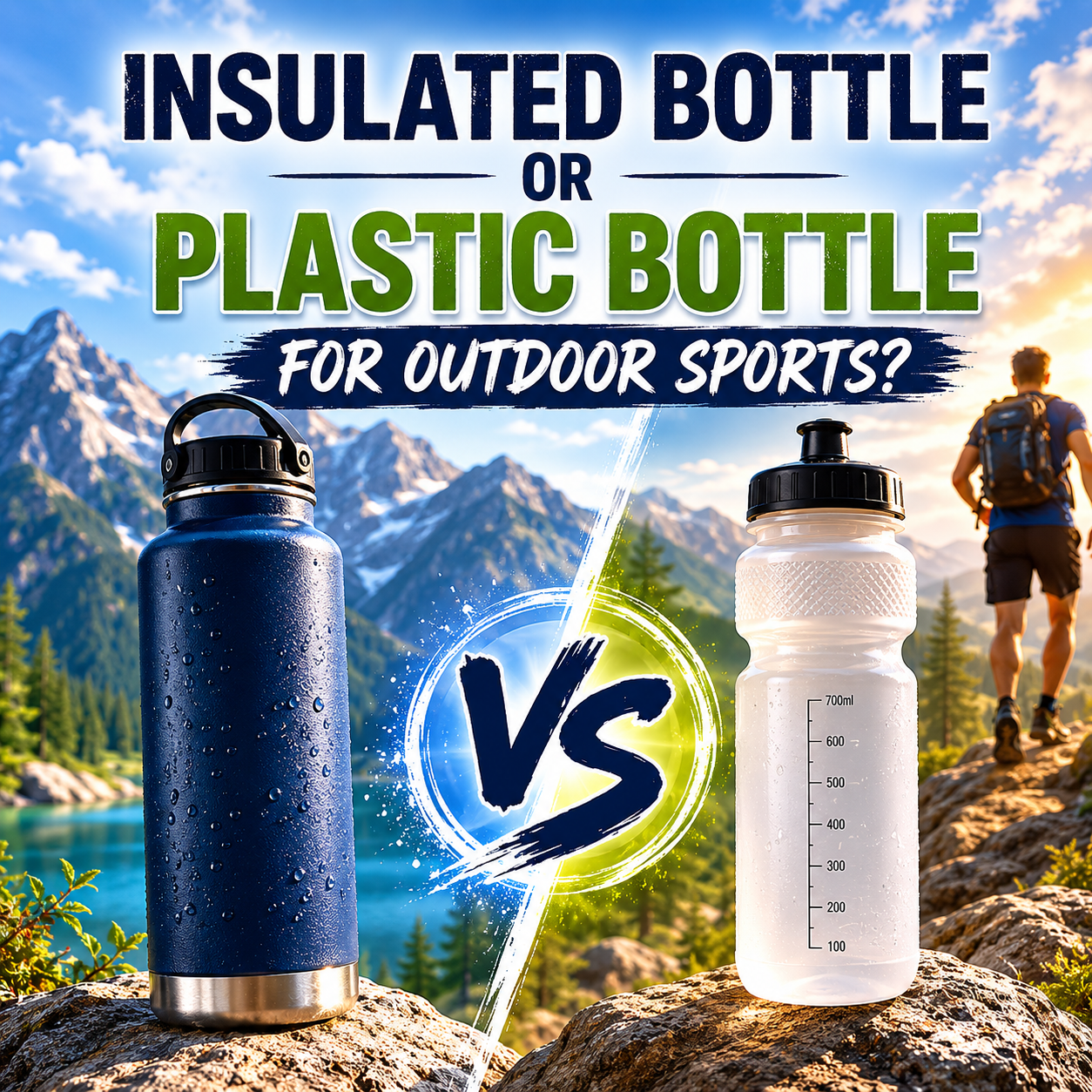
If you’ve ever stood at the start line of a trail race or packed a bag for a weekend camping trip, you know the argument well. One friend swears by a feather‑light plastic bottle. Another won’t go anywhere without their stainless steel insulated flask. So which one actually works better when you’re sweating in the sun, scrambling over rocks, or cycling into a headwind?
This isn’t a guesswork article. En Jarrino, we’ve been engineering and supplying hydration bottles for brands, sports teams, and event organisers for over 10 años. We’ve tested dozens of prototypes in the field—from high‑desert ultras to casual paddle‑boarding sessions—and the differences between plastic and insulated bottles go far deeper than most “top 10” lists will tell you.
We’re going to break down exactly how these two types of bottles perform across five critical outdoor‑sports factors: peso, temperature retention, durabilidad, taste, and versatility. By the end, you’ll know precisely which bottle to pick for your activity—and, if you’re a business buyer, which one makes the most sense for your next bulk order.
1. Understanding the core materials
Before we compare, let’s define what we’re really talking about. Not all plastic bottles are the same, and neither are all insulated bottles. The details matter when you’re sourcing for a team or retail brand.
Plastic sport bottles in the professional and outdoor market are almost never made from the cheap, cloudy polyethylene you remember from childhood. They are typically manufactured from:
Eastman Tritan™ copolyester – BPA‑free, shatter‑resistant, odour‑resistant, crystal clear.
Polypropylene (PÁGINAS) – lighter, more flexible, often used in squeeze bottles for cycling.
HDPE – used in budget‑conscious models, less durable over UV exposure.
Insulated bottles are overwhelmingly constructed from 304 o 316 stainless steel with a double‑wall vacuum construction. There is no lining that can degrade; the vacuum gap itself does the insulating.
Why does this matter to your decision? Because a Tritan bottle behaves nothing like a flimsy disposable bottle, and a properly welded vacuum flask can keep ice solid for 24 hours while surviving a fall onto granite.
2. Peso: the make‑or‑break metric for endurance sports
If you’re running, fast‑packing, or racing, every gram counts. We took five bottles from our catalogue and weighed them empty:
| Tipo de botella & Capacidad | Empty Weight |
|---|---|
| 750 ml Tritan plastic sport bottle | 120 gramo |
| 500 ml PP squeeze bottle | 85 gramo |
| 500 ml single‑wall stainless steel (not insulated) | 200 gramo |
| 750 ml double‑wall insulated stainless steel | 380 gramo |
| 1000 ml double‑wall insulated stainless steel | 480 gramo |
The difference is stark. The insulated 750 ml bottle is three times heavier than its Tritan counterpart.
Real‑world takeaway: On a 30‑km trail run, I carried two 500 ml soft flasks (roughly 70 g total) in a vest. Switching to even a single small insulated bottle would have added 250 g and required a handheld strap. My time would have suffered, and my shoulders would have felt it. For any sport where speed and lightness dominate—marathons, triathlons, fast‑packing—plastic (or flexible hydration flasks) wins hands down.
Expert insight: The American College of Sports Medicine notes that every additional 1% of body weight carried increases energy expenditure by roughly 1%. For a 70 kg athlete, that 300 g difference is significant over hours.
3. Temperature retention: when cold water becomes a safety tool
Insulated bottles shine when temperature matters beyond comfort. We conducted a controlled test: filled a Tritan bottle and a 750 ml double‑wall vacuum bottle with water at 5°C, then left them in a 35°C environment (direct sunlight).
| Time elapsed | Tritan bottle water temp | Insulated bottle water temp |
|---|---|---|
| 0 horas | 5°C | 5°C |
| 2 horas | 22°C | 7°C |
| 6 horas | 31°C | 10°C |
| 12 horas | 34°C | 14°C |
The plastic bottle equilibrated with ambient temperature quickly. The insulated bottle kept the liquid genuinely cool well past noon. In hot‑weather outdoor work or sports, this isn’t just about enjoyment—it’s about hydration compliance. Researchers (p.ej., International Journal of Sport Nutrition and Exercise Metabolism, 2019) have repeatedly shown that people drink more fluid voluntarily when the water is cool and palatable.
The same principle applies in winter. An insulated bottle prevents water from freezing while you’re snowshoeing or mountaineering. A plastic bottle can become a block of ice in under an hour at -15°C.
B2B perspective: If your customers are construction crews, wildland firefighters, or high‑altitude guides, the insulated bottle isn’t a luxury; it’s a performance and safety tool.
4. Durability and lifespan: the long‑term cost equation
Botellas de plástico, even high‑end Tritan, will eventually scratch, develop stress cracks if dropped repeatedly, and can retain odours if not washed thoroughly. We cycle our test Tritan bottles through 1,500 dishwasher cycles and simulate 2‑metre drops onto concrete. They survive well, but after about two years of hard daily use, the seal ring may need replacement and the body shows cosmetic wear.
Insulated stainless steel bottles are practically bombproof. The outer wall can dent if you throw it off a cliff, but a dent rarely breaks the vacuum. The bottle still works. In our lab, we’ve cut open bottles that had been in field use for seven years. The interior was pristine, with no corrosion, no pitting.
Sin embargo, durability comes with a caveat: if the vacuum fails, the bottle loses all insulating ability, and there is no repair. We’ve seen failure rates below 0.3% in our premium line, but in ultra‑low‑cost imports, the rate can be far higher. Check the warranty. (We offer 5 years on stainless, 2 on plastic.)
Trustworthiness note: I’m not here to sell you the most expensive bottle. For a school sports day where bottles get lost weekly, a 6Tritanbottlemightbemoresensiblethana6Tritanbohttlmimigramohtbmimetrooresenortesibyomithana25 insulated one. I’ll help you do the maths in the next section.
5. Taste, smell, and health safety
No one talks about this enough: plastic can alter the taste of water, especially when it’s been sitting in a hot car. High‑quality Tritan is virtually inert and passes all organoleptic tests (no taint transfer after 72 hours of contact), but it’s still a polymer. Some users report a subtle “plastic” note with lemon‑infused water or when the bottle has been unused for a while.
Stainless steel imparts zero taste. Period. That’s why it’s the material of choice for medical and laboratory containers.
6. Side‑by‑side comparison table
Here is a quick reference for outdoor‑sports decision making.
| Factor | Plastic Sport Bottle (Tritán / PÁGINAS) | Insulated Stainless Steel Bottle |
|---|---|---|
| Peso | Very light (85–150 g) | Heavy (300–500 g) |
| Cold retention | Poor – warms up within 1–2 h | Excellent – iced water lasts 12–24 h |
| Hot liquids | Not suitable above 70°C | Designed for hot & cold |
| Durabilidad | Scratch‑resistant, replaceable | Dent‑resistant, nearly indestructible |
| Taste neutrality | Very good (Tritán) | Perfect |
| Cleaning ease | Dishwasher safe | Hand wash recommended for cap mechanisms |
| Cost per unit (B2B bulk) | Bajo | Medium to high |
| Environmental impact | Recyclable, lighter to ship | Lifetime product, fully recyclable steel |
| Best sport use case | Correr, ciclismo, gimnasia, quick hikes | Senderismo, cámping, fishing, hot‑weather work, winter sports |
7. Which bottle for which outdoor sport: a practical decision tree
When I consult our brand clients on which bottle to private‑label for a specific audience, we walk through this exact framework:
A. High‑output, short‑duration activities (≤2 hours)
Examples: road running, criterium cycling, HIIT class, 5‑a‑side football
➡️ Recommendation: lightweight plastic squeeze or Tritan bottle.
Weight matters most. Speed of drinking matters. You can refill at aid stations.
B. Long‑duration, exposed environments
Examples: all‑day hikes, kayak touring, backcountry skiing, open‑water sailing
➡️ Recommendation: double‑wall insulated bottle.
Temperature control keeps you drinking. Durability matters if the bottle falls overboard or off a cliff ledge.
do. Variable temperatures / year‑round use
Examples: construction teams, outdoor educators, mountain guides
➡️ Recommendation: insulated bottle for cold months, paired with a lightweight summer option.
Many B2B buyers order a seasonal mix from us.
D. Children and school sports
Examples: sports camps, school teams, youth clubs
➡️ Recommendation: BPA‑free Tritan plastic bottle with a leak‑proof lid.
Asequible, replaceable, and lighter for small hands.
8. What does this mean for your B2B order?
If you’re reading this blog on Jarrino’s website, you’re probably not buying a single bottle. You’re sourcing for a corporate wellness programme, an outdoor gear brand, or a tournament giveaway.
Here’s what I tell our procurement partners:
Lead time and MOQ – Our Tritan bottles start at 100 units with a 3‑week lead time for custom logos. Insulated bottles MOQ is typically 200 unidades, 4–5 weeks with custom colour and laser engraving.
Customisation ROI – An insulated bottle with a metal body takes laser engraving beautifully and lasts for years, putting your brand in front of the user daily. Plastic bottles are brilliant for event giveaways because you can order more units for the same budget.
- Sustainability footprint – Shipping lighter plastic bottles reduces carbon emissions per unit, but a steel bottle kept for a decade has a lower lifetime footprint. We offer carbon‑offset freight options and can provide LCAs (lifecycle assessments) on request. If you’re ready to evaluate these trade‑offs for your own order, explore our bulk water bottle options o learn more about our custom logo process—we’ll help you balance budget, performance, and footprint.
9. Conclusión: stop choosing sides, start choosing based on use
We’ve used a 500 ml soft flask to run a 50‑mile race through the Dolomites, and I’ve sipped hot tea from a 1‑litre vacuum flask while winter camping in Lapland. Both bottles were perfect for their moment. The mistake is assuming one bottle should rule them all.
For most outdoor sports enthusiasts, the smart setup is actually ambos: a lightweight plastic bottle for high‑output days, and an insulated stainless steel bottle for everything else. For B2B buyers, the choice depends entirely on the end user’s activity profile and the brand message you want to send.
Still not sure which one fits your project? Our product engineers can walk you through the options based on your exact use case, target climate, and budget—no hard sell, just straight advice from people who build these bottles every day.
Contact our Jarrino team
Publicaciones relacionadas
Vasos navideños personalizados: Guía completa de fabricación OEM/ODM
Jarrino es un fabricante certificado OEM/ODM que se especializa en matraces de vacío personalizados., vasos revestidos de cerámica, y vasos de titanio. Los plazos de entrega para los pedidos navideños personalizados del cuarto trimestre son de 20 a 30 días con MOQ bajos (300–1.000 unidades) y cumplimiento total de FDA/LFGB. Ofrecemos personalización de extremo a extremo, incluida la impresión digital 3D., grabado con láser, y embalaje de regalo de Navidad personalizado. Los kits de muestra y las cotizaciones están disponibles previa solicitud para ayudar a las marcas a asegurar la producción navideña del cuarto trimestre sin problemas..
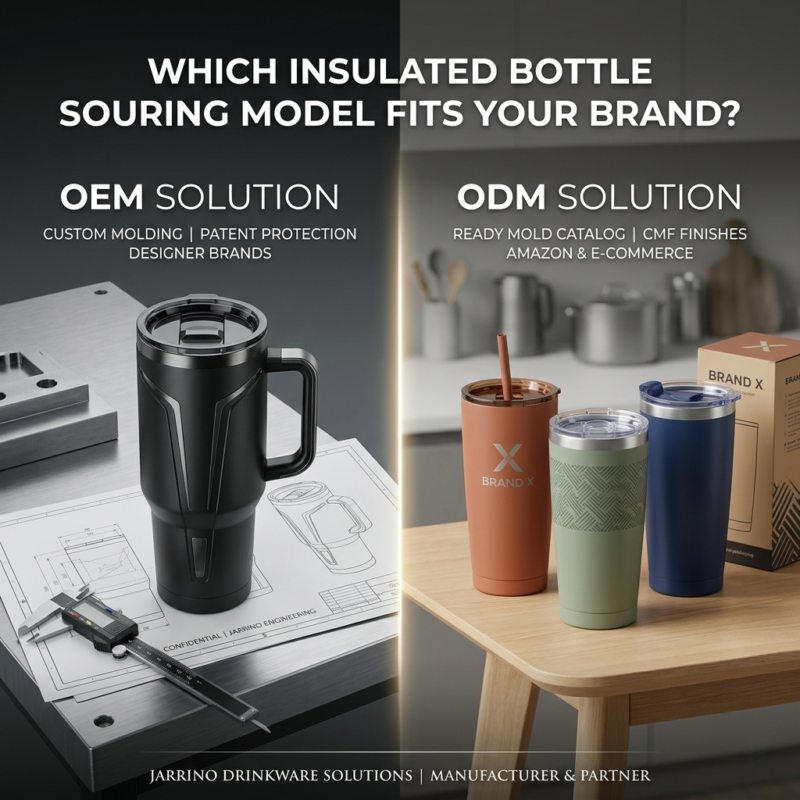
OEM frente a. Vasos aislados ODM: ¿Qué modelo de abastecimiento se adapta a su marca de vasos?
Elegir entre OEM (Fabricación de equipos originales) y ODM (Fabricación de diseño original) define la R de su marca de bebidas&presupuesto D, tiempo de comercialización, y exclusividad del producto. OEM es ideal para marcas establecidas con diseños CAD personalizados y requisitos de IP únicos, ofrenda 100% moldeado personalizado y protección de patentes. ODM está diseñado para vendedores de Amazon, Inicios de DTC, y compradores corporativos que buscan cero costos de herramientas, MOQ bajos, y lanzamientos rápidos de productos a través de acabados CMF avanzados (recubrimiento en polvo, impresión ultravioleta).
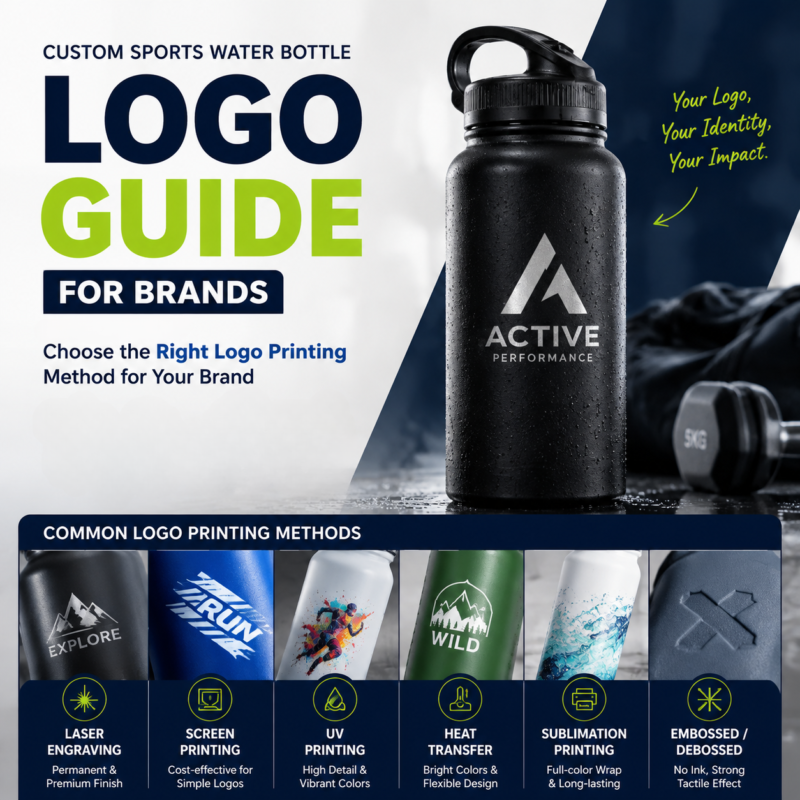
Guía de logotipos de botellas de agua deportivas personalizadas para marcas
Los logotipos personalizados de botellas de agua deportivas se crean mediante diferentes procesos de decoración según el material de la botella., diseño de marca, y requisitos de rendimiento. Esta guía cubre los métodos de impresión de logotipos más comunes., incluyendo grabado láser, serigrafía, impresión ultravioleta, transferencia de calor, y sublimación, Ayudar a las marcas deportivas a seleccionar la opción de personalización adecuada para productos de bebidas duraderos y profesionales..
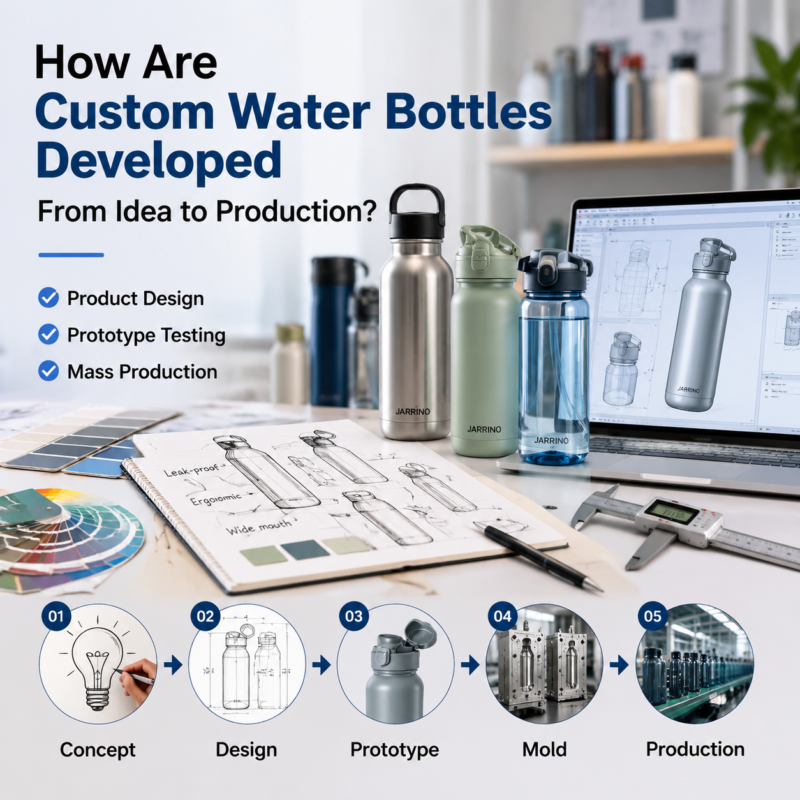
¿Cómo se desarrollan las botellas de agua personalizadas desde la idea hasta la producción??
Desarrollar una botella de agua personalizada requiere más que elegir un diseño y agregar un logotipo.. Desde el concepto inicial del producto hasta la ingeniería, creación de prototipos, desarrollo de moldes, pruebas, y producción en masa, Cada etapa juega un papel importante en la creación de un producto de bebida exitoso.. Esta guía explica cómo las marcas trabajan con los fabricantes de botellas de agua OEM para transformar ideas en alta calidad., Productos listos para el mercado mientras se gestiona el diseño., costo, y desafíos de producción.
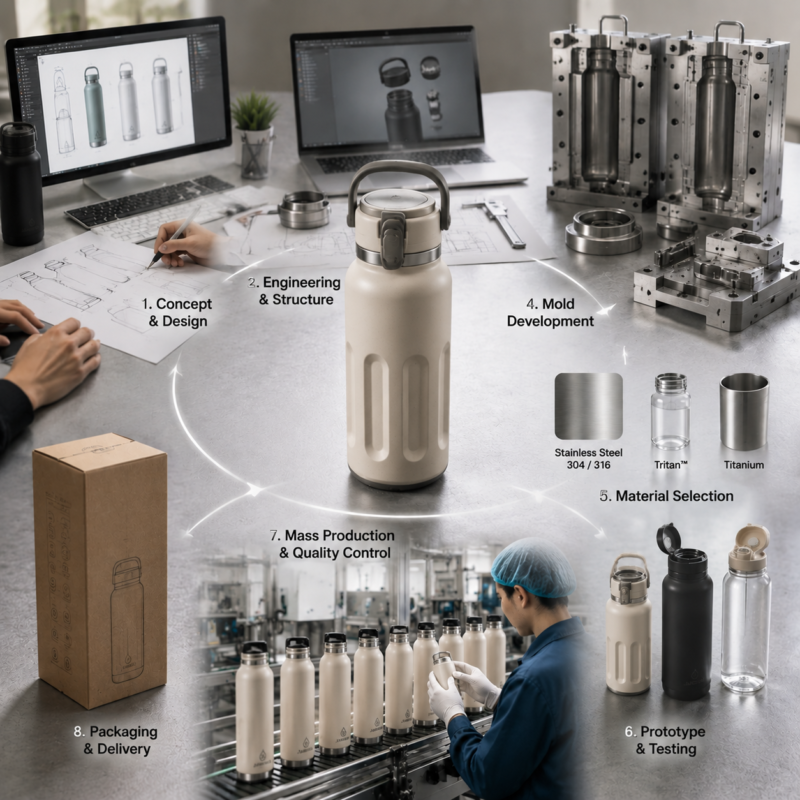
¿Cómo se fabrican las botellas de agua totalmente personalizadas??
Desarrollar una botella de agua totalmente personalizada implica mucho más que añadir un logotipo a un producto existente.. Esta guía explica cómo las marcas crean botellas de agua únicas a través del diseño de productos., ingeniería, selección de material, desarrollo de moldes, prueba de prototipo, y producción en masa. Descubra cómo un experimentado fabricante de botellas de agua OEM ayuda a transformar una idea en un producto listo para el mercado mientras gestiona la calidad., costo, y eficiencia de producción.
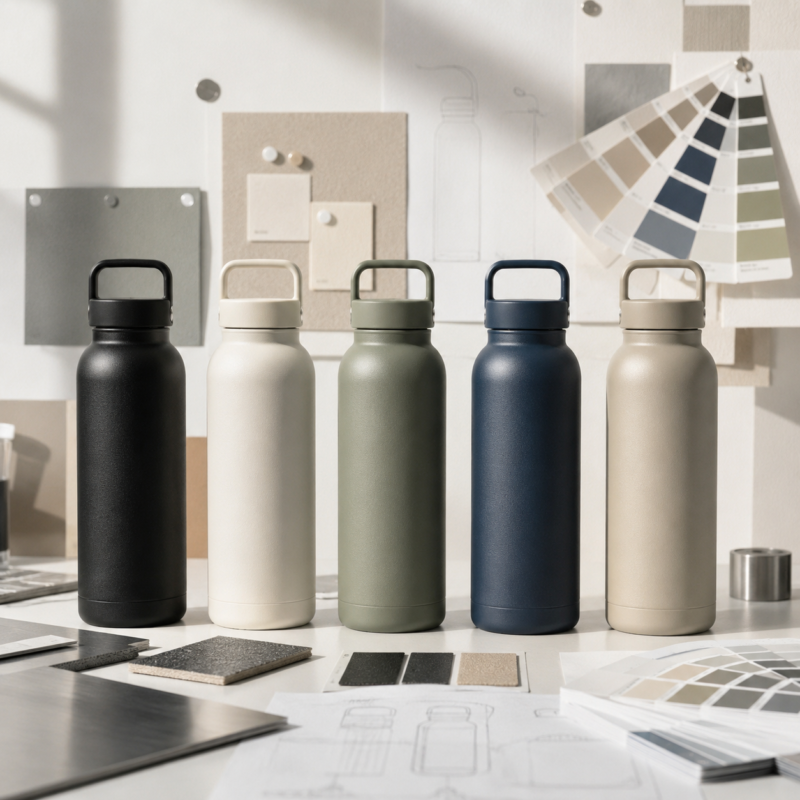
Cómo elegir colores y acabados para botellas de agua personalizadas
El éxito de una colección de botellas de agua personalizadas depende de algo más que colores atractivos. Elegir la paleta de colores adecuada, acabado superficial, y la estrategia de fabricación ayuda a fortalecer la identidad de la marca, mejorar el atractivo del cliente, y asegurar ventas a largo plazo. Esta guía explica cómo seleccionar colores según las preferencias del mercado., comparar acabados mate y brillante, optimizar los SKU, y lograr una calidad constante a través de la producción OEM profesional.

Por qué los vasos estilo Stanley dominan el mercado mayorista
Los vasos estilo Stanley se han convertido en un fenómeno cultural y un éxito de ventas al por mayor. Este artículo explora por qué – desde 18/8 Acero inoxidable y aislamiento al vacío de doble pared para un alto valor percibido., potencial de personalización, y demanda constante de pedidos repetidos. Descubra qué hace que estos vasos sean confiables, categoría rentable para compradores mayoristas.
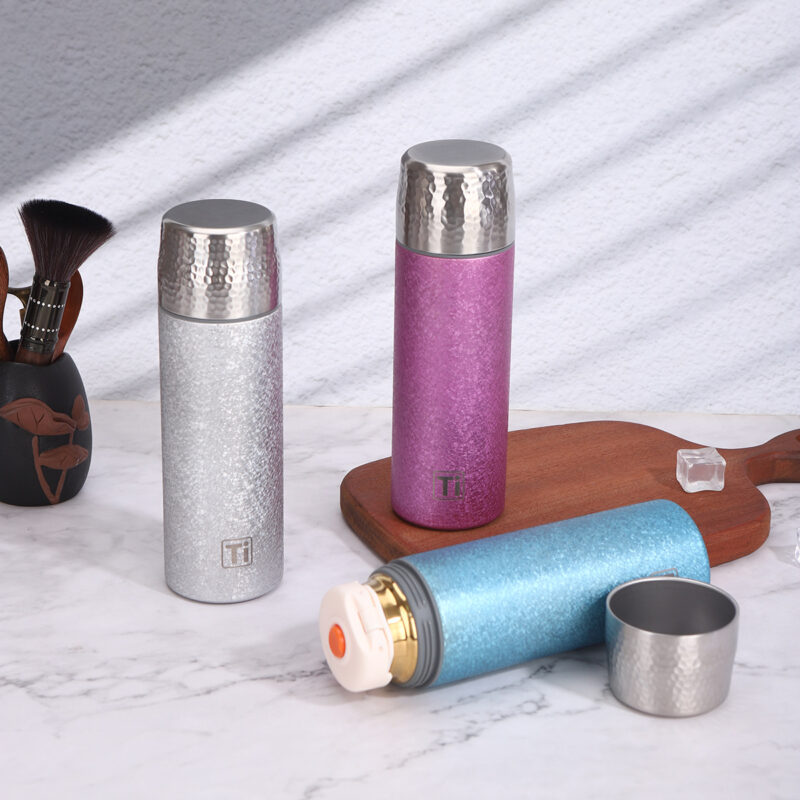
¿Son seguras las botellas de agua de titanio??
El titanio es seguro. También es caro. Así es como se compara con el acero inoxidable y el aluminio, y qué material realmente tiene sentido para su marca..
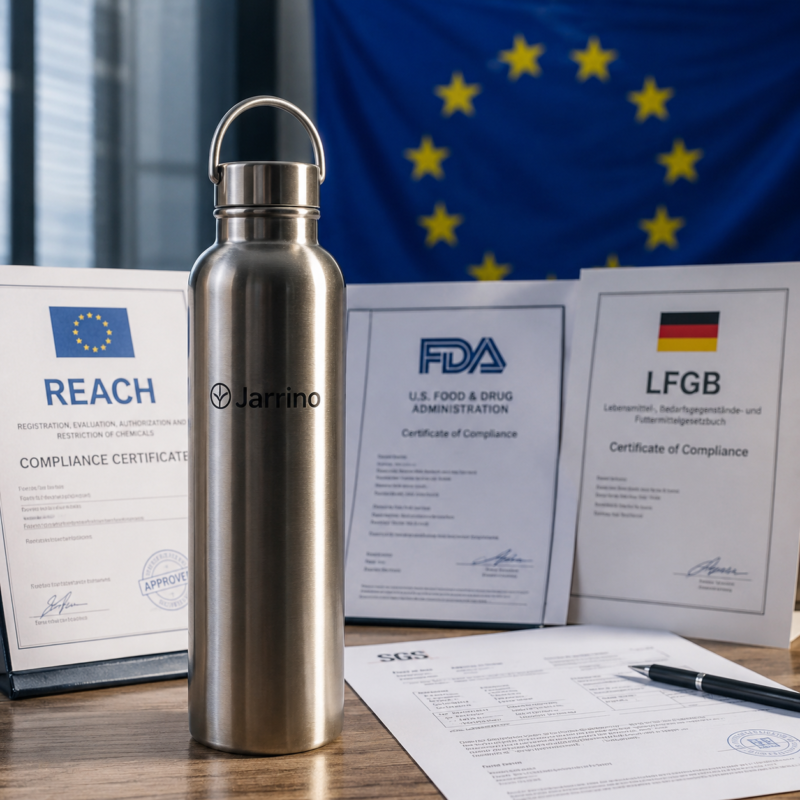
Reglamento de microplásticos de la UE 2026: Lo que todo fabricante de botellas de agua personalizadas debe saber
Descubra cómo funciona el Reglamento de Microplásticos de la UE (UE) 2026/1168 Afecta a los fabricantes de botellas de agua personalizadas y a las marcas privadas de bebidas y bebidas.. Descubra cómo Jarrino ayuda a los importadores a cumplir con REACH con botellas de agua duraderas de acero inoxidable.
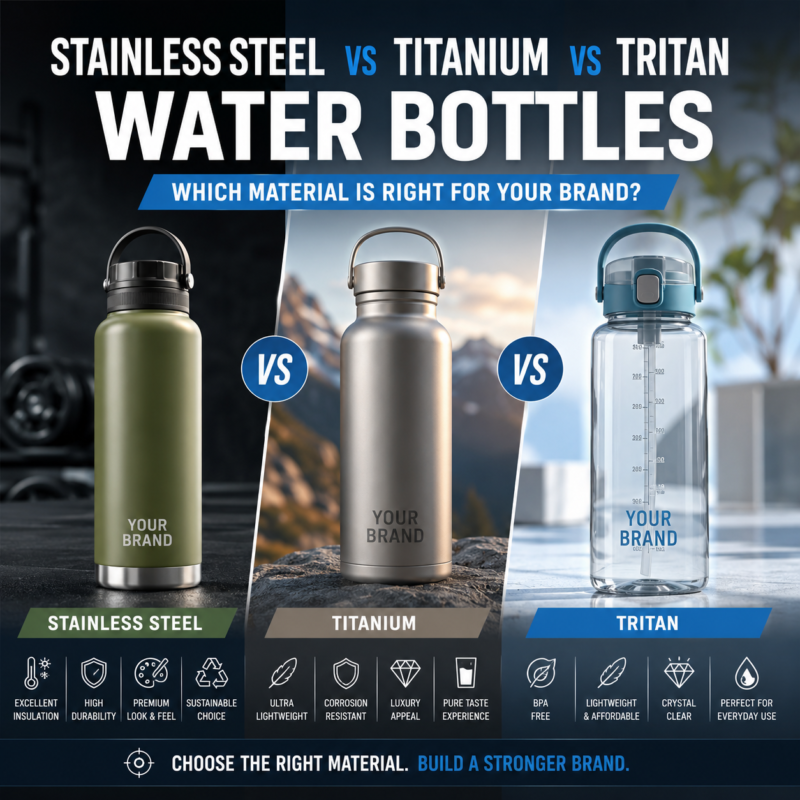
Stainless Steel vs Titanium vs Tritan Water Bottles: Which Material Is Right for Your Brand?
Choosing the right water bottle material can significantly impact your product quality, pricing, and brand positioning. This guide compares stainless steel, titanio, and Tritan water bottles across durability, aislamiento, costo, personalización, and sustainability to help brands, minoristas, and OEM buyers select the best material for their target market.
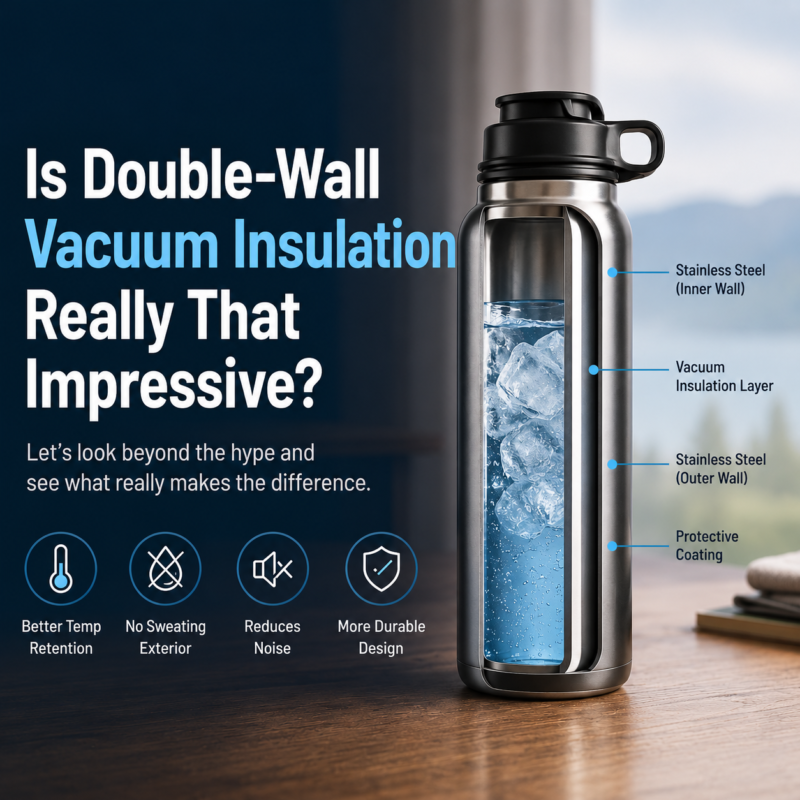
¿Es el aislamiento al vacío de doble pared realmente tan impresionante??
Double‑wall vacuum insulation is standard in premium drinkware, but the difference between a bottle that performs and one that disappoints comes down to manufacturing quality. This guide explains how vacuum insulation works, sets realistic performance expectations, and gives B2B buyers a practical checklist for evaluating suppliers. Plus, why Jarrino’s strict quality standards ensure your custom bottles deliver on their promises.
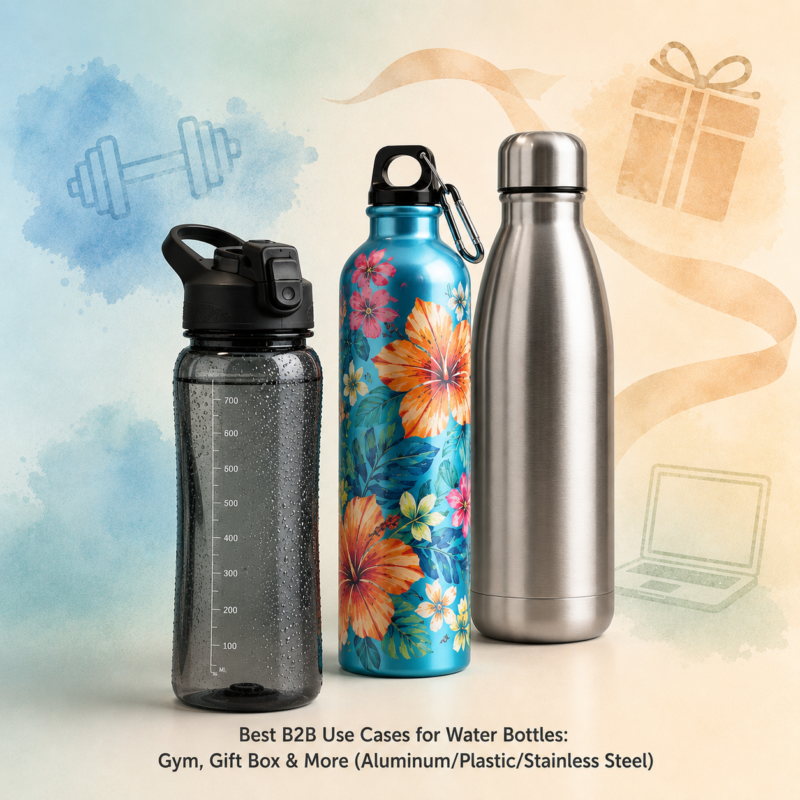
Los mejores casos de uso B2B para botellas de agua: Gimnasia, Caja de regalo & Más (Aluminio/Plástico/Acero)
No todas las botellas de agua se adaptan a todos los casos de uso B2B. Este artículo combina tres materiales: acero inoxidable., aluminio, plástico: a aplicaciones del mundo real: gimnasios, cajas de regalo corporativas, ferias comerciales, venta al por menor al aire libre, y programas escolares. El acero inoxidable gana en durabilidad y aislamiento. El aluminio ofrece ligereza, marca a todo color. El plástico es económico para eventos de gran volumen (siempre que esté libre de BPA). Una hoja de trucos rápida ayuda a los compradores B2B a equilibrar los costos, imagen de marca, y expectativas del usuario.