

Stainless Steel vs Titanium vs Tritan Water Bottles: Which Material Is Right for Your Brand?
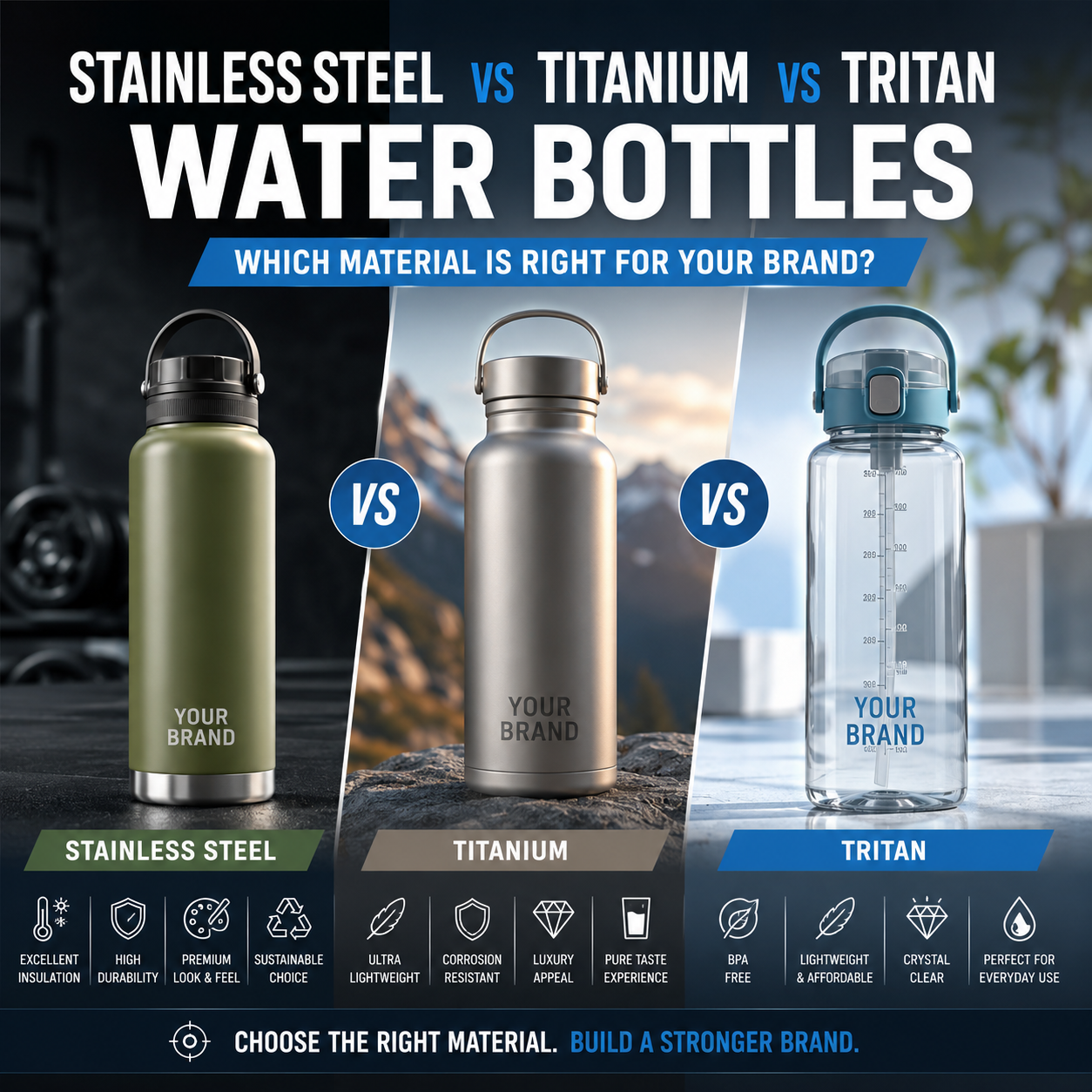
When launching a custom drinkware collection, one of the first decisions isn’t color or logo placement—it’s selección de material.
Should you choose acero inoxidable, titanio, o Tritan™ plastic?
Each material targets different customer segments, price points, and use cases. The wrong choice can increase manufacturing costs, reduce customer satisfaction, or weaken your brand positioning. The right one can improve margins, strengthen your value proposition, and increase repeat purchases.
If you’re sourcing from a water bottle manufacturer for OEM or private-label production, understanding the strengths and limitations of each material is essential.
This guide compares stainless steel, titanio, and Tritan across performance, durabilidad, branding potential, sustainability, and manufacturing considerations to help you choose the best material for your business.
Quick Comparison
| Característica | Acero inoxidable | Titanio | Tritán |
|---|---|---|---|
| Durabilidad | ★★★★★ | ★★★★★ | ★★★☆☆ |
| Peso | Medio | Very Light | Light |
| Aislamiento | Excellent | Bien | None |
| Taste Neutrality | Excellent | Outstanding | Bien |
| Premium Perception | Alto | Luxury | Medio |
| Cost | $$ | $$$$ | $ |
| Sin BPA | Sí | Sí | Sí |
| Lavavajillas segura | Usually | Sí | Sí |
| OEM Customization | Excellent | Bien | Excellent |
| Typical Customers | Exterior, Corporate, Retail | Premium Outdoor, Luxury | Deportes, Schools, Promotional |
Why Material Choice Matters More Than Ever
Consumers today don’t simply buy a water bottle.
They buy:
-
Sostenibilidad
-
Health and safety
-
Brand identity
-
Lifestyle
-
Actuación
Material selection influences:
-
Manufacturing cost
-
Retail pricing
-
Shipping expenses
-
Product lifespan
-
Customer reviews
-
Environmental impact
-
Brand positioning
For B2B buyers, material directly affects profitability.
Stainless Steel Water Bottles


Stainless steel remains the global standard for premium reusable drinkware.
Most high-quality bottles use grado alimenticio 18/8 (304) acero inoxidable, while vacuum insulation creates excellent temperature retention.
Advantages
Outstanding Temperature Performance
Double-wall vacuum insulation can keep drinks:
-
Cold for up to 24 horas
-
Hot for up to 12 horas
This makes stainless steel ideal for:
-
Coffee brands
-
Outdoor brands
-
Travel products
-
Corporate gifts
Extremely Durable
304 stainless steel resists:
-
Rust
-
Corrosion
-
Dents
-
Daily wear
Many bottles remain functional after years of use.
Excellent Branding Surface
Manufacturers can apply:
-
Powder coating
-
impresión ultravioleta
-
Grabado láser
-
Serigrafía
-
Full-wrap graphics
-
Custom Pantone colors
This flexibility makes stainless steel the preferred choice for private-label brands.
Sostenible
Because stainless steel is highly recyclable and designed for long-term use, it aligns well with brands emphasizing environmental responsibility.
Limitations
-
Heavier than titanium or Tritan
-
Higher shipping costs
-
Slightly more expensive than plastic
Titanium Water Bottles


Titanium occupies the luxury end of the drinkware market.
Originally popular among mountaineers and backpackers, titanium bottles are now increasingly used by premium lifestyle brands.
Advantages
Incredibly Lightweight
Titanium offers steel-like strength while weighing significantly less.
Perfecto para:
-
Senderismo
-
Cámping
-
Viajar
-
Minimalist EDC products
Exceptional Corrosion Resistance
Titanium naturally forms an oxide layer that protects against:
-
Saltwater
-
Acids
-
Moisture
It will not rust.
Pure Drinking Experience
Titanium is highly inert.
It doesn’t affect:
-
Coffee
-
Té
-
Mineral water
-
Electrolytes
Many enthusiasts describe titanium as delivering the cleanest taste.
Luxury Positioning
Titanium immediately communicates:
-
Premium quality
-
Engineering excellence
-
Outdoor performance
Brands often sell titanium bottles at two to four times the price of comparable stainless steel products.
Limitations
-
High material cost
-
More difficult machining
-
Smaller OEM production ecosystem
-
Plazos de entrega más largos
-
Fewer color-finishing options
Tritan Water Bottles


Tritan is a BPA-free copolyester developed specifically for reusable drinkware.
Unlike ordinary plastic bottles, Tritan combines clarity with durability.
Advantages
Ligero
Ideal para:
-
Schools
-
Gyms
-
Deportes
-
Desplazamientos diarios
Lower product weight also reduces freight costs.
Asequible
Tritan bottles typically have the lowest production cost.
This makes them suitable for:
-
Promotional campaigns
-
Giveaways
-
Retail chains
-
Event merchandise
Crystal Clear Appearance
Unlike many plastics, Tritan remains transparent over long-term use.
Customers appreciate its glass-like appearance without the fragility.
Easy Customization
Manufacturers can produce:
-
Transparent colors
-
Frosted finishes
-
Flip lids
-
Straw lids
-
Fruit infusers
-
Measurement markings
Limitations
-
No vacuum insulation
-
Lower premium perception
-
Can scratch over time
-
Not intended for keeping beverages hot
Performance Comparison
| Criteria | Acero inoxidable | Titanio | Tritán |
|---|---|---|---|
| Keeps Drinks Hot | Excellent | Bien | No |
| Keeps Drinks Cold | Excellent | Bien | No |
| Peso | Medio | Excellent | Excellent |
| Durabilidad | Excellent | Excellent | Bien |
| Corrosion Resistance | Excellent | Outstanding | N/A |
| Luxury Appeal | Alto | Outstanding | Moderado |
| Production Cost | Moderado | Alto | Bajo |
| Shipping Cost | Medio | Bajo | Very Low |
| Color Options | Excellent | Limited | Excellent |
Which Material Fits Different Brand Types?
| Brand Type | Recommended Material |
|---|---|
| Outdoor Equipment | Titanium or Stainless Steel |
| Corporate Gifts | Acero inoxidable |
| Coffee Brands | Acero inoxidable |
| Luxury Lifestyle | Titanio |
| Fitness Brands | Tritan or Stainless Steel |
| School Products | Tritán |
| Promotional Products | Tritán |
| Premium E-commerce | Acero inoxidable |
| Travel Accessories | Acero inoxidable |
| High-End Adventure | Titanio |
OEM Manufacturing Considerations
Choosing the right manufacturing partner matters just as much as choosing the right material.
When evaluating suppliers, ask about:
-
Food-grade material certifications
-
Factory audit reports
-
Vacuum insulation testing
-
Leak-proof testing
-
Production capacity
-
MOQ flexibility
-
Logo printing options
-
Packaging customization
-
Lead times
-
Quality control procedures
Experienced OEM manufacturers can also recommend the most cost-effective material based on your target market, retail price, and order volume.
Cost vs Retail Positioning
| Material | Typical Manufacturing Cost | Typical Retail Position |
|---|---|---|
| Tritán | Bajo | Entry-Level |
| Acero inoxidable | Medio | Mid-to-Premium |
| Titanio | Alto | Luxury |
Higher material cost doesn’t always reduce profit.
Premium materials often support significantly higher retail pricing and stronger brand differentiation.
Which Material Should Your Brand Choose?
Elegir acero inoxidable if you want:
-
The broadest market appeal
-
Excellent insulation
-
Premium branding
-
Long product lifespan
-
Strong OEM customization options
Elegir titanio if you want:
-
Luxury positioning
-
Ultra-lightweight products
-
High-end outdoor customers
-
Maximum durability
-
Premium pricing
Elegir Tritán if you want:
-
Affordable manufacturing
-
Lightweight products
-
Promotional campaigns
-
School and fitness markets
-
Large-volume production
Preguntas frecuentes
Is titanium better than stainless steel?
Titanium is lighter and more corrosion-resistant, while stainless steel offers better value, stronger insulation performance, and a wider range of manufacturing options. For most brands, stainless steel provides the best balance of performance and cost.
Is Tritan safer than stainless steel?
Both are considered safe for food and beverage use when manufactured to appropriate standards. Tritan is BPA-free, while food-grade stainless steel is non-reactive and widely used for insulated drinkware.
Which material lasts the longest?
Titanium and stainless steel generally have the longest service life due to their resistance to impact and corrosion. Tritan is durable for everyday use but can become scratched with heavy wear.
Which material is easiest to customize?
Stainless steel offers the greatest flexibility, supporting powder coating, grabado con láser, silk-screen printing, impresión ultravioleta, and a wide range of finishes. Tritan also allows colorful molded designs, while titanium typically has more limited finishing options.
Final Thoughts
There is no single «mejor» water bottle material—only the best choice for your brand’s positioning and customers.
-
Acero inoxidable remains the most versatile option, balancing durability, aislamiento, personalización, and value.
-
Titanio is ideal for premium brands seeking differentiation through lightweight performance and luxury appeal.
-
Tritán is a practical solution for high-volume, budget-conscious, and sports-oriented product lines.
For most OEM and private-label projects, stainless steel continues to deliver the strongest combination of manufacturing flexibility, consumer appeal, and long-term brand value. Selecting the right material early in product development will help optimize costs, strengthen your positioning, and create a drinkware collection that resonates with your target market.
Publicaciones relacionadas
¿Los vasos personalizados que brillan en la oscuridad son buenos para su marca??
Los vasos personalizados que brillan en la oscuridad ofrecen a las marcas privadas una oportunidad de alto margen en un mercado competitivo. Jarrino proporciona calidad industrial, Recubrimientos fotoluminiscentes aptos para alimentos., Garantizar la durabilidad y el cumplimiento al tiempo que se dirige a los sectores de actividades al aire libre y juveniles., Impulsar el atractivo viral en las redes sociales y la diferenciación de productos..
Cómo elegir 100% Botellas de agua de acero inoxidable a prueba de fugas para su marca?
Esta guía ayuda a las marcas de bebidas a seleccionar 100% Botellas de acero inoxidable a prueba de fugas mediante el análisis de pruebas de control de calidad y la ingeniería de tapas.. Fabricantes como Jarrino utilizan el modelo invertido., sacudida, y pruebas de presión de aire para verificar los sellos.. Los tapones de rosca tradicionales ofrecen una protección absoluta contra fugas., mientras que las tapas abatibles y las tapas con pajitas para bloquear requieren juntas de silicona precisas, Precisión de rosca CNC, y válvulas de aire unidireccionales para evitar derrames..
Vasos navideños personalizados: Guía completa de fabricación OEM/ODM
Jarrino es un fabricante certificado OEM/ODM que se especializa en matraces de vacío personalizados., vasos revestidos de cerámica, y vasos de titanio. Los plazos de entrega para los pedidos navideños personalizados del cuarto trimestre son de 20 a 30 días con MOQ bajos (300–1.000 unidades) y cumplimiento total de FDA/LFGB. Ofrecemos personalización de extremo a extremo, incluida la impresión digital 3D., grabado con láser, y embalaje de regalo de Navidad personalizado. Los kits de muestra y las cotizaciones están disponibles previa solicitud para ayudar a las marcas a asegurar la producción navideña del cuarto trimestre sin problemas..
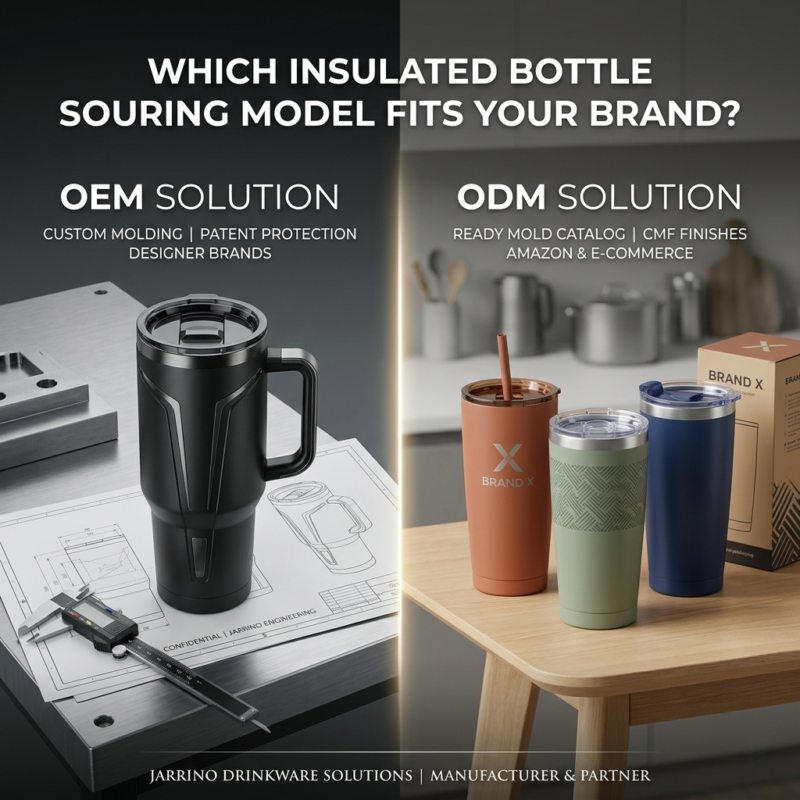
OEM frente a. Vasos aislados ODM: ¿Qué modelo de abastecimiento se adapta a su marca de vasos?
Elegir entre OEM (Fabricación de equipos originales) y ODM (Fabricación de diseño original) define la R de su marca de bebidas&presupuesto D, tiempo de comercialización, y exclusividad del producto. OEM es ideal para marcas establecidas con diseños CAD personalizados y requisitos de IP únicos, ofrenda 100% moldeado personalizado y protección de patentes. ODM está diseñado para vendedores de Amazon, Inicios de DTC, y compradores corporativos que buscan cero costos de herramientas, MOQ bajos, y lanzamientos rápidos de productos a través de acabados CMF avanzados (recubrimiento en polvo, impresión ultravioleta).
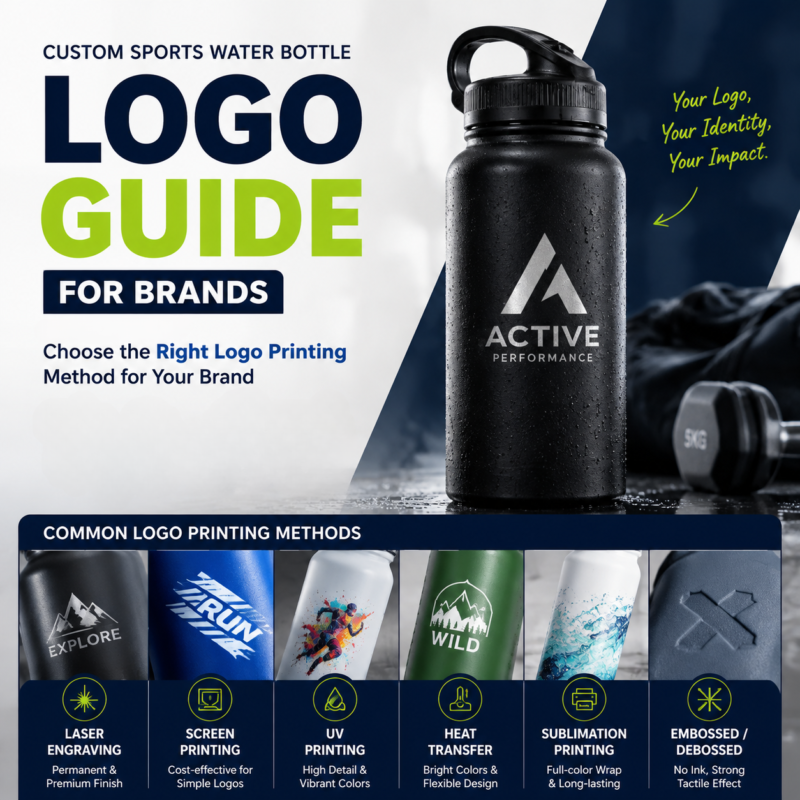
Guía de logotipos de botellas de agua deportivas personalizadas para marcas
Los logotipos personalizados de botellas de agua deportivas se crean mediante diferentes procesos de decoración según el material de la botella., diseño de marca, y requisitos de rendimiento. Esta guía cubre los métodos de impresión de logotipos más comunes., incluyendo grabado láser, serigrafía, impresión ultravioleta, transferencia de calor, y sublimación, Ayudar a las marcas deportivas a seleccionar la opción de personalización adecuada para productos de bebidas duraderos y profesionales..
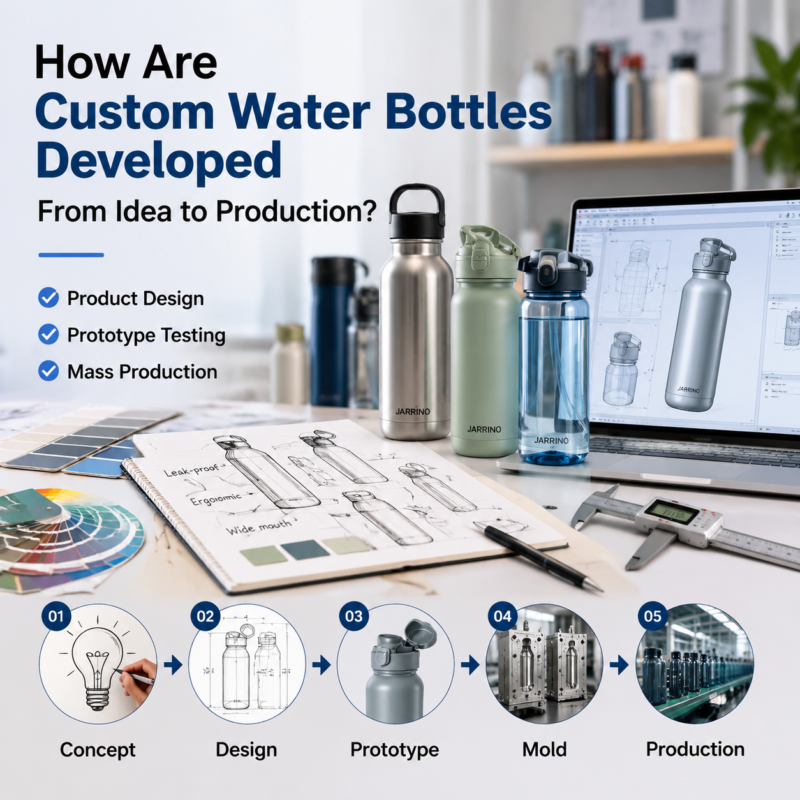
¿Cómo se desarrollan las botellas de agua personalizadas desde la idea hasta la producción??
Desarrollar una botella de agua personalizada requiere más que elegir un diseño y agregar un logotipo.. Desde el concepto inicial del producto hasta la ingeniería, creación de prototipos, desarrollo de moldes, pruebas, y producción en masa, Cada etapa juega un papel importante en la creación de un producto de bebida exitoso.. Esta guía explica cómo las marcas trabajan con los fabricantes de botellas de agua OEM para transformar ideas en alta calidad., Productos listos para el mercado mientras se gestiona el diseño., costo, y desafíos de producción.
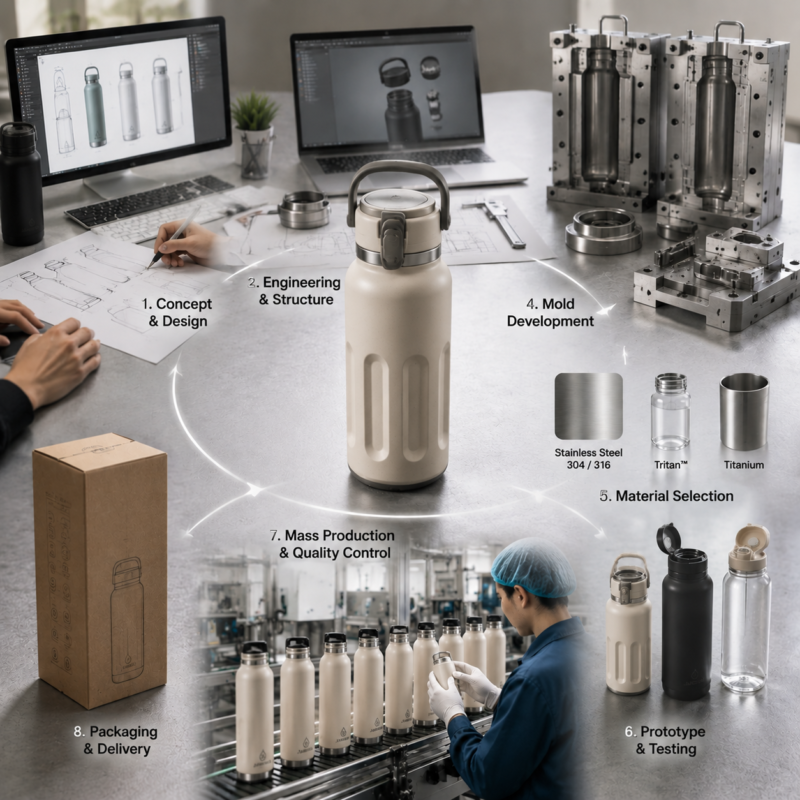
¿Cómo se fabrican las botellas de agua totalmente personalizadas??
Desarrollar una botella de agua totalmente personalizada implica mucho más que añadir un logotipo a un producto existente.. Esta guía explica cómo las marcas crean botellas de agua únicas a través del diseño de productos., ingeniería, selección de material, desarrollo de moldes, prueba de prototipo, y producción en masa. Descubra cómo un experimentado fabricante de botellas de agua OEM ayuda a transformar una idea en un producto listo para el mercado mientras gestiona la calidad., costo, y eficiencia de producción.
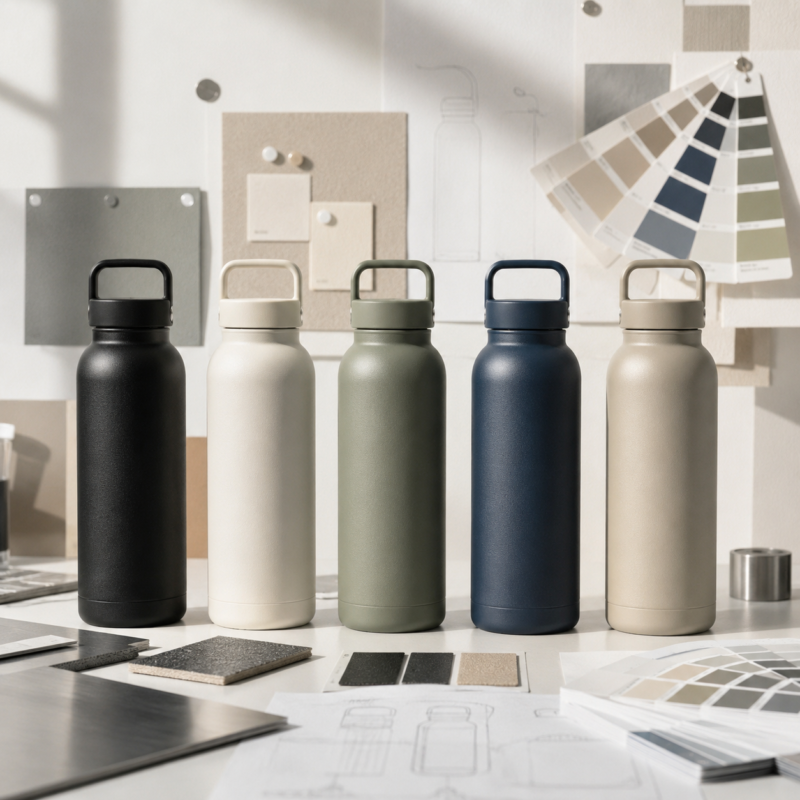
Cómo elegir colores y acabados para botellas de agua personalizadas
El éxito de una colección de botellas de agua personalizadas depende de algo más que colores atractivos. Elegir la paleta de colores adecuada, acabado superficial, y la estrategia de fabricación ayuda a fortalecer la identidad de la marca, mejorar el atractivo del cliente, y asegurar ventas a largo plazo. Esta guía explica cómo seleccionar colores según las preferencias del mercado., comparar acabados mate y brillante, optimizar los SKU, y lograr una calidad constante a través de la producción OEM profesional.
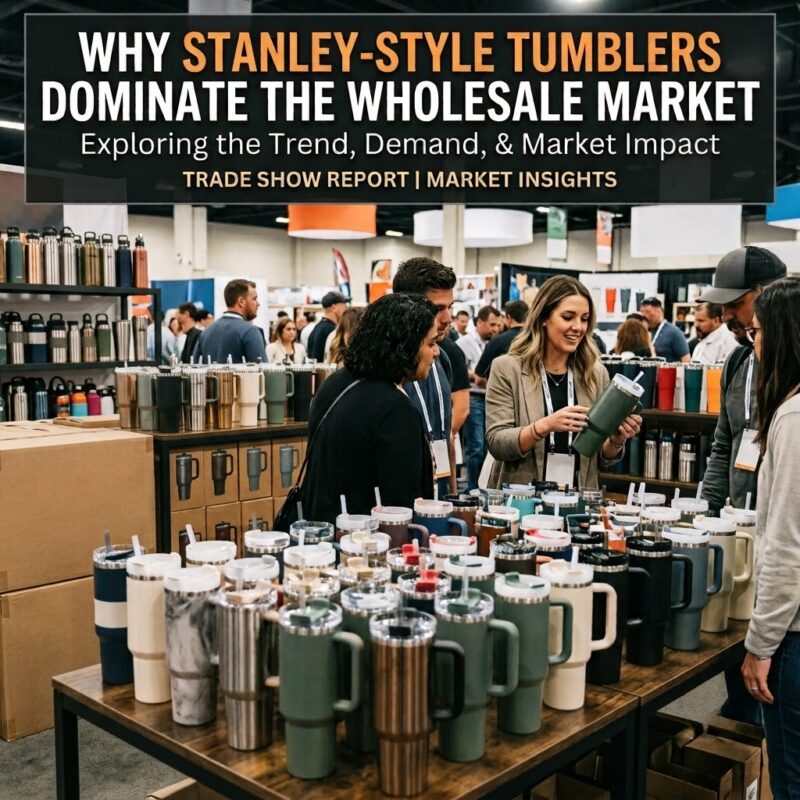
Por qué los vasos estilo Stanley dominan el mercado mayorista
Los vasos estilo Stanley se han convertido en un fenómeno cultural y un éxito de ventas al por mayor. Este artículo explora por qué – desde 18/8 Acero inoxidable y aislamiento al vacío de doble pared para un alto valor percibido., potencial de personalización, y demanda constante de pedidos repetidos. Descubra qué hace que estos vasos sean confiables, categoría rentable para compradores mayoristas.
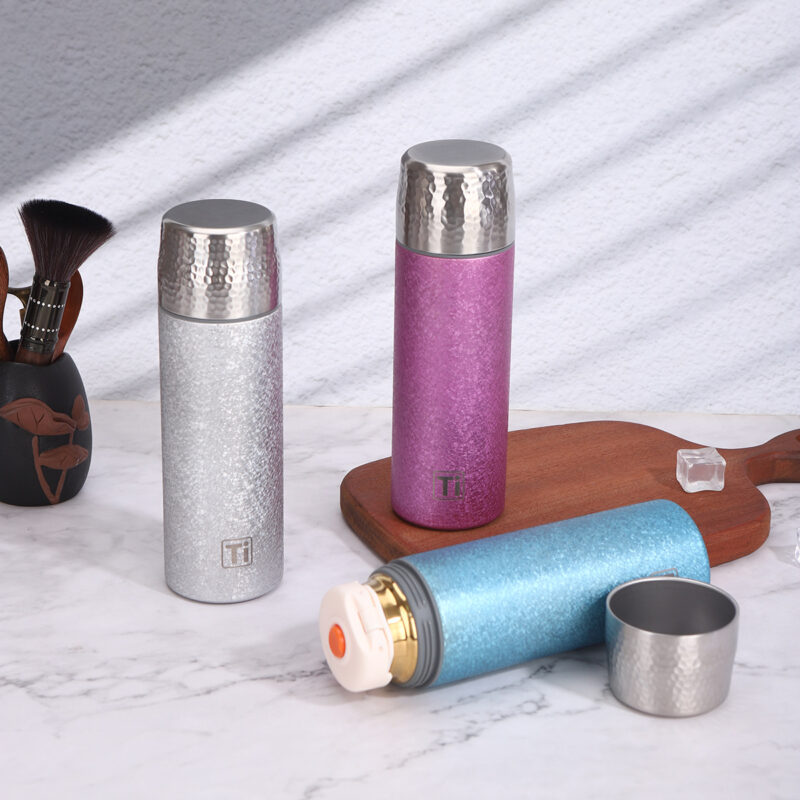
¿Son seguras las botellas de agua de titanio??
El titanio es seguro. También es caro. Así es como se compara con el acero inoxidable y el aluminio, y qué material realmente tiene sentido para su marca..
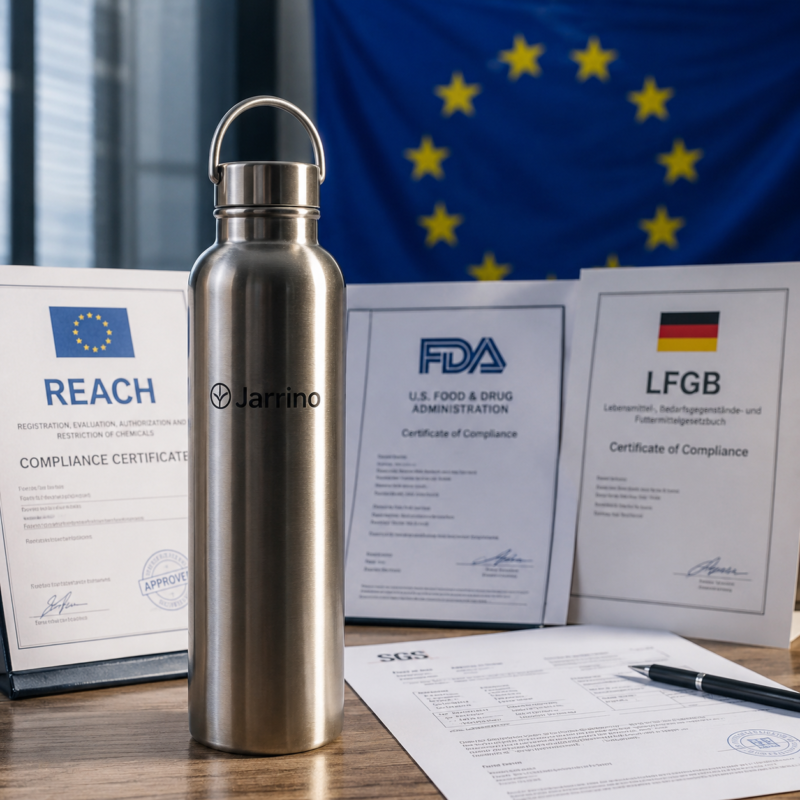
Reglamento de microplásticos de la UE 2026: Lo que todo fabricante de botellas de agua personalizadas debe saber
Descubra cómo funciona el Reglamento de Microplásticos de la UE (UE) 2026/1168 Afecta a los fabricantes de botellas de agua personalizadas y a las marcas privadas de bebidas y bebidas.. Descubra cómo Jarrino ayuda a los importadores a cumplir con REACH con botellas de agua duraderas de acero inoxidable.
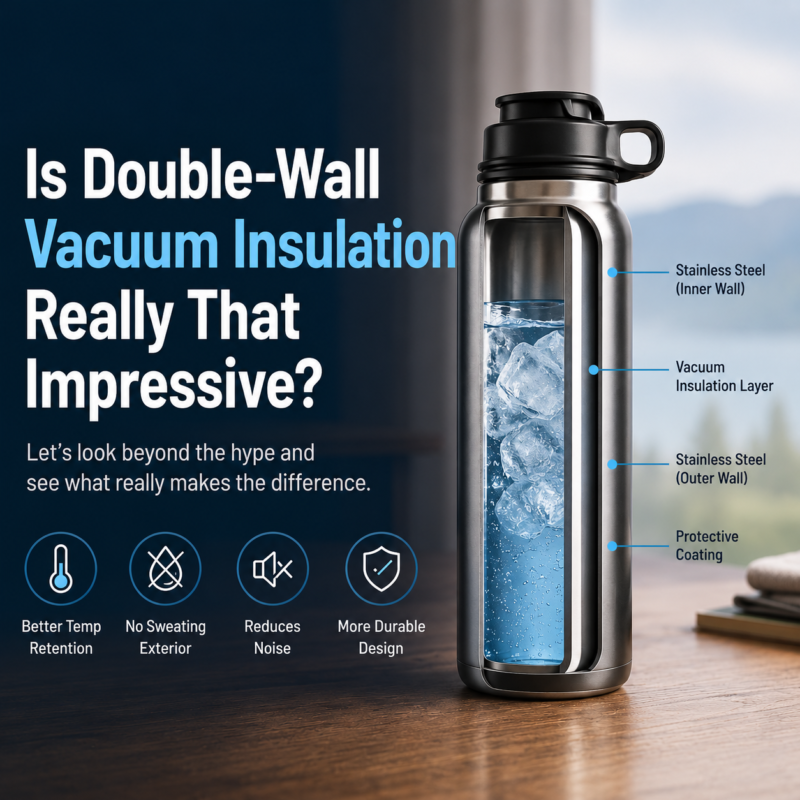
¿Es el aislamiento al vacío de doble pared realmente tan impresionante??
Double‑wall vacuum insulation is standard in premium drinkware, but the difference between a bottle that performs and one that disappoints comes down to manufacturing quality. This guide explains how vacuum insulation works, sets realistic performance expectations, and gives B2B buyers a practical checklist for evaluating suppliers. Plus, why Jarrino’s strict quality standards ensure your custom bottles deliver on their promises.