
¿Cómo se fabrican las botellas de agua totalmente personalizadas??
From Product Concept and Mold Development to Mass Production
A fully custom water bottle is not created by simply adding a logo to an existing product. A truly custom bottle requires a complete product development process that transforms an idea into a manufacturable product.
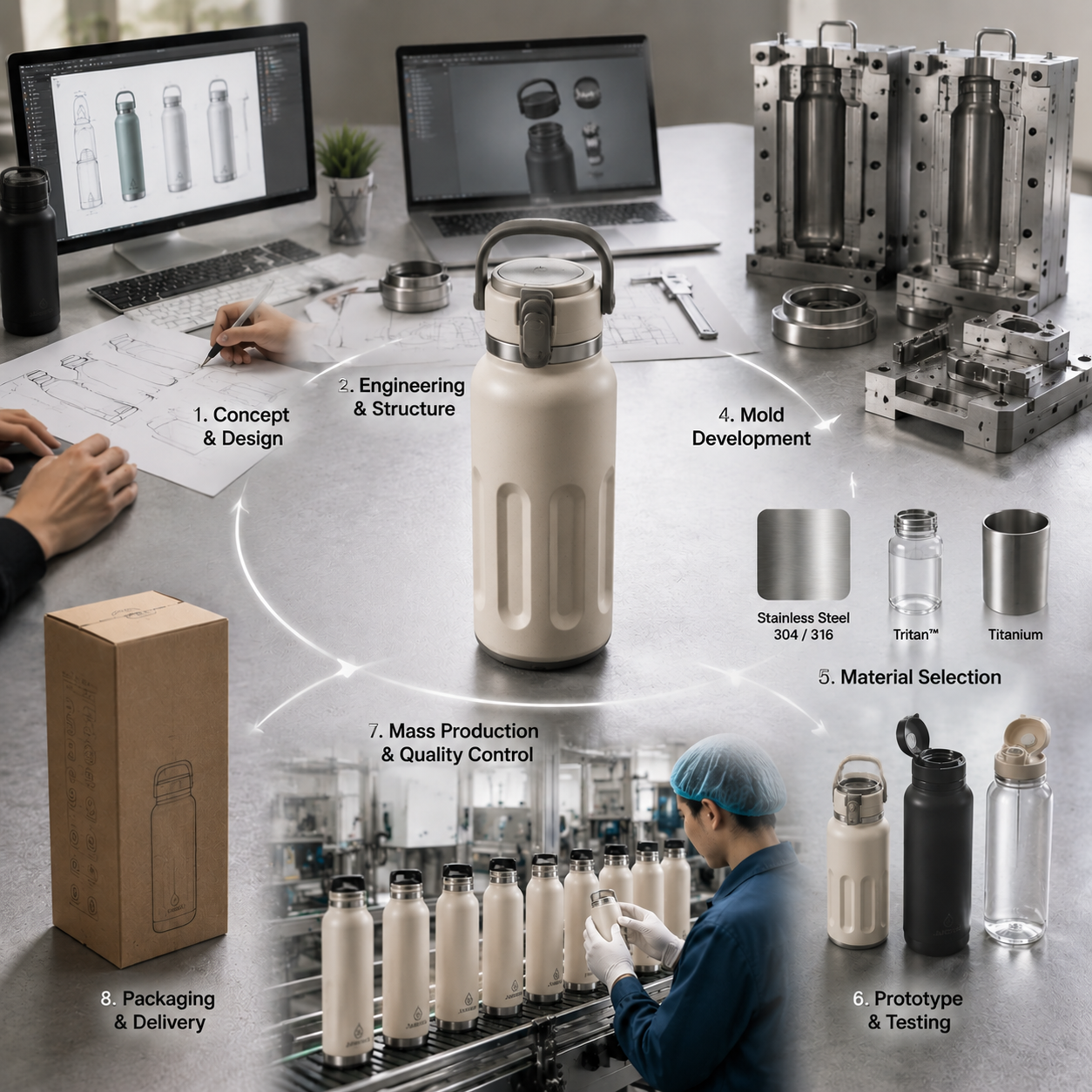
For brands looking to create their own unique drinkware, the journey usually involves product design, ingeniería, selección de material, prueba de prototipo, desarrollo de moldes, quality inspection, y producción en masa.
Choosing the right custom water bottle manufacturer is critical because the manufacturing partner directly affects product quality, development efficiency, production cost, and long-term scalability.
En Jarrino, we help startups, minoristas, distribuidores, and established brands develop custom water bottles from concept to production. Whether a brand needs a completely new bottle design or a customized existing platform, our team supports every stage of the development process.
This guide explains how fully custom water bottles are designed, developed, and manufactured.
What Is a Fully Custom Water Bottle?
A fully custom water bottle is a product developed according to a brand’s unique requirements rather than a standard factory design.
Unlike basic customization, which usually includes logo printing or color changes, a fully custom project allows brands to control almost every aspect of the product.
A fully custom water bottle may include:
- Original bottle shape
- Custom size and capacity
- Unique lid design
- Special functional features
- Custom accessories
- Exclusive surface finishes
- Custom packaging
Por ejemplo, a brand may want to develop:
- A premium insulated bottle for outdoor users
- A lightweight titanium bottle for adventure markets
- A children’s bottle with a special safety lid
- A branded corporate gift bottle with a unique design
These projects require deeper cooperation between the brand and the OEM manufacturer.
Paso 1: Product Concept and Design Development
Every custom water bottle begins with an idea.
Before manufacturing starts, brands need to define the product concept:
- Who is the target customer?
- What problem does the bottle solve?
- What capacity is required?
- What material is suitable?
- What price range is expected?
- What features make the product different?
A professional manufacturer helps evaluate whether the idea can be produced efficiently.
Por ejemplo:
A sports brand may prioritize:
- Lightweight design
- Easy carrying
- Durabilidad
- Large capacity
A premium lifestyle brand may focus on:
- Unique appearance
- High-end finishes
- Premium materials
A children’s bottle brand may require:
- Safe materials
- Leak-proof structure
- Easy cleaning
The design stage determines the foundation of the entire project.
Paso 2: Industrial Design and Engineering
After the product concept is confirmed, the next step is converting the idea into a production-ready design.
This includes two important areas:
Diseño Industrial
Industrial designers focus on:
- Bottle appearance
- Shape
- Proportion
- User experience
- Brand identity
A good design should not only look attractive but also consider manufacturing limitations.
Engineering Development
Engineering teams evaluate:
- Product structure
- Wall thickness
- Lid mechanism
- Assembly method
- Manufacturing feasibility
A common mistake for new brands is designing a product that looks impressive but is difficult or expensive to manufacture.
An experienced OEM partner helps optimize the design before moving into tooling.
Paso 3: Do Fully Custom Water Bottles Need New Molds?
One of the most common questions from brands is:
Do I need a new mold for my custom water bottle?
The answer depends on the level of customization.
When a New Mold Is Not Required
A new mold may not be necessary if you only need:
- Logo customization
- Color changes
- Packaging customization
- Surface finishing changes
Using an existing bottle platform can help brands:
- Reduce development costs
- Shorten launch time
- Test market demand
When a New Mold Is Required
A new mold is usually needed for:
- Completely new bottle shapes
- Custom dimensions
- Unique lid structures
- Exclusive product designs
- Special functions
For brands that want a truly differentiated product, mold development is often the key step.
Paso 4: Mold Development for Custom Water Bottles
Mold development is one of the most important stages in creating a fully custom water bottle.
The mold determines:
- Product shape
- Dimensional accuracy
- Production efficiency
- Product consistency
The typical mold development process includes:
1. 3D Design Confirmation
Engineers create detailed drawings and 3D models based on the approved design.
The team reviews:
- Dimensions
- Structure
- Material requirements
- Production methods
before creating the mold.
2. Mold Manufacturing
After design approval, the mold is manufactured using precision processing.
The mold complexity depends on:
- Bottle structure
- Material
- Number of components
- Production method
For stainless steel insulated bottles, tooling may involve:
- Bottle forming
- Neck shaping
- Bottom structure
- Lid components
For Tritan or plastic bottles, tooling may involve:
- Injection molds
- Blow molds
- Cap molds
3. Mold Testing and Optimization
Before mass production, manufacturers conduct trial production.
The product is checked for:
- Size accuracy
- Appearance
- Assembly performance
- Functionality
Any necessary adjustments are completed before final production.
This stage helps avoid expensive problems during mass manufacturing.
Paso 5: Material Selection for Custom Water Bottles
Material selection affects product performance, customer experience, and brand positioning.
Common materials include:
Acero inoxidable
The most popular choice for premium insulated drinkware.
Advantages:
- Durable
- Food-safe
- Excellent insulation capability
- Long service life
304 stainless steel is widely used for:
- Zonas
- Travel mugs
- Vacuum bottles
316 stainless steel is often selected for premium products requiring higher corrosion resistance.
Tritan ™
Tritan™ is commonly used for lightweight reusable bottles.
Advantages:
- Sin BPA
- Transparent appearance
- Impact resistance
- Ligero
It is popular for:
- Sports bottles
- Fitness products
- Children’s bottles
Titanio
Titanium is a premium material used by brands targeting:
- Outdoor enthusiasts
- Adventure users
- High-end customers
Advantages:
- Extremely lightweight
- Corrosion resistant
- Premium positioning
Paso 6: Prototype Testing Before Mass Production
Before large-scale production, professional manufacturers create samples for testing.
Prototype approval allows brands to confirm:
- Product appearance
- Dimensions
- Function
- Material performance
- User experience
Testing may include:
- Leak testing
- Lid function testing
- Surface inspection
- Insulation testing
Sample approval is an important step because it reduces production risks before large investment.
Paso 7: Mass Production and Quality Control
Once the final sample is approved, production begins.
A professional custom water bottle manufacturer manages multiple stages:
Production Preparation
Including:
- Material inspection
- Production scheduling
- Manufacturing setup
Fabricación
Depending on the product type:
Stainless steel bottles may involve:
- Forming
- Welding
- Vacuum insulation
- Surface finishing
- Assembly
Plastic bottles may involve:
- Moldura de inyección
- Blow molding
- Assembly
Inspección de calidad
Quality checks include:
- Appearance inspection
- Leak testing
- Function testing
- Packaging inspection
Consistent quality control ensures every production batch meets brand requirements.
Frequently Asked Questions About Fully Custom Water Bottles
How long does it take to develop a fully custom water bottle?
A fully custom project usually takes longer than standard customization because it may involve design, ingeniería, desarrollo de moldes, and testing.
The timeline depends on product complexity and production requirements.
Is creating a new mold expensive?
Mold costs depend on:
- Product design
- Material
- Complexity
- Number of components
An experienced manufacturer can help optimize the design to control tooling investment.
Can startups develop fully custom water bottles?
Sí.
Many startups begin with existing platforms and move to fully custom products after validating market demand.
This approach reduces risk while allowing long-term product development.
Why Choose Jarrino for Fully Custom Water Bottle Development?
Developing a successful custom water bottle requires more than manufacturing capacity.
Brands need a partner with experience in:
- Product development
- Material selection
- Mold development
- Manufacturing processes
- Control de calidad
En Jarrino, we support brands from the first product idea to final production.
Our goal is to help businesses create unique drinkware products that are practical, confiable, and ready for global markets.
Whether you are developing your first custom bottle or expanding an existing product line, Jarrino provides OEM and ODM solutions designed around your business goals.
Start Your Fully Custom Water Bottle Project
Every successful product starts with a clear idea and the right manufacturing partner.
If you are planning to develop a fully custom water bottle, Jarrino can help you evaluate materials, improve product designs, develop prototypes, manage tooling, and achieve reliable mass production.
Contact Jarrino today to discuss your next custom drinkware project.
Publicaciones relacionadas
How to Choose 100% Leak-Proof Stainless Steel Water Bottles for Your Brand?
This guide helps drinkware brands select 100% leak-proof stainless steel bottles by analyzing QC testing and lid engineering. Manufacturers like Jarrino use inverted, shaking, and air pressure tests to verify seals. Traditional screw-caps offer absolute leak protection, while locking flip-lids and straw caps require precise silicone gaskets, CNC thread precision, and one-way air valves to prevent spills.
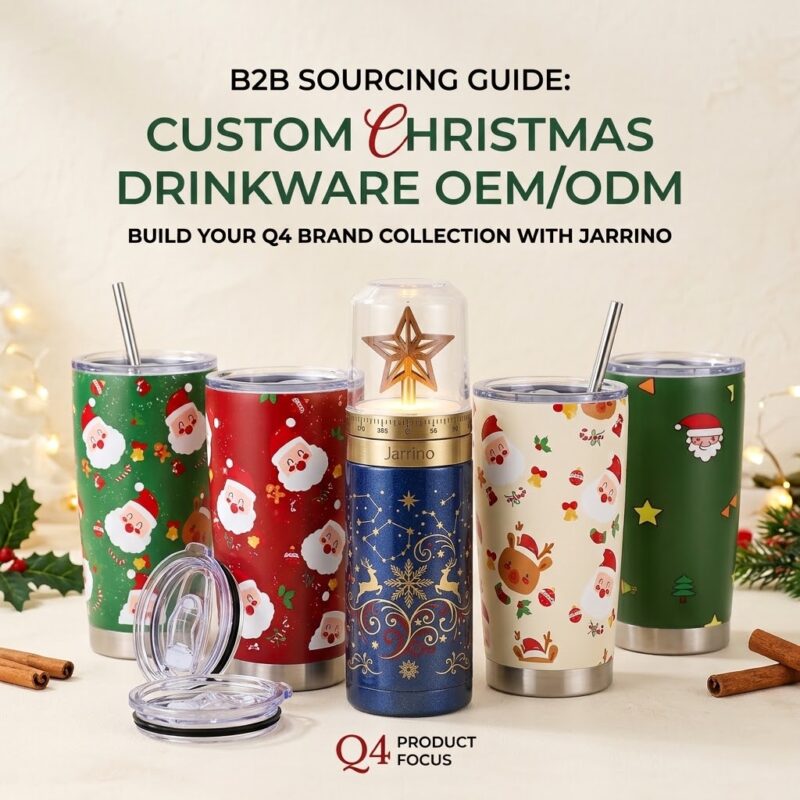
Vasos navideños personalizados: Guía completa de fabricación OEM/ODM
Jarrino es un fabricante certificado OEM/ODM que se especializa en matraces de vacío personalizados., vasos revestidos de cerámica, y vasos de titanio. Los plazos de entrega para los pedidos navideños personalizados del cuarto trimestre son de 20 a 30 días con MOQ bajos (300–1.000 unidades) y cumplimiento total de FDA/LFGB. Ofrecemos personalización de extremo a extremo, incluida la impresión digital 3D., grabado con láser, y embalaje de regalo de Navidad personalizado. Los kits de muestra y las cotizaciones están disponibles previa solicitud para ayudar a las marcas a asegurar la producción navideña del cuarto trimestre sin problemas..
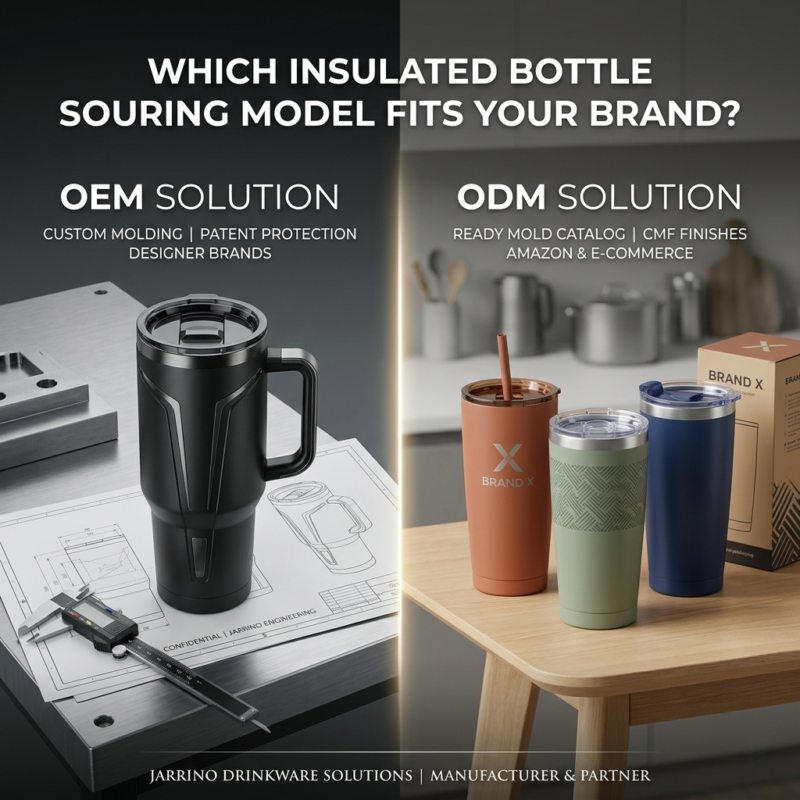
OEM frente a. Vasos aislados ODM: ¿Qué modelo de abastecimiento se adapta a su marca de vasos?
Elegir entre OEM (Fabricación de equipos originales) y ODM (Fabricación de diseño original) define la R de su marca de bebidas&presupuesto D, tiempo de comercialización, y exclusividad del producto. OEM es ideal para marcas establecidas con diseños CAD personalizados y requisitos de IP únicos, ofrenda 100% moldeado personalizado y protección de patentes. ODM está diseñado para vendedores de Amazon, Inicios de DTC, y compradores corporativos que buscan cero costos de herramientas, MOQ bajos, y lanzamientos rápidos de productos a través de acabados CMF avanzados (recubrimiento en polvo, impresión ultravioleta).
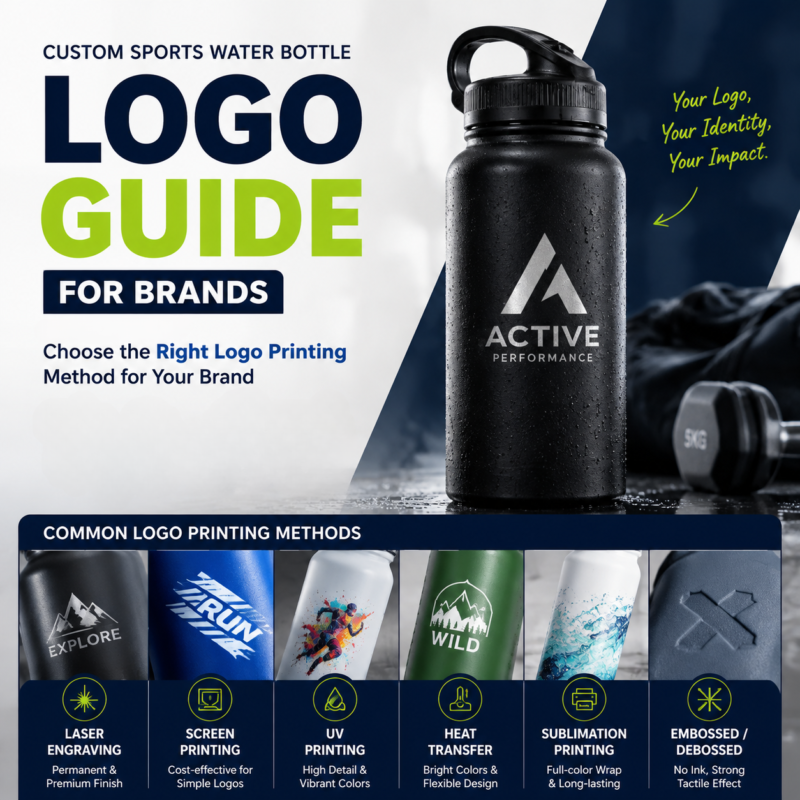
Guía de logotipos de botellas de agua deportivas personalizadas para marcas
Los logotipos personalizados de botellas de agua deportivas se crean mediante diferentes procesos de decoración según el material de la botella., diseño de marca, y requisitos de rendimiento. Esta guía cubre los métodos de impresión de logotipos más comunes., incluyendo grabado láser, serigrafía, impresión ultravioleta, transferencia de calor, y sublimación, Ayudar a las marcas deportivas a seleccionar la opción de personalización adecuada para productos de bebidas duraderos y profesionales..
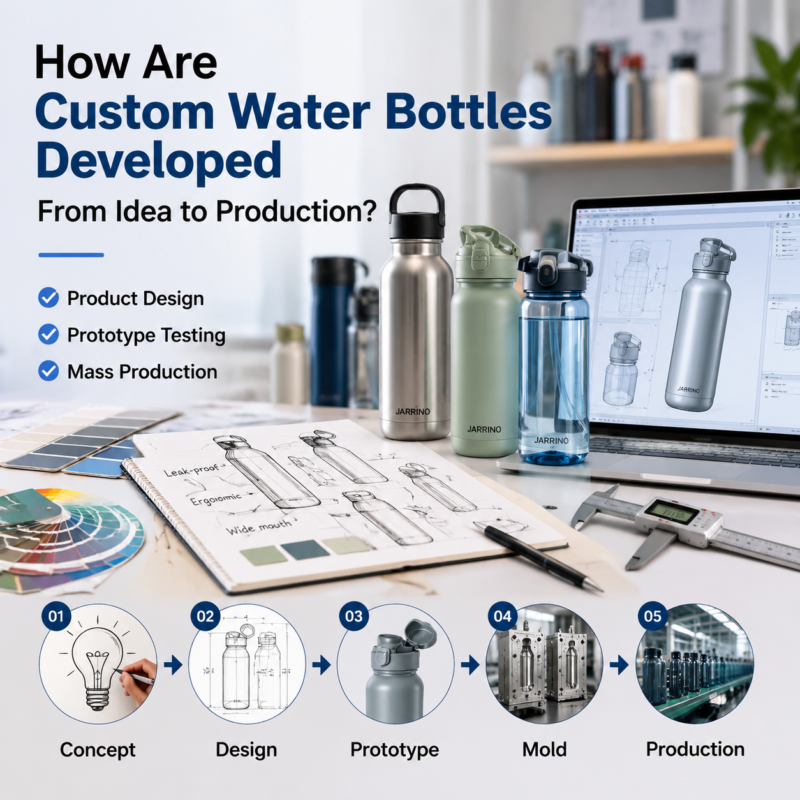
¿Cómo se desarrollan las botellas de agua personalizadas desde la idea hasta la producción??
Desarrollar una botella de agua personalizada requiere más que elegir un diseño y agregar un logotipo.. Desde el concepto inicial del producto hasta la ingeniería, creación de prototipos, desarrollo de moldes, pruebas, y producción en masa, Cada etapa juega un papel importante en la creación de un producto de bebida exitoso.. Esta guía explica cómo las marcas trabajan con los fabricantes de botellas de agua OEM para transformar ideas en alta calidad., Productos listos para el mercado mientras se gestiona el diseño., costo, y desafíos de producción.
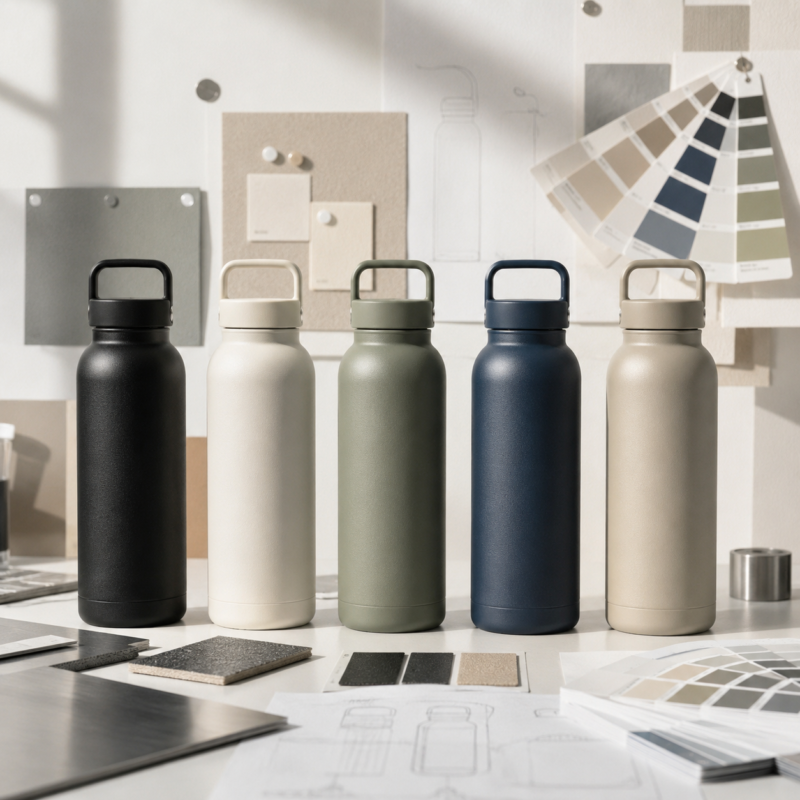
Cómo elegir colores y acabados para botellas de agua personalizadas
El éxito de una colección de botellas de agua personalizadas depende de algo más que colores atractivos. Elegir la paleta de colores adecuada, acabado superficial, y la estrategia de fabricación ayuda a fortalecer la identidad de la marca, mejorar el atractivo del cliente, y asegurar ventas a largo plazo. Esta guía explica cómo seleccionar colores según las preferencias del mercado., comparar acabados mate y brillante, optimizar los SKU, y lograr una calidad constante a través de la producción OEM profesional.
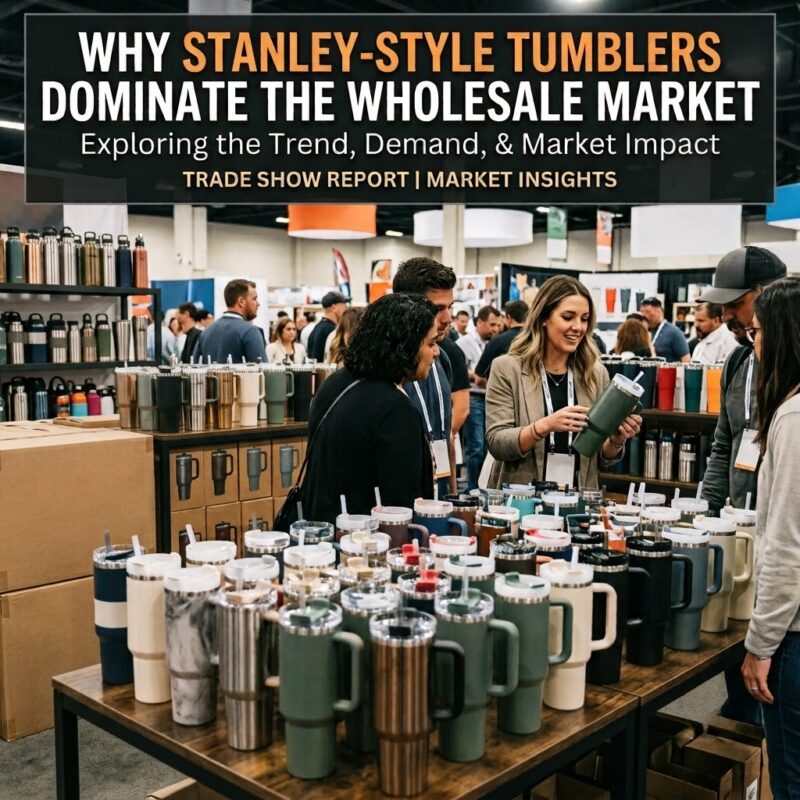
Por qué los vasos estilo Stanley dominan el mercado mayorista
Los vasos estilo Stanley se han convertido en un fenómeno cultural y un éxito de ventas al por mayor. Este artículo explora por qué – desde 18/8 Acero inoxidable y aislamiento al vacío de doble pared para un alto valor percibido., potencial de personalización, y demanda constante de pedidos repetidos. Descubra qué hace que estos vasos sean confiables, categoría rentable para compradores mayoristas.
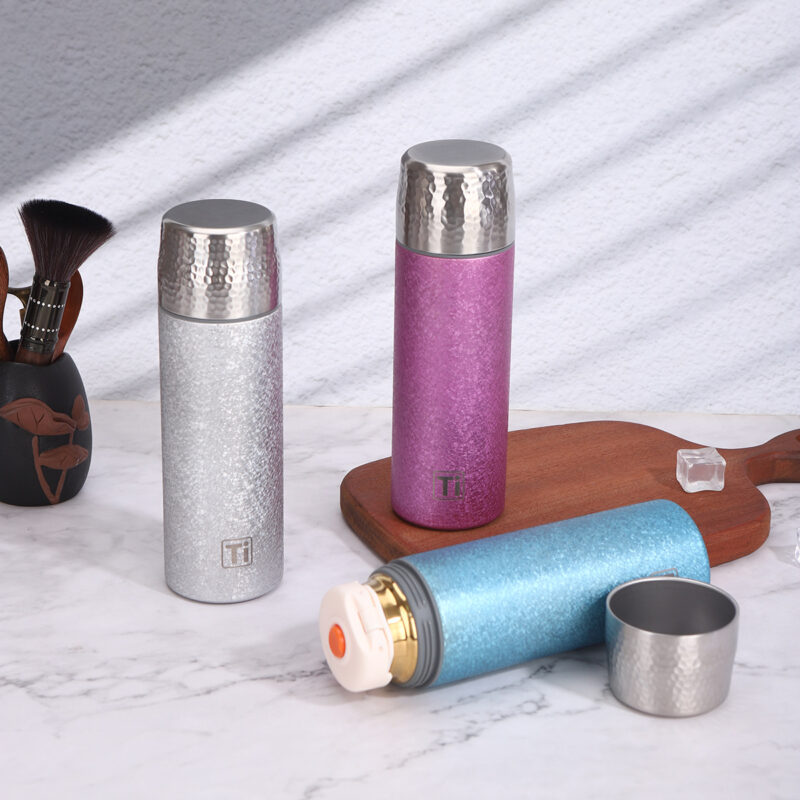
¿Son seguras las botellas de agua de titanio??
El titanio es seguro. También es caro. Así es como se compara con el acero inoxidable y el aluminio, y qué material realmente tiene sentido para su marca..
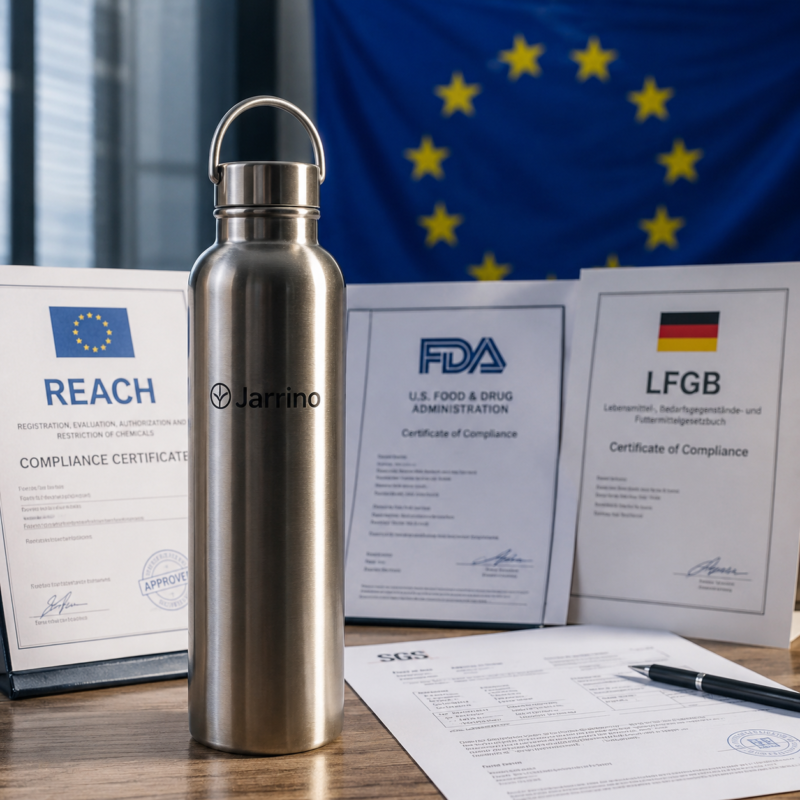
Reglamento de microplásticos de la UE 2026: Lo que todo fabricante de botellas de agua personalizadas debe saber
Descubra cómo funciona el Reglamento de Microplásticos de la UE (UE) 2026/1168 Afecta a los fabricantes de botellas de agua personalizadas y a las marcas privadas de bebidas y bebidas.. Descubra cómo Jarrino ayuda a los importadores a cumplir con REACH con botellas de agua duraderas de acero inoxidable.
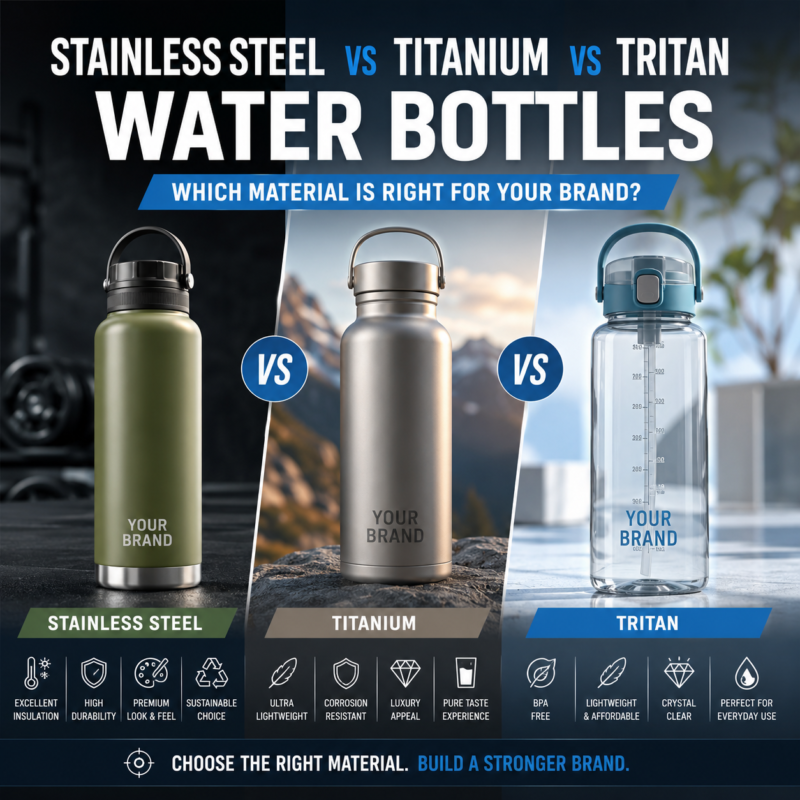
Stainless Steel vs Titanium vs Tritan Water Bottles: Which Material Is Right for Your Brand?
Choosing the right water bottle material can significantly impact your product quality, pricing, and brand positioning. This guide compares stainless steel, titanio, and Tritan water bottles across durability, aislamiento, costo, personalización, and sustainability to help brands, minoristas, and OEM buyers select the best material for their target market.
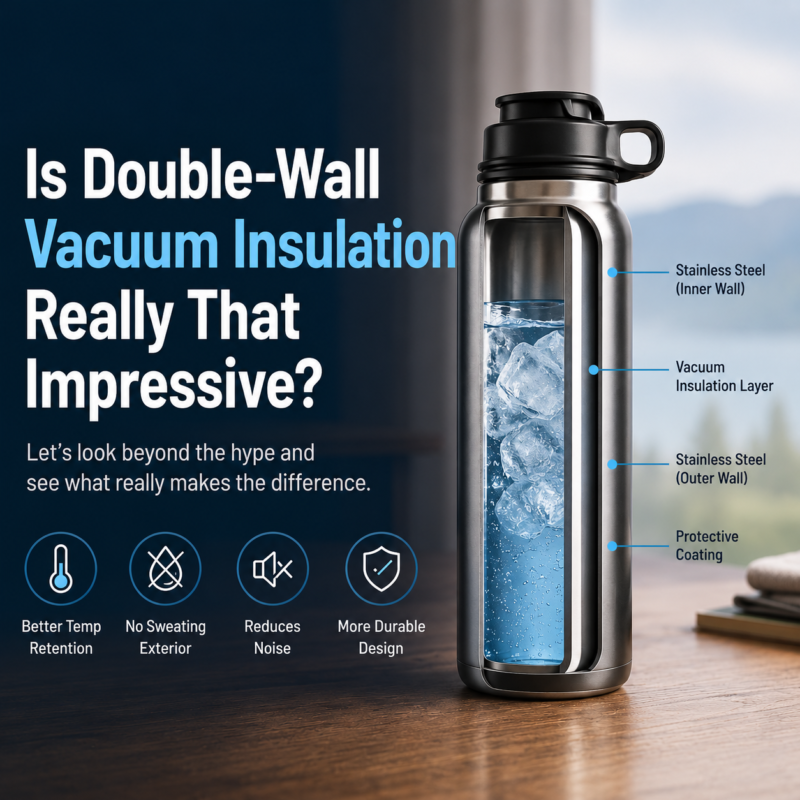
¿Es el aislamiento al vacío de doble pared realmente tan impresionante??
Double‑wall vacuum insulation is standard in premium drinkware, but the difference between a bottle that performs and one that disappoints comes down to manufacturing quality. This guide explains how vacuum insulation works, sets realistic performance expectations, and gives B2B buyers a practical checklist for evaluating suppliers. Plus, why Jarrino’s strict quality standards ensure your custom bottles deliver on their promises.
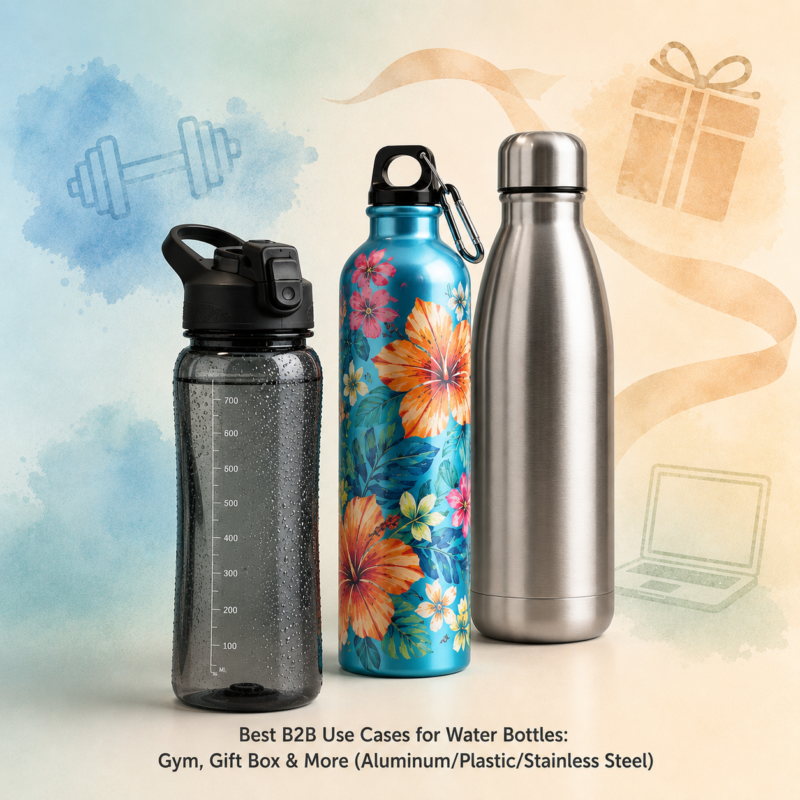
Los mejores casos de uso B2B para botellas de agua: Gimnasia, Caja de regalo & Más (Aluminio/Plástico/Acero)
No todas las botellas de agua se adaptan a todos los casos de uso B2B. Este artículo combina tres materiales: acero inoxidable., aluminio, plástico: a aplicaciones del mundo real: gimnasios, cajas de regalo corporativas, ferias comerciales, venta al por menor al aire libre, y programas escolares. El acero inoxidable gana en durabilidad y aislamiento. El aluminio ofrece ligereza, marca a todo color. El plástico es económico para eventos de gran volumen (siempre que esté libre de BPA). Una hoja de trucos rápida ayuda a los compradores B2B a equilibrar los costos, imagen de marca, y expectativas del usuario.