
¿Es el aislamiento al vacío de doble pared realmente tan impresionante??
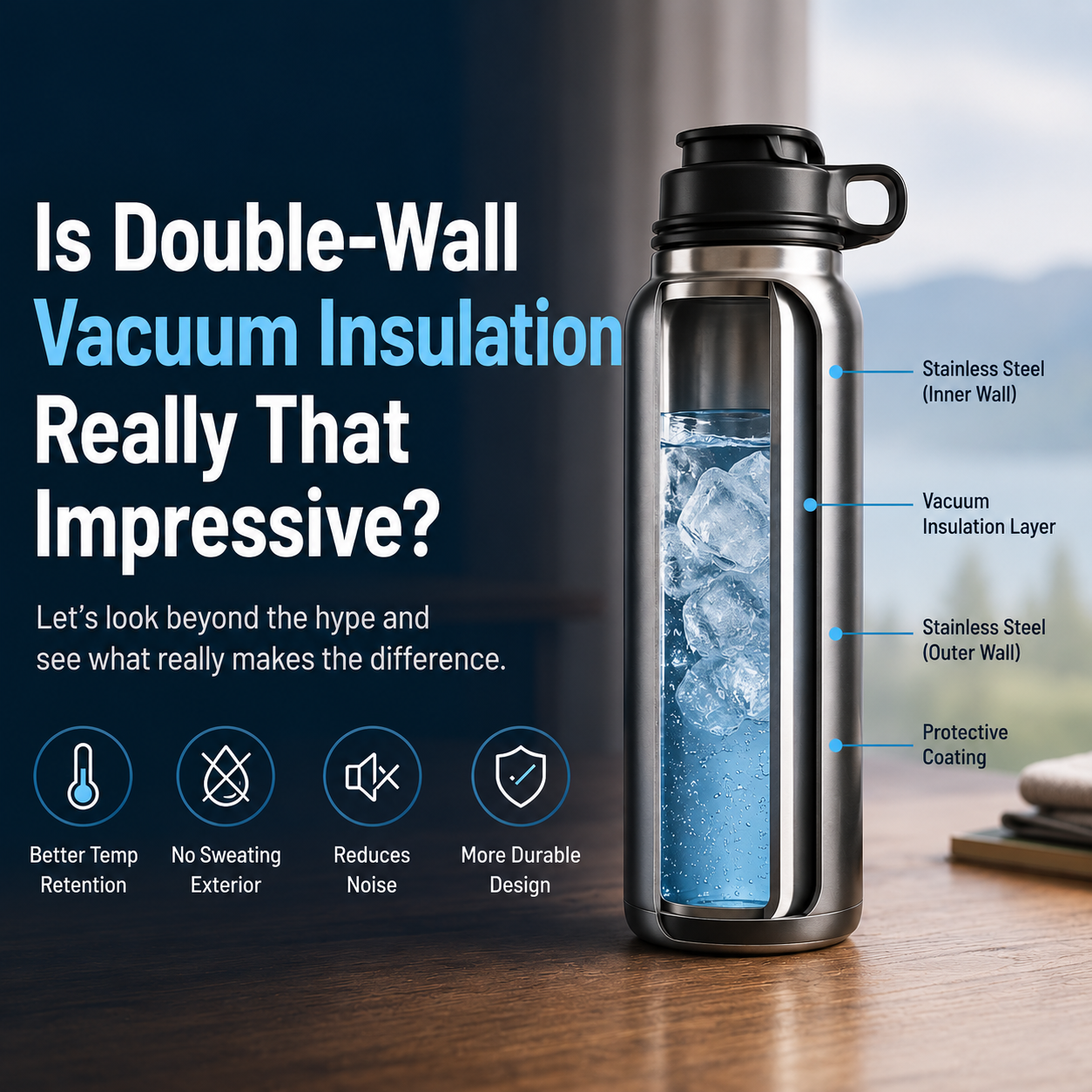
Tabla de contenido
If you’ve ever bought a stainless steel water bottle, you’ve seen the phrase “double‑wall vacuum insulation” on almost every product page. But have you ever stopped to question whether it actually works—or whether it’s just clever marketing?
La respuesta corta: Sí, it works. But the longer answer matters more for B2B buyers. Not all vacuum insulation is created equal, and understanding the difference between a genuinely well‑made bottle and one that just uses the right keywords can save you from disappointed customers and returns.
This guide cuts through the marketing noise. We’ll walk through how vacuum insulation actually works, what performance you should expect from a quality bottle, and—most importantly—how to tell if your supplier is delivering real technology or just good copywriting.
How Vacuum Insulation Actually Works (Without the Jargon)
Heat moves in three ways: conduction, convection, and radiation.
- Conduction is heat moving through a solid object. Think of a metal spoon heating up in a hot soup.
- Convection is heat moving through air or liquid. Warm air rises, cool air sinks – that’s convection.
- Thermal radiation is heat radiating from a hot object without needing direct contact. Think of feeling warmth from a campfire without touching the flames.
A standard single‑wall bottle is terrible at stopping any of these. Pour hot coffee into a regular metal cup, and within minutes the outside will be too hot to hold – and the inside will be lukewarm. Heat moves straight through the metal wall via conduction, and once the outside air starts moving, convection carries that heat away even faster.
Double‑wall vacuum insulation attacks all three heat transfer methods simultaneously, which is why it’s so effective.
The Vacuum Layer Eliminates Conduction and Convection
A true vacuum‑insulated bottle is built with two layers of stainless steel – an inner wall and an outer wall – with the space between them completely evacuated of air.
Why does that matter? Without air in that space, there’s no medium for heat to travel through. Conduction requires physical contact to transfer heat; convection requires air or liquid to circulate. Remove the air, and both pathways are effectively blocked.
For context, a quality vacuum bottle typically evacuates the space between the walls to a pressure of less than 0.1 Pa (Pascal) – over 100,000 times thinner than normal atmospheric pressure. That’s effectively nothing.
Reflective Coatings Minimize Radiant Heat Loss
Even with a perfect vacuum, a small amount of heat still escapes through radiation. Premium bottles solve this by coating the inner wall with a reflective layer – often copper or silver plating.
This reflective surface bounces radiant heat back toward the liquid instead of letting it escape through the bottle walls. Industry sources indicate that a well‑manufactured inner coating can reflect up to 95% of thermal radiation.
Without this coating, you’d still lose heat over time even through a vacuum. With it, your hot drink stays hot for much longer.
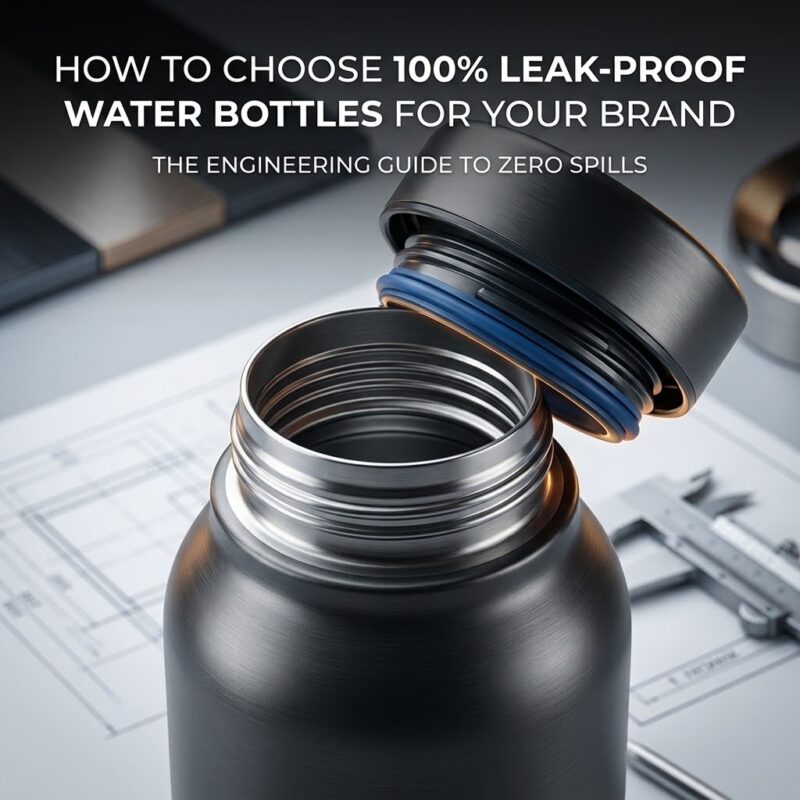
Tight Sealing Controls Convection at the Opening
Here’s something many buyers overlook: even if the walls are perfectly insulated, the bottle’s opening can still let heat escape. Every time you open the lid, warm air rises out, and cooler air enters. Over the course of a day, that adds up.
Quality bottles solve this with tight‑sealing lids and narrow openings designed to minimize air exchange. Some premium models take it further with twist‑pour stoppers or insulated caps that add an extra barrier against heat loss from the top.
What Performance Should You Actually Expect?
Not all bottles perform the same. But for a well‑made vacuum‑insulated bottle, here are realistic benchmarks:
- Hot retention: A good bottle should keep hot water (around 95°C / 203°F) above 65°C / 149°F after 6 horas. En 12 horas, it should still be noticeably warm – above 50°C / 122°F.
- Cold retention: The same bottle should keep ice water (around 4°C / 40°F) cold for 12 a 24 horas, with ice still present after a full workday.
- Condensation prevention: The outer wall should stay dry at room temperature. If a so‑called “insulated” bottle sweats on the outside, the vacuum layer is compromised or nonexistent.
These aren’t vague claims – they’re measurable performance thresholds that legitimate manufacturers test for. If a supplier can’t provide test data, that’s a red flag.
What Vacuum Quality Actually Tells You About the Factory
Here’s where many B2B buyers get stuck. Two bottles might both claim “double‑wall vacuum insulation,” but the actual performance can vary dramatically. The difference comes down to manufacturing quality – which you can’t see without digging deeper.
Welding Integrity
The two stainless steel walls are welded together at the mouth of the bottle to create a completely sealed airspace. If that weld isn’t perfect, air will slowly leak back into the vacuum layer over time. A bottle that starts with decent insulation can lose half its performance within months if the weld isn’t airtight.
What to ask a supplier: “Do you use helium leak testing on your vacuum seals?” If they don’t know what that is, keep looking. Helium leak testing is the industry standard for detecting microscopic leaks that can’t be seen with the naked eye.
Inner Surface Finish
The smoothness of the inner stainless steel surface affects how easily bacteria can hide and how well the bottle cleans. Rough surfaces can trap residues and make thorough cleaning difficult. Premium manufacturers use electropolishing – an electrochemical process that smooths and brightens the stainless steel surface.
Wall Thickness
Thicker stainless steel walls retain vacuum better and resist denting. Many premium bottles use a minimum wall thickness of 0.8mm or more. Thinner walls are cheaper to produce but more prone to damage – and once dented, the vacuum layer can be compromised.
What to ask a supplier: “What’s your inner and outer wall thickness, and do you have third‑party test reports showing vacuum retention over time?” A manufacturer that routinely sends samples to accredited labs (like SGS or Intertek) for independent testing is far more trustworthy than one that only provides in‑house data.
The One‑Piece vs. Bottom‑Welded Debate
Some premium bottles use a “one‑piece” or “seamless” construction where the inner and outer walls are formed from a single sheet of stainless steel, eliminating the bottom weld that could become a failure point. Other bottles weld a separate bottom piece onto the walls after forming – which is cheaper but introduces additional potential leak points.
Neither approach is inherently bad, but seamless construction generally indicates a higher‑end manufacturing process.
Common Myths B2B Buyers Should Stop Believing
Myth 1: “All vacuum bottles are basically the same.”
This is flat‑out wrong. The vacuum layer is the key, but how well a factory maintains that vacuum over time – through weld quality, material thickness, and leak testing – separates good suppliers from bad ones. China produces over 80% of the world’s double‑wall insulated bottles, but quality varies enormously across manufacturers. Some are world‑class; others are cutting corners.
Myth 2: “Higher price always means better insulation.”
Not necessarily. Some luxury brands charge premium prices for the same manufacturing sourced from the same Chinese factories as lower‑priced competitors. What you’re often paying for is brand marketing and packaging, not engineering.
The best approach is to evaluate suppliers based on verified performance data, not shelf price.
Myth 3: “The bottle will stay hot for ’12 hours‘ no matter what.”
Test conditions matter. Most performance claims (12 horas de calor, 24 horas de frio) are measured under ideal lab conditions – 20°C room temperature, bottle full and preheated, lid sealed tight. In real‑world use – sitting in a cold car, opened frequently, or partially filled – actual performance will be lower.
That doesn’t mean the claims are false. It means you should expect realistic performance and test samples under your actual use conditions before committing to a bulk order.
Myth 4: “Vacuum insulation is only for hot drinks.”
Actually, vacuum bottles are equally good at keeping cold drinks cold and preventing condensation on the outside. That’s a major selling point for gym users, office workers, and anyone who doesn’t want a sweaty water ring on their desk or in their bag.
How This Technology Benefits Your Brand’s Bottom Line
For B2B buyers sourcing bottles for corporate gifts, minorista, or promotional campaigns, quality vacuum insulation delivers real business value beyond the obvious product feature.
Better Customer Experience = Repeat Business
A bottle that actually keeps coffee hot for six hours creates a positive emotional connection with the user. A bottle that fails within two hours creates frustration – and probably a return.
Quality insulation directly reduces complaint rates and return rates. For brands building long‑term customer relationships, that’s critical.
Higher Perceived Value Justifies Premium Pricing
Customers can immediately feel the difference between a cheap single‑wall bottle and a quality vacuum‑insulated one – they’re heavier, feel more substantial, and perform obviously better. That tangible quality gap justifies higher retail prices and stronger margins.
Brand Visibility Lasts Longer
A well‑made bottle stays in use for years, not months. Every time someone carries it to the office, el gimnasio, or on a trip, your logo gets seen. Poor insulation sends bottles to the back of the cupboard quickly.
Practical Takeaways for B2B Buyers
When evaluating suppliers for double‑wall vacuum‑insulated bottles, here’s a straightforward checklist:
- Request vacuum retention test data – Ask for third‑party test reports from labs like SGS or Intertek, showing temperature retention over 6 y 12 hours under standardized conditions. If a supplier can’t provide this, be cautious.
- Ask about leak testing – Helium leak detection is the gold standard for vacuum seal testing. Cheap suppliers often skip it. Ask specifically what method they use.
- Check wall thickness specifications – A reputable supplier will share this without hesitation. Aim for minimum 0.8mm wall thickness for durability.
- Inspect sample bottle welds and seams – When you receive a sample, examine the bottom weld visually. Uneven or rough welds often indicate lower manufacturing quality.
- Test samples yourself – Don’t rely entirely on supplier data. Fill sample bottles with hot water (measured with a thermometer) and track temperature over 6 a 12 hours in your own environment.
- Request certification documentation – For export to North America and Europe, confirm that all food‑contact components meet FDA, LFGB, or REACH requirements, depending on your target market.
- Verify compliance for regulated markets – Be aware of changing regulations; for example, the EU has tightened bisphenol A limits to 1 ppb and introduced stricter controls on PFAS in coatings. A well‑prepared manufacturer will be proactive about these updates.
The Right Supplier Makes the Difference
Double‑wall vacuum insulation is real technology with genuine performance benefits. But like any manufacturing process, the results depend entirely on who’s doing the work and how much care they put into quality control.
En Jarrino, we manufacture stainless steel bottles with double‑wall vacuum insulation to strict quality standards. We run regular third‑party testing to verify our insulation performance, and we can provide temperature retention data, certification documentation, and pre‑production samples before you commit to a bulk order.
Quality insulation isn’t just a feature – it’s the foundation of customer satisfaction. If you’re sourcing custom stainless steel bottles and want to ensure your products actually deliver on their promises, let’s talk.
👉 Contact Jarrino today – request a sample, discuss your specifications, or ask for our latest test reports.
Publicaciones relacionadas
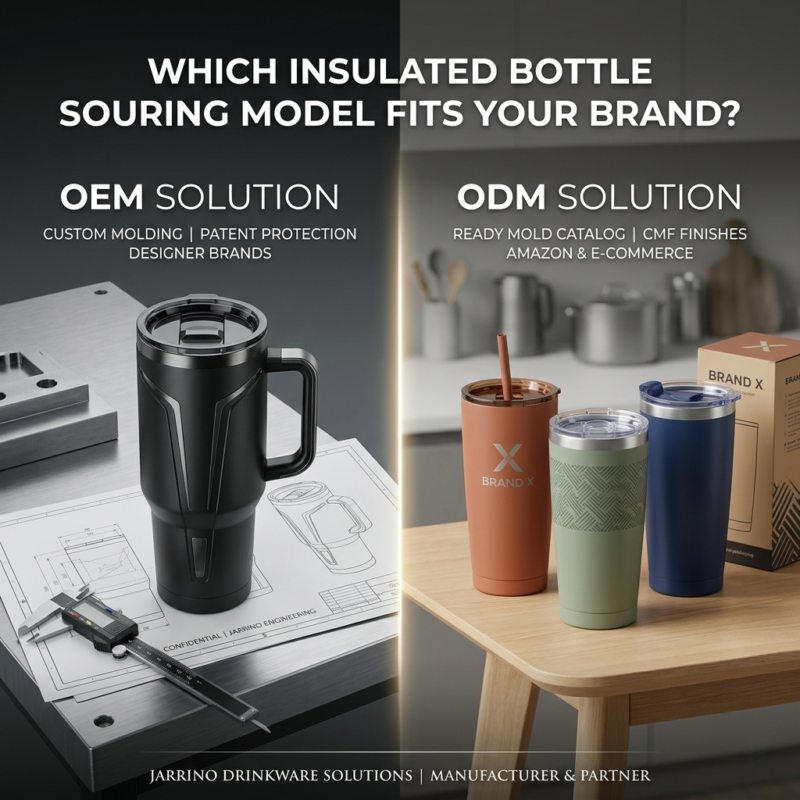
OEM frente a. Vasos aislados ODM: ¿Qué modelo de abastecimiento se adapta a su marca de vasos?
Elegir entre OEM (Fabricación de equipos originales) y ODM (Fabricación de diseño original) define la R de su marca de bebidas&presupuesto D, tiempo de comercialización, y exclusividad del producto. OEM es ideal para marcas establecidas con diseños CAD personalizados y requisitos de IP únicos, ofrenda 100% moldeado personalizado y protección de patentes. ODM está diseñado para vendedores de Amazon, Inicios de DTC, y compradores corporativos que buscan cero costos de herramientas, MOQ bajos, y lanzamientos rápidos de productos a través de acabados CMF avanzados (recubrimiento en polvo, impresión ultravioleta).
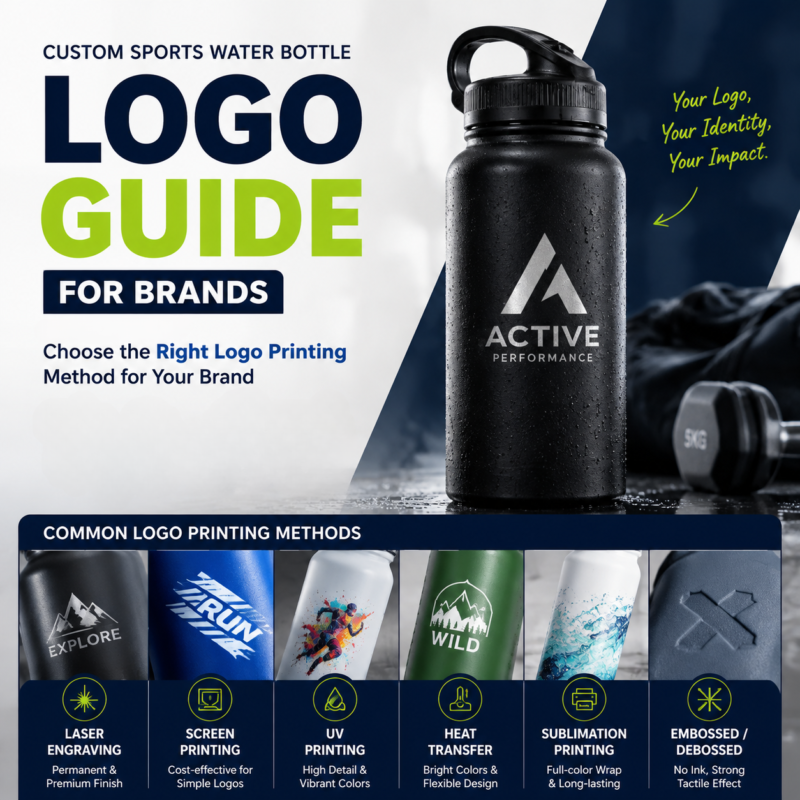
Guía de logotipos de botellas de agua deportivas personalizadas para marcas
Los logotipos personalizados de botellas de agua deportivas se crean mediante diferentes procesos de decoración según el material de la botella., diseño de marca, y requisitos de rendimiento. Esta guía cubre los métodos de impresión de logotipos más comunes., incluyendo grabado láser, serigrafía, impresión ultravioleta, transferencia de calor, y sublimación, Ayudar a las marcas deportivas a seleccionar la opción de personalización adecuada para productos de bebidas duraderos y profesionales..
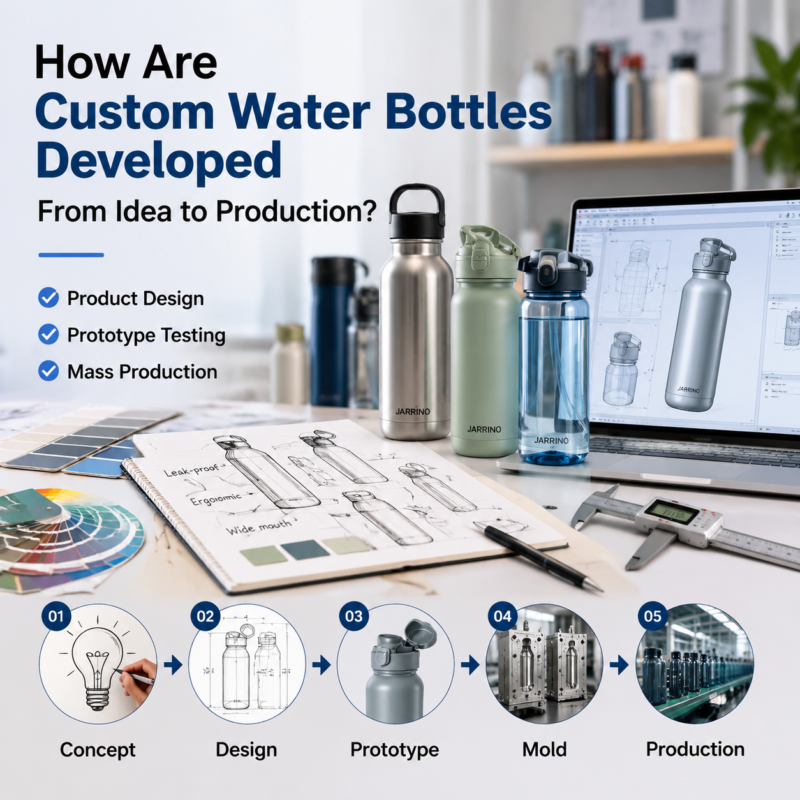
¿Cómo se desarrollan las botellas de agua personalizadas desde la idea hasta la producción??
Desarrollar una botella de agua personalizada requiere más que elegir un diseño y agregar un logotipo.. Desde el concepto inicial del producto hasta la ingeniería, creación de prototipos, desarrollo de moldes, pruebas, y producción en masa, Cada etapa juega un papel importante en la creación de un producto de bebida exitoso.. Esta guía explica cómo las marcas trabajan con los fabricantes de botellas de agua OEM para transformar ideas en alta calidad., Productos listos para el mercado mientras se gestiona el diseño., costo, y desafíos de producción.
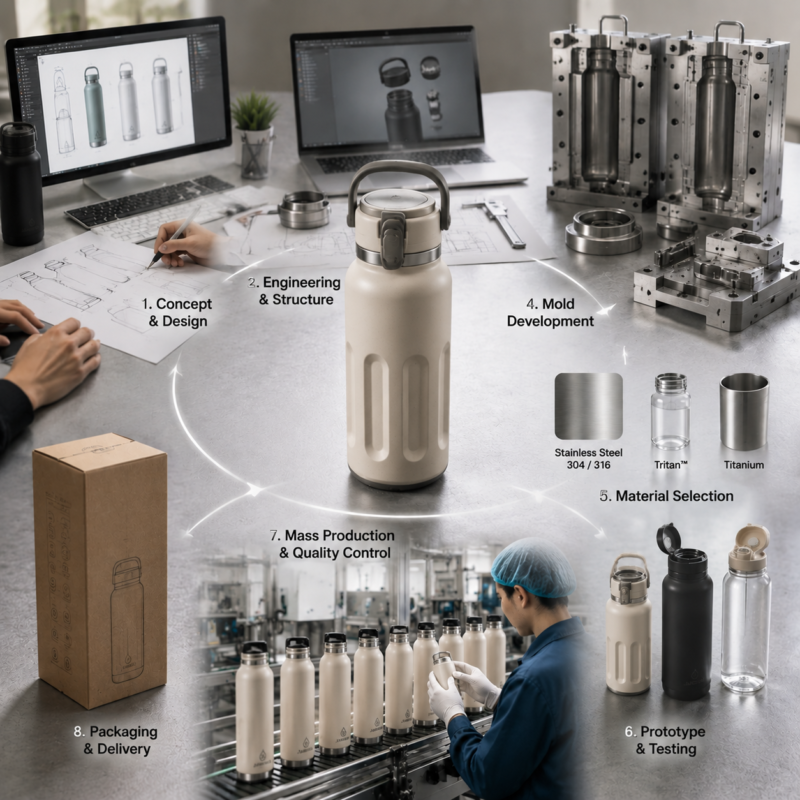
¿Cómo se fabrican las botellas de agua totalmente personalizadas??
Desarrollar una botella de agua totalmente personalizada implica mucho más que añadir un logotipo a un producto existente.. Esta guía explica cómo las marcas crean botellas de agua únicas a través del diseño de productos., ingeniería, selección de material, desarrollo de moldes, prueba de prototipo, y producción en masa. Descubra cómo un experimentado fabricante de botellas de agua OEM ayuda a transformar una idea en un producto listo para el mercado mientras gestiona la calidad., costo, y eficiencia de producción.
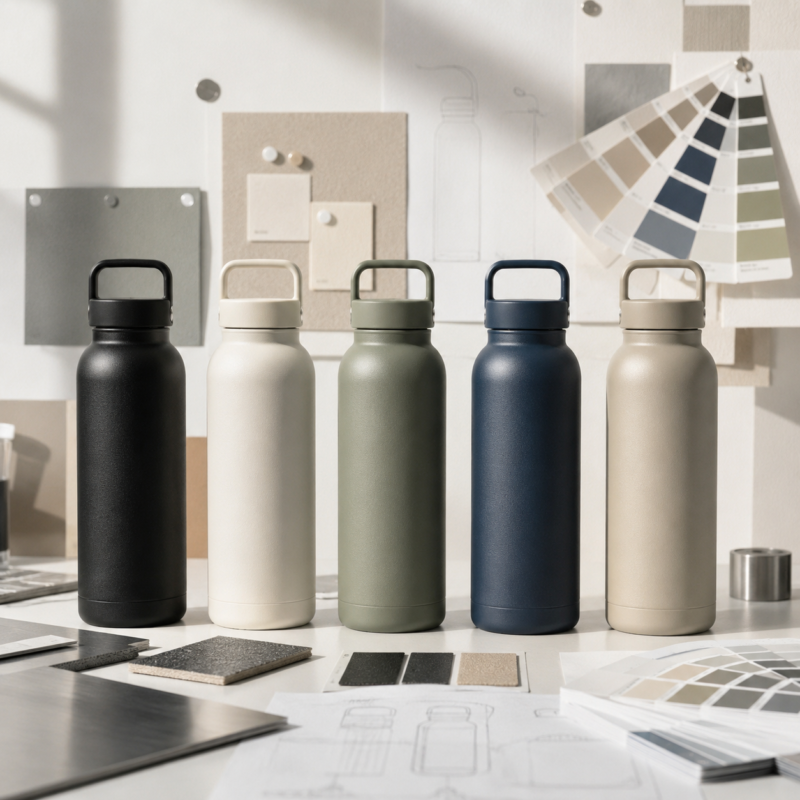
Cómo elegir colores y acabados para botellas de agua personalizadas
El éxito de una colección de botellas de agua personalizadas depende de algo más que colores atractivos. Elegir la paleta de colores adecuada, acabado superficial, y la estrategia de fabricación ayuda a fortalecer la identidad de la marca, mejorar el atractivo del cliente, y asegurar ventas a largo plazo. Esta guía explica cómo seleccionar colores según las preferencias del mercado., comparar acabados mate y brillante, optimizar los SKU, y lograr una calidad constante a través de la producción OEM profesional.
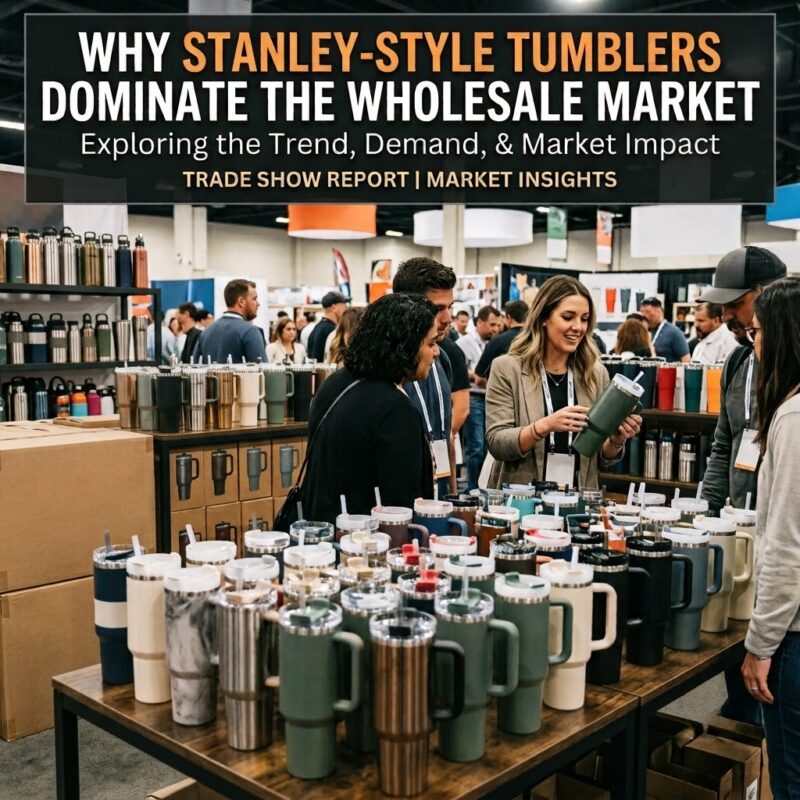
Por qué los vasos estilo Stanley dominan el mercado mayorista
Los vasos estilo Stanley se han convertido en un fenómeno cultural y un éxito de ventas al por mayor. Este artículo explora por qué – desde 18/8 Acero inoxidable y aislamiento al vacío de doble pared para un alto valor percibido., potencial de personalización, y demanda constante de pedidos repetidos. Descubra qué hace que estos vasos sean confiables, categoría rentable para compradores mayoristas.
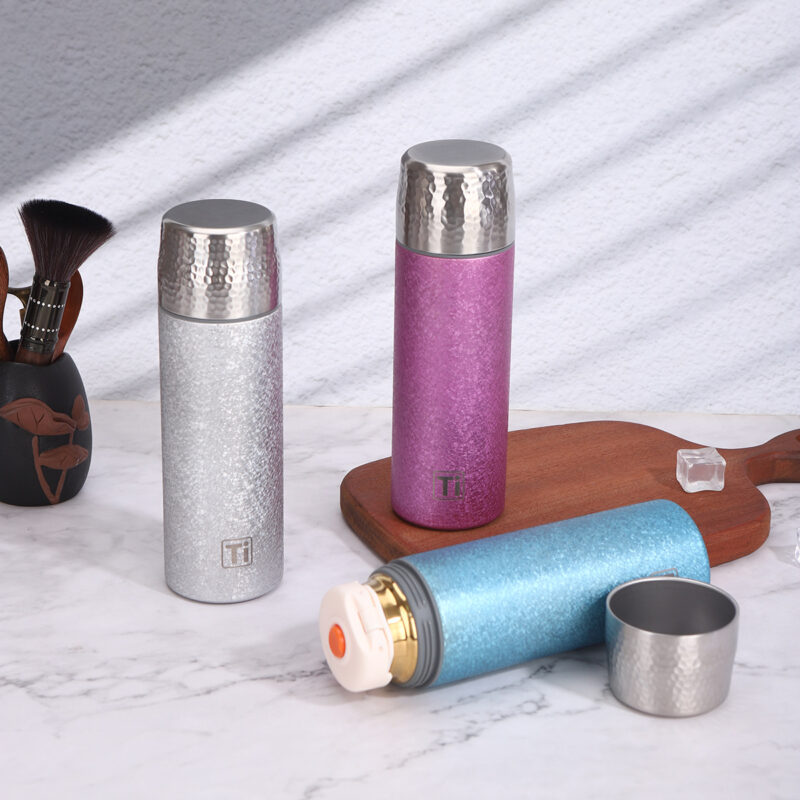
¿Son seguras las botellas de agua de titanio??
El titanio es seguro. También es caro. Así es como se compara con el acero inoxidable y el aluminio, y qué material realmente tiene sentido para su marca..
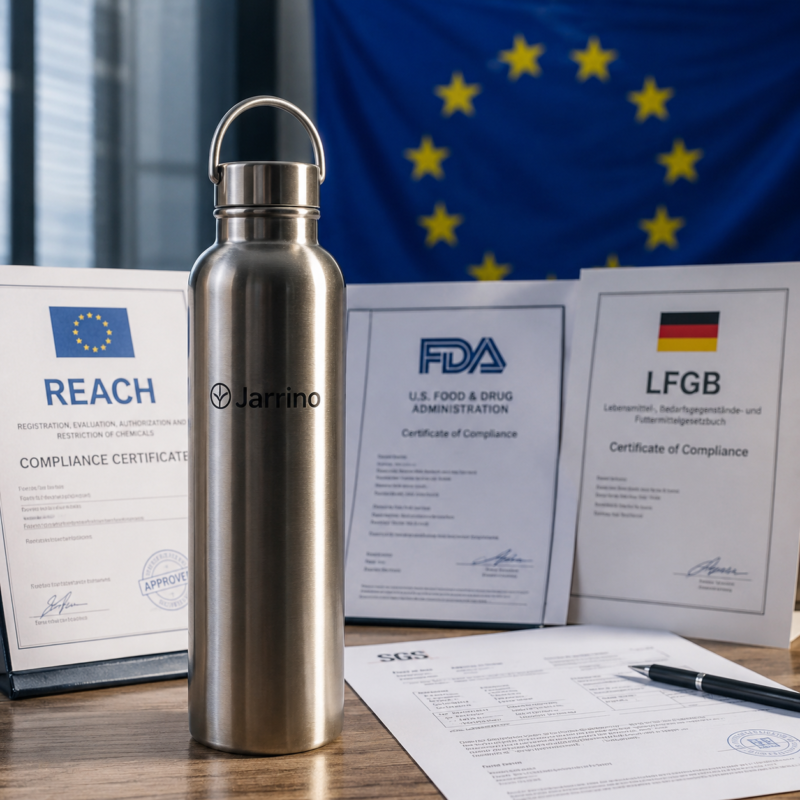
Reglamento de microplásticos de la UE 2026: Lo que todo fabricante de botellas de agua personalizadas debe saber
Descubra cómo funciona el Reglamento de Microplásticos de la UE (UE) 2026/1168 Afecta a los fabricantes de botellas de agua personalizadas y a las marcas privadas de bebidas y bebidas.. Descubra cómo Jarrino ayuda a los importadores a cumplir con REACH con botellas de agua duraderas de acero inoxidable.
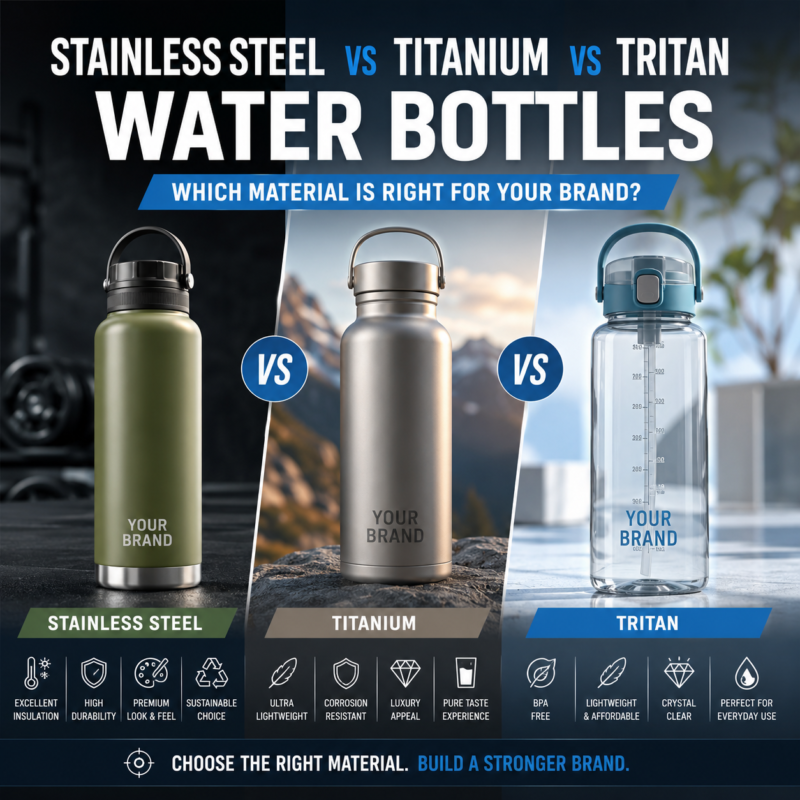
Stainless Steel vs Titanium vs Tritan Water Bottles: Which Material Is Right for Your Brand?
Choosing the right water bottle material can significantly impact your product quality, pricing, and brand positioning. This guide compares stainless steel, titanio, and Tritan water bottles across durability, aislamiento, costo, personalización, and sustainability to help brands, minoristas, and OEM buyers select the best material for their target market.
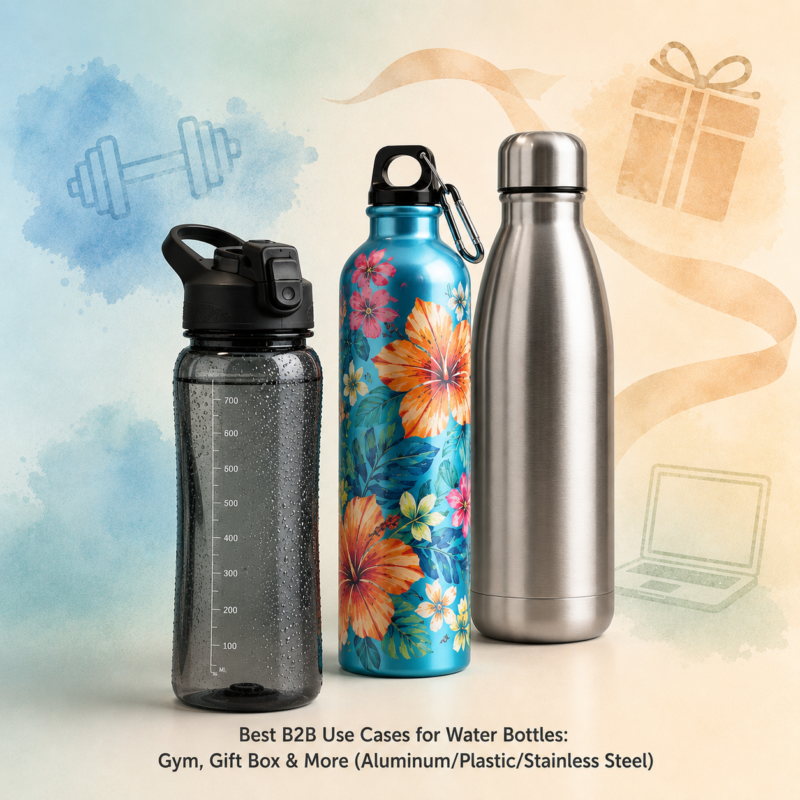
Los mejores casos de uso B2B para botellas de agua: Gimnasia, Caja de regalo & Más (Aluminio/Plástico/Acero)
No todas las botellas de agua se adaptan a todos los casos de uso B2B. Este artículo combina tres materiales: acero inoxidable., aluminio, plástico: a aplicaciones del mundo real: gimnasios, cajas de regalo corporativas, ferias comerciales, venta al por menor al aire libre, y programas escolares. El acero inoxidable gana en durabilidad y aislamiento. El aluminio ofrece ligereza, marca a todo color. El plástico es económico para eventos de gran volumen (siempre que esté libre de BPA). Una hoja de trucos rápida ayuda a los compradores B2B a equilibrar los costos, imagen de marca, y expectativas del usuario.

¿Qué método de decoración de botellas de agua personalizado dura realmente??
Grabado láser, sublimación, ultravioleta, o serigrafía: qué decoración de botella personalizada realmente sobrevive al uso diario? los probamos. Lee los resultados.
Deja de jugar al juego MOQ: Una forma más inteligente de escalar su marca
MOQ no es una barrera, es una señal. Descubra cómo las mejores marcas convierten los pedidos mínimos en una ventaja competitiva. Lea la guía completa.