

Stainless Steel vs Titanium vs Tritan Water Bottles: Which Material Is Right for Your Brand?
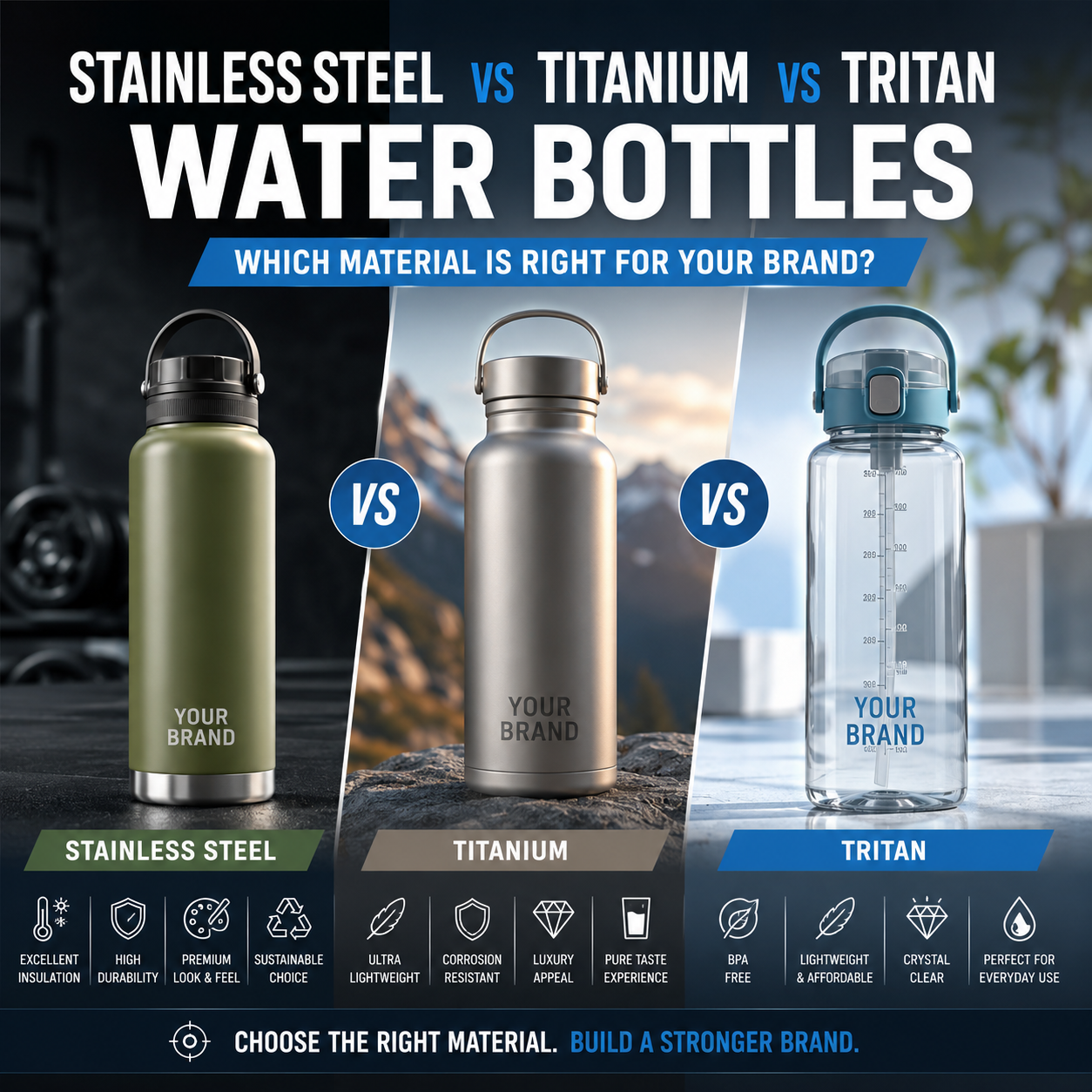
When launching a custom drinkware collection, one of the first decisions isn’t color or logo placement—it’s Seleção de material.
Should you choose aço inoxidável, titânio, ou Tritan™ plastic?
Each material targets different customer segments, price points, and use cases. The wrong choice can increase manufacturing costs, reduce customer satisfaction, or weaken your brand positioning. The right one can improve margins, strengthen your value proposition, and increase repeat purchases.
If you’re sourcing from a water bottle manufacturer for OEM or private-label production, understanding the strengths and limitations of each material is essential.
This guide compares stainless steel, titânio, and Tritan across performance, durabilidade, branding potential, sustentabilidade, and manufacturing considerations to help you choose the best material for your business.
Quick Comparison
| Recurso | Aço inoxidável | Titânio | Plástico |
|---|---|---|---|
| Durabilidade | ★★★★★ | ★★★★★ | ★★★☆☆ |
| Peso | Medium | Very Light | Light |
| Isolamento | Excellent | Bom | None |
| Taste Neutrality | Excellent | Outstanding | Bom |
| Premium Perception | High | Luxury | Medium |
| Cost | $$ | $$$$ | $ |
| BPA livre | Sim | Sim | Sim |
| Lavagem de louça Segura | Usually | Sim | Sim |
| OEM Customization | Excellent | Bom | Excellent |
| Typical Customers | Outdoor, Corporate, Retail | Premium Outdoor, Luxury | Esportes, Schools, Promotional |
Why Material Choice Matters More Than Ever
Consumers today don’t simply buy a water bottle.
They buy:
-
Sustentabilidade
-
Health and safety
-
Brand identity
-
Lifestyle
-
Performance
Material selection influences:
-
Manufacturing cost
-
Retail pricing
-
Shipping expenses
-
Product lifespan
-
Customer reviews
-
Environmental impact
-
Brand positioning
For B2B buyers, material directly affects profitability.
Stainless Steel Water Bottles


Stainless steel remains the global standard for premium reusable drinkware.
Most high-quality bottles use de qualidade alimentar 18/8 (304) aço inoxidável, while vacuum insulation creates excellent temperature retention.
Advantages
Outstanding Temperature Performance
Double-wall vacuum insulation can keep drinks:
-
Cold for up to 24 horas
-
Hot for up to 12 horas
This makes stainless steel ideal for:
-
Coffee brands
-
Outdoor brands
-
Travel products
-
Corporate gifts
Extremely Durable
304 stainless steel resists:
-
Rust
-
Corrosion
-
Dents
-
Daily wear
Many bottles remain functional after years of use.
Excellent Branding Surface
Manufacturers can apply:
-
Powder coating
-
Impressão UV
-
Gravação a laser
-
Impressão de seda
-
Full-wrap graphics
-
Custom Pantone colors
This flexibility makes stainless steel the preferred choice for private-label brands.
Sustentável
Because stainless steel is highly recyclable and designed for long-term use, it aligns well with brands emphasizing environmental responsibility.
Limitations
-
Heavier than titanium or Tritan
-
Higher shipping costs
-
Slightly more expensive than plastic
Titanium Water Bottles


Titanium occupies the luxury end of the drinkware market.
Originally popular among mountaineers and backpackers, titanium bottles are now increasingly used by premium lifestyle brands.
Advantages
Incredibly Lightweight
Titanium offers steel-like strength while weighing significantly less.
Perfeito para:
-
Hiking
-
Camping
-
Viagem
-
Minimalist EDC products
Exceptional Corrosion Resistance
Titanium naturally forms an oxide layer that protects against:
-
Saltwater
-
Acids
-
Moisture
It will not rust.
Pure Drinking Experience
Titanium is highly inert.
It doesn’t affect:
-
Coffee
-
Tea
-
Mineral water
-
Electrolytes
Many enthusiasts describe titanium as delivering the cleanest taste.
Luxury Positioning
Titanium immediately communicates:
-
Premium quality
-
Engineering excellence
-
Outdoor performance
Brands often sell titanium bottles at two to four times the price of comparable stainless steel products.
Limitations
-
High material cost
-
More difficult machining
-
Smaller OEM production ecosystem
-
Longer lead times
-
Fewer color-finishing options
Tritan Water Bottles


Tritan is a BPA-free copolyester developed specifically for reusable drinkware.
Unlike ordinary plastic bottles, Tritan combines clarity with durability.
Advantages
Leve
Ideal for:
-
Schools
-
Gyms
-
Esportes
-
Daily commuting
Lower product weight also reduces freight costs.
Acessível
Tritan bottles typically have the lowest production cost.
This makes them suitable for:
-
Promotional campaigns
-
Giveaways
-
Retail chains
-
Event merchandise
Crystal Clear Appearance
Unlike many plastics, Tritan remains transparent over long-term use.
Customers appreciate its glass-like appearance without the fragility.
Easy Customization
Manufacturers can produce:
-
Transparent colors
-
Frosted finishes
-
Flip lids
-
Straw lids
-
Fruit infusers
-
Measurement markings
Limitations
-
No vacuum insulation
-
Lower premium perception
-
Can scratch over time
-
Not intended for keeping beverages hot
Performance Comparison
| Criteria | Aço inoxidável | Titânio | Plástico |
|---|---|---|---|
| Keeps Drinks Hot | Excellent | Bom | Não |
| Keeps Drinks Cold | Excellent | Bom | Não |
| Peso | Medium | Excellent | Excellent |
| Durabilidade | Excellent | Excellent | Bom |
| Corrosion Resistance | Excellent | Outstanding | N/A |
| Luxury Appeal | High | Outstanding | Moderate |
| Production Cost | Moderate | High | Low |
| Shipping Cost | Medium | Low | Very Low |
| Color Options | Excellent | Limited | Excellent |
Which Material Fits Different Brand Types?
| Brand Type | Recommended Material |
|---|---|
| Outdoor Equipment | Titanium or Stainless Steel |
| Corporate Gifts | Aço inoxidável |
| Coffee Brands | Aço inoxidável |
| Luxury Lifestyle | Titânio |
| Fitness Brands | Tritan or Stainless Steel |
| School Products | Plástico |
| Promotional Products | Plástico |
| Premium E-commerce | Aço inoxidável |
| Travel Accessories | Aço inoxidável |
| High-End Adventure | Titânio |
OEM Manufacturing Considerations
Choosing the right manufacturing partner matters just as much as choosing the right material.
When evaluating suppliers, ask about:
-
Food-grade material certifications
-
Factory audit reports
-
Vacuum insulation testing
-
Leak-proof testing
-
Production capacity
-
MOQ flexibility
-
Logo printing options
-
Packaging customization
-
Lead times
-
Quality control procedures
Experienced OEM manufacturers can also recommend the most cost-effective material based on your target market, retail price, and order volume.
Cost vs Retail Positioning
| Material | Typical Manufacturing Cost | Typical Retail Position |
|---|---|---|
| Plástico | Low | Entry-Level |
| Aço inoxidável | Medium | Mid-to-Premium |
| Titânio | High | Luxury |
Higher material cost doesn’t always reduce profit.
Premium materials often support significantly higher retail pricing and stronger brand differentiation.
Which Material Should Your Brand Choose?
Escolher aço inoxidável if you want:
-
The broadest market appeal
-
Excellent insulation
-
Premium branding
-
Long product lifespan
-
Strong OEM customization options
Escolher titânio if you want:
-
Luxury positioning
-
Ultra-lightweight products
-
High-end outdoor customers
-
Maximum durability
-
Premium pricing
Escolher Plástico if you want:
-
Affordable manufacturing
-
Lightweight products
-
Promotional campaigns
-
School and fitness markets
-
Large-volume production
Frequently Asked Questions
Is titanium better than stainless steel?
Titanium is lighter and more corrosion-resistant, while stainless steel offers better value, stronger insulation performance, and a wider range of manufacturing options. For most brands, stainless steel provides the best balance of performance and cost.
Is Tritan safer than stainless steel?
Both are considered safe for food and beverage use when manufactured to appropriate standards. Tritan is BPA-free, while food-grade stainless steel is non-reactive and widely used for insulated drinkware.
Which material lasts the longest?
Titanium and stainless steel generally have the longest service life due to their resistance to impact and corrosion. Tritan is durable for everyday use but can become scratched with heavy wear.
Which material is easiest to customize?
Stainless steel offers the greatest flexibility, supporting powder coating, Gravura a laser, silk-screen printing, Impressão UV, and a wide range of finishes. Tritan also allows colorful molded designs, while titanium typically has more limited finishing options.
Final Thoughts
There is no single “best” water bottle material—only the best choice for your brand’s positioning and customers.
-
Aço inoxidável remains the most versatile option, balancing durability, isolamento, personalização, and value.
-
Titânio is ideal for premium brands seeking differentiation through lightweight performance and luxury appeal.
-
Plástico is a practical solution for high-volume, budget-conscious, and sports-oriented product lines.
For most OEM and private-label projects, stainless steel continues to deliver the strongest combination of manufacturing flexibility, consumer appeal, and long-term brand value. Selecting the right material early in product development will help optimize costs, strengthen your positioning, and create a drinkware collection that resonates with your target market.
Related Posts
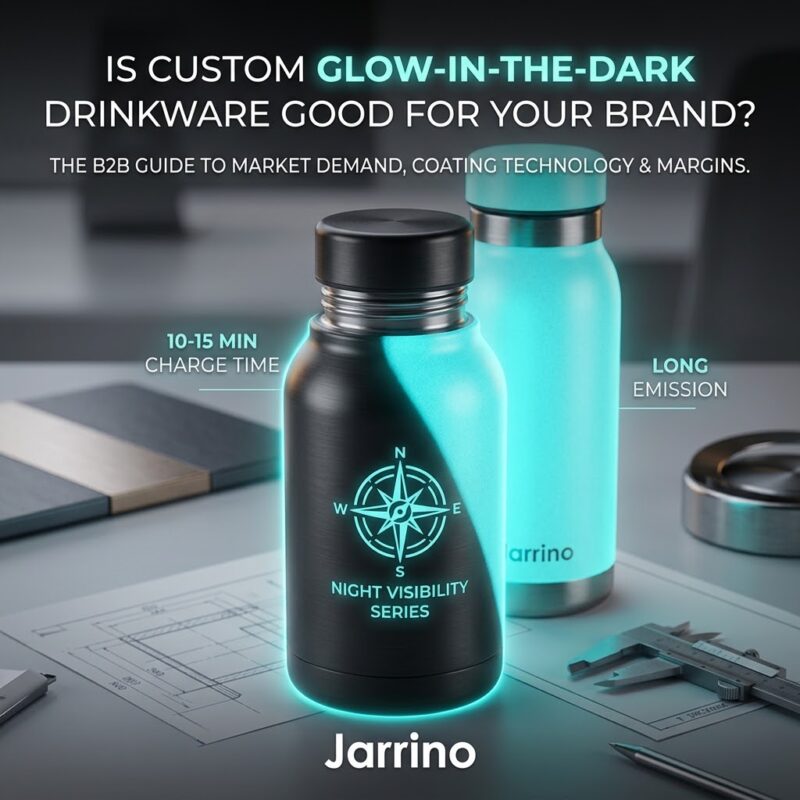
Is Custom Glow-in-the-Dark Drinkware Good for Your Brand?
Custom glow-in-the-dark drinkware offers private-label brands a high-margin opportunity in a competitive market. Jarrino provides industrial-grade, food-safe photoluminescent coatings, ensuring durability and compliance while targeting outdoor and youth sectors, driving viral social media appeal and product differentiation.
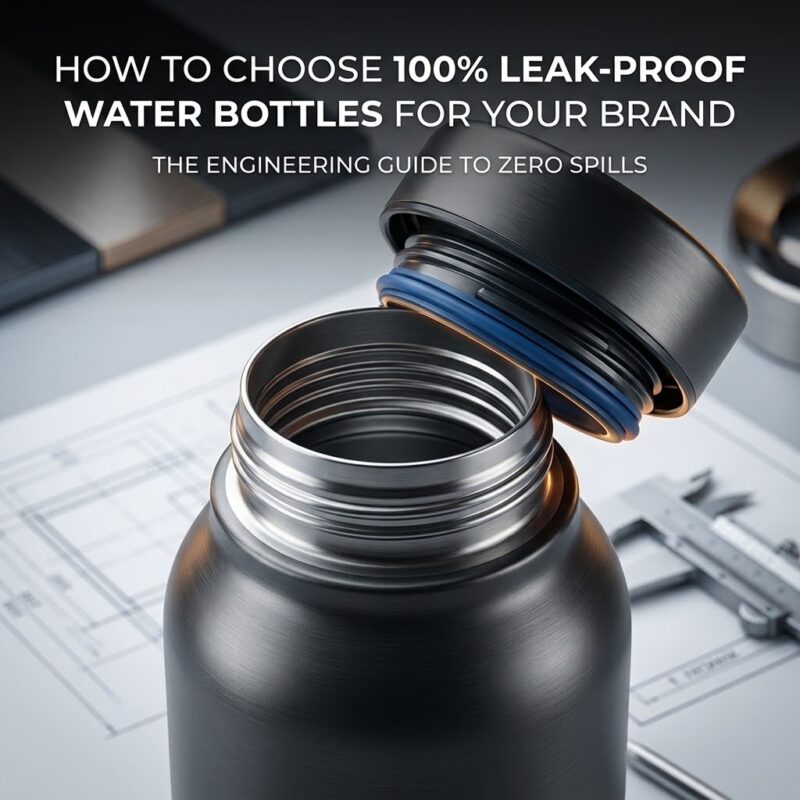
How to Choose 100% Leak-Proof Stainless Steel Water Bottles for Your Brand?
This guide helps drinkware brands select 100% leak-proof stainless steel bottles by analyzing QC testing and lid engineering. Manufacturers like Jarrino use inverted, shaking, and air pressure tests to verify seals. Traditional screw-caps offer absolute leak protection, while locking flip-lids and straw caps require precise silicone gaskets, CNC thread precision, and one-way air valves to prevent spills.
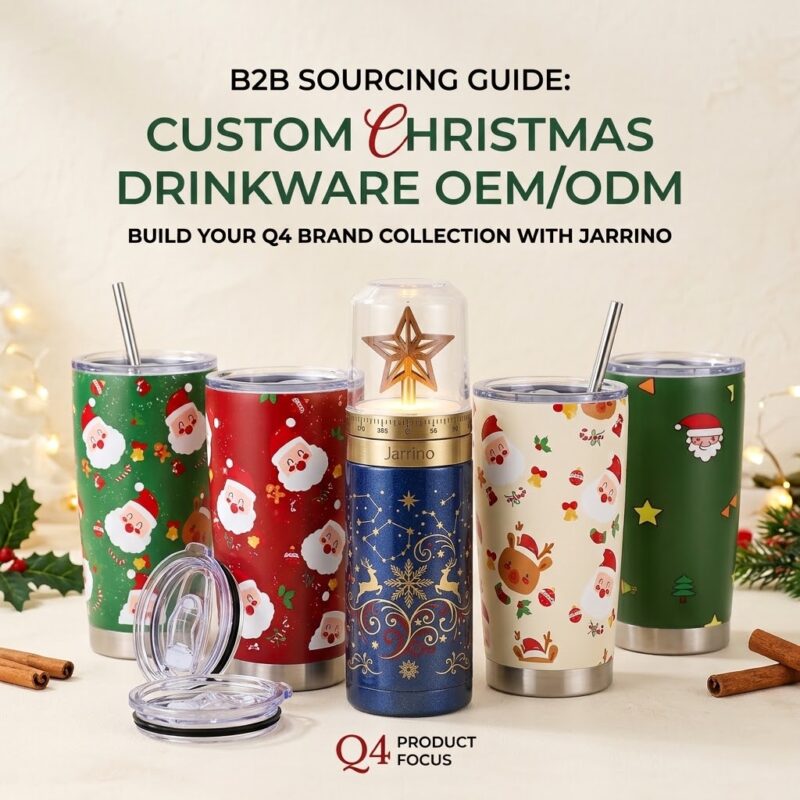
Copos de Natal personalizados: Guia completo de fabricação OEM/ODM
Jarrino é um fabricante certificado OEM/ODM especializado em frascos a vácuo personalizados, copos revestidos de cerâmica, e copos de titânio. Os prazos de entrega para pedidos personalizados de Natal do quarto trimestre são de 20 a 30 dias com MOQs baixos (300–1.000 unidades) e total conformidade com FDA/LFGB. Oferecemos personalização de ponta a ponta, incluindo impressão digital 3D, Gravura a laser, e embalagens personalizadas para presentes de Natal. Kits de amostra e orçamentos estão disponíveis mediante solicitação para ajudar as marcas a garantir a produção do feriado do quarto trimestre sem problemas.
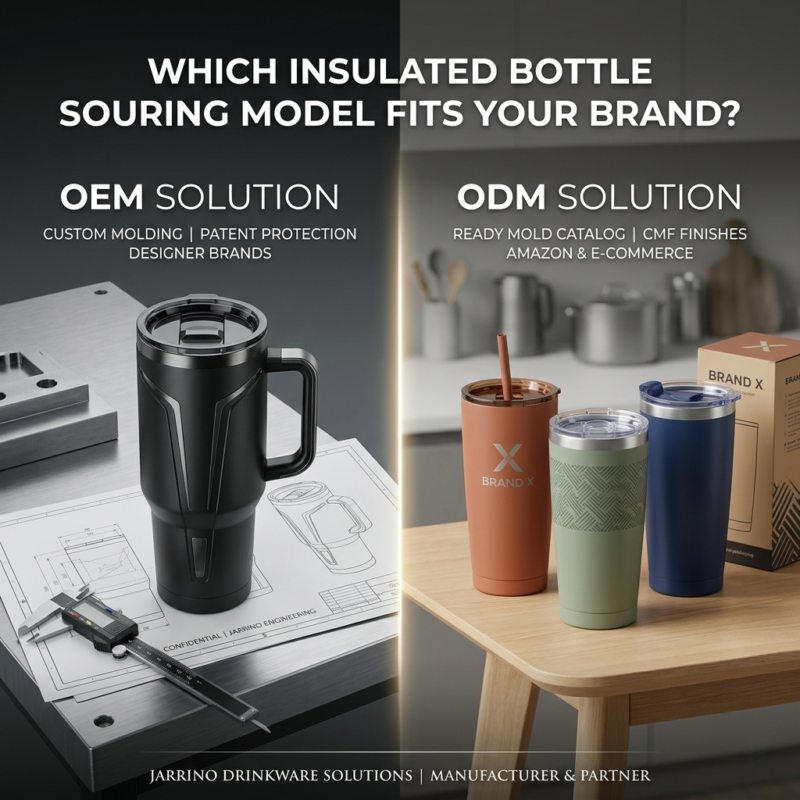
OEM vs.. Tumblers isolados ODM: Qual modelo de fornecimento se adapta à sua marca de bebidas
Escolhendo entre OEM (Fabricação de Equipamento Original) e ODM (Fabricação de design original) define o R da sua marca de copos&Orçamento D, tempo de lançamento no mercado, e exclusividade do produto. OEM é ideal para marcas estabelecidas com designs CAD personalizados e requisitos de IP exclusivos, oferta 100% moldagem personalizada e proteção de patente. ODM foi desenvolvido para vendedores da Amazon, Inicializações DTC, e compradores corporativos que buscam custos zero com ferramentas, quantidade mínima para pedido, e lançamentos rápidos de produtos por meio de acabamentos CMF avançados (revestimento em pó, Impressão UV).
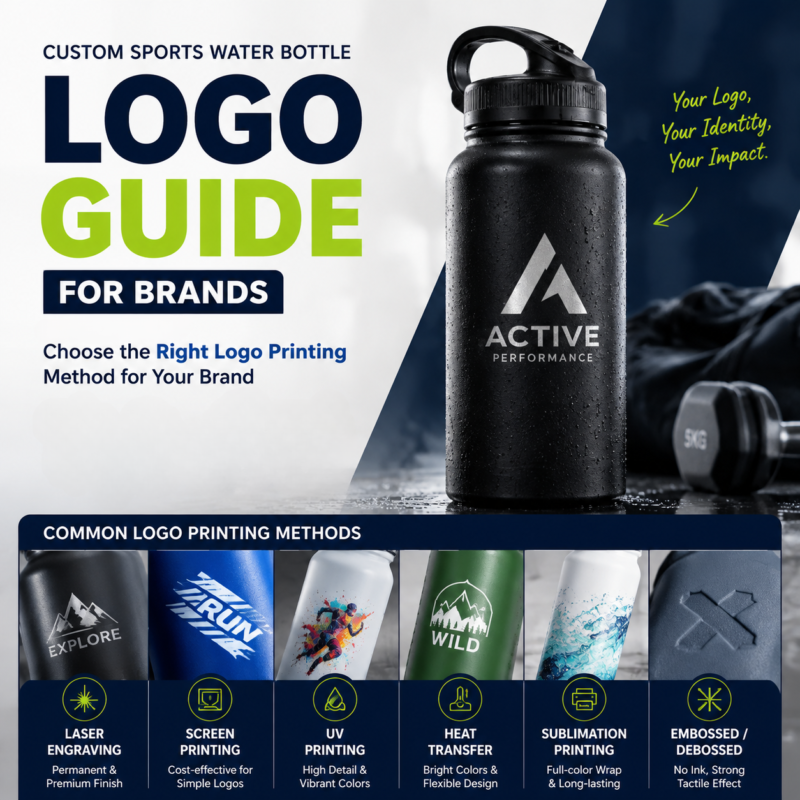
Guia de logotipo de garrafa de água esportiva personalizada para marcas
Logotipos personalizados de garrafas de água esportivas são criados por meio de diferentes processos de decoração, dependendo do material da garrafa, design de marca, e requisitos de desempenho. Este guia cobre os métodos mais comuns de impressão de logotipos, incluindo gravação a laser, serigrafia, Impressão UV, transferência de calor, e sublimação, ajudando marcas esportivas a selecionar a opção de personalização certa para produtos de bebidas duráveis e profissionais.
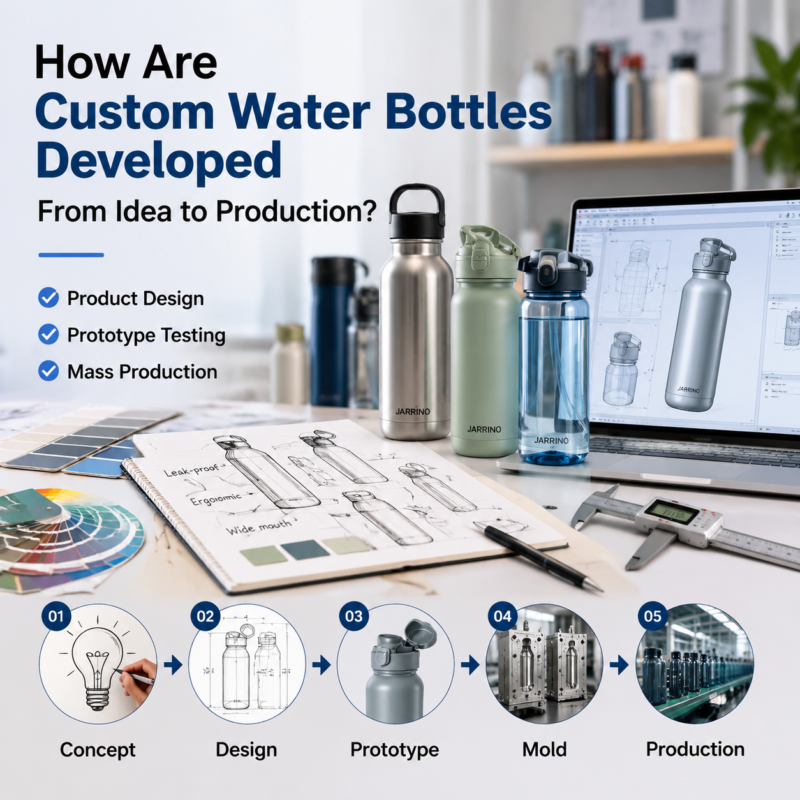
Como as garrafas de água personalizadas são desenvolvidas desde a ideia até a produção?
Desenvolver uma garrafa de água personalizada exige mais do que escolher um design e adicionar um logotipo. Do conceito inicial do produto à engenharia, prototipagem, desenvolvimento de moldes, testando, e produção em massa, cada etapa desempenha um papel importante na criação de um produto para bebidas de sucesso. Este guia explica como as marcas trabalham com fabricantes de garrafas de água OEM para transformar ideias em garrafas de água de alta qualidade., produtos prontos para o mercado enquanto gerencia o design, custo, e desafios de produção.
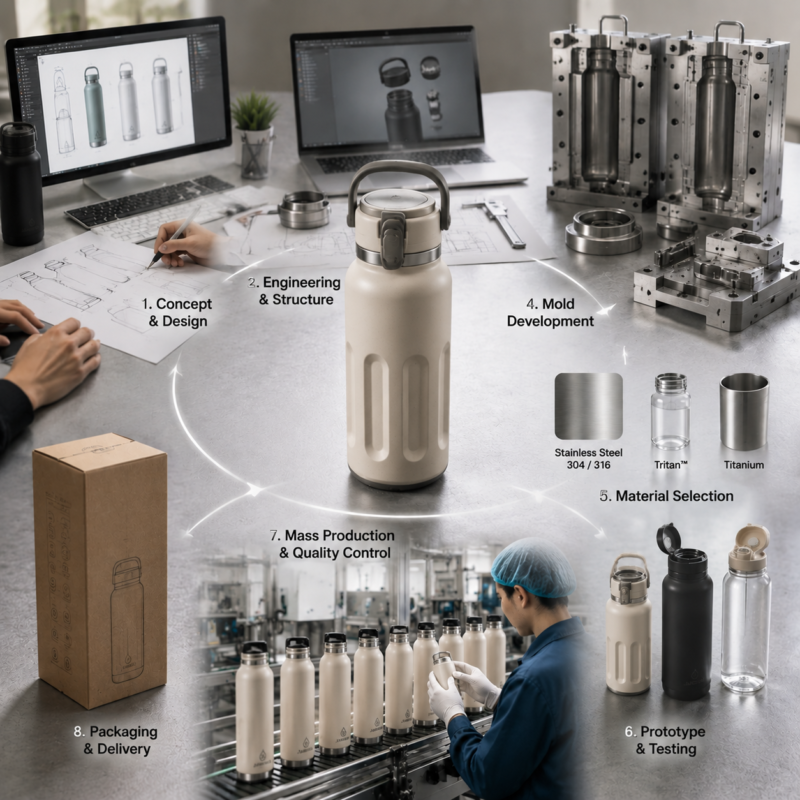
Como são feitas as garrafas de água totalmente personalizadas?
Desenvolver uma garrafa de água totalmente personalizada envolve muito mais do que adicionar um logotipo a um produto existente. Este guia explica como as marcas criam garrafas de água exclusivas por meio do design de produtos, engenharia, Seleção de material, desenvolvimento de moldes, teste de protótipo, e produção em massa. Saiba como um experiente fabricante de garrafas de água OEM ajuda a transformar uma ideia em um produto pronto para o mercado, ao mesmo tempo em que gerencia a qualidade, custo, e eficiência de produção.
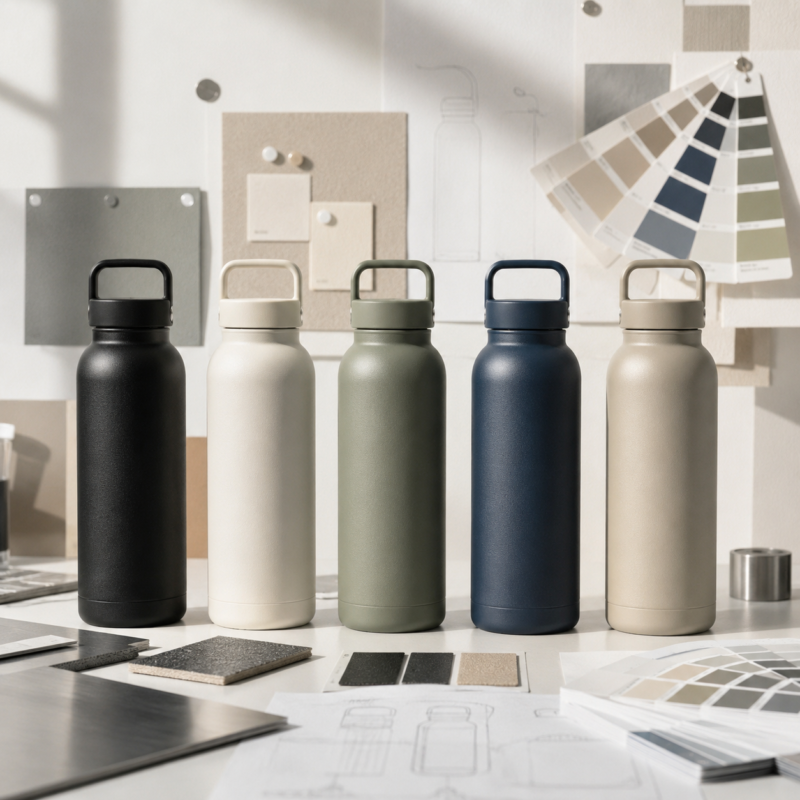
Como escolher cores e acabamentos para garrafas de água personalizadas
O sucesso de uma coleção de garrafas de água personalizadas depende de mais do que cores atraentes. Escolhendo a paleta de cores certa, acabamento superficial, e a estratégia de fabricação ajuda a fortalecer a identidade da marca, melhorar o apelo do cliente, e garantir vendas a longo prazo. Este guia explica como selecionar cores com base nas preferências do mercado, compare acabamentos foscos e brilhantes, otimizar SKUs, e alcançar qualidade consistente através da produção OEM profissional.

Por que os copos estilo Stanley dominam o mercado atacadista
Os copos estilo Stanley se tornaram um fenômeno cultural e um best-seller no atacado. Este artigo explora o porquê – desde 18/8 aço inoxidável e isolamento a vácuo de parede dupla com alto valor percebido, potencial de personalização, e demanda constante de pedidos repetidos. Saiba o que torna esses copos confiáveis, categoria lucrativa para compradores atacadistas.
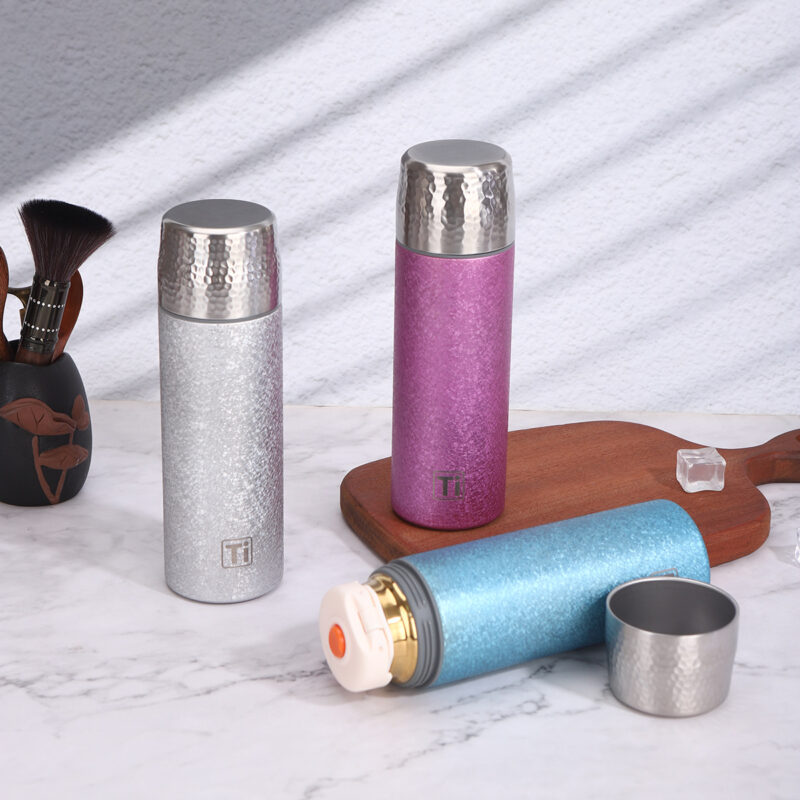
As garrafas de água de titânio são seguras?
Titânio é seguro. Também é caro. Veja como ele se compara ao aço inoxidável e ao alumínio – e qual material realmente faz sentido para sua marca.
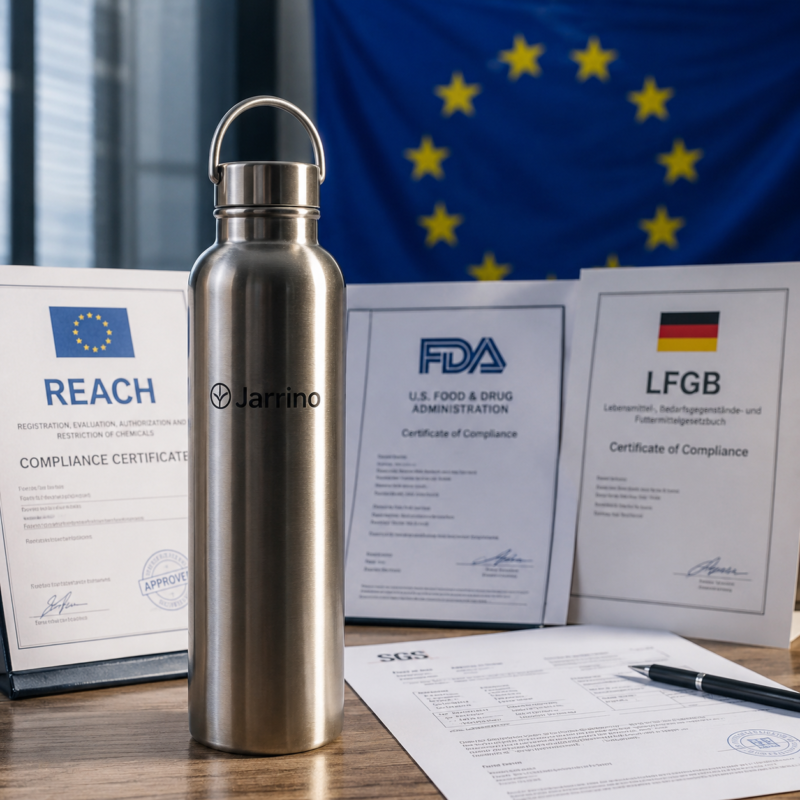
Regulamento de Microplásticos da UE 2026: O que todo fabricante de garrafas de água personalizadas deve saber
Saiba como funciona o Regulamento de Microplásticos da UE (UE) 2026/1168 afeta fabricantes de garrafas de água personalizadas e marcas próprias de bebidas. Descubra como Jarrino ajuda os importadores a manter a conformidade com o REACH com garrafas de água duráveis de aço inoxidável.
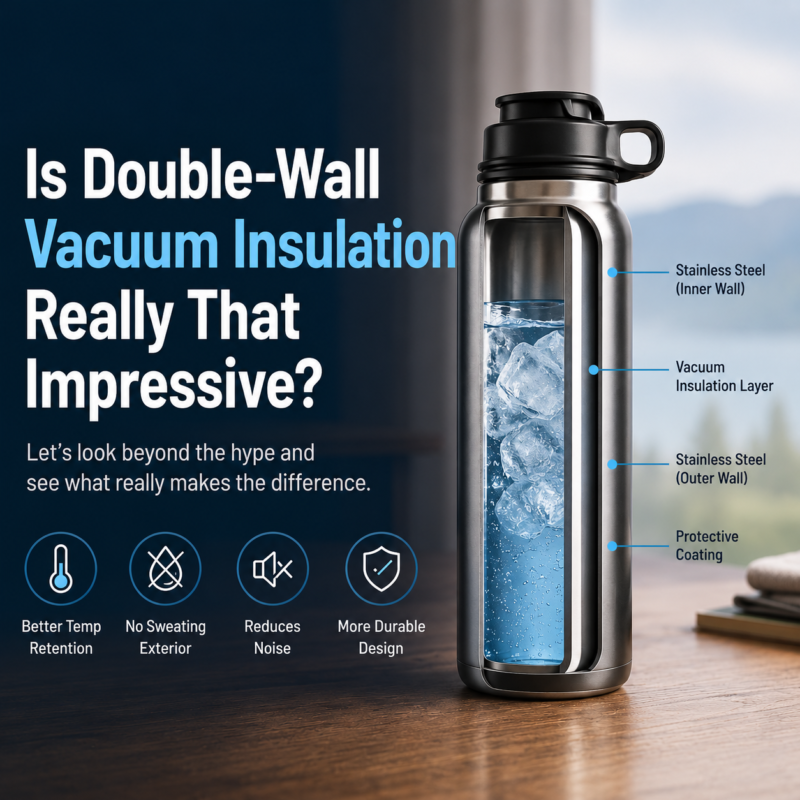
O isolamento a vácuo de parede dupla é realmente tão impressionante?
Double‑wall vacuum insulation is standard in premium drinkware, but the difference between a bottle that performs and one that disappoints comes down to manufacturing quality. This guide explains how vacuum insulation works, sets realistic performance expectations, and gives B2B buyers a practical checklist for evaluating suppliers. Plus, why Jarrino’s strict quality standards ensure your custom bottles deliver on their promises.