
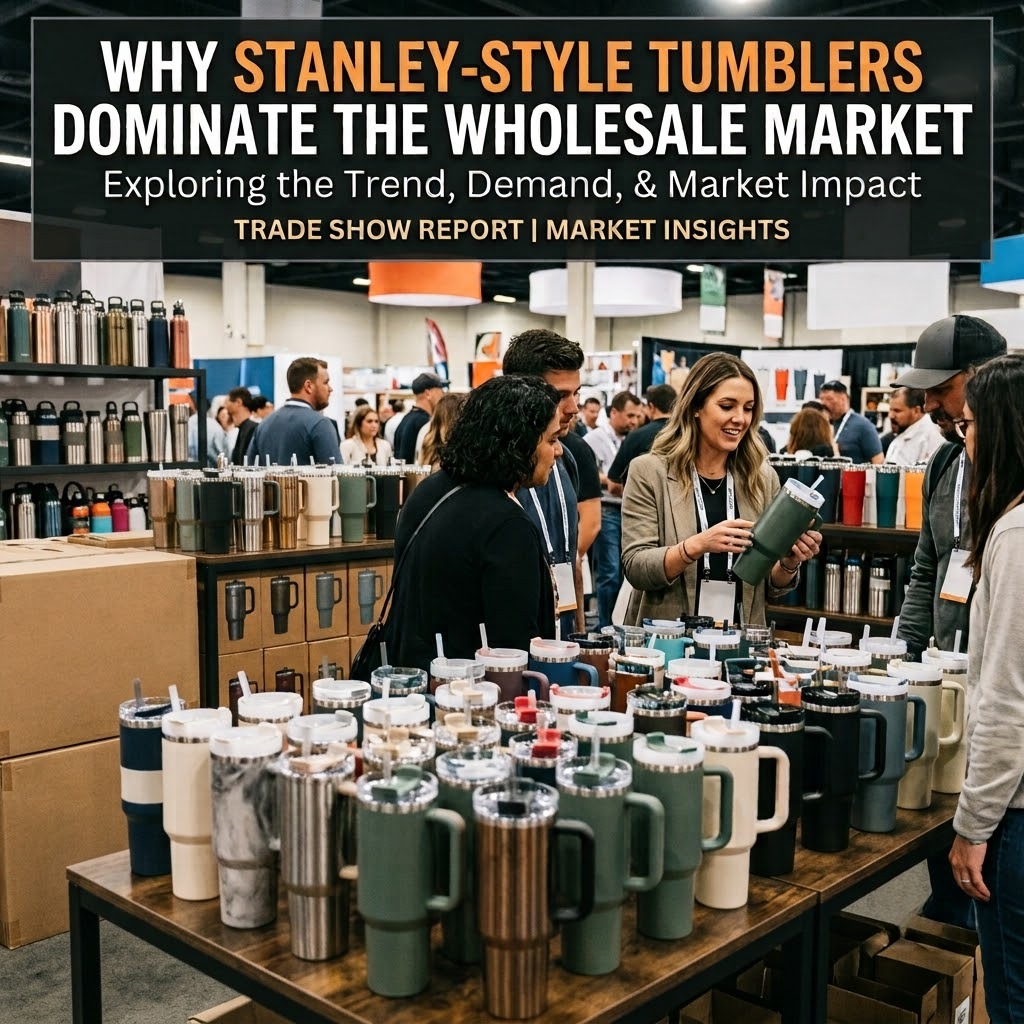
Por que os copos estilo Stanley dominam o mercado atacadista
Índice
If you‘ve walked into any office, gym, or coffee shop in the past few years, you’ve seen them. Those rugged, powder‑coated stainless steel tumblers with the tapered silhouette and the unmistakable handle. They‘re everywhere — on desks, in car cup holders, clipped to backpacks, sitting next to laptops in conference rooms.
The Stanley‑style tumbler has become more than a drinkware trend. It’s a cultural phenomenon. And for wholesale buyers, it represents one of the most consistent, high‑demand product categories in the promotional products and retail drinkware space.
But why exactly do these tumblers dominate the wholesale market? And what does that mean for buyers looking to source them for their own brands, corporate gifting programs, or retail shelves?
Let‘s break it down.
The Product Itself: Built for Real Life
The Stanley‑style tumbler didn’t become popular by accident. It earned its place through a combination of thoughtful design, durable materials, and genuine utility.
18/8 Food‑Grade Stainless Steel
At the core of every quality Stanley‑style tumbler is 304 (18/8) aço inoxidável. This material is food‑safe, rust‑resistant, and built to withstand daily abuse. Unlike plastic or glass alternatives, stainless steel doesn‘t retain flavors, doesn’t leach chemicals, and doesn‘t shatter when dropped.
For wholesale buyers, this means fewer returns, happier end users, and a product that actually lasts.
Double‑Wall Vacuum Insulation
The defining feature of these tumblers is their ability to keep drinks at the right temperature for hours. A well‑made Stanley‑style tumbler will keep coffee hot for 6‑8 hours and iced water cold for up to 24 horas.
This isn’t just a nice‑to‑have. It‘s the reason people carry these tumblers every day — and why they become attached to them. A product that becomes part of someone’s daily routine is a product that builds brand loyalty.
Leak‑Proof, Spill‑Resistant Design
From commuters to hikers to busy parents, people need drinkware that doesn‘t leak. The secure, leak‑proof lids on these tumblers give users the confidence to toss them in a bag without worrying about spills.
For corporate gift buyers, this reliability matters. A tumbler that leaks is a gift that gets thrown away. A tumbler that doesn’t is a gift that gets used every day.
Sizes That Work for Everyone
Stanley‑style tumblers come in a range of sizes — most commonly 20 Oz, 30 Oz, e 40 Oz. Each size serves a different purpose:
| Tamanho | Best For | Typical Use |
|---|---|---|
| 20 Oz | Daily commuters, office workers, coffee drinkers | Fits most cup holders, easy to carry, ideal for morning coffee |
| 30 Oz | All‑day hydration, gym users, road trips | Large enough for a full workday, still fits standard cup holders |
| 40 Oz | Outdoor enthusiasts, long shifts, heavy hydration | Maximum capacity, popular with tradespeople and outdoor workers |
This range allows wholesale buyers to stock a single product line that appeals to a wide cross‑section of end users.
The Stanley‑Style Effect
The Stanley brand itself has enjoyed a massive resurgence in recent years, driven by social media, influencer marketing, and viral content. But what wholesale buyers need to understand is that the demand is not limited to the Stanley brand itself.
O estilo — the silhouette, the handle, the powder‑coated finish — has become the standard. Consumers recognize it. They trust it. And they expect it.
This means wholesale buyers don‘t need to sell the Stanley brand to succeed. They need to sell the Stanley‑style product — the same form factor, the same quality, the same utility — with their own branding.
And that’s where the wholesale opportunity truly opens up.
Why Wholesale Buyers Love This Category
For businesses sourcing drinkware for corporate gifts, promotional campaigns, or retail — the Stanley‑style tumbler offers several distinct advantages.
1. Broad Market Appeal
These tumblers appeal to just about everyone. Office workers. Outdoor enthusiasts. Parents. Students. Fitness buffs. Professionals. The demographic range is unusually wide for a single product category.
That means wholesale buyers can stock one product line and serve multiple customer segments. Less inventory complexity. Faster turnover.
2. High Perceived Value
A Stanley‑style tumbler feels premium. It‘s heavy. It’s solid. It looks like it costs more than it does. This makes it an ideal choice for corporate gifts, employee appreciation programs, and promotional campaigns where the goal is to impress.
When you hand someone a high‑quality tumbler, the message isn‘t “here’s a free thing.” The message is “we value you, and we value quality.”
3. Customization That Works
The large, flat surface of these tumblers makes them ideal for branding. Whether it‘s laser engraving, screen printing, or UV printing — a logo on a Stanley‑style tumbler gets seen. Daily. By the person carrying it and everyone they meet.
This is why promotional products distributors consistently rank drinkware among the most effective promotional items. The brand impression lasts for years, not days.
4. Strong Pricing and Margins
The wholesale cost of a high‑quality Stanley‑style tumbler typically falls between $3 e $10 per unit, depending on customization level and order volume. Retail prices often range from $15 para $40.
For wholesale buyers, this leaves healthy margins — especially when ordering in volume. And with consistent demand, turnover is reliable.
5. Repeat Order Potential
A good tumbler doesn‘t break. But people lose them. They give them as gifts. They buy backups. And when they love a product, they buy more for friends and family.
For wholesale buyers, this translates to repeat orders. Customers who source from you once often come back for more.
6. Sustainability Credentials
Stainless steel is infinitely recyclable. It’s reusable. It reduces reliance on single‑use plastics. And in 2026, the focus on sustainability is stronger than ever. Brands and consumers alike are looking for products that align with environmental values.
A Stanley‑style tumbler fits that bill perfectly.
7. Stability in a Fast‑Changing Market
The global drinkware market is projected to grow from $36.81 billion in 2026 para $45.52 billion by 2030, at a CAGR of 5.5%. Insulated metal drinkware represents a significant and growing segment of this market.
Stanley‑style tumblers are not a flash‑in‑the‑pan trend. They’ve proven their staying power. Demand shows no sign of slowing. For wholesale buyers, this means stability — a product category that remains reliable year after year.
What Wholesale Buyers Should Look for in a Supplier
If you‘re ready to source Stanley‑style tumblers for your brand, the next step is finding the right manufacturing partner.
Material Transparency
A trustworthy supplier will openly state their material grade. Look for 304 aço inoxidável and ask for material certifications. A supplier who can’t tell you what grade of steel they use is a supplier you should avoid.
Insulation Performance
Not all insulated tumblers perform equally. Ask for thermal test data. The best suppliers can provide real numbers on heat and cold retention — not just marketing claims.
Food‑Safety Compliance
If you‘re selling into the US or European markets, FDA and LFGB certifications are non‑negotiable. Make sure your supplier can provide current, valid compliance documentation.
Customization Capabilities
Can the supplier handle your logo requirements? Do they offer multiple printing methods? Can they match your brand colors? The right supplier makes customization easy, not complicated.
Consistent Quality Control
A great sample means nothing if the bulk order doesn’t match it. Look for suppliers with robust quality control processes — in‑process inspections, material traceability, and final product testing.
Reliable Lead Times
Know what to expect. A professional supplier will give you a clear timeline — sample development, produção, shipping, and customs. Surprises are acceptable in the mail, not in supply chains.
Communication
Suppliers who respond quickly to inquiries are more likely to resolve production issues quickly. Responsiveness matters.
Why Jarrino
At Jarrino, we manufacture premium Stanley‑style tumblers for wholesale buyers, corporate gift programs, and promotional product distributors. We use certified 304 stainless steel with full material traceability, LFGB and FDA compliance, and double‑wall vacuum insulation that delivers consistent temperature retention.
Our MOQ starts from 200 pedaços, with 15‑35 working days lead times for wholesale orders. Customization options include laser engraving, screen printing, color matching, e embalagem personalizada. We ship to the USA, Europe, Australia, and beyond.
Contact Jarrino today to request a sample and discuss your wholesale order.
Related Posts
Custom Christmas Drinkware: Complete OEM/ODM Manufacturing Guide
Jarrino is a certified OEM/ODM manufacturer specializing in custom vacuum flasks, ceramic-lined tumblers, and titanium drinkware. Lead times for Q4 custom Christmas orders are 20–30 days with low MOQs (300–1,000 pcs) and full FDA/LFGB compliance. We offer end-to-end customization including 3D digital printing, Gravura a laser, and bespoke Christmas gift packaging. Sample kits and the quotes are available upon request to help brands lock in Q4 holiday production smoothly.
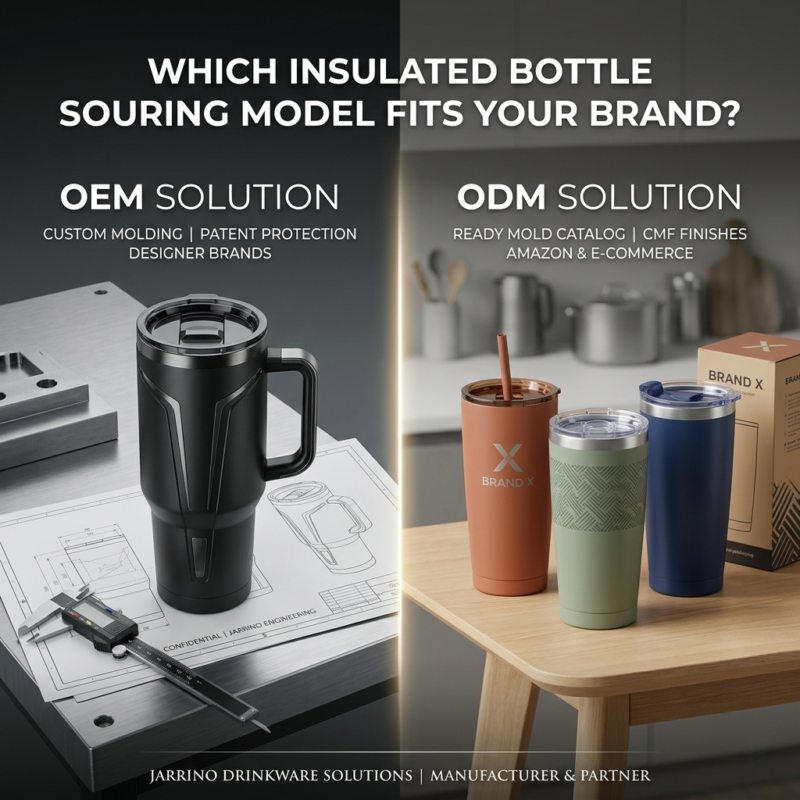
OEM vs. ODM Insulated Tumblers: Which Sourcing Model Fits Your Drinkware Brand
Choosing between OEM (Original Equipment Manufacturing) and ODM (Original Design Manufacturing) defines your drinkware brand’s R&D budget, time-to-market, and product exclusivity. OEM is ideal for established brands with custom CAD designs and unique IP requirements, offering 100% custom molding and patent protection. ODM is built for Amazon sellers, DTC startups, and corporate buyers seeking zero tooling costs, low MOQs, and rapid product launches via advanced CMF finishes (powder coating, UV printing).
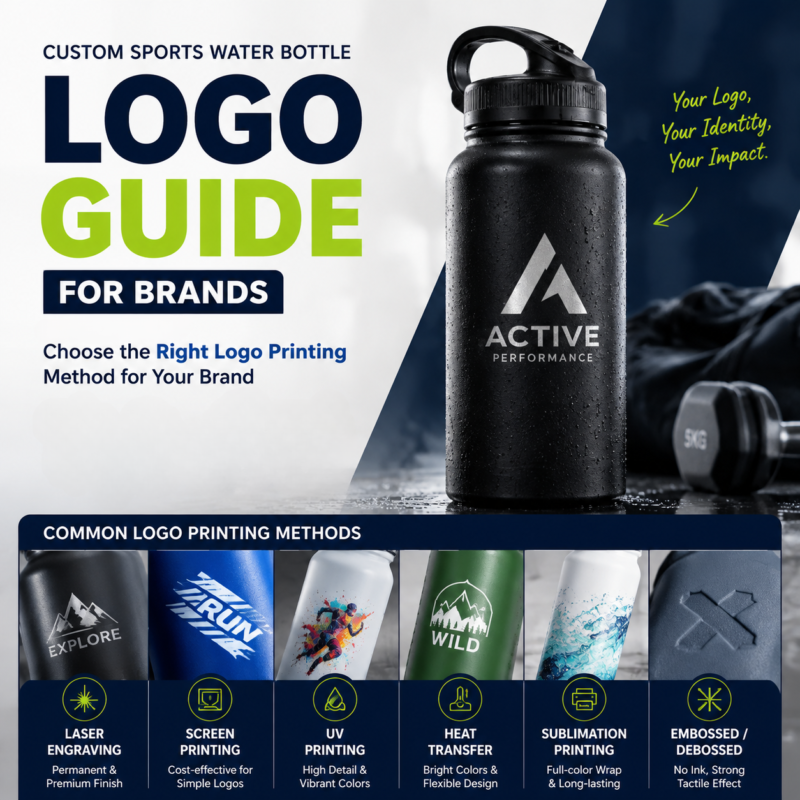
Custom Sports Water Bottle Logo Guide for Brands
Custom sports water bottle logos are created through different decoration processes depending on the bottle material, brand design, and performance requirements. This guide covers the most common logo printing methods, including laser engraving, screen printing, UV printing, transferência de calor, and sublimation, helping sports brands select the right customization option for durable and professional drinkware products.
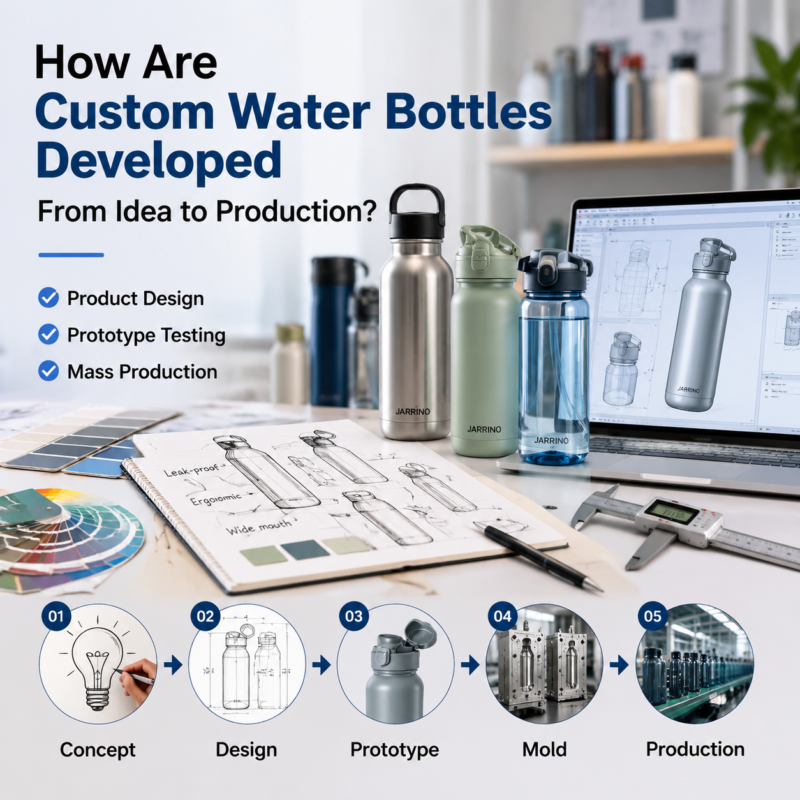
How Are Custom Water Bottles Developed From Idea to Production?
Developing a custom water bottle requires more than choosing a design and adding a logo. From the initial product concept to engineering, prototyping, mold development, testing, and mass production, every stage plays an important role in creating a successful drinkware product. This guide explains how brands work with OEM water bottle manufacturers to transform ideas into high-quality, market-ready products while managing design, custo, and production challenges.
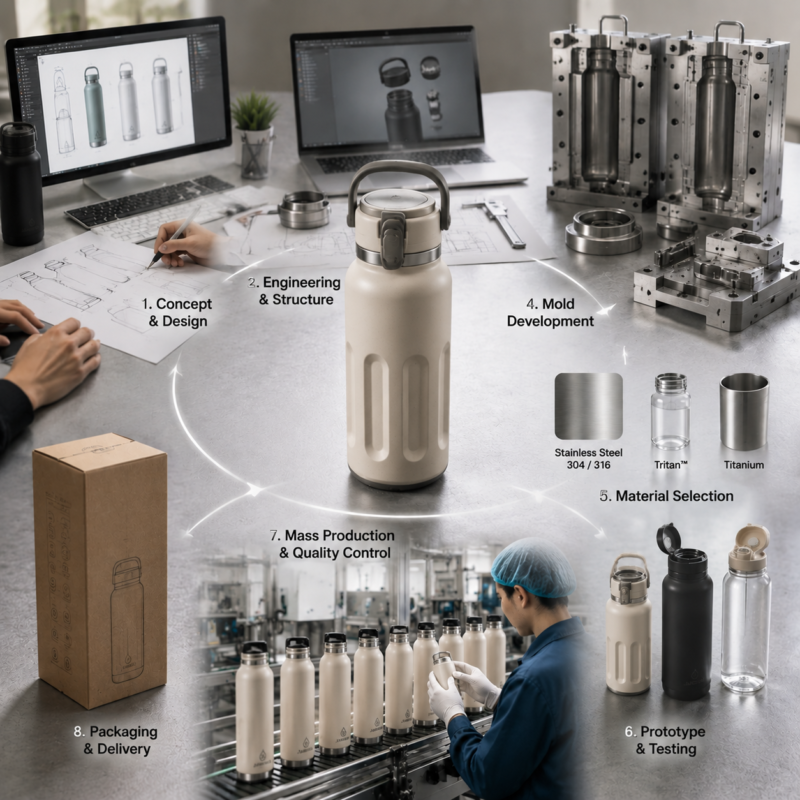
How Are Fully Custom Water Bottles Made?
Developing a fully custom water bottle involves much more than adding a logo to an existing product. This guide explains how brands create unique water bottles through product design, engineering, Seleção de material, mold development, prototype testing, and mass production. Learn how an experienced OEM water bottle manufacturer helps transform an idea into a market-ready product while managing quality, custo, e eficiência de produção.
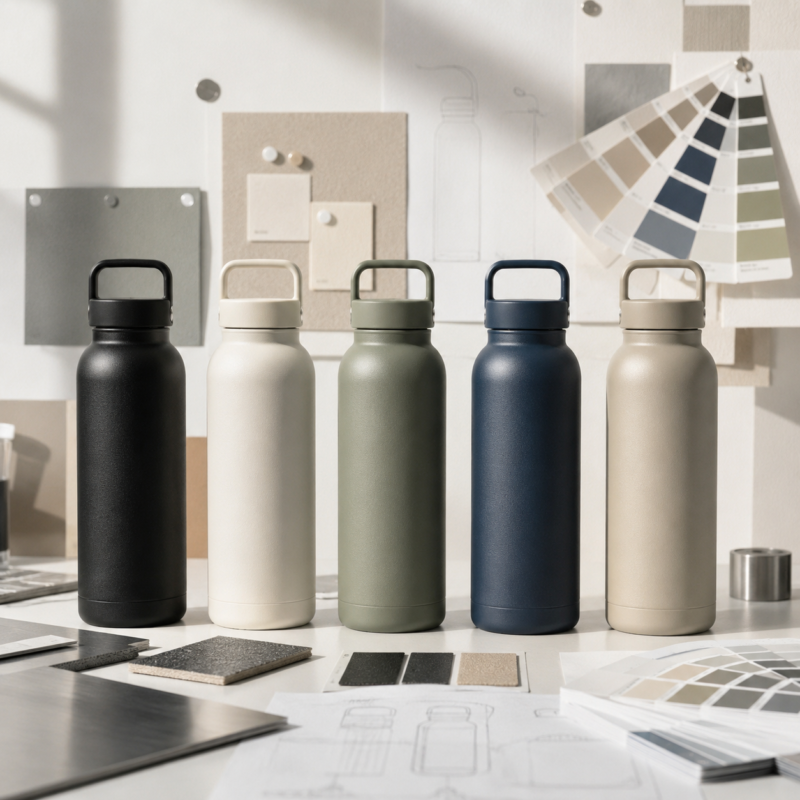
Como escolher cores e acabamentos para garrafas de água personalizadas
O sucesso de uma coleção de garrafas de água personalizadas depende de mais do que cores atraentes. Escolhendo a paleta de cores certa, acabamento superficial, e a estratégia de fabricação ajuda a fortalecer a identidade da marca, melhorar o apelo do cliente, e garantir vendas a longo prazo. Este guia explica como selecionar cores com base nas preferências do mercado, compare acabamentos foscos e brilhantes, otimizar SKUs, e alcançar qualidade consistente através da produção OEM profissional.
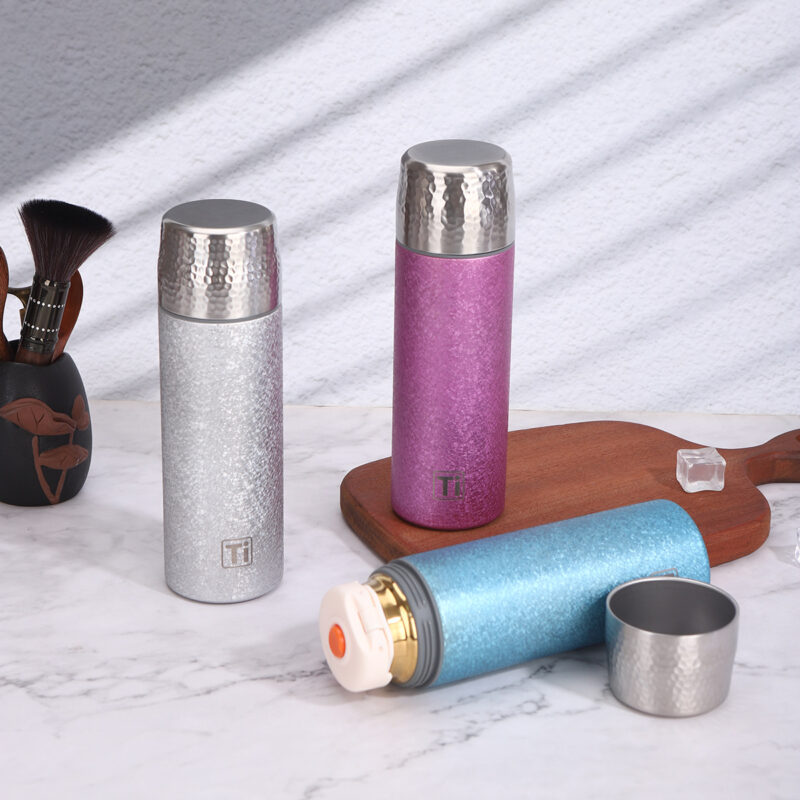
As garrafas de água de titânio são seguras?
Titânio é seguro. Também é caro. Veja como ele se compara ao aço inoxidável e ao alumínio – e qual material realmente faz sentido para sua marca.
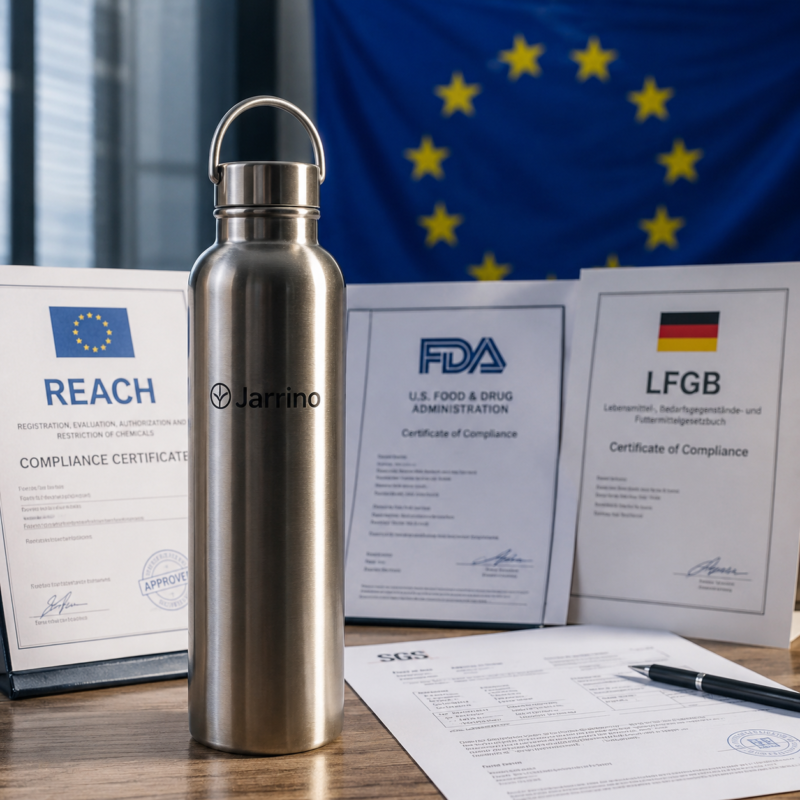
Regulamento de Microplásticos da UE 2026: O que todo fabricante de garrafas de água personalizadas deve saber
Saiba como funciona o Regulamento de Microplásticos da UE (UE) 2026/1168 afeta fabricantes de garrafas de água personalizadas e marcas próprias de bebidas. Descubra como Jarrino ajuda os importadores a manter a conformidade com o REACH com garrafas de água duráveis de aço inoxidável.
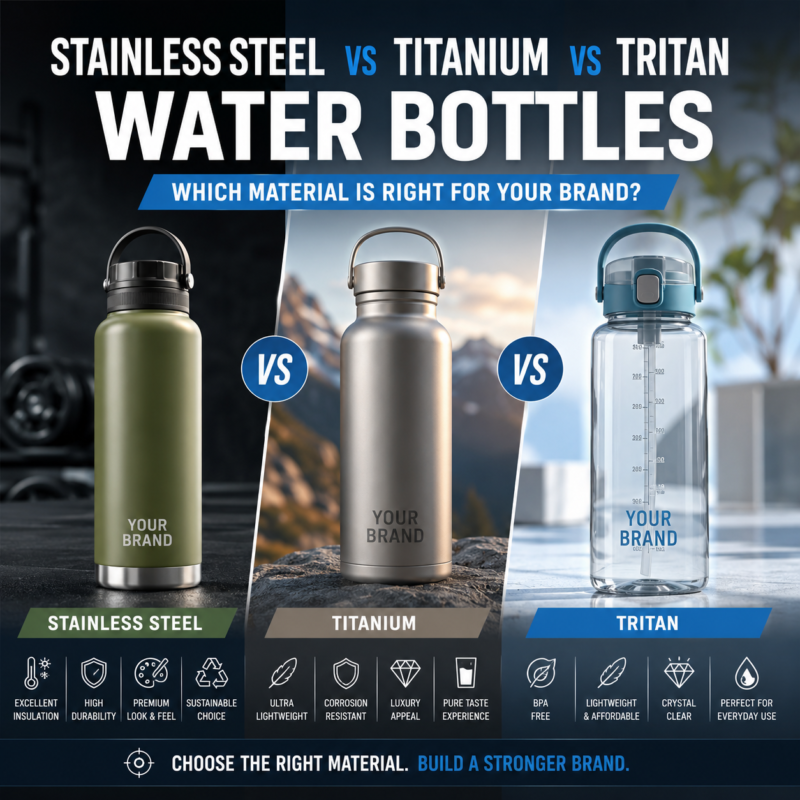
Stainless Steel vs Titanium vs Tritan Water Bottles: Which Material Is Right for Your Brand?
Choosing the right water bottle material can significantly impact your product quality, pricing, and brand positioning. This guide compares stainless steel, titânio, and Tritan water bottles across durability, isolamento, custo, personalização, and sustainability to help brands, retailers, and OEM buyers select the best material for their target market.
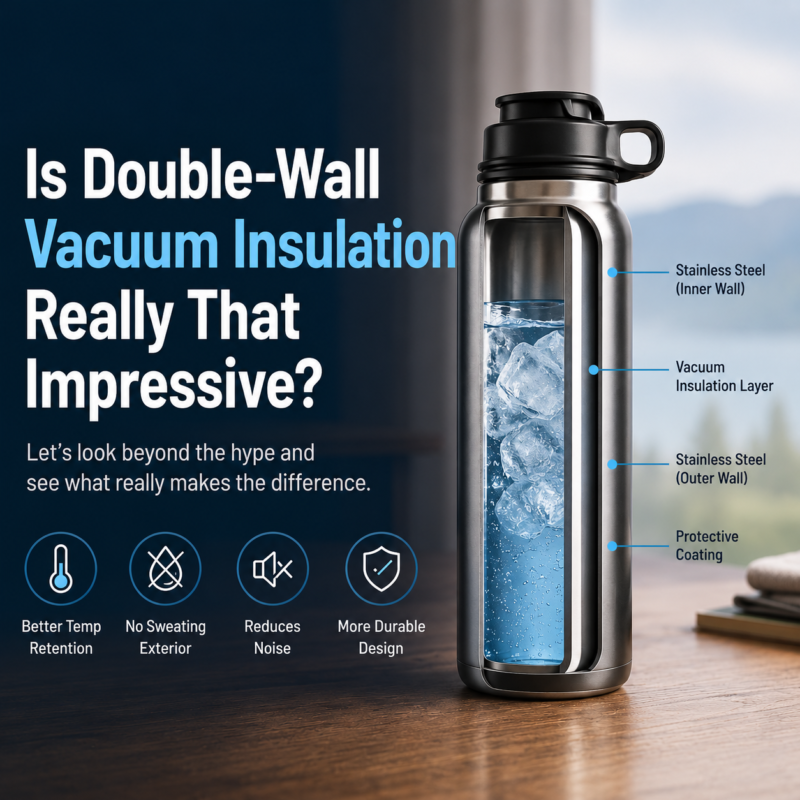
O isolamento a vácuo de parede dupla é realmente tão impressionante?
Double‑wall vacuum insulation is standard in premium drinkware, but the difference between a bottle that performs and one that disappoints comes down to manufacturing quality. This guide explains how vacuum insulation works, sets realistic performance expectations, and gives B2B buyers a practical checklist for evaluating suppliers. Plus, why Jarrino’s strict quality standards ensure your custom bottles deliver on their promises.
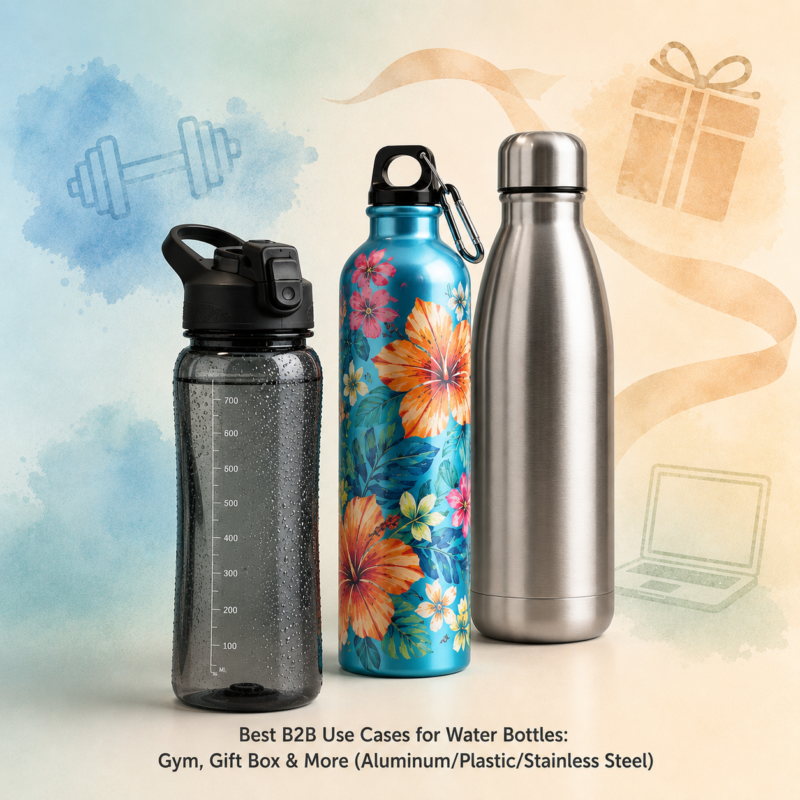
Melhores casos de uso B2B para garrafas de água: Academia, Caixa de presente & Mais (Alumínio/Plástico/Aço)
Nem toda garrafa de água se adapta a todos os casos de uso B2B. Este artigo corresponde a três materiais – aço inoxidável, alumínio, plástico — para aplicações do mundo real: academias, caixas de presente corporativas, feiras, varejo ao ar livre, e programas escolares. O aço inoxidável ganha em durabilidade e isolamento. O alumínio oferece leveza, marca colorida. O plástico é econômico para eventos de alto volume (desde que seja livre de BPA). Uma folha de dicas rápida ajuda os compradores B2B a equilibrar os custos, imagem da marca, e expectativas do usuário.
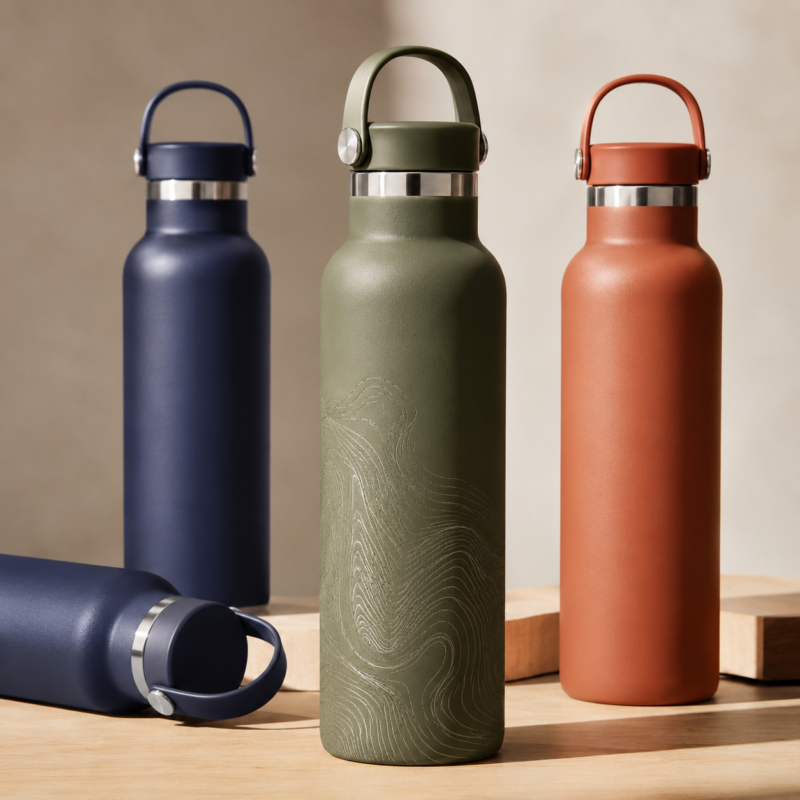
Qual método de decoração de garrafa de água personalizada realmente dura?
Gravação a laser, sublimação, ultravioleta, ou serigrafia – cuja decoração de garrafa personalizada realmente sobrevive ao uso diário? Nós os testamos. Leia os resultados.