
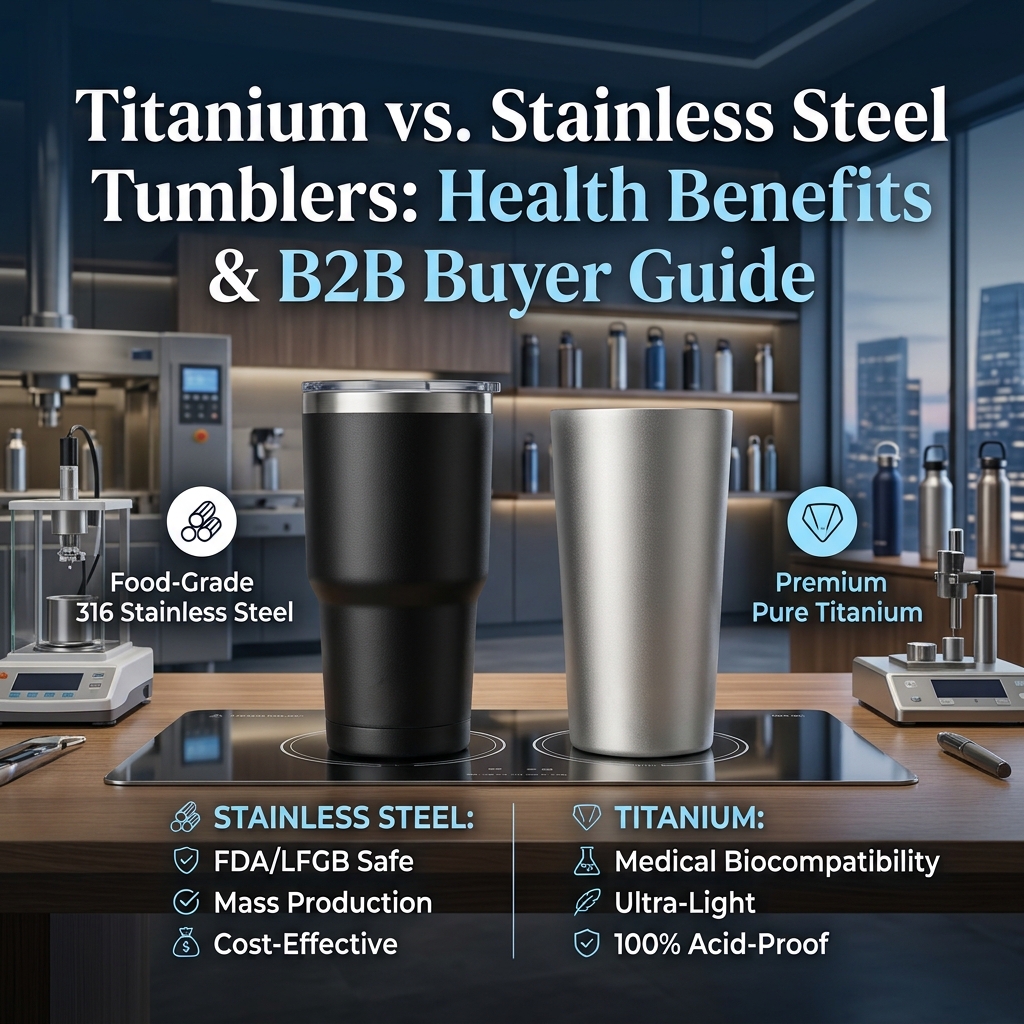
Stainless Steel vs. Titanium Tumblers: Which is Healthier?
Articles connexes
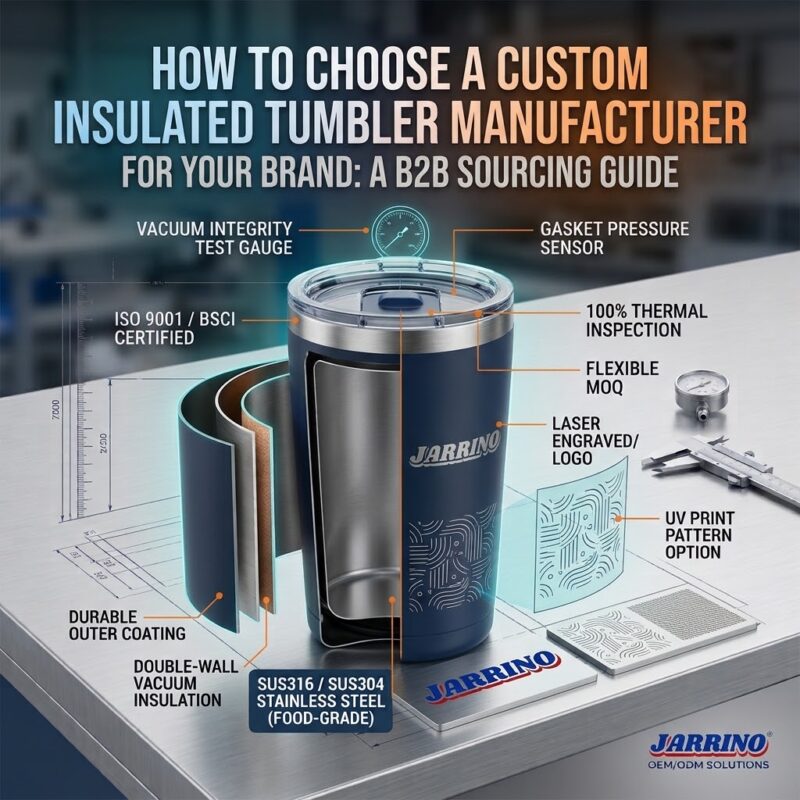
Comment choisir un fabricant de gobelets isothermes personnalisés pour votre marque
Découvrez comment choisir le bon fabricant de gobelets isothermes personnalisés pour votre marque. En savoir plus sur les services OEM et ODM, matériaux en acier inoxydable, personnalisation de marque privée, MOQ, prix de gros, contrôle de qualité, et conformité contact alimentaire. Ce guide aide les acheteurs B2B, grossistes, et les marques de verres évaluent leurs fournisseurs et se procurent des gobelets isothermes personnalisés en toute confiance..
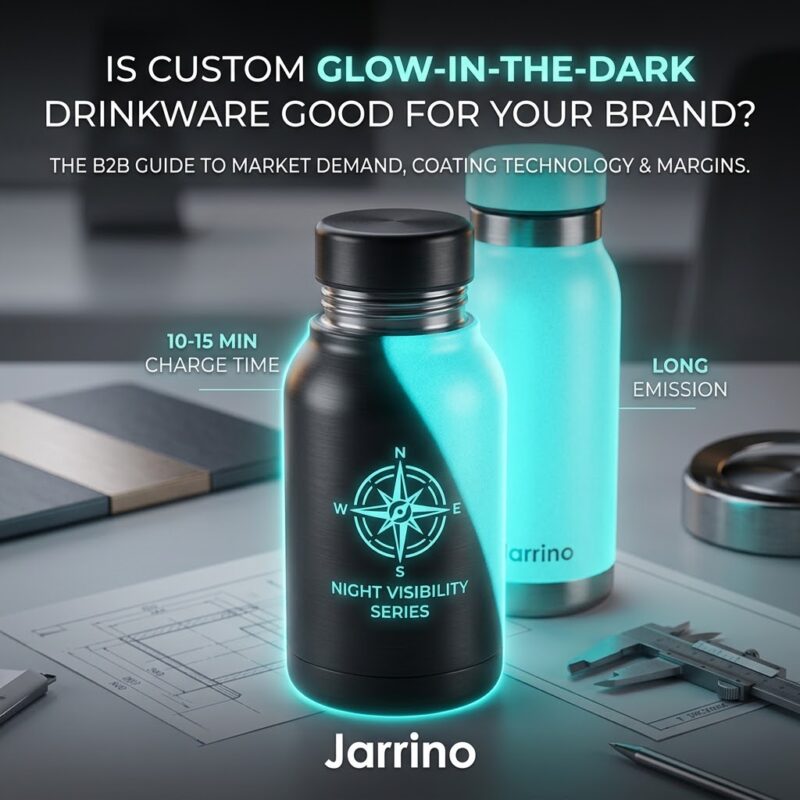
Les verres personnalisés qui brillent dans le noir sont-ils bons pour votre marque?
Les verres personnalisés qui brillent dans le noir offrent aux marques de distributeur une opportunité de marge élevée sur un marché concurrentiel. Jarrino fournit des produits de qualité industrielle, revêtements photoluminescents de qualité alimentaire, assurer la durabilité et la conformité tout en ciblant les secteurs du plein air et de la jeunesse, stimuler l'attrait viral des médias sociaux et la différenciation des produits.
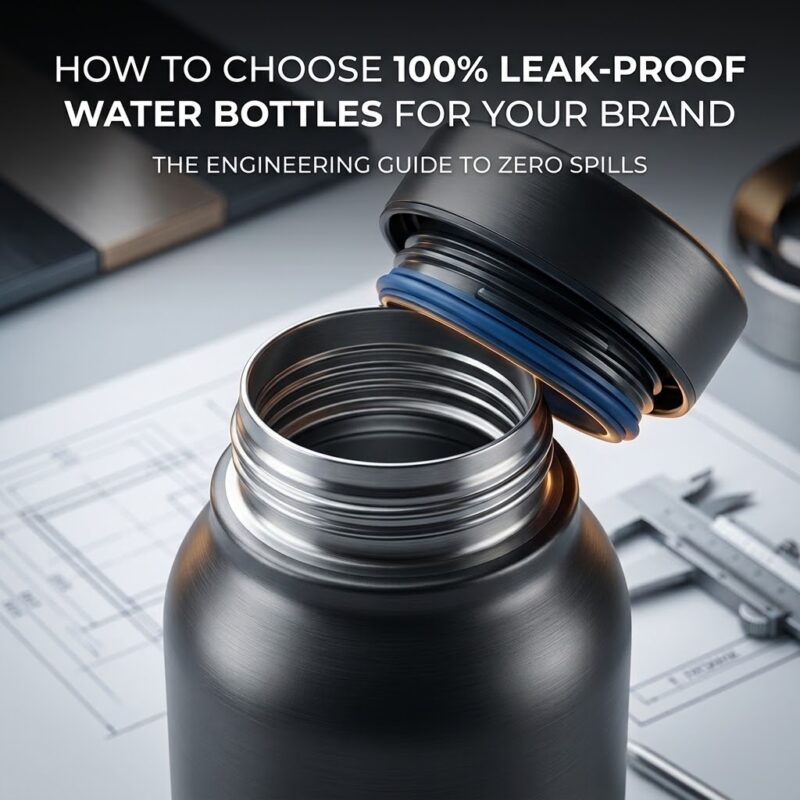
Comment choisir 100% Bouteilles d'eau étanches en acier inoxydable pour votre marque?
Ce guide aide les marques de verres à sélectionner 100% bouteilles en acier inoxydable étanches grâce à l'analyse des tests de contrôle qualité et de l'ingénierie des couvercles. Les fabricants comme Jarrino utilisent des, tremblement, et tests de pression d'air pour vérifier les joints. Les bouchons à vis traditionnels offrent une protection absolue contre les fuites, tandis que les couvercles verrouillables et les bouchons en paille nécessitent des joints en silicone précis., Précision du filetage CNC, et valves d'air unidirectionnelles pour éviter les déversements.
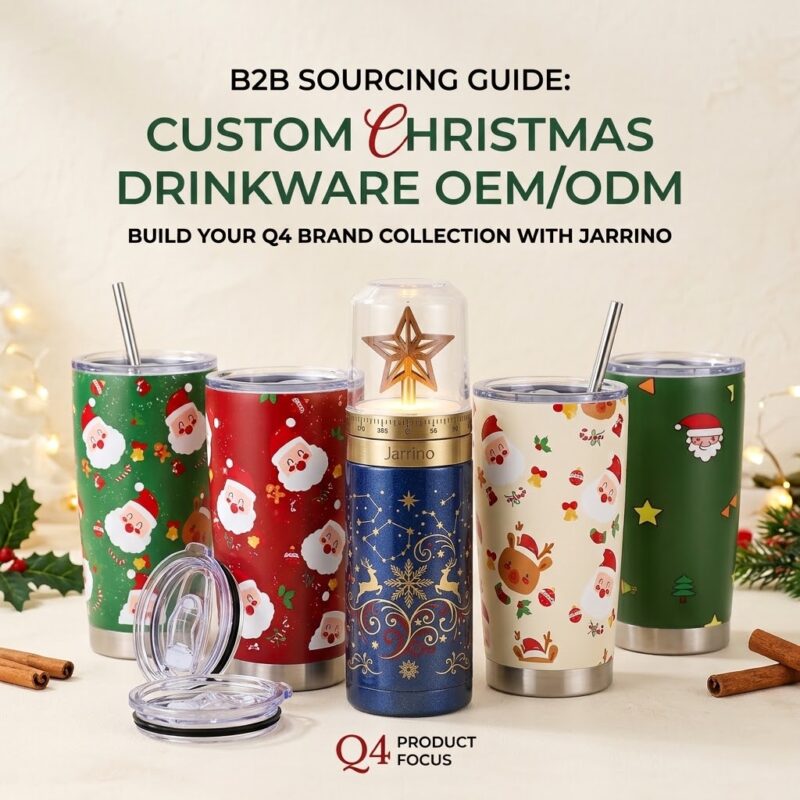
Verres de Noël personnalisés: Guide complet de fabrication OEM/ODM
Jarrino est un fabricant certifié OEM/ODM spécialisé dans les flacons à vide personnalisés, gobelets doublés de céramique, et verres en titane. Les délais de livraison pour les commandes de Noël personnalisées du quatrième trimestre sont de 20 à 30 jours avec de faibles MOQ (300–1 000 pièces) et conformité totale FDA/LFGB. Nous proposons une personnalisation de bout en bout, y compris l'impression numérique 3D, gravure laser, et emballages cadeaux de Noël sur mesure. Des kits d'échantillons et des devis sont disponibles sur demande pour aider les marques à sécuriser en douceur la production des fêtes du quatrième trimestre..
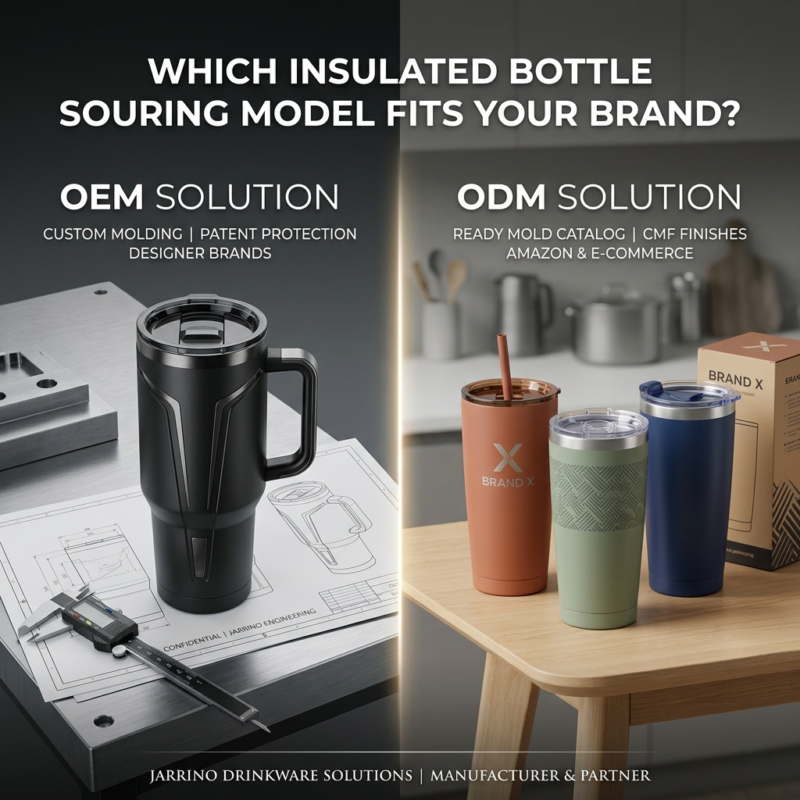
OEM contre. Gobelets isolés par ODM: Quel modèle d'approvisionnement convient à votre marque de verres
Choisir entre OEM (Fabrication d'équipement d'origine) et ODM (Fabrication de conception originale) définit le R de votre marque de verres&Budget D, délai de mise sur le marché, et l'exclusivité du produit. L'OEM est idéal pour les marques établies avec des conceptions CAO personnalisées et des exigences IP uniques, offre 100% moulage sur mesure et protection par brevet. ODM est conçu pour les vendeurs Amazon, Startups DTC, et les acheteurs d'entreprise recherchant des coûts d'outillage nuls, faibles MOQ, et des lancements de produits rapides via des finitions CMF avancées (revêtement en poudre, Impression UV).
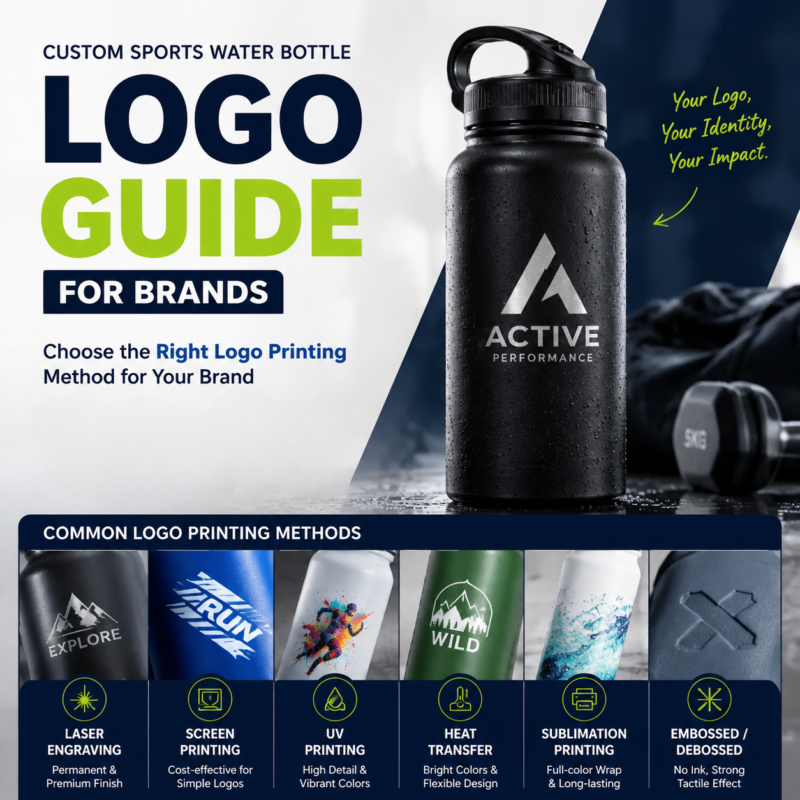
Guide de logo de bouteille d’eau de sport personnalisé pour les marques
Les logos personnalisés de bouteilles d'eau de sport sont créés grâce à différents processus de décoration en fonction du matériau de la bouteille., conception de marque, et exigences de performance. Ce guide couvre les méthodes d'impression de logo les plus courantes, y compris la gravure au laser, sérigraphie, Impression UV, transfert de chaleur, et sublimation, aider les marques de sport à sélectionner la bonne option de personnalisation pour des produits de boisson durables et professionnels.
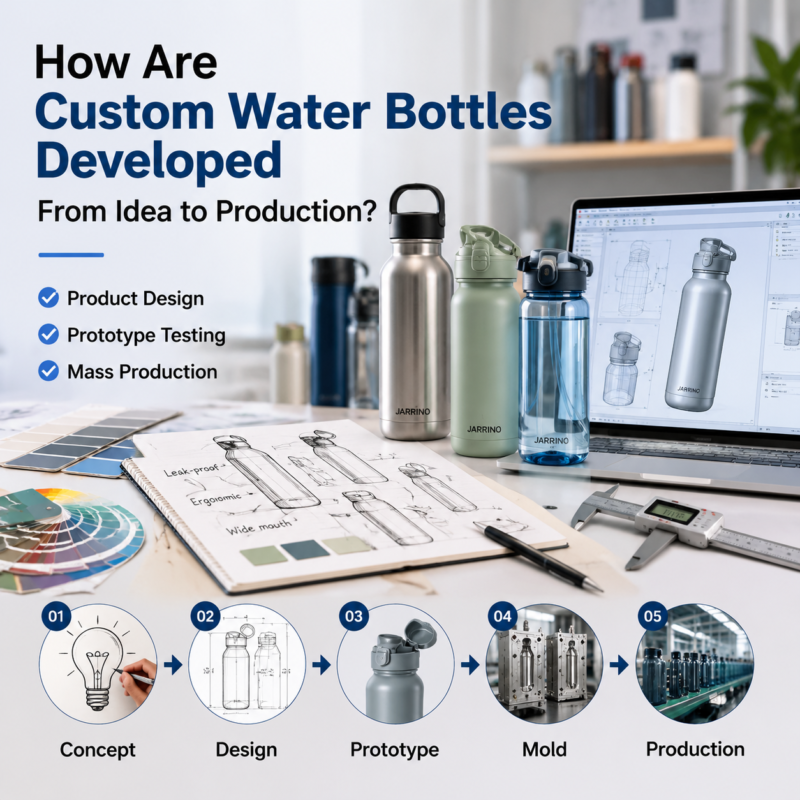
Comment les bouteilles d'eau personnalisées sont-elles développées, de l'idée à la production ??
Développer une bouteille d'eau personnalisée nécessite bien plus que choisir un design et ajouter un logo.. Du concept produit initial à l'ingénierie, prototypage, développement de moisissures, essai, et production de masse, chaque étape joue un rôle important dans la création d'un produit de boisson réussi. Ce guide explique comment les marques travaillent avec les fabricants de bouteilles d'eau OEM pour transformer les idées en produits de haute qualité., produits prêts à être commercialisés tout en gérant la conception, coût, et les défis de production.
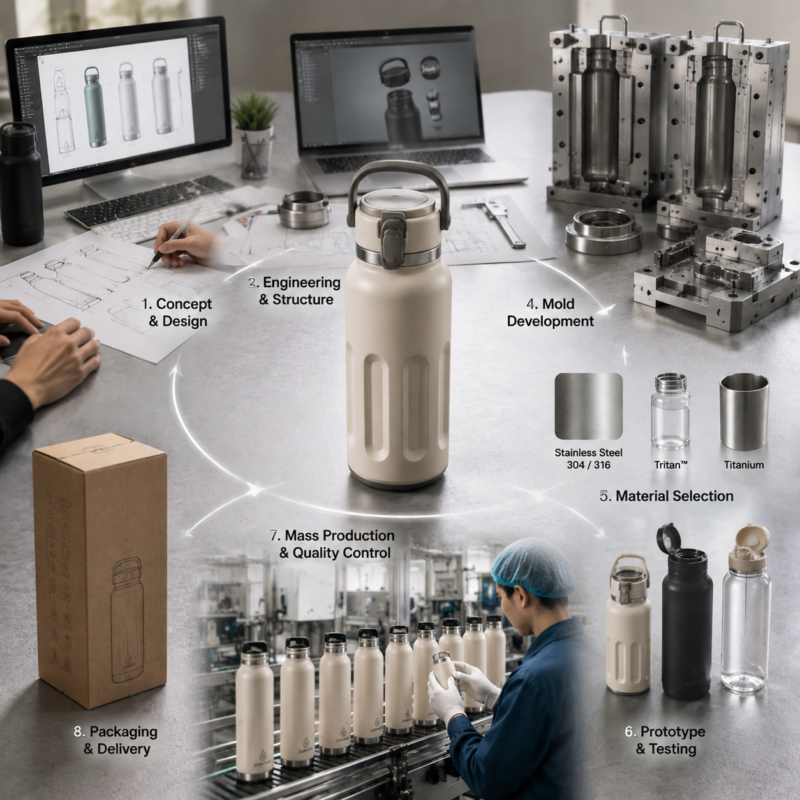
Comment sont fabriquées les bouteilles d’eau entièrement personnalisées?
Développer une bouteille d’eau entièrement personnalisée implique bien plus que l’ajout d’un logo à un produit existant. Ce guide explique comment les marques créent des bouteilles d'eau uniques grâce à la conception de produits., ingénierie, sélection des matériaux, développement de moisissures, tests de prototypes, et production de masse. Découvrez comment un fabricant de bouteilles d'eau OEM expérimenté contribue à transformer une idée en un produit prêt à être commercialisé tout en gérant la qualité., coût, et efficacité de production.
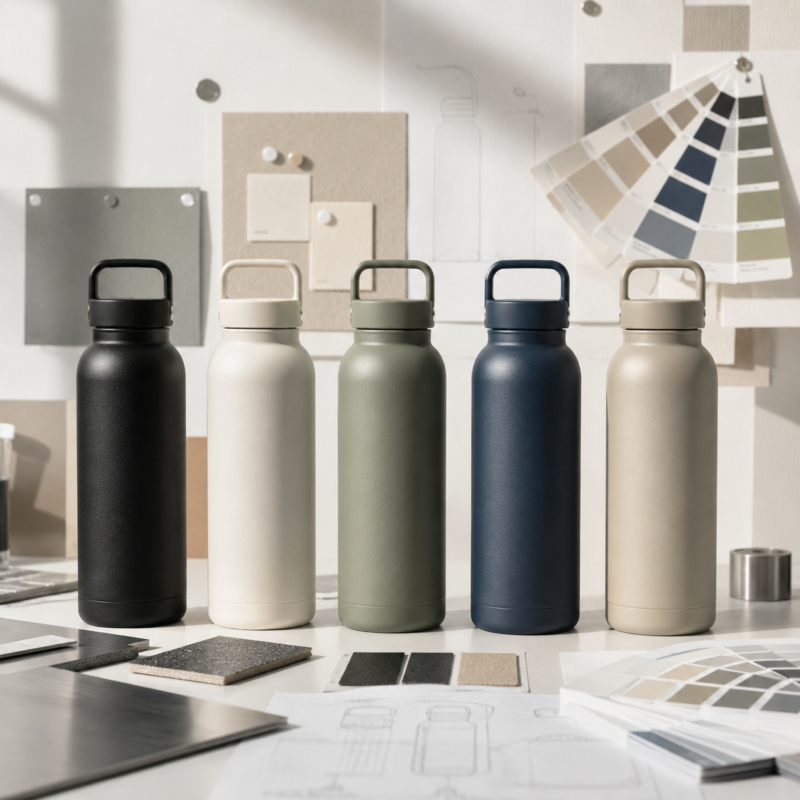
Comment choisir les couleurs et les finitions des bouteilles d'eau personnalisées
Le succès d’une collection de bouteilles d’eau personnalisées ne dépend pas seulement de couleurs attrayantes. Choisir la bonne palette de couleurs, état de surface, et la stratégie de fabrication contribue à renforcer l’identité de la marque, améliorer l'attractivité des clients, et assurer des ventes à long terme. Ce guide explique comment sélectionner les couleurs en fonction des préférences du marché, comparer les finitions mates et brillantes, optimiser les SKU, et obtenez une qualité constante grâce à une production OEM professionnelle.
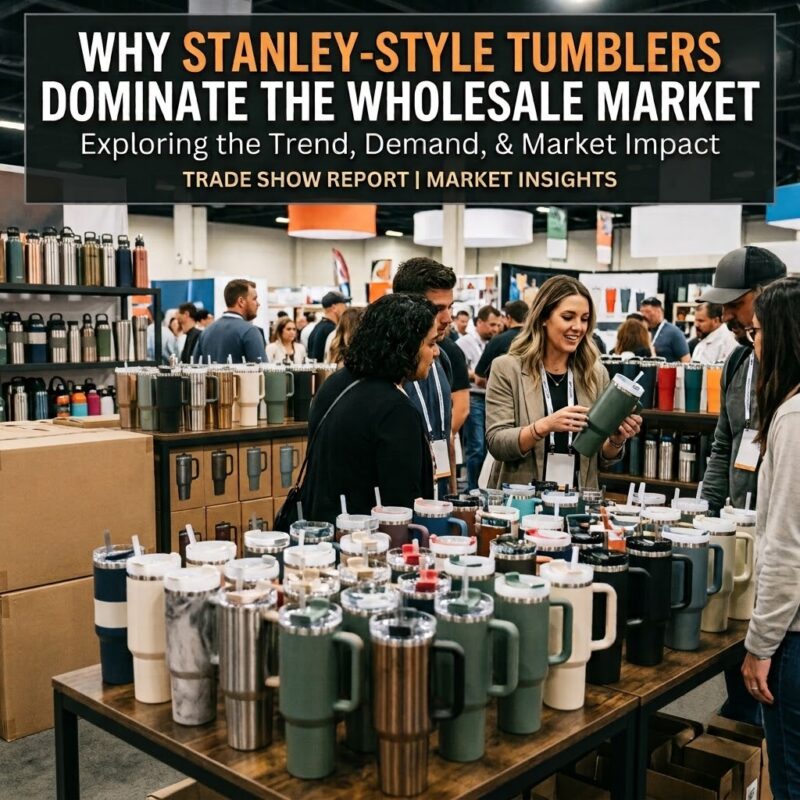
Pourquoi les gobelets de style Stanley dominent le marché de gros
Les gobelets de style Stanley sont devenus un phénomène culturel et un best-seller en gros. Cet article explore pourquoi – de 18/8 acier inoxydable et isolation sous vide à double paroi pour une valeur perçue élevée, potentiel de personnalisation, et une demande constante de commandes répétées. Découvrez ce qui fait de ces gobelets un produit fiable, catégorie rentable pour les acheteurs en gros.
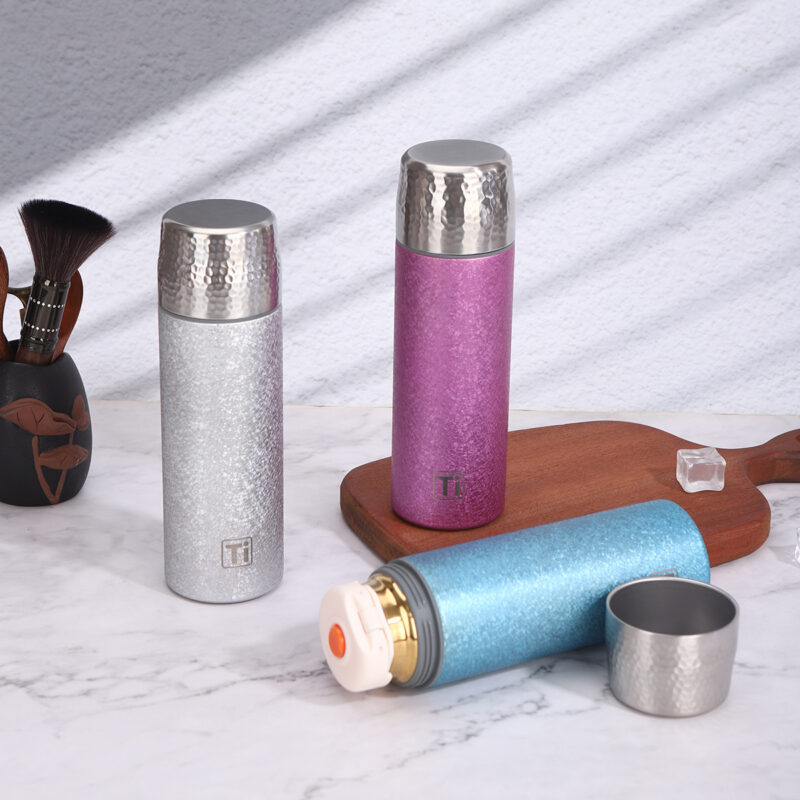
Les bouteilles d'eau en titane sont-elles sûres?
Le titane est sans danger. C'est aussi cher. Voici comment il se compare à l’acier inoxydable et à l’aluminium – et quel matériau est réellement adapté à votre marque..
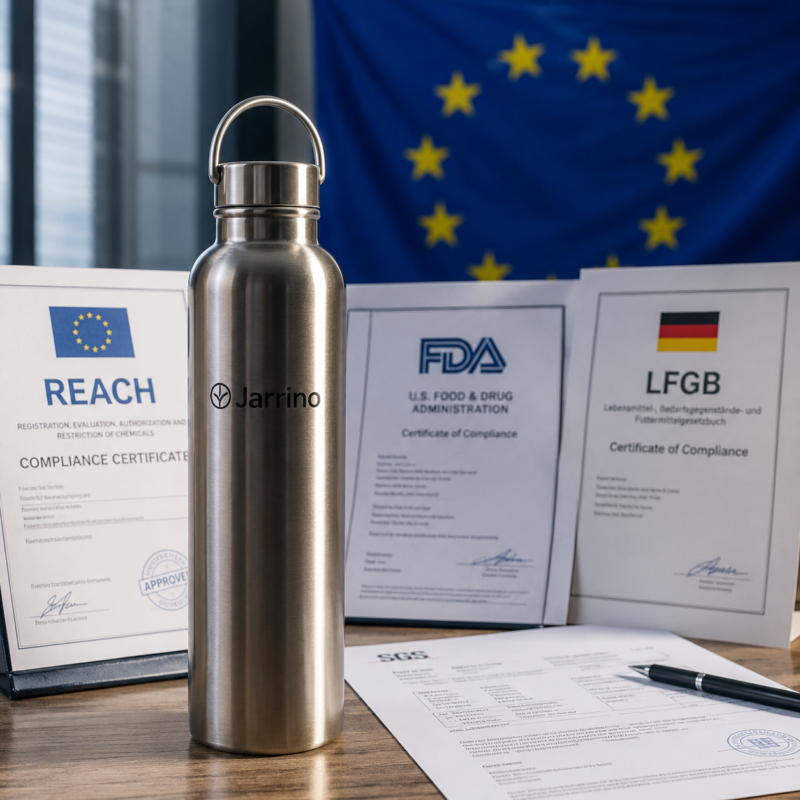
Règlement de l'UE sur les microplastiques 2026: Ce que tout fabricant de bouteilles d’eau personnalisées devrait savoir
Découvrez comment le règlement européen sur les microplastiques (UE) 2026/1168 impacte les fabricants de bouteilles d’eau personnalisées et les marques de verres de marque privée. Découvrez comment Jarrino aide les importateurs à rester conformes à REACH avec des bouteilles d'eau durables en acier inoxydable.