Commentaires fermés sur How to Choose a Custom Insulated Tumbler Manufacturer for Your Brand
Choosing the right custom insulated tumbler manufacturer is an important decision for drinkware brands, wholesalers, importers, and promotional product distributors. The right supplier can help you develop distinctive products, control sourcing costs, maintain consistent quality, and build a scalable private label drinkware business.
Cependant, not all tumbler manufacturers offer the same materials, customization options, production capabilities, or quality standards. Comparing suppliers based on unit price alone can lead to unexpected tooling costs, inconsistent product specifications, and delays during production.
This guide explains how to evaluate custom insulated tumbler manufacturers, compare OEM and ODM services, understand MOQ and pricing, select suitable materials, and prepare a more effective wholesale quotation request.
What Should You Look for in a Custom Insulated Tumbler Manufacturer?
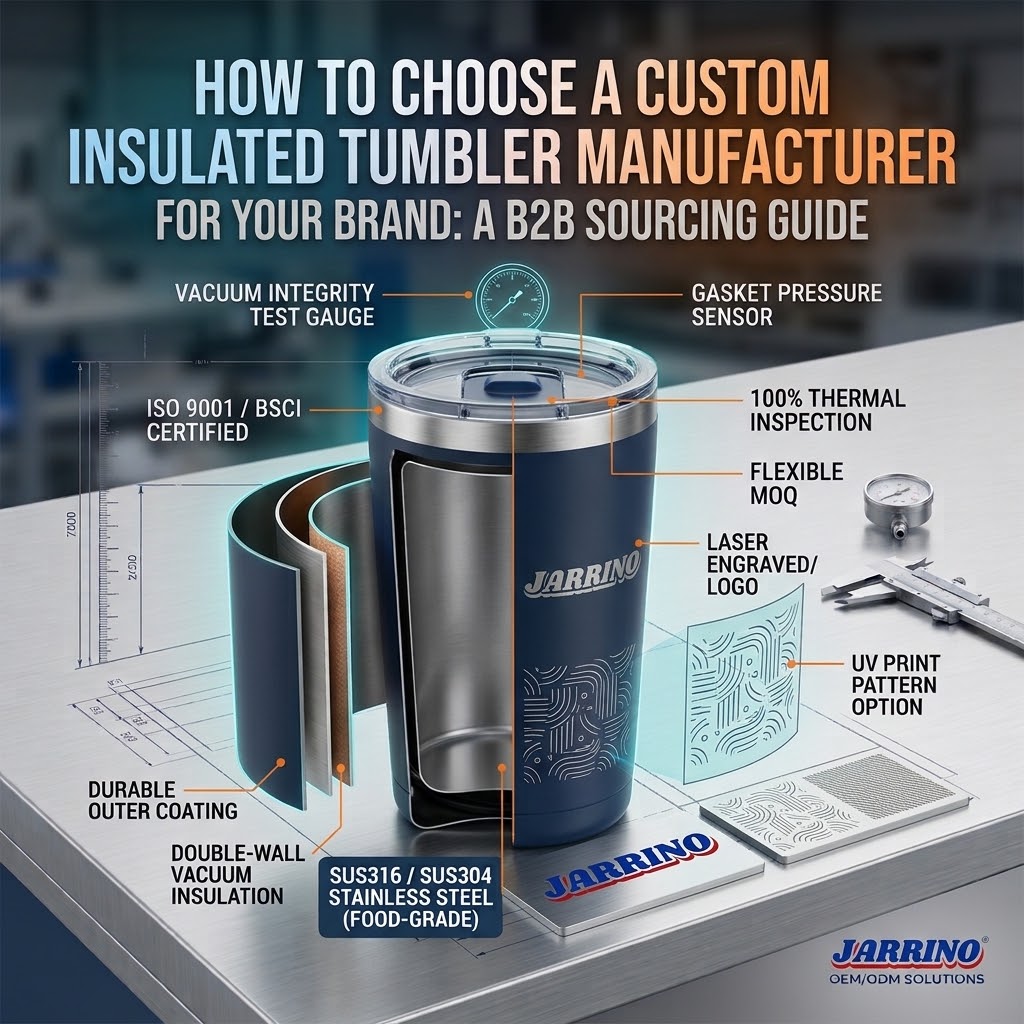
A reliable custom insulated tumbler manufacturer should be able to explain its material specifications, customization capabilities, minimum order requirements, quality-control procedures, and production process.
Pour les acheteurs B2B, the most important evaluation criteria are:
Product specifications:Clearly defined materials, capacités, dimensions, lid designs, and insulation requirements.
Customization capabilities:Logo application, correspondance des couleurs, surface finishes, accessories, et emballage.
OEM and ODM support:Options for developing a product from your design or customizing an existing model.
MOQ and cost transparency:Clear pricing for products, échantillons, outillage, branding, et emballage.
Quality assurance:Defined inspection procedures, product testing, and consistent production specifications.
Compliance documentation:Relevant food-contact documentation for the intended market and product configuration.
Communication and delivery:Realistic lead times, clear approval procedures, and production updates.
The best manufacturing partner is not necessarily the supplier offering the lowest initial price. It is the supplier whose capabilities, product quality, and commercial terms match your business requirements.
1. Choose the Right Material for Custom Insulated Tumblers
Material selection affects product weight, durabilité, apparence, manufacturing cost, and suitability for different markets.
Stainless Steel Insulated Tumblers
Stainless steel is widely used in premium reusable drinkware. Double-wall vacuum-insulated construction can help maintain beverage temperature by reducing heat transfer between the inner and outer walls.
When sourcing custom stainless steel tumblers, confirm the exact grade used for each component rather than relying on a general stainless steel specification.
Par exemple, buyers may request 304 stainless steel for the inner wall and specify a separate material grade for the outer wall, depending on the product design and budget.
Other considerations include:
Wall construction and vacuum insulation performance
Capacity and overall dimensions
Revêtement en poudre, polished finishes, or other surface treatments
Poignée, paille, and lid configurations
Logo application and packaging requirements
Plastic and Tritan Tumblers
Plastic drinkware may suit lightweight products, transparent designs, and applications where portability or visual product differentiation is important.
Tritan is often selected for clear, reusable drinkware. Cependant, a single-wall Tritan tumbler does not offer the same insulation construction as a double-wall vacuum-insulated stainless steel tumbler.
Choose materials based on the actual product design and intended use rather than treating all reusable tumblers as interchangeable.
How Do You Compare Tumbler Materials?
Evaluation factor
Stainless steel vacuum tumbler
Plastic or Tritan tumbler
Typical positioning
Premium reusable drinkware
Lightweight everyday drinkware
Isolation
Vacuum insulation when designed accordingly
Depends on construction
Appearance
Metallic, coated, or polished finishes
Can offer transparent or colored designs
Personnalisation
Engraving, impression, coatings, and other compatible methods
Printing and other material-compatible methods
Main purchasing consideration
Material grade, isolation, finish, and weight
Material specification, transparency, durabilité, and intended use
These are general product characteristics, not universal specifications. Actual performance and customization options depend on the selected model.
2. Compare OEM and ODM Tumbler Manufacturers
OEM and ODM are two common approaches to custom drinkware manufacturing. Understanding the difference helps you choose the right development route.
OEM tumbler manufacturingis generally suitable when your business has its own design, technical drawings, product specifications, or approved sample. The manufacturer produces the product according to the agreed requirements.
ODM tumbler manufacturingtypically starts with an existing manufacturer design that can be selected or modified to fit your brand. Depending on the model, modifications may include color, logo, accessories, et emballage.
Requirement
OEM manufacturing
ODM manufacturing
Starting point
Buyer-provided design or specifications
Existing manufacturer design
Design flexibility
Depends on the project and factory capabilities
Usually based on available models and permitted modifications
Development requirements
May involve engineering, prototypes, or tooling
May allow a more direct route to sampling
Cost considerations
Custom development and tooling may add costs
Existing tooling may reduce some development expenses
Suitable buyers
Brands seeking a defined or differentiated product
Brands seeking a customized product based on an existing design
Neither approach is automatically better. The right choice depends on your design requirements, budget, target launch date, and desired product differentiation.
Before proceeding, clarify which changes are included in the quoted service and which require separate development fees.
3. Customize Tumblers Beyond the Logo
A recognizable logo helps establish brand identity, but successful private label tumblers often combine several coordinated design elements.
Personnalisation du logo
Common logo application methods include:
Gravure laser:Suitable for compatible surfaces where a precise, durable mark is desired.
Sérigraphie:Useful for certain artwork and surface applications.
Heat transfer:Can support specific graphic and color requirements on compatible products.
Other printing methods:Available depending on the surface, artwork, and production process.
Ask your manufacturer to recommend a method based on your artwork, tumbler coating, logo size, and required appearance.
Custom Colors and Surface Finishes
Color customization can help distinguish a product line from standard wholesale drinkware. Options may include matte finishes, revêtement en poudre, metallic effects, or custom color matching, depending on the model.
Confirm whether the color is an existing option or requires a separate production setup. If color accuracy is important, establish an approval process before mass production.
Lids, Handles, Straws, and Accessories
Functional details can influence both usability and manufacturing complexity.
Consider whether your target customers need a handle, paille, direct-drinking lid, cup-holder-compatible base, or other accessories. Each addition should be evaluated for compatibility, cleaning requirements, durabilité, and cost.
Private Label Packaging
Custom packaging can support retail presentation, gifting, and brand consistency. Discuss box design, inserts, printed materials, and packaging protection with your supplier.
Pour les acheteurs B2B, the key is to distinguish standard customization options from changes that require new tooling, additional testing, or higher MOQs.
4. Understand MOQ and Custom Tumbler Pricing
MOQ, or minimum order quantity, is the smallest order a manufacturer is willing to accept under specified commercial conditions.
There is no universal MOQ for custom insulated tumblers. Requirements vary according to the existing model, production process, order quantity, color selection, branding method, et emballage.
Par exemple, customizing an existing tumbler may involve different costs and order requirements from developing a new mold or changing the product structure.
What Determines the Cost of a Custom Insulated Tumbler?
Material and construction:Material grade, wall construction, insulation design, and component selection influence manufacturing costs.
Conception de produits:Existing models may avoid certain tooling expenses, while structural changes may require additional engineering or tooling.
Personnalisation:Logo application, custom colors, traitements de surface, and accessories can affect the unit price.
Order quantity:Production volume and setup requirements influence how costs are distributed across an order.
Conditionnement:Retail boxes, inserts personnalisés, and other packaging requirements can add to the total project cost.
Quality and compliance requirements:Testing, documentation, and inspection arrangements should be included in the purchasing plan where applicable.
How Can Buyers Compare Supplier Quotations?
Request quotations based on the same product specifications.
A useful quotation should clarify:
Product model and capacity
Inner and outer material grades
Lid and accessory configuration
Logo method and color requirements
Unit price at specified quantities
MOQ and any color-specific restrictions
Sample charges and tooling costs
Packaging costs
Production lead time and shipping terms
Do not compare unit prices without checking what each quotation includes. A lower price may reflect a different specification, simpler packaging, or fewer services.
For brands developing a new product, total project cost is often a more useful measure than unit price alone.
5. Evaluate Quality Control and Food-Contact Compliance
Product quality is essential for repeat orders, customer satisfaction, and long-term brand reputation.
Before placing a bulk order, ask how the manufacturer verifies product specifications and checks finished goods.
Important Quality-Control Checks
Depending on the product, a quality plan may include:
Material and component verification
Dimensional and assembly inspections
Surface finish and logo consistency checks
Lid fit and leak testing under an agreed method
Vacuum insulation performance testing
Packaging and pre-shipment inspection
For insulation testing, specify the starting beverage temperature, ambient conditions, test duration, and measurement method. This makes it easier to compare performance consistently and avoids relying on vague claims about how long a tumbler keeps drinks hot or cold.
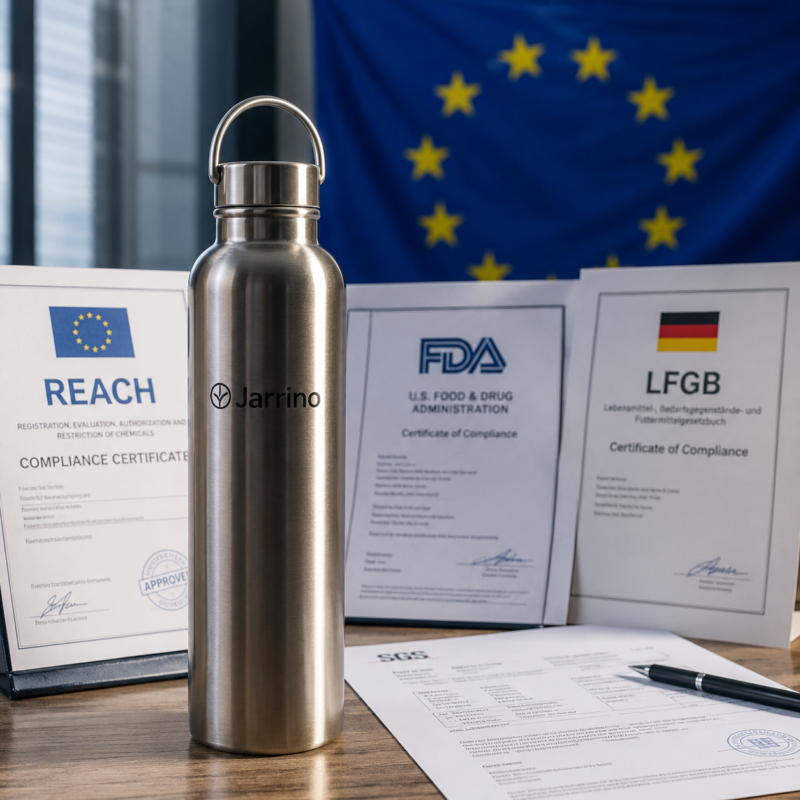
What About FDA, LFGB, and EU Food-Contact Requirements?
Requirements depend on the destination market, intended use, product construction, and materials that contact food or beverages.
US food-contact requirements and European Union food-contact rules are not interchangeable. Similarly, a supplier’s possession of a general test report does not automatically establish that every component of every product complies with all applicable requirements.
Before ordering, request documentation relevant to the specific product and market. Confirm which materials and components were tested, which requirements were assessed, and whether additional testing or declarations are needed.
For EU-bound products, review the applicable food-contact legislation and material-specific requirements. For US-bound products, confirm the relevant FDA requirements for the intended food-contact use.
The goal is to verify product suitability before importation and sale, not simply to collect certificates.
6. Request Samples Before Bulk Production
A product sample helps buyers evaluate whether the proposed tumbler matches their expectations before committing to a larger order.
Use a written checklist to review:
Materials and dimensions:Verify the agreed material grades, capacité, dimensions, and component specifications.
Appearance:Check the finish, couleur, surface quality, and overall construction.
Branding:Compare the logo position, taille, couleur, and application quality with the approved artwork.
Functionality:Test the lid, drinking mechanism, handle, and other relevant features.
Leak resistance:Follow an agreed test procedure appropriate to the product’s intended use.
Isolation:Compare performance under consistent test conditions against the agreed specification.
Conditionnement:Confirm the packaging design, product protection, and included accessories.
Once the sample is approved, document the final specifications. If the production version differs from the approved sample, resolve the discrepancy before authorizing shipment.
For repeat orders, retaining an approved reference sample and specification sheet can help reduce inconsistencies between batches.
7. Check Production Lead Times and Supplier Communication
The manufacturing timeline depends on product availability, customization complexity, sample approvals, outillage, material preparation, order quantity, and factory scheduling.
Ask your supplier to separate the expected timelines for:
Initial quotation and specification review
Sample preparation and approval
Tooling or structural development, if required
Mass production
Quality inspection and packaging
Shipment and delivery
Clarify when the production lead time officially begins. Par exemple, some production schedules may depend on deposit receipt, final artwork approval, or sample confirmation.
Also evaluate how the supplier handles design revisions, specification changes, production updates, and quality issues.
Clear communication is particularly important for customized orders because even a small change in color, logo placement, or packaging can affect the final product.
8. A Practical Checklist for Choosing a Wholesale Tumbler Supplier
Before selecting a custom insulated tumbler manufacturer, use the following checklist to compare potential suppliers.
Evaluation question
What to confirm
Product specifications
Are materials, dimensions, and insulation requirements clearly defined?
Personnalisation
Can the supplier meet your logo, couleur, finish, et exigences d'emballage?
Services OEM/ODM
Can the manufacturer support your preferred development approach?
MOQ
Is the minimum order suitable for your purchasing plan?
Pricing
Are tooling, échantillons, branding, and packaging costs transparent?
Samples
Can you approve the product before mass production?
Contrôle de qualité
Are inspection methods and acceptance criteria clearly defined?
Conformité
Is relevant product documentation available for your target market?
Délai de mise en œuvre
Are sample and production schedules clearly explained?
Repeat orders
Can the agreed specifications be used to support consistent reordering?
A supplier comparison should be based on documented requirements and evidence rather than general promises. If a requirement is essential to your business, obtain confirmation in writing before placing the order.
9. Why Consider Jarrino for Custom Insulated Tumblers?
For drinkware brands, wholesalers, and distributors, sourcing a custom tumbler involves more than finding a standard product at a competitive price. The product must also match the brand’s specifications, target market, and commercial requirements.
Jarrino’s B2B drinkware offering provides a starting point for businesses exploring customized bottles, insulated tumblers, and related drinkware products.
When discussing a project with Jarrino, buyers should prepare their preferred capacity, material requirements, target quantity, logo artwork, color preferences, and packaging specifications. These details help establish which available models and customization options may fit the project.
Depending on the selected product, the discussion may cover:
Existing tumbler models and customization possibilities
Material and component specifications
Logo application and surface finishes
Exigences d'emballage
MOQ, sample arrangements, and quotation details
Applicable product documentation and quality requirements
The appropriate manufacturing approach depends on the actual project. Buyers should confirm available options, pricing, calendriers de production, and documentation directly with Jarrino before making purchasing decisions.
Whether you are sourcing private label tumblers for retail, branded drinkware for promotional distribution, or customized insulated cups for a product collection, a clear specification is the first step toward a more efficient sourcing process.
Frequently Asked Questions About Custom Insulated Tumbler Manufacturing
What is a custom insulated tumbler manufacturer?
A custom insulated tumbler manufacturer produces insulated drinking cups according to agreed product specifications and may offer branding, couleur, accessory, and packaging customization. Available services vary by manufacturer and model.
How do I find a private label tumbler manufacturer?
Identify manufacturers that offer suitable product models, confirm their customization capabilities, and compare MOQ, pricing, échantillons, quality-control procedures, and relevant compliance documentation. Request a written quotation based on the same specifications from each supplier.
What is the MOQ for custom insulated tumblers?
MOQ varies by model, order quantity, méthode de logo, couleur, conditionnement, and tooling requirements. Ask the manufacturer to confirm the minimum quantity for your specific product and customization plan.
Can I order custom logo tumblers wholesale?
Oui. Many drinkware suppliers offer logo customization for wholesale orders. Available methods and minimum quantities depend on the product surface, artwork, production process, and supplier capabilities.
What is the difference between OEM and ODM tumblers?
OEM generally follows a buyer’s design or technical specifications. ODM generally starts with an existing manufacturer design that can be selected or modified. Confirm the precise scope of each service with your supplier.
How much does a custom stainless steel tumbler cost?
The price depends on materials, construction, capacité, order quantity, personnalisation, accessories, conditionnement, and tooling. A reliable comparison requires quotations based on identical specifications.
How long does it take to manufacture custom tumblers?
The timeline depends on whether the product uses an existing model, whether samples or tooling are required, the order quantity, and the production schedule. Request separate estimates for sampling, mass production, and delivery.
Which stainless steel grade should I choose for a tumbler?
The appropriate grade depends on the product design, component application, intended use, and applicable requirements. Specify the inner and outer wall materials separately and request supporting documentation where needed.
What documents should I request from a tumbler supplier?
Request product specifications, relevant food-contact test reports or declarations, and any other documentation required for your destination market. Verify that the documents apply to the actual product and its components.
Can a manufacturer customize both the tumbler and its packaging?
Depending on its capabilities, a manufacturer may offer logo application, personnalisation des couleurs, accessories, and retail packaging. Confirm which options are standard and which require additional costs, outillage, or minimum quantities.
Request a Quote for Custom Insulated Tumblers
Looking for a B2B supplier for your next drinkware project?
Contact Jarrino with your product requirements, target quantity, preferred materials, branding details, and packaging needs. A clear brief helps establish suitable product options, customization possibilities, MOQ, and quotation details.
Explore custom insulated tumblers with Jarrino and start planning your private label drinkware project.
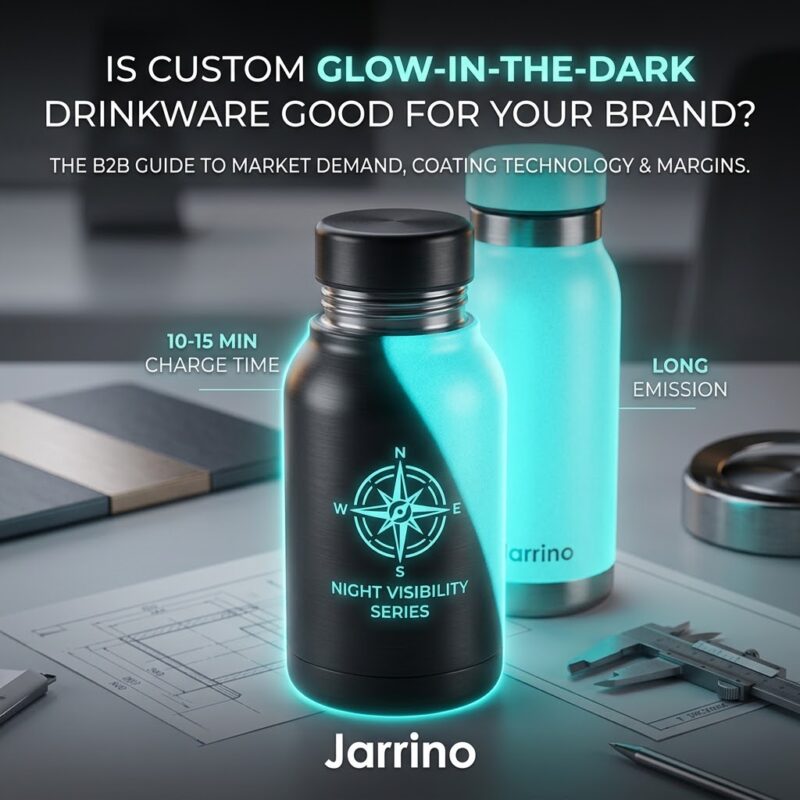
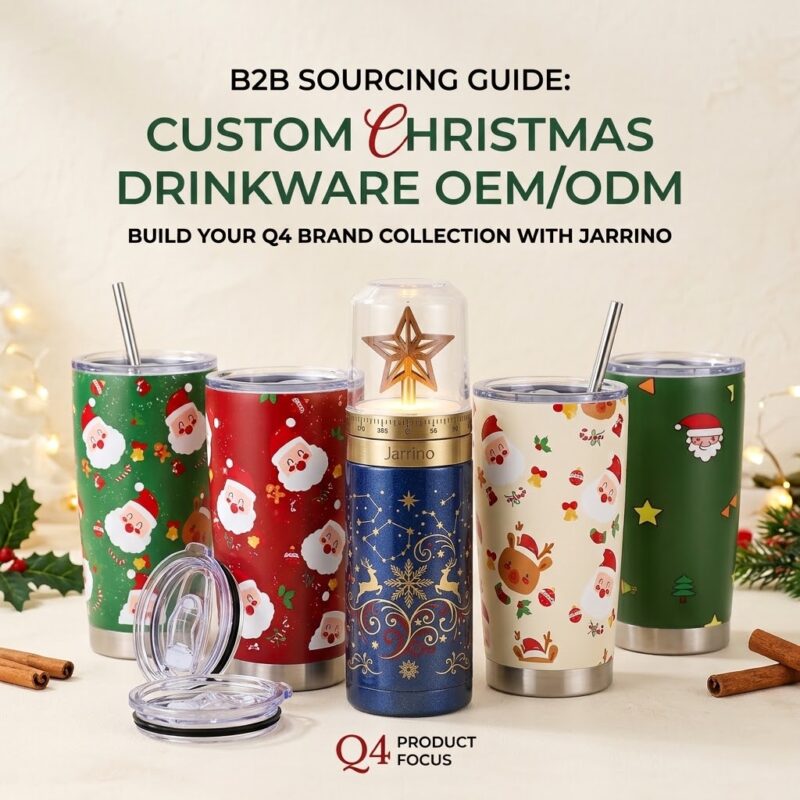
Les verres personnalisés qui brillent dans le noir offrent aux marques de distributeur une opportunité de marge élevée sur un marché concurrentiel. Jarrino fournit des produits de qualité industrielle, revêtements photoluminescents de qualité alimentaire, assurer la durabilité et la conformité tout en ciblant les secteurs du plein air et de la jeunesse, stimuler l'attrait viral des médias sociaux et la différenciation des produits.
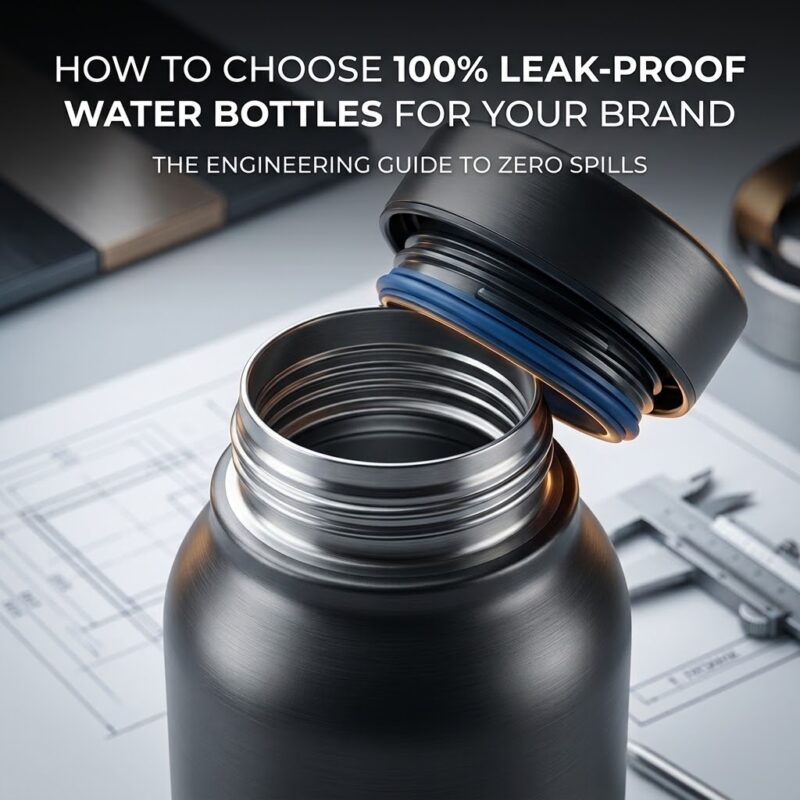
Ce guide aide les marques de verres à sélectionner 100% bouteilles en acier inoxydable étanches grâce à l'analyse des tests de contrôle qualité et de l'ingénierie des couvercles. Les fabricants comme Jarrino utilisent des, tremblement, et tests de pression d'air pour vérifier les joints. Les bouchons à vis traditionnels offrent une protection absolue contre les fuites, tandis que les couvercles verrouillables et les bouchons en paille nécessitent des joints en silicone précis., Précision du filetage CNC, et valves d'air unidirectionnelles pour éviter les déversements.
Jarrino est un fabricant certifié OEM/ODM spécialisé dans les flacons à vide personnalisés, gobelets doublés de céramique, et verres en titane. Les délais de livraison pour les commandes de Noël personnalisées du quatrième trimestre sont de 20 à 30 jours avec de faibles MOQ (300–1 000 pièces) et conformité totale FDA/LFGB. Nous proposons une personnalisation de bout en bout, y compris l'impression numérique 3D, gravure laser, et emballages cadeaux de Noël sur mesure. Des kits d'échantillons et des devis sont disponibles sur demande pour aider les marques à sécuriser en douceur la production des fêtes du quatrième trimestre..
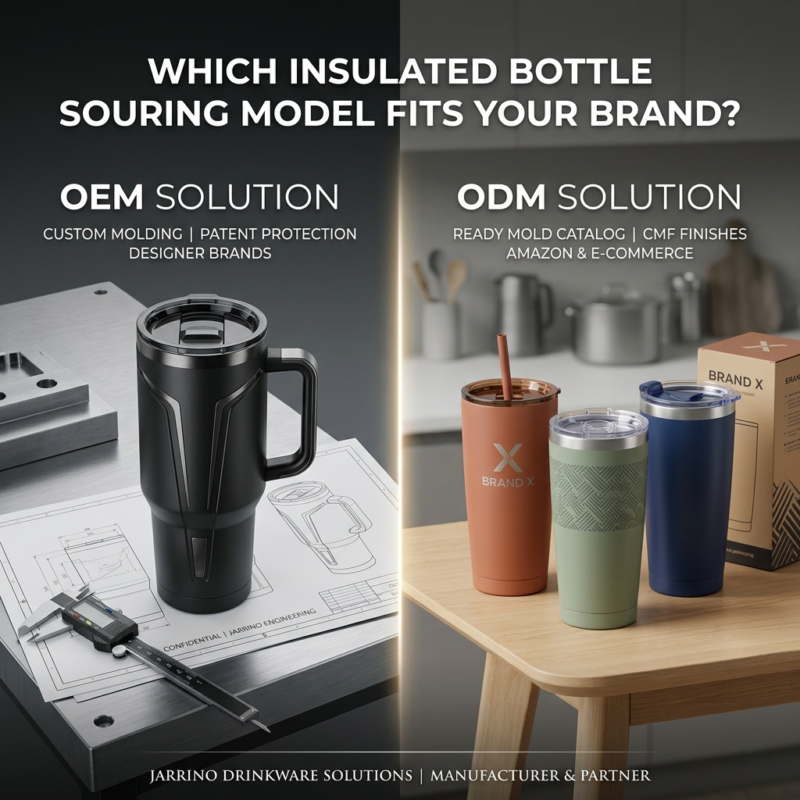
Choisir entre OEM (Fabrication d'équipement d'origine) et ODM (Fabrication de conception originale) définit le R de votre marque de verres&Budget D, délai de mise sur le marché, et l'exclusivité du produit. L'OEM est idéal pour les marques établies avec des conceptions CAO personnalisées et des exigences IP uniques, offre 100% moulage sur mesure et protection par brevet. ODM est conçu pour les vendeurs Amazon, Startups DTC, et les acheteurs d'entreprise recherchant des coûts d'outillage nuls, faibles MOQ, et des lancements de produits rapides via des finitions CMF avancées (revêtement en poudre, Impression UV).
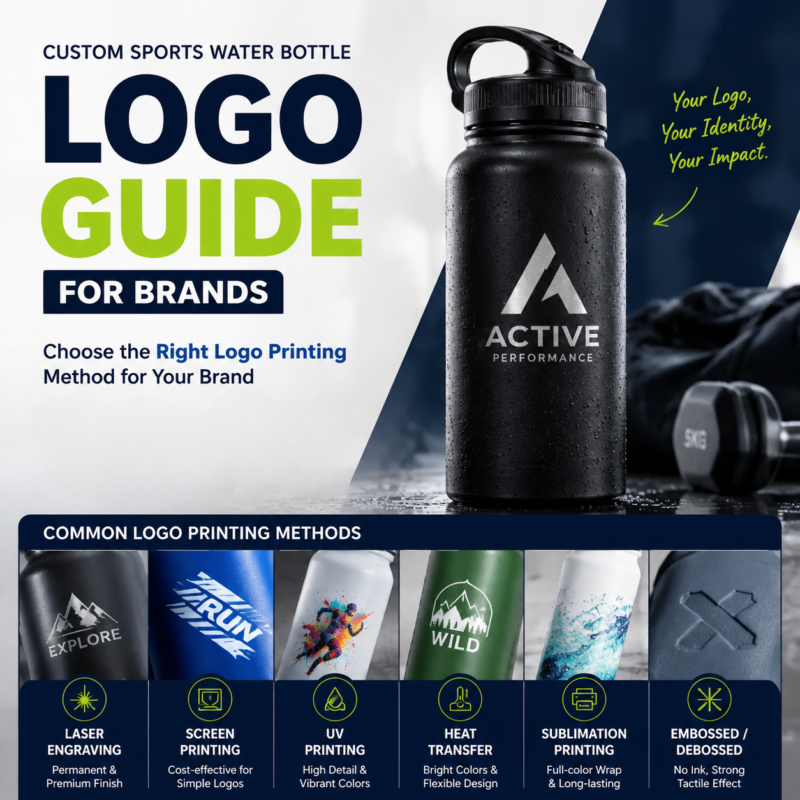
Les logos personnalisés de bouteilles d'eau de sport sont créés grâce à différents processus de décoration en fonction du matériau de la bouteille., conception de marque, et exigences de performance. Ce guide couvre les méthodes d'impression de logo les plus courantes, y compris la gravure au laser, sérigraphie, Impression UV, transfert de chaleur, et sublimation, aider les marques de sport à sélectionner la bonne option de personnalisation pour des produits de boisson durables et professionnels.
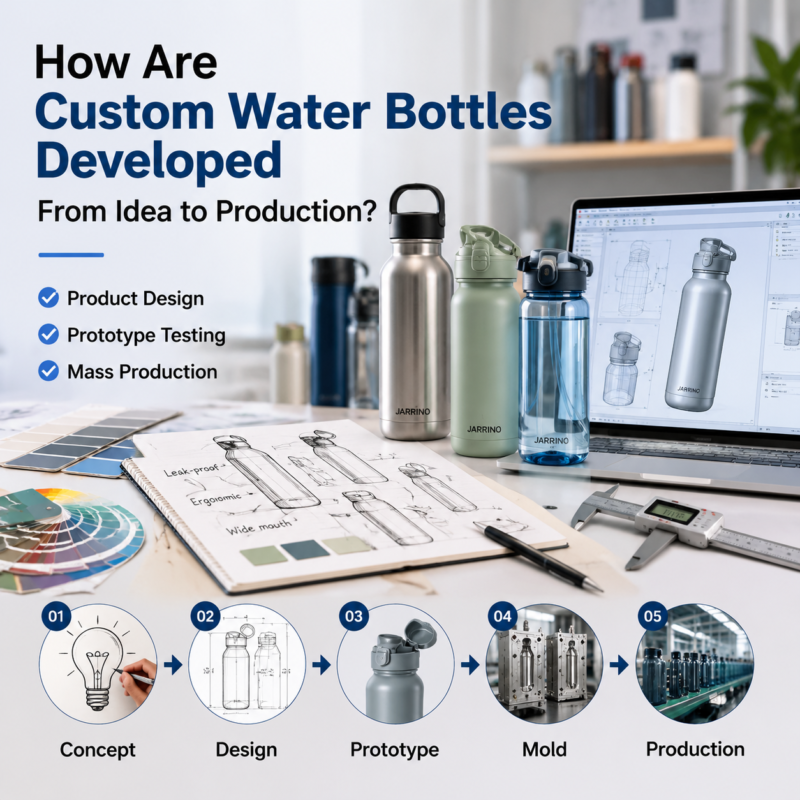
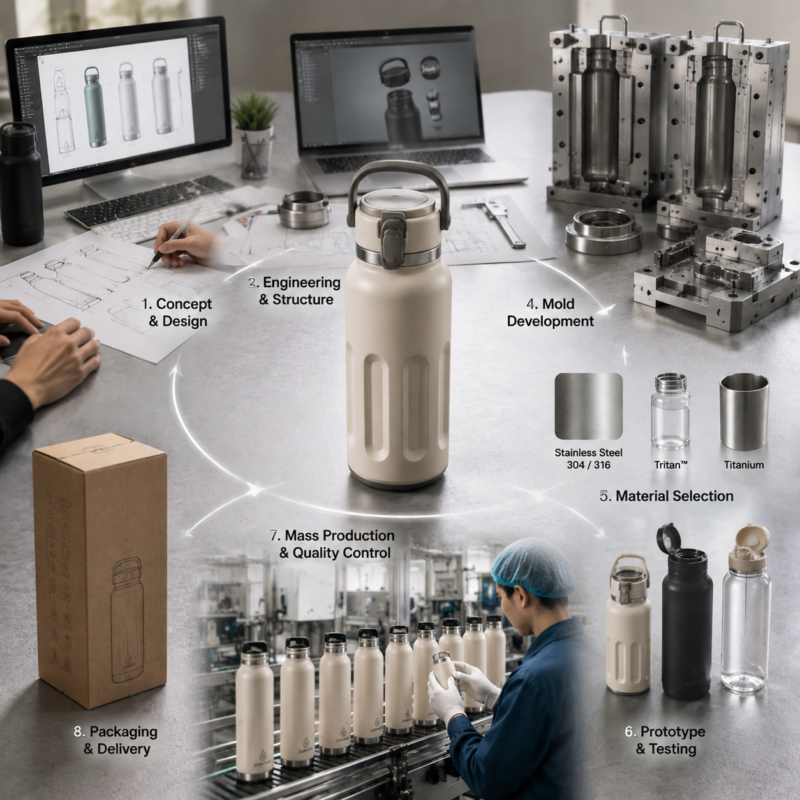
Développer une bouteille d'eau personnalisée nécessite bien plus que choisir un design et ajouter un logo.. Du concept produit initial à l'ingénierie, prototypage, développement de moisissures, essai, et production de masse, chaque étape joue un rôle important dans la création d'un produit de boisson réussi. Ce guide explique comment les marques travaillent avec les fabricants de bouteilles d'eau OEM pour transformer les idées en produits de haute qualité., produits prêts à être commercialisés tout en gérant la conception, coût, et les défis de production.
Développer une bouteille d’eau entièrement personnalisée implique bien plus que l’ajout d’un logo à un produit existant. Ce guide explique comment les marques créent des bouteilles d'eau uniques grâce à la conception de produits., ingénierie, sélection des matériaux, développement de moisissures, tests de prototypes, et production de masse. Découvrez comment un fabricant de bouteilles d'eau OEM expérimenté contribue à transformer une idée en un produit prêt à être commercialisé tout en gérant la qualité., coût, et efficacité de production.
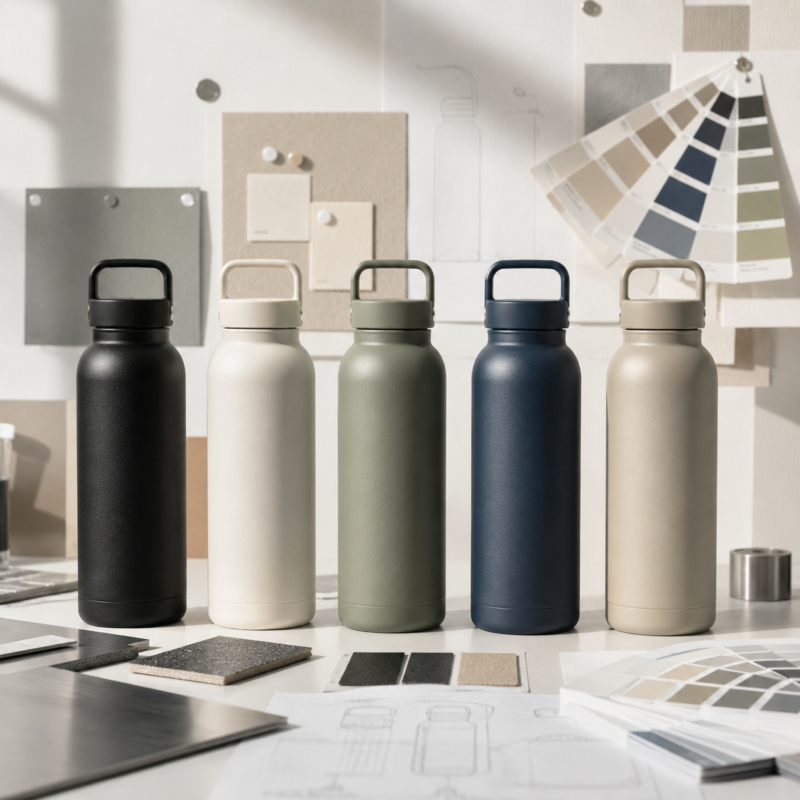
Le succès d’une collection de bouteilles d’eau personnalisées ne dépend pas seulement de couleurs attrayantes. Choisir la bonne palette de couleurs, état de surface, et la stratégie de fabrication contribue à renforcer l’identité de la marque, améliorer l'attractivité des clients, et assurer des ventes à long terme. Ce guide explique comment sélectionner les couleurs en fonction des préférences du marché, comparer les finitions mates et brillantes, optimiser les SKU, et obtenez une qualité constante grâce à une production OEM professionnelle.
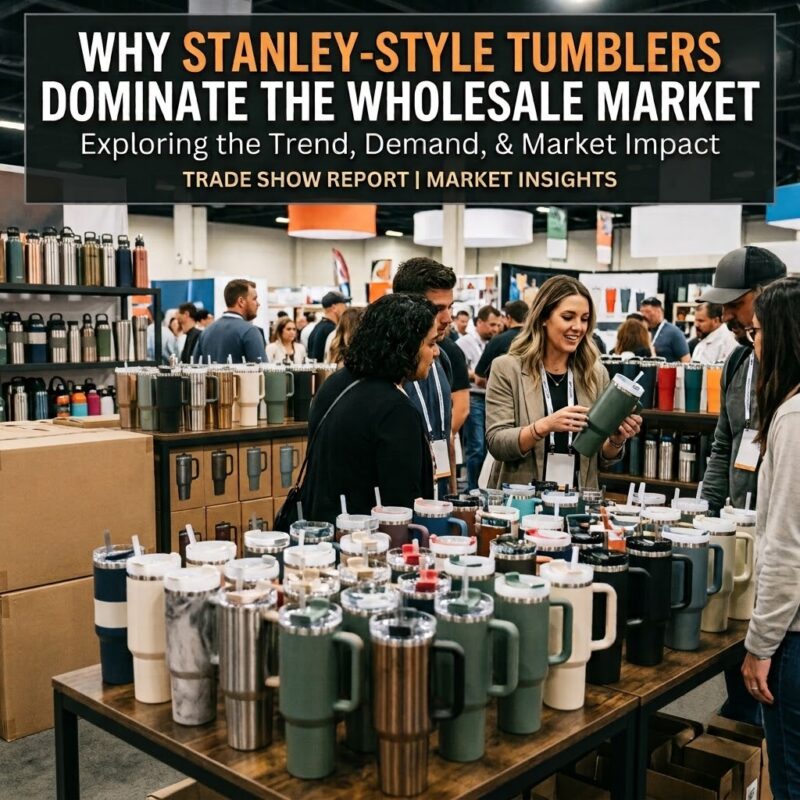
Les gobelets de style Stanley sont devenus un phénomène culturel et un best-seller en gros. Cet article explore pourquoi – de 18/8 acier inoxydable et isolation sous vide à double paroi pour une valeur perçue élevée, potentiel de personnalisation, et une demande constante de commandes répétées. Découvrez ce qui fait de ces gobelets un produit fiable, catégorie rentable pour les acheteurs en gros.
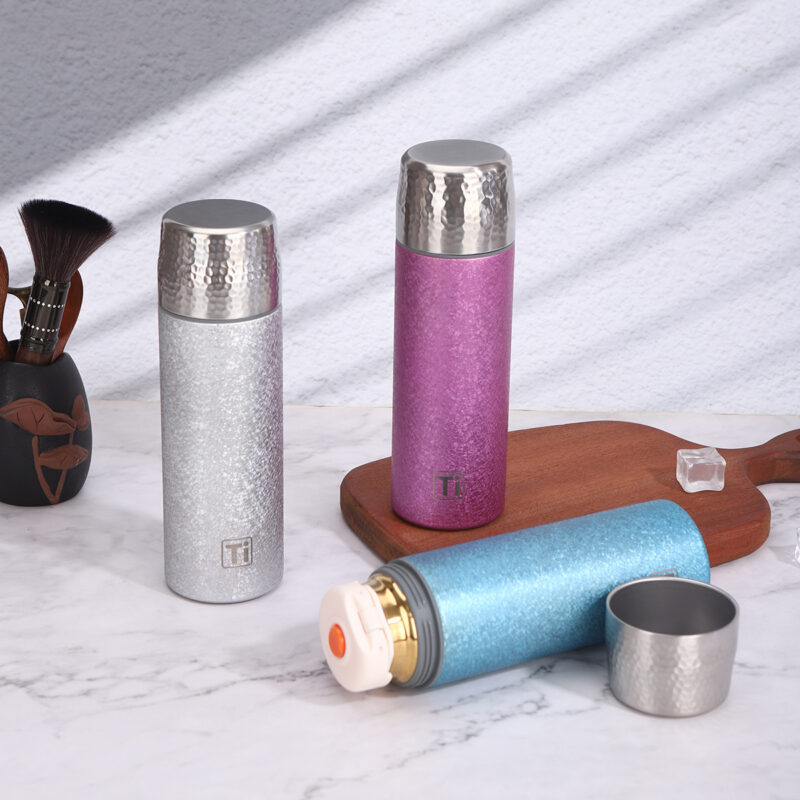
Le titane est sans danger. C'est aussi cher. Voici comment il se compare à l’acier inoxydable et à l’aluminium – et quel matériau est réellement adapté à votre marque..
Découvrez comment le règlement européen sur les microplastiques (UE) 2026/1168 impacte les fabricants de bouteilles d’eau personnalisées et les marques de verres de marque privée. Découvrez comment Jarrino aide les importateurs à rester conformes à REACH avec des bouteilles d'eau durables en acier inoxydable.
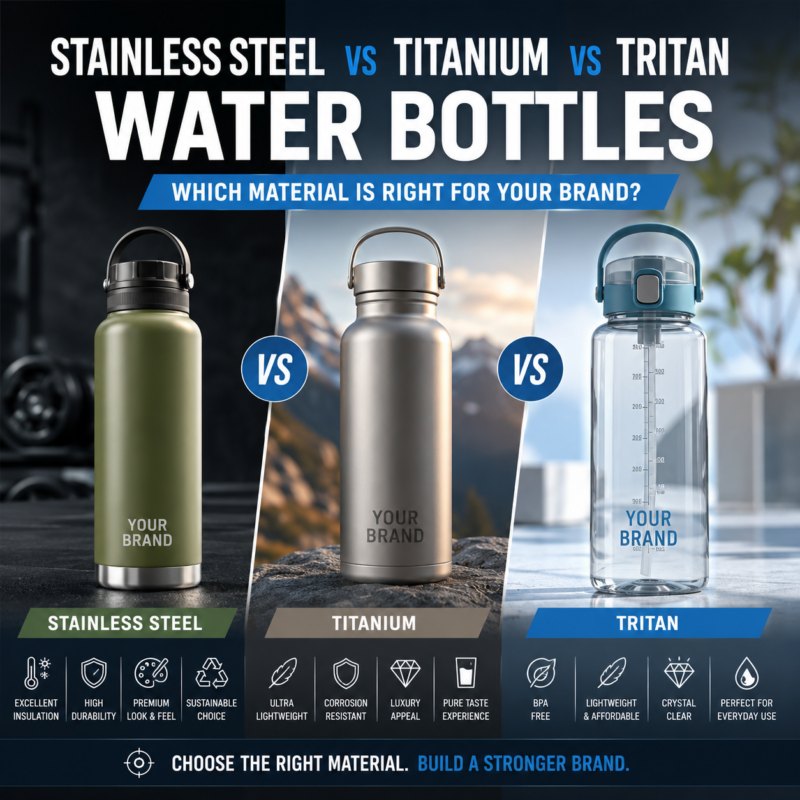
Choosing the right water bottle material can significantly impact your product quality, pricing, and brand positioning. This guide compares stainless steel, titane, and Tritan water bottles across durability, isolation, coût, personnalisation, and sustainability to help brands, détaillants, and OEM buyers select the best material for their target market.
Pour offrir les meilleures expériences, nous utilisons des technologies telles que les cookies pour stocker et/ou accéder aux informations sur l'appareil. Le consentement à ces technologies nous permettra de traiter des données telles que le comportement de navigation ou des identifiants uniques sur ce site.. Ne pas consentir ou retirer son consentement, peut affecter négativement certaines caractéristiques et fonctions.
Fonctionnel
Toujours activé
Le stockage ou l'accès technique est strictement nécessaire à la finalité légitime de permettre l'utilisation d'un service spécifique explicitement demandé par l'abonné ou l'utilisateur., ou aux seules fins d'effectuer la transmission d'une communication sur un réseau de communications électroniques.
Préférences
Le stockage ou l'accès technique est nécessaire dans le but légitime de stocker des préférences qui ne sont pas demandées par l'abonné ou l'utilisateur..
Statistiques
Le stockage ou l'accès technique utilisé exclusivement à des fins statistiques.Le stockage ou l'accès technique utilisé exclusivement à des fins statistiques anonymes. Sans assignation à comparaître, conformité volontaire de la part de votre fournisseur d'accès Internet, ou des enregistrements supplémentaires provenant d'un tiers, les informations stockées ou récupérées à cette seule fin ne peuvent généralement pas être utilisées pour vous identifier.
Commercialisation
Le stockage ou l'accès technique est nécessaire pour créer des profils d'utilisateurs pour envoyer de la publicité., ou pour suivre l'utilisateur sur un site Web ou sur plusieurs sites Web à des fins de marketing similaires.