
Pourquoi les gobelets de style Stanley dominent le marché de gros
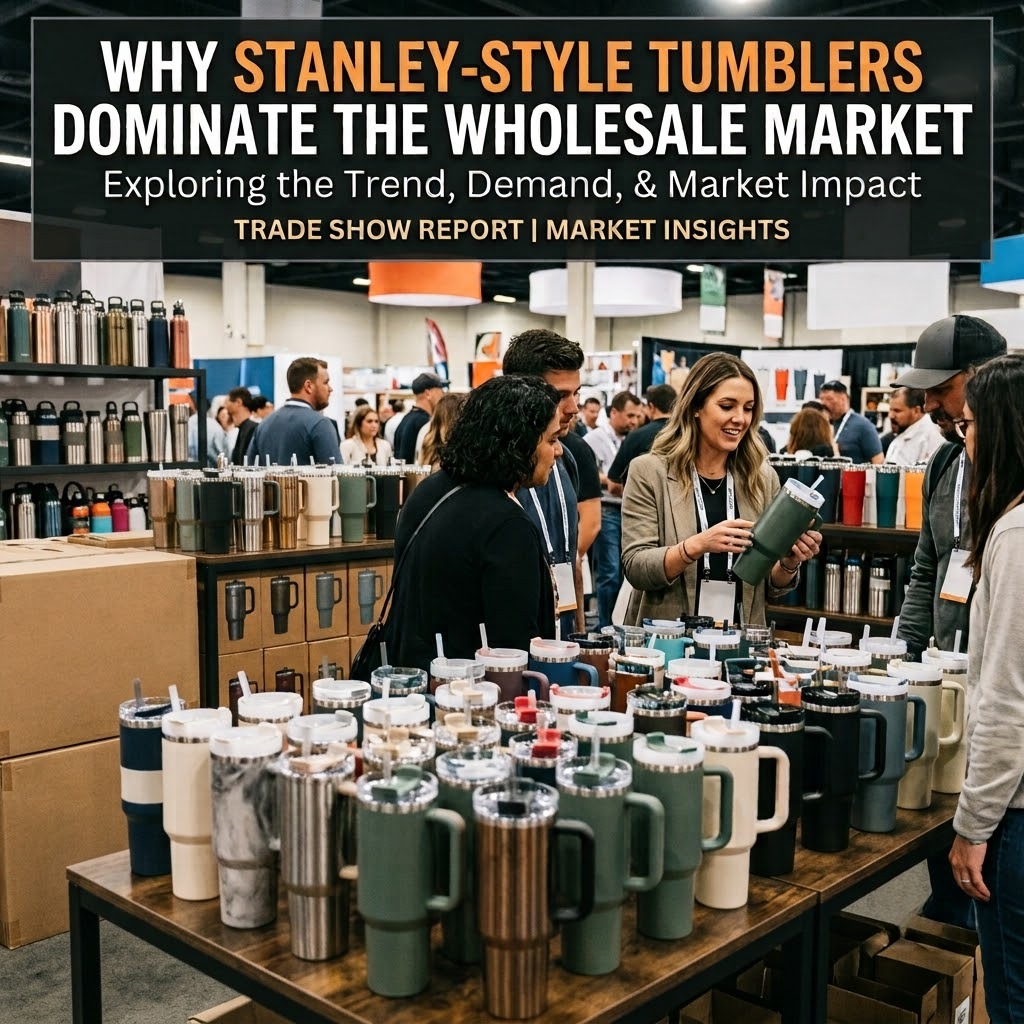
Table des matières
If you‘ve walked into any office, gym, or coffee shop in the past few years, you’ve seen them. Those rugged, powder‑coated stainless steel tumblers with the tapered silhouette and the unmistakable handle. They‘re everywhere — on desks, in car cup holders, clipped to backpacks, sitting next to laptops in conference rooms.
The Stanley‑style tumbler has become more than a drinkware trend. It’s a cultural phenomenon. And for wholesale buyers, it represents one of the most consistent, high‑demand product categories in the promotional products and retail drinkware space.
But why exactly do these tumblers dominate the wholesale market? And what does that mean for buyers looking to source them for their own brands, corporate gifting programs, or retail shelves?
Let‘s break it down.
The Product Itself: Built for Real Life
The Stanley‑style tumbler didn’t become popular by accident. It earned its place through a combination of thoughtful design, durable materials, and genuine utility.
18/8 Food‑Grade Stainless Steel
At the core of every quality Stanley‑style tumbler is 304 (18/8) acier inoxydable. This material is food‑safe, rust‑resistant, and built to withstand daily abuse. Unlike plastic or glass alternatives, stainless steel doesn‘t retain flavors, doesn’t leach chemicals, and doesn‘t shatter when dropped.
For wholesale buyers, this means fewer returns, happier end users, and a product that actually lasts.
Isolation sous vide à double paroi
The defining feature of these tumblers is their ability to keep drinks at the right temperature for hours. A well‑made Stanley‑style tumbler will keep coffee hot for 6‑8 hours and iced water cold for up to 24 heures.
This isn’t just a nice‑to‑have. It‘s the reason people carry these tumblers every day — and why they become attached to them. A product that becomes part of someone’s daily routine is a product that builds brand loyalty.
Leak‑Proof, Spill‑Resistant Design
From commuters to hikers to busy parents, people need drinkware that doesn‘t leak. The secure, leak‑proof lids on these tumblers give users the confidence to toss them in a bag without worrying about spills.
For corporate gift buyers, this reliability matters. A tumbler that leaks is a gift that gets thrown away. A tumbler that doesn’t is a gift that gets used every day.
Sizes That Work for Everyone
Stanley‑style tumblers come in a range of sizes — most commonly 20 oz, 30 oz, et 40 oz. Each size serves a different purpose:
| Taille | Best For | Typical Use |
|---|---|---|
| 20 oz | Daily commuters, office workers, coffee drinkers | Fits most cup holders, easy to carry, ideal for morning coffee |
| 30 oz | All‑day hydration, gym users, road trips | Large enough for a full workday, still fits standard cup holders |
| 40 oz | Outdoor enthusiasts, long shifts, heavy hydration | Maximum capacity, popular with tradespeople and outdoor workers |
This range allows wholesale buyers to stock a single product line that appeals to a wide cross‑section of end users.
The Stanley‑Style Effect
The Stanley brand itself has enjoyed a massive resurgence in recent years, driven by social media, influencer marketing, and viral content. But what wholesale buyers need to understand is that the demand is not limited to the Stanley brand itself.
Le style — the silhouette, the handle, the powder‑coated finish — has become the standard. Consumers recognize it. They trust it. And they expect it.
This means wholesale buyers don‘t need to sell the Stanley brand to succeed. They need to sell the Stanley‑style product — the same form factor, the same quality, the same utility — with their own branding.
And that’s where the wholesale opportunity truly opens up.
Why Wholesale Buyers Love This Category
For businesses sourcing drinkware for corporate gifts, promotional campaigns, or retail — the Stanley‑style tumbler offers several distinct advantages.
1. Broad Market Appeal
These tumblers appeal to just about everyone. Office workers. Outdoor enthusiasts. Parents. Students. Fitness buffs. Professionals. The demographic range is unusually wide for a single product category.
That means wholesale buyers can stock one product line and serve multiple customer segments. Less inventory complexity. Faster turnover.
2. High Perceived Value
A Stanley‑style tumbler feels premium. It‘s heavy. It’s solid. It looks like it costs more than it does. This makes it an ideal choice for corporate gifts, employee appreciation programs, and promotional campaigns where the goal is to impress.
When you hand someone a high‑quality tumbler, the message isn‘t “here’s a free thing.” The message is “we value you, and we value quality.”
3. Customization That Works
The large, flat surface of these tumblers makes them ideal for branding. Whether it‘s laser engraving, sérigraphie, or UV printing — a logo on a Stanley‑style tumbler gets seen. Daily. By the person carrying it and everyone they meet.
This is why promotional products distributors consistently rank drinkware among the most effective promotional items. The brand impression lasts for years, not days.
4. Strong Pricing and Margins
The wholesale cost of a high‑quality Stanley‑style tumbler typically falls between $3 et $10 per unit, depending on customization level and order volume. Retail prices often range from $15 à $40.
For wholesale buyers, this leaves healthy margins — especially when ordering in volume. And with consistent demand, turnover is reliable.
5. Repeat Order Potential
A good tumbler doesn‘t break. But people lose them. They give them as gifts. They buy backups. And when they love a product, they buy more for friends and family.
For wholesale buyers, this translates to repeat orders. Customers who source from you once often come back for more.
6. Sustainability Credentials
Stainless steel is infinitely recyclable. It’s reusable. It reduces reliance on single‑use plastics. And in 2026, the focus on sustainability is stronger than ever. Brands and consumers alike are looking for products that align with environmental values.
A Stanley‑style tumbler fits that bill perfectly.
7. Stability in a Fast‑Changing Market
The global drinkware market is projected to grow from $36.81 billion in 2026 à $45.52 billion by 2030, at a CAGR of 5.5%. Insulated metal drinkware represents a significant and growing segment of this market.
Stanley‑style tumblers are not a flash‑in‑the‑pan trend. They’ve proven their staying power. Demand shows no sign of slowing. For wholesale buyers, this means stability — a product category that remains reliable year after year.
What Wholesale Buyers Should Look for in a Supplier
If you‘re ready to source Stanley‑style tumblers for your brand, the next step is finding the right manufacturing partner.
Material Transparency
A trustworthy supplier will openly state their material grade. Look for 304 acier inoxydable and ask for material certifications. A supplier who can’t tell you what grade of steel they use is a supplier you should avoid.
Performances d'isolation
Not all insulated tumblers perform equally. Ask for thermal test data. The best suppliers can provide real numbers on heat and cold retention — not just marketing claims.
Food‑Safety Compliance
If you‘re selling into the US or European markets, FDA and LFGB certifications are non‑negotiable. Make sure your supplier can provide current, valid compliance documentation.
Customization Capabilities
Can the supplier handle your logo requirements? Do they offer multiple printing methods? Can they match your brand colors? The right supplier makes customization easy, not complicated.
Consistent Quality Control
A great sample means nothing if the bulk order doesn’t match it. Look for suppliers with robust quality control processes — in‑process inspections, material traceability, and final product testing.
Reliable Lead Times
Know what to expect. A professional supplier will give you a clear timeline — sample development, production, shipping, and customs. Surprises are acceptable in the mail, not in supply chains.
Communication
Suppliers who respond quickly to inquiries are more likely to resolve production issues quickly. Responsiveness matters.
Why Jarrino
Chez Jarrino, we manufacture premium Stanley‑style tumblers for wholesale buyers, corporate gift programs, and promotional product distributors. We use certified 304 stainless steel with full material traceability, LFGB and FDA compliance, and double‑wall vacuum insulation that delivers consistent temperature retention.
Our MOQ starts from 200 pièces, with 15‑35 working days lead times for wholesale orders. Customization options include laser engraving, sérigraphie, correspondance des couleurs, and custom packaging. We ship to the USA, Europe, Australia, and beyond.
Contact Jarrino today to request a sample and discuss your wholesale order.
Articles connexes
Verres de Noël personnalisés: Guide complet de fabrication OEM/ODM
Jarrino est un fabricant certifié OEM/ODM spécialisé dans les flacons à vide personnalisés, gobelets doublés de céramique, et verres en titane. Les délais de livraison pour les commandes de Noël personnalisées du quatrième trimestre sont de 20 à 30 jours avec de faibles MOQ (300–1 000 pièces) et conformité totale FDA/LFGB. Nous proposons une personnalisation de bout en bout, y compris l'impression numérique 3D, gravure laser, et emballages cadeaux de Noël sur mesure. Des kits d'échantillons et des devis sont disponibles sur demande pour aider les marques à sécuriser en douceur la production des fêtes du quatrième trimestre..
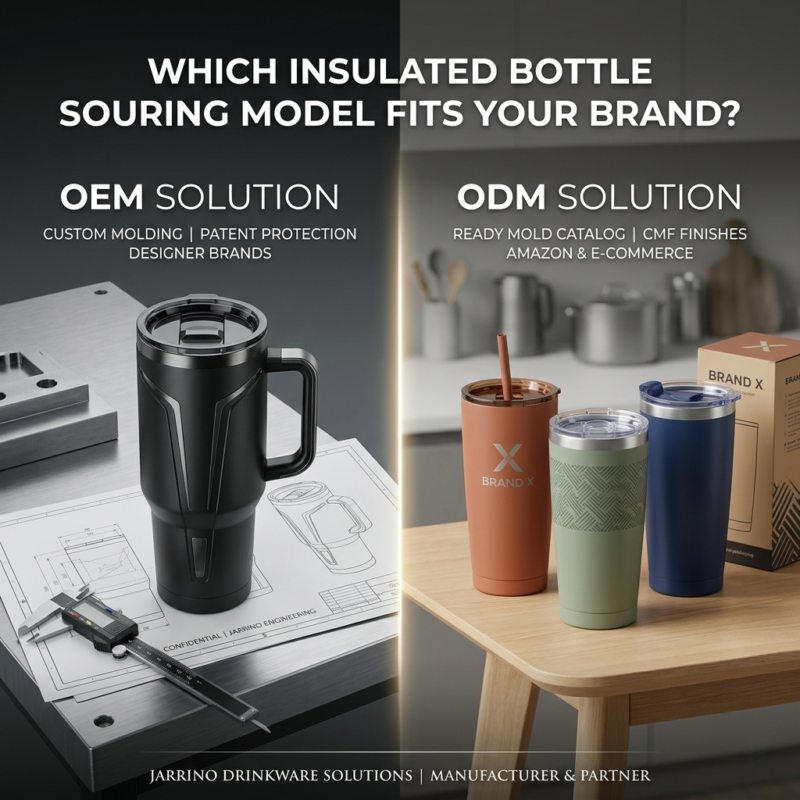
OEM contre. Gobelets isolés par ODM: Quel modèle d'approvisionnement convient à votre marque de verres
Choisir entre OEM (Fabrication d'équipement d'origine) et ODM (Fabrication de conception originale) définit le R de votre marque de verres&Budget D, délai de mise sur le marché, et l'exclusivité du produit. L'OEM est idéal pour les marques établies avec des conceptions CAO personnalisées et des exigences IP uniques, offre 100% moulage sur mesure et protection par brevet. ODM est conçu pour les vendeurs Amazon, Startups DTC, et les acheteurs d'entreprise recherchant des coûts d'outillage nuls, faibles MOQ, et des lancements de produits rapides via des finitions CMF avancées (revêtement en poudre, Impression UV).
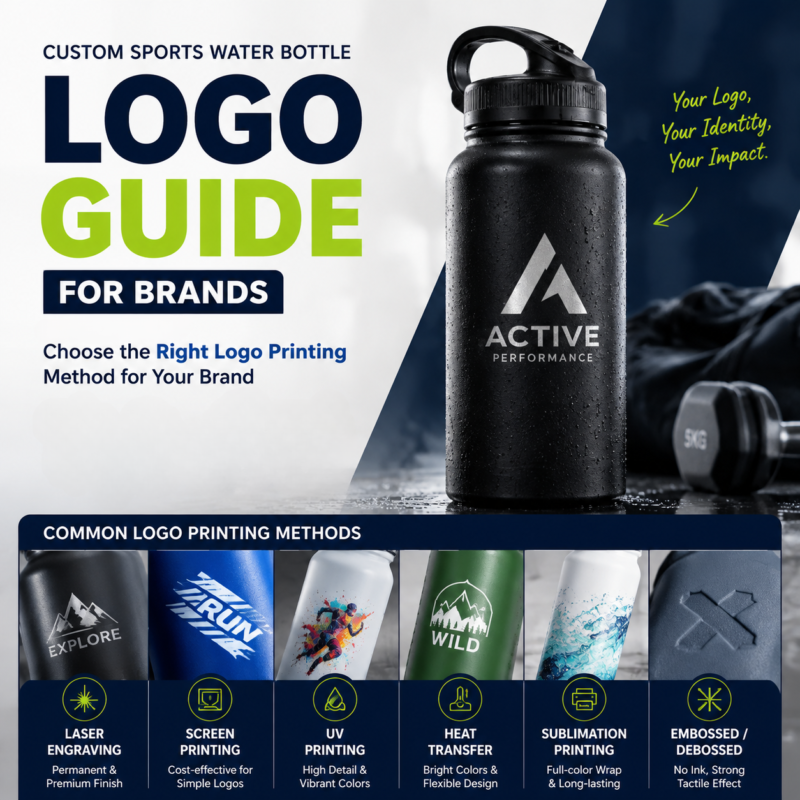
Guide de logo de bouteille d’eau de sport personnalisé pour les marques
Les logos personnalisés de bouteilles d'eau de sport sont créés grâce à différents processus de décoration en fonction du matériau de la bouteille., conception de marque, et exigences de performance. Ce guide couvre les méthodes d'impression de logo les plus courantes, y compris la gravure au laser, sérigraphie, Impression UV, transfert de chaleur, et sublimation, aider les marques de sport à sélectionner la bonne option de personnalisation pour des produits de boisson durables et professionnels.
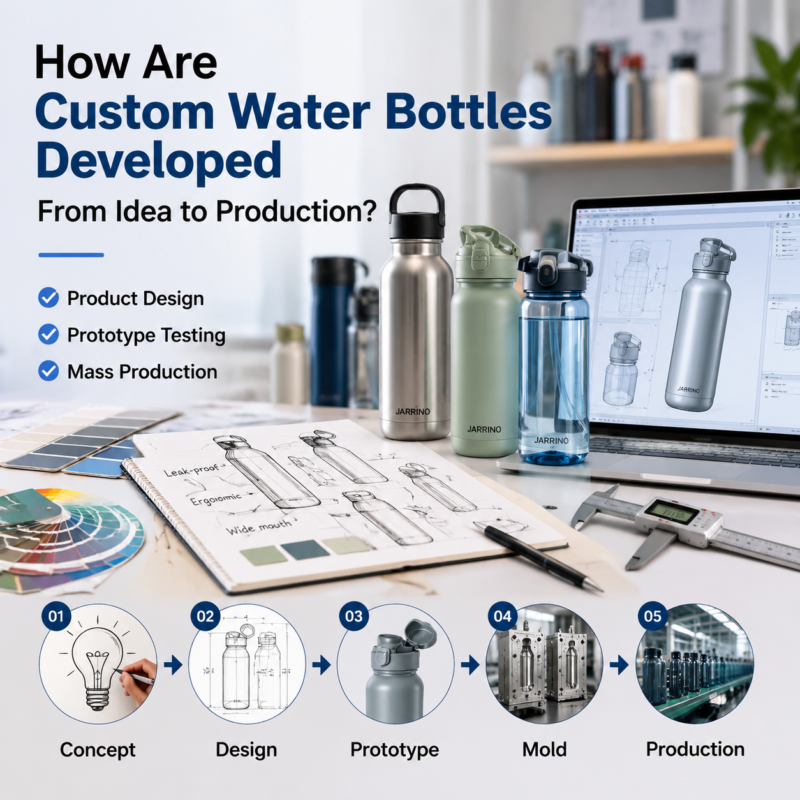
Comment les bouteilles d'eau personnalisées sont-elles développées, de l'idée à la production ??
Développer une bouteille d'eau personnalisée nécessite bien plus que choisir un design et ajouter un logo.. Du concept produit initial à l'ingénierie, prototypage, développement de moisissures, essai, et production de masse, chaque étape joue un rôle important dans la création d'un produit de boisson réussi. Ce guide explique comment les marques travaillent avec les fabricants de bouteilles d'eau OEM pour transformer les idées en produits de haute qualité., produits prêts à être commercialisés tout en gérant la conception, coût, et les défis de production.
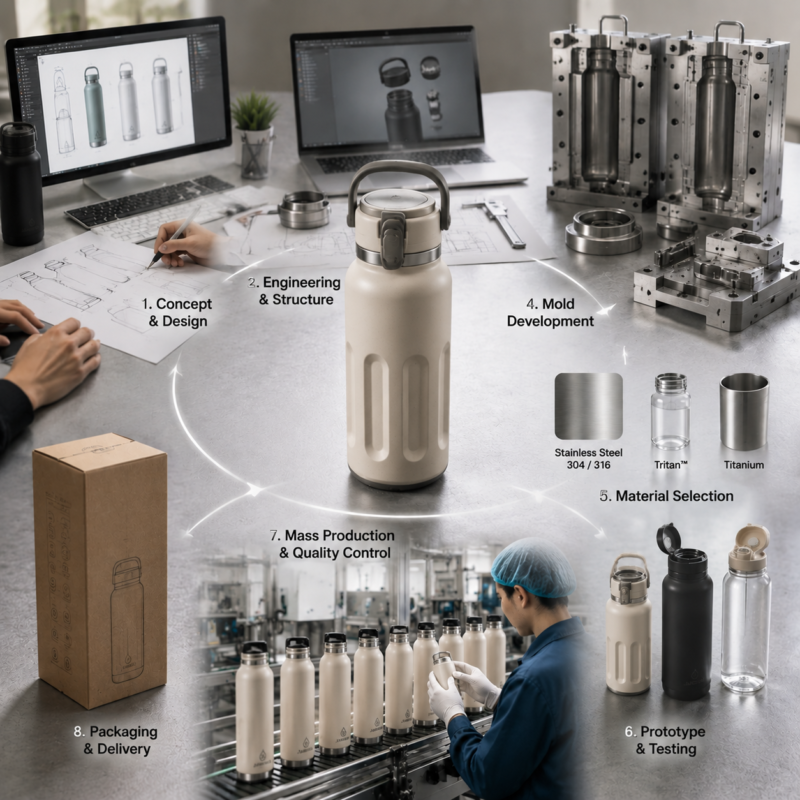
Comment sont fabriquées les bouteilles d’eau entièrement personnalisées?
Développer une bouteille d’eau entièrement personnalisée implique bien plus que l’ajout d’un logo à un produit existant. Ce guide explique comment les marques créent des bouteilles d'eau uniques grâce à la conception de produits., ingénierie, sélection des matériaux, développement de moisissures, tests de prototypes, et production de masse. Découvrez comment un fabricant de bouteilles d'eau OEM expérimenté contribue à transformer une idée en un produit prêt à être commercialisé tout en gérant la qualité., coût, et efficacité de production.
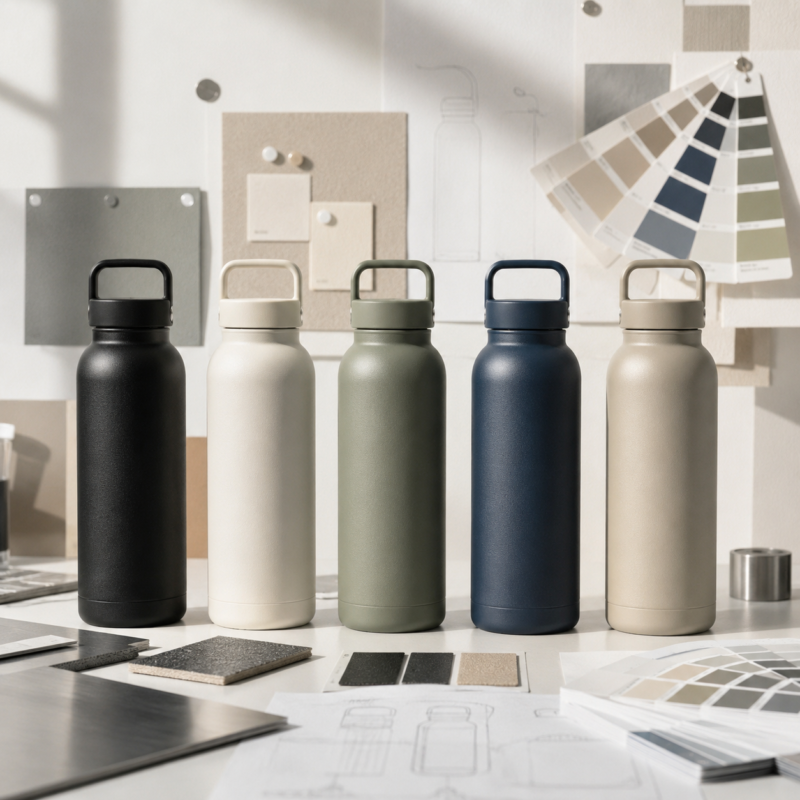
Comment choisir les couleurs et les finitions des bouteilles d'eau personnalisées
Le succès d’une collection de bouteilles d’eau personnalisées ne dépend pas seulement de couleurs attrayantes. Choisir la bonne palette de couleurs, état de surface, et la stratégie de fabrication contribue à renforcer l’identité de la marque, améliorer l'attractivité des clients, et assurer des ventes à long terme. Ce guide explique comment sélectionner les couleurs en fonction des préférences du marché, comparer les finitions mates et brillantes, optimiser les SKU, et obtenez une qualité constante grâce à une production OEM professionnelle.
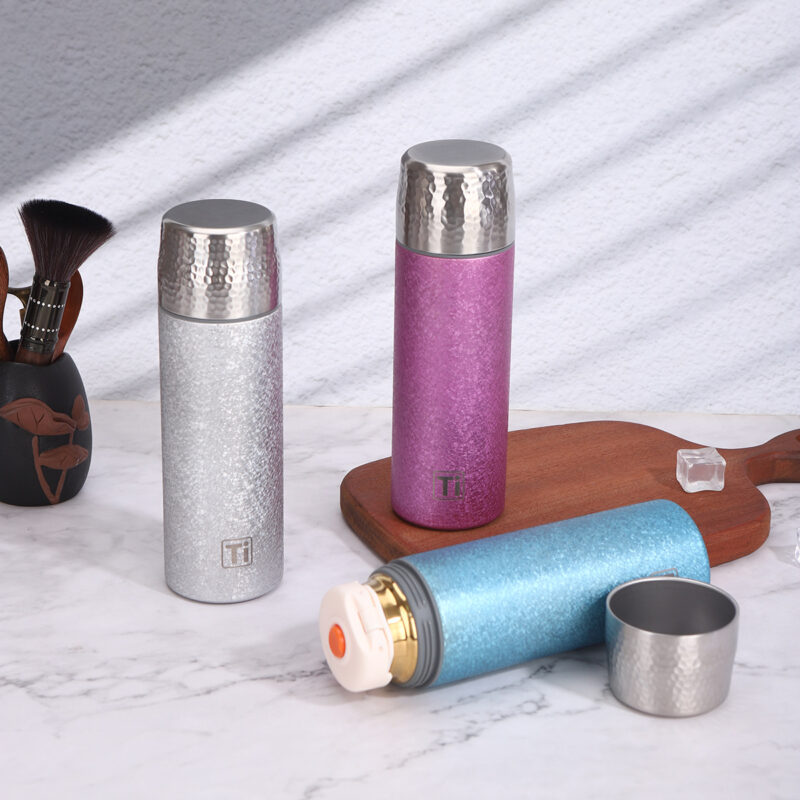
Les bouteilles d'eau en titane sont-elles sûres?
Le titane est sans danger. C'est aussi cher. Voici comment il se compare à l’acier inoxydable et à l’aluminium – et quel matériau est réellement adapté à votre marque..
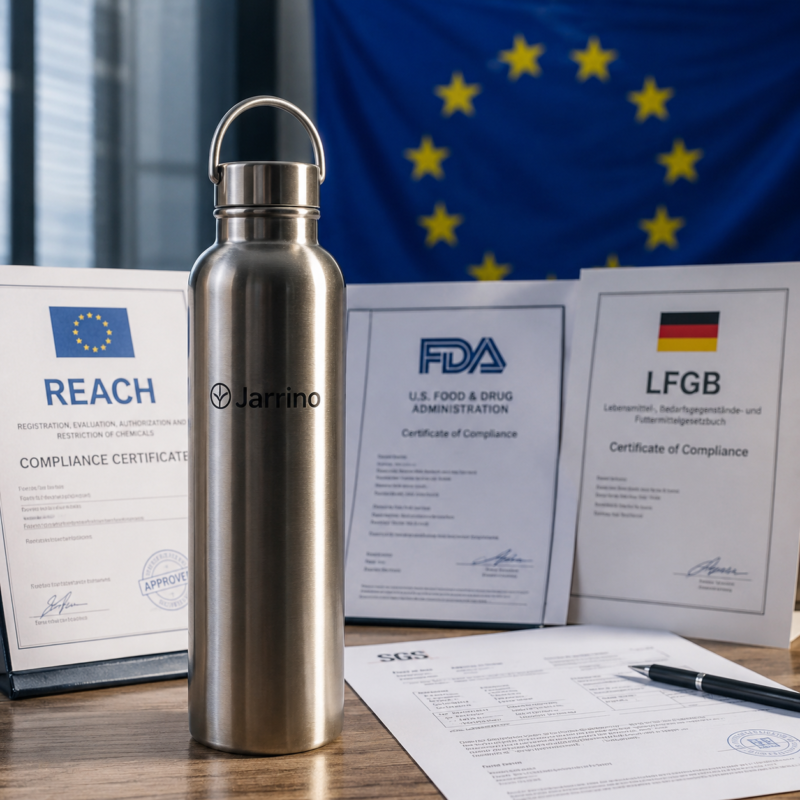
Règlement de l'UE sur les microplastiques 2026: Ce que tout fabricant de bouteilles d’eau personnalisées devrait savoir
Découvrez comment le règlement européen sur les microplastiques (UE) 2026/1168 impacte les fabricants de bouteilles d’eau personnalisées et les marques de verres de marque privée. Découvrez comment Jarrino aide les importateurs à rester conformes à REACH avec des bouteilles d'eau durables en acier inoxydable.
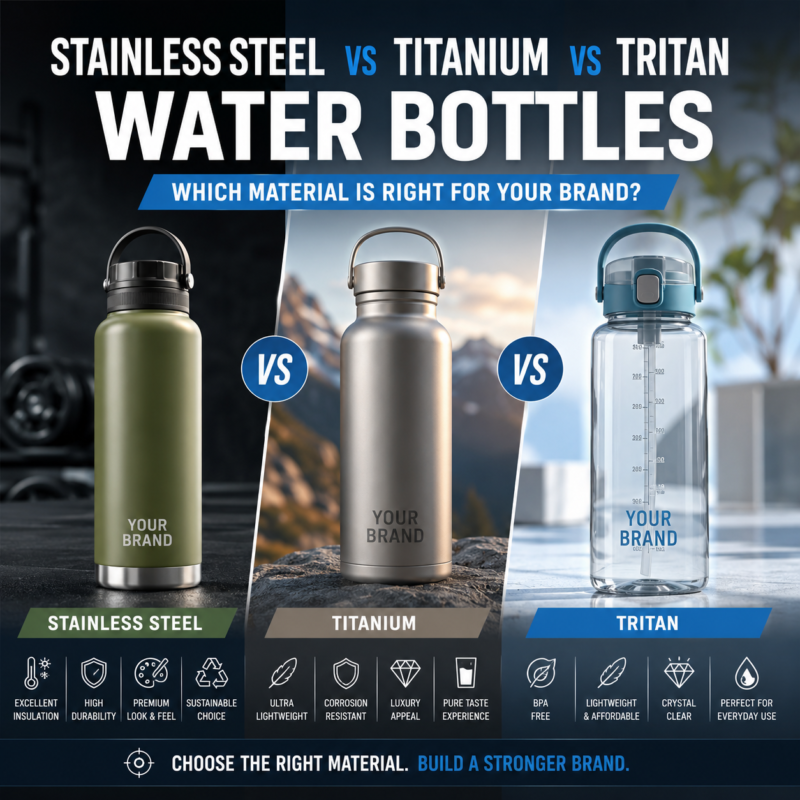
Stainless Steel vs Titanium vs Tritan Water Bottles: Which Material Is Right for Your Brand?
Choosing the right water bottle material can significantly impact your product quality, pricing, and brand positioning. This guide compares stainless steel, titane, and Tritan water bottles across durability, isolation, coût, personnalisation, and sustainability to help brands, détaillants, and OEM buyers select the best material for their target market.
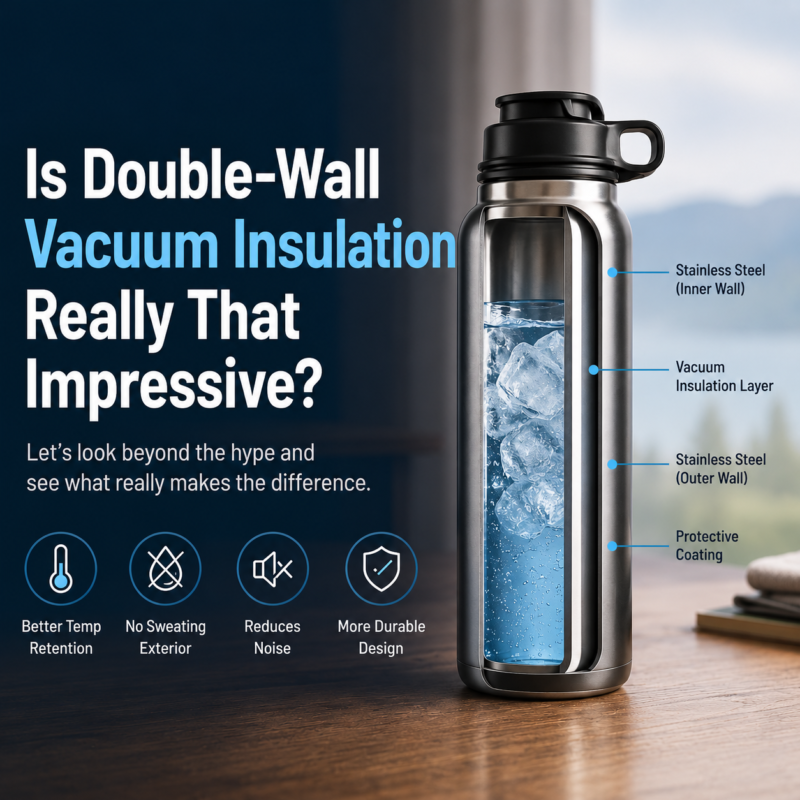
L’isolation sous vide à double paroi est-elle vraiment si impressionnante ??
Double‑wall vacuum insulation is standard in premium drinkware, but the difference between a bottle that performs and one that disappoints comes down to manufacturing quality. This guide explains how vacuum insulation works, sets realistic performance expectations, and gives B2B buyers a practical checklist for evaluating suppliers. Plus, why Jarrino’s strict quality standards ensure your custom bottles deliver on their promises.
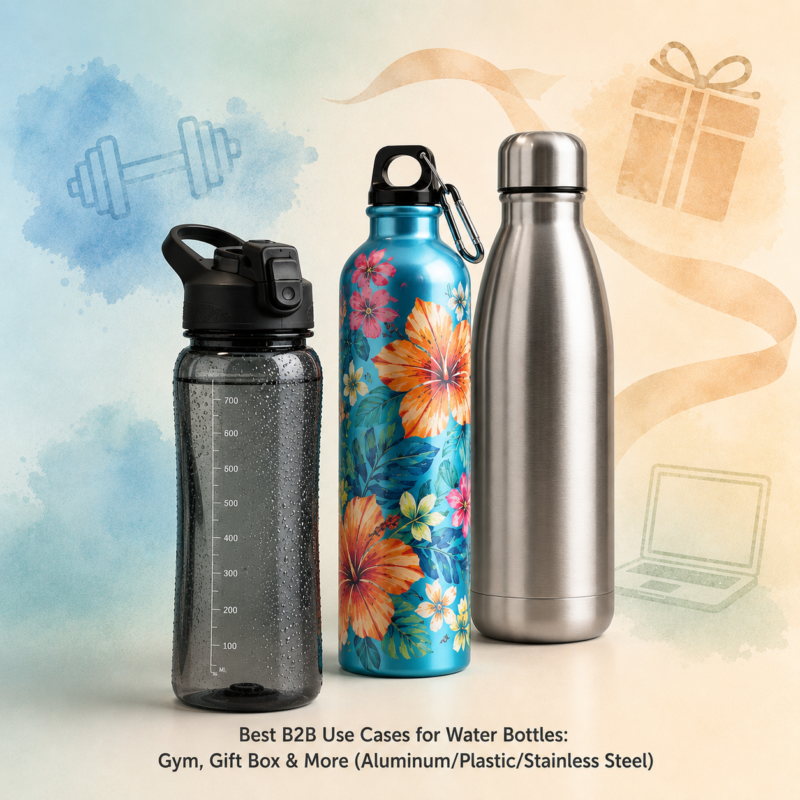
Meilleurs cas d'utilisation B2B pour les bouteilles d'eau: Salle de sport, Coffret cadeau & Plus (Aluminium/Plastique/Acier)
Toutes les bouteilles d’eau ne conviennent pas à tous les cas d’utilisation B2B. Cet article correspond à trois matériaux : l'acier inoxydable, aluminium, plastique — aux applications du monde réel: gymnases, coffrets cadeaux d'entreprise, salons professionnels, vente au détail en plein air, et programmes scolaires. L'acier inoxydable gagne en durabilité et en isolation. L'aluminium offre de la légèreté, marquage en couleur. Le plastique est économique pour les événements à grand volume (à condition qu'il soit sans BPA). Une aide-mémoire rapide aide les acheteurs B2B à équilibrer les coûts, image de marque, et les attentes des utilisateurs.
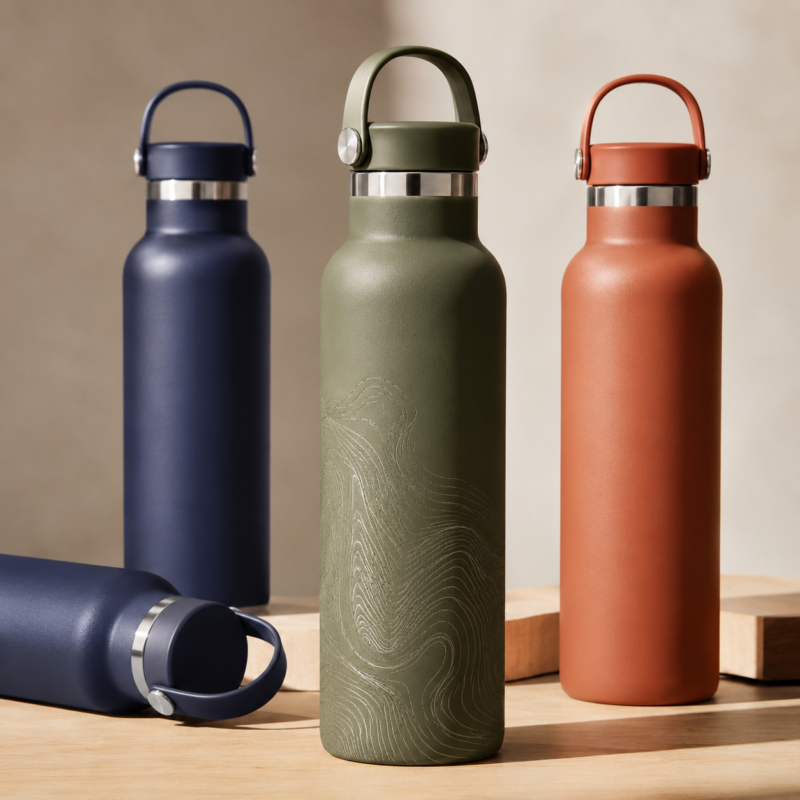
Quelle méthode de décoration de bouteille d’eau personnalisée dure réellement?
Gravure laser, sublimation, UV, ou sérigraphie – quelle décoration de bouteille personnalisée survit réellement à une utilisation quotidienne? Nous les avons testés. Lire les résultats.