

Stainless Steel vs Titanium vs Tritan Water Bottles: Which Material Is Right for Your Brand?
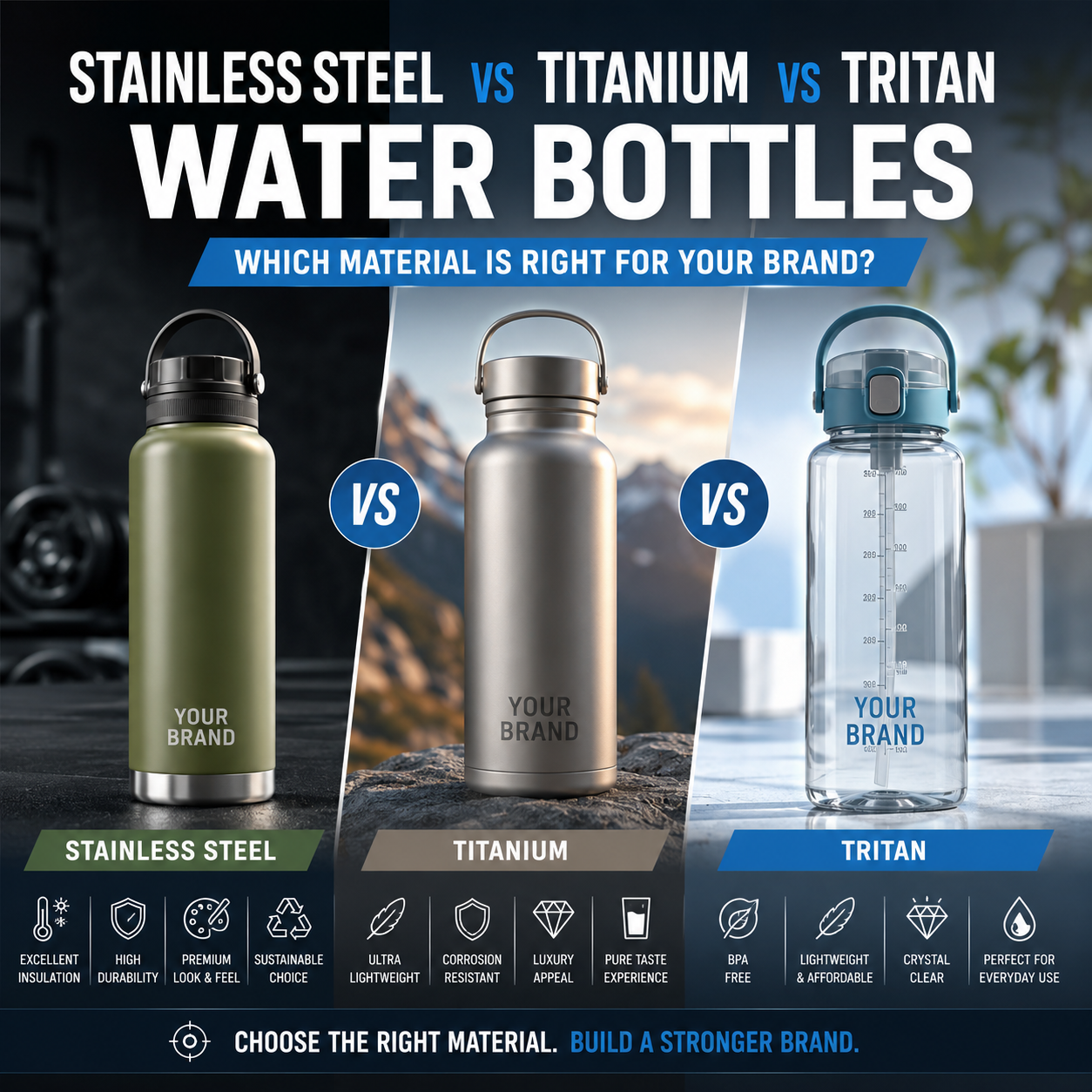
When launching a custom drinkware collection, one of the first decisions isn’t color or logo placement—it’s sélection des matériaux.
Should you choose acier inoxydable, titane, ou Tritan™ plastic?
Each material targets different customer segments, price points, and use cases. The wrong choice can increase manufacturing costs, reduce customer satisfaction, or weaken your brand positioning. The right one can improve margins, strengthen your value proposition, and increase repeat purchases.
Si tu’re sourcing from a water bottle manufacturer for OEM or private-label production, understanding the strengths and limitations of each material is essential.
This guide compares stainless steel, titane, and Tritan across performance, durabilité, branding potential, sustainability, and manufacturing considerations to help you choose the best material for your business.
Quick Comparison
| Fonctionnalité | Acier inoxydable | Titane | Tritan |
|---|---|---|---|
| Durabilité | ★★★★★ | ★★★★★ | ★★★☆☆ |
| Poids | Medium | Very Light | Light |
| Isolation | Excellent | Good | None |
| Taste Neutrality | Excellent | Outstanding | Good |
| Premium Perception | Haut | Luxury | Medium |
| Coût | $$ | $$$$ | $ |
| Sans BPA | Oui | Oui | Oui |
| Passe au lave-vaisselle | Usually | Oui | Oui |
| OEM Customization | Excellent | Good | Excellent |
| Typical Customers | Outdoor, Corporate, Retail | Premium Outdoor, Luxury | Sportif, Schools, Promotional |
Why Material Choice Matters More Than Ever
Consumers today don’t simply buy a water bottle.
They buy:
-
Durabilité
-
Health and safety
-
Brand identity
-
Lifestyle
-
Performance
Material selection influences:
-
Manufacturing cost
-
Retail pricing
-
Shipping expenses
-
Product lifespan
-
Customer reviews
-
Environmental impact
-
Brand positioning
Pour les acheteurs B2B, material directly affects profitability.
Stainless Steel Water Bottles


Stainless steel remains the global standard for premium reusable drinkware.
Most high-quality bottles use de qualité alimentaire 18/8 (304) acier inoxydable, while vacuum insulation creates excellent temperature retention.
Avantages
Outstanding Temperature Performance
Double-wall vacuum insulation can keep drinks:
-
Cold for up to 24 heures
-
Hot for up to 12 heures
This makes stainless steel ideal for:
-
Coffee brands
-
Outdoor brands
-
Travel products
-
Corporate gifts
Extremely Durable
304 stainless steel resists:
-
Rust
-
Corrosion
-
Dents
-
Daily wear
Many bottles remain functional after years of use.
Excellent Branding Surface
Manufacturers can apply:
-
Revêtement en poudre
-
Impression UV
-
Gravure laser
-
Impression d'écran en soie
-
Full-wrap graphics
-
Couleurs Pantone personnalisées
This flexibility makes stainless steel the preferred choice for private-label brands.
Sustainable
Because stainless steel is highly recyclable and designed for long-term use, it aligns well with brands emphasizing environmental responsibility.
Limites
-
Heavier than titanium or Tritan
-
Higher shipping costs
-
Slightly more expensive than plastic
Titanium Water Bottles


Titanium occupies the luxury end of the drinkware market.
Originally popular among mountaineers and backpackers, titanium bottles are now increasingly used by premium lifestyle brands.
Avantages
Incredibly Lightweight
Titanium offers steel-like strength while weighing significantly less.
Parfait pour:
-
Randonnée
-
Camping
-
Voyage
-
Minimalist EDC products
Exceptional Corrosion Resistance
Titanium naturally forms an oxide layer that protects against:
-
Saltwater
-
Acids
-
Moisture
It will not rust.
Pure Drinking Experience
Titanium is highly inert.
Ce n'est pas le cas’t affect:
-
Coffee
-
Tea
-
Mineral water
-
Electrolytes
Many enthusiasts describe titanium as delivering the cleanest taste.
Luxury Positioning
Titanium immediately communicates:
-
Premium quality
-
Engineering excellence
-
Outdoor performance
Brands often sell titanium bottles at two to four times the price of comparable stainless steel products.
Limites
-
High material cost
-
More difficult machining
-
Smaller OEM production ecosystem
-
Longer lead times
-
Fewer color-finishing options
Tritan Water Bottles


Tritan is a BPA-free copolyester developed specifically for reusable drinkware.
Unlike ordinary plastic bottles, Tritan combines clarity with durability.
Avantages
Léger
Ideal for:
-
Schools
-
Gyms
-
Sportif
-
Daily commuting
Lower product weight also reduces freight costs.
Abordable
Tritan bottles typically have the lowest production cost.
This makes them suitable for:
-
Promotional campaigns
-
Giveaways
-
Retail chains
-
Event merchandise
Crystal Clear Appearance
Unlike many plastics, Tritan remains transparent over long-term use.
Customers appreciate its glass-like appearance without the fragility.
Easy Customization
Manufacturers can produce:
-
Transparent colors
-
Frosted finishes
-
Flip lids
-
Straw lids
-
Fruit infusers
-
Measurement markings
Limites
-
No vacuum insulation
-
Lower premium perception
-
Can scratch over time
-
Not intended for keeping beverages hot
Performance Comparison
| Criteria | Acier inoxydable | Titane | Tritan |
|---|---|---|---|
| Keeps Drinks Hot | Excellent | Good | Non |
| Keeps Drinks Cold | Excellent | Good | Non |
| Poids | Medium | Excellent | Excellent |
| Durabilité | Excellent | Excellent | Good |
| Corrosion Resistance | Excellent | Outstanding | N/A |
| Luxury Appeal | Haut | Outstanding | Modéré |
| Production Cost | Modéré | Haut | Faible |
| Shipping Cost | Medium | Faible | Very Low |
| Color Options | Excellent | Limited | Excellent |
Which Material Fits Different Brand Types?
| Brand Type | Recommended Material |
|---|---|
| Outdoor Equipment | Titanium or Stainless Steel |
| Corporate Gifts | Acier inoxydable |
| Coffee Brands | Acier inoxydable |
| Luxury Lifestyle | Titane |
| Fitness Brands | Tritan or Stainless Steel |
| School Products | Tritan |
| Promotional Products | Tritan |
| Premium E-commerce | Acier inoxydable |
| Travel Accessories | Acier inoxydable |
| High-End Adventure | Titane |
OEM Manufacturing Considerations
Choosing the right manufacturing partner matters just as much as choosing the right material.
When evaluating suppliers, ask about:
-
Food-grade material certifications
-
Factory audit reports
-
Vacuum insulation testing
-
Leak-proof testing
-
Capacité de production
-
MOQ flexibility
-
Logo printing options
-
Packaging customization
-
Lead times
-
Quality control procedures
Experienced OEM manufacturers can also recommend the most cost-effective material based on your target market, retail price, and order volume.
Cost vs Retail Positioning
| Matériel | Typical Manufacturing Cost | Typical Retail Position |
|---|---|---|
| Tritan | Faible | Entry-Level |
| Acier inoxydable | Medium | Mid-to-Premium |
| Titane | Haut | Luxury |
Higher material cost doesn’t always reduce profit.
Premium materials often support significantly higher retail pricing and stronger brand differentiation.
Which Material Should Your Brand Choose?
Choisir acier inoxydable if you want:
-
The broadest market appeal
-
Excellent insulation
-
Premium branding
-
Long product lifespan
-
Strong OEM customization options
Choisir titane if you want:
-
Luxury positioning
-
Ultra-lightweight products
-
High-end outdoor customers
-
Maximum durability
-
Premium pricing
Choisir Tritan if you want:
-
Affordable manufacturing
-
Lightweight products
-
Promotional campaigns
-
School and fitness markets
-
Large-volume production
Foire aux questions
Is titanium better than stainless steel?
Titanium is lighter and more corrosion-resistant, while stainless steel offers better value, stronger insulation performance, and a wider range of manufacturing options. For most brands, stainless steel provides the best balance of performance and cost.
Is Tritan safer than stainless steel?
Both are considered safe for food and beverage use when manufactured to appropriate standards. Tritan is BPA-free, while food-grade stainless steel is non-reactive and widely used for insulated drinkware.
Which material lasts the longest?
Titanium and stainless steel generally have the longest service life due to their resistance to impact and corrosion. Tritan is durable for everyday use but can become scratched with heavy wear.
Which material is easiest to customize?
Stainless steel offers the greatest flexibility, supporting powder coating, gravure laser, sérigraphie, Impression UV, and a wide range of finishes. Tritan also allows colorful molded designs, while titanium typically has more limited finishing options.
Final Thoughts
There is no single « meilleur » water bottle material—only the best choice for your brand’s positioning and customers.
-
Stainless steel remains the most versatile option, balancing durability, isolation, personnalisation, and value.
-
Titane is ideal for premium brands seeking differentiation through lightweight performance and luxury appeal.
-
Tritan is a practical solution for high-volume, budget-conscious, and sports-oriented product lines.
For most OEM and private-label projects, stainless steel continues to deliver the strongest combination of manufacturing flexibility, consumer appeal, and long-term brand value. Selecting the right material early in product development will help optimize costs, strengthen your positioning, and create a drinkware collection that resonates with your target market.
Articles connexes
Les verres personnalisés qui brillent dans le noir sont-ils bons pour votre marque?
Les verres personnalisés qui brillent dans le noir offrent aux marques de distributeur une opportunité de marge élevée sur un marché concurrentiel. Jarrino fournit des produits de qualité industrielle, revêtements photoluminescents de qualité alimentaire, assurer la durabilité et la conformité tout en ciblant les secteurs du plein air et de la jeunesse, stimuler l'attrait viral des médias sociaux et la différenciation des produits.
Comment choisir 100% Bouteilles d'eau étanches en acier inoxydable pour votre marque?
Ce guide aide les marques de verres à sélectionner 100% bouteilles en acier inoxydable étanches grâce à l'analyse des tests de contrôle qualité et de l'ingénierie des couvercles. Les fabricants comme Jarrino utilisent des, tremblement, et tests de pression d'air pour vérifier les joints. Les bouchons à vis traditionnels offrent une protection absolue contre les fuites, tandis que les couvercles verrouillables et les bouchons en paille nécessitent des joints en silicone précis., Précision du filetage CNC, et valves d'air unidirectionnelles pour éviter les déversements.
Verres de Noël personnalisés: Guide complet de fabrication OEM/ODM
Jarrino est un fabricant certifié OEM/ODM spécialisé dans les flacons à vide personnalisés, gobelets doublés de céramique, et verres en titane. Les délais de livraison pour les commandes de Noël personnalisées du quatrième trimestre sont de 20 à 30 jours avec de faibles MOQ (300–1 000 pièces) et conformité totale FDA/LFGB. Nous proposons une personnalisation de bout en bout, y compris l'impression numérique 3D, gravure laser, et emballages cadeaux de Noël sur mesure. Des kits d'échantillons et des devis sont disponibles sur demande pour aider les marques à sécuriser en douceur la production des fêtes du quatrième trimestre..
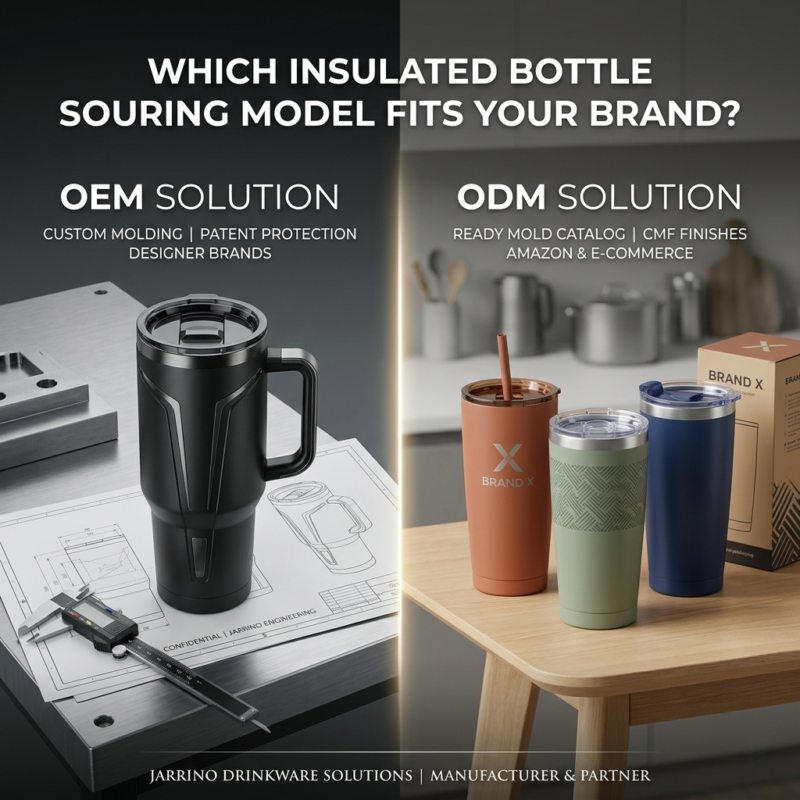
OEM contre. Gobelets isolés par ODM: Quel modèle d'approvisionnement convient à votre marque de verres
Choisir entre OEM (Fabrication d'équipement d'origine) et ODM (Fabrication de conception originale) définit le R de votre marque de verres&Budget D, délai de mise sur le marché, et l'exclusivité du produit. L'OEM est idéal pour les marques établies avec des conceptions CAO personnalisées et des exigences IP uniques, offre 100% moulage sur mesure et protection par brevet. ODM est conçu pour les vendeurs Amazon, Startups DTC, et les acheteurs d'entreprise recherchant des coûts d'outillage nuls, faibles MOQ, et des lancements de produits rapides via des finitions CMF avancées (revêtement en poudre, Impression UV).
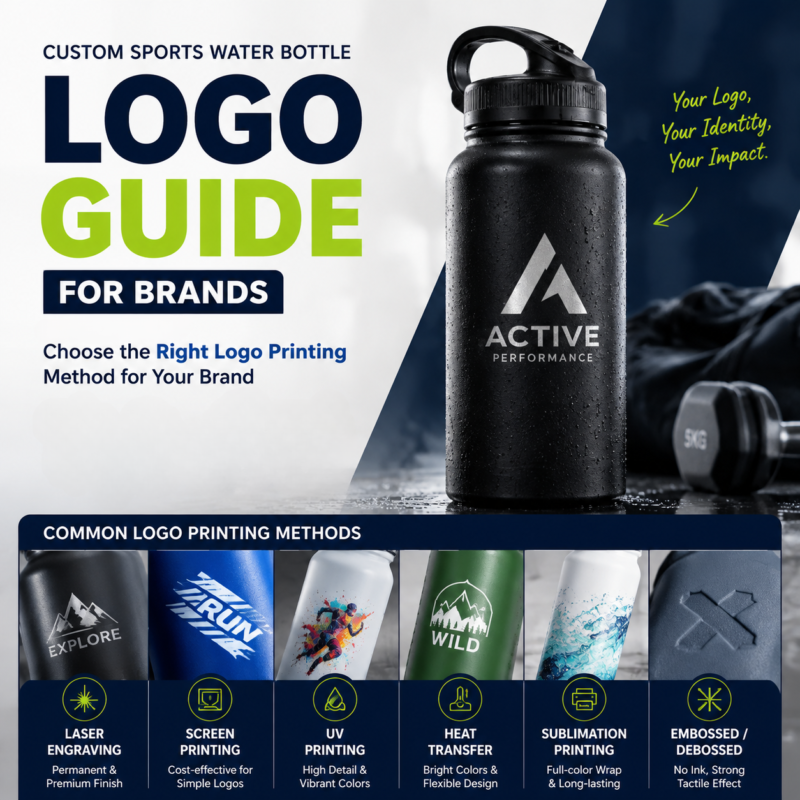
Guide de logo de bouteille d’eau de sport personnalisé pour les marques
Les logos personnalisés de bouteilles d'eau de sport sont créés grâce à différents processus de décoration en fonction du matériau de la bouteille., conception de marque, et exigences de performance. Ce guide couvre les méthodes d'impression de logo les plus courantes, y compris la gravure au laser, sérigraphie, Impression UV, transfert de chaleur, et sublimation, aider les marques de sport à sélectionner la bonne option de personnalisation pour des produits de boisson durables et professionnels.
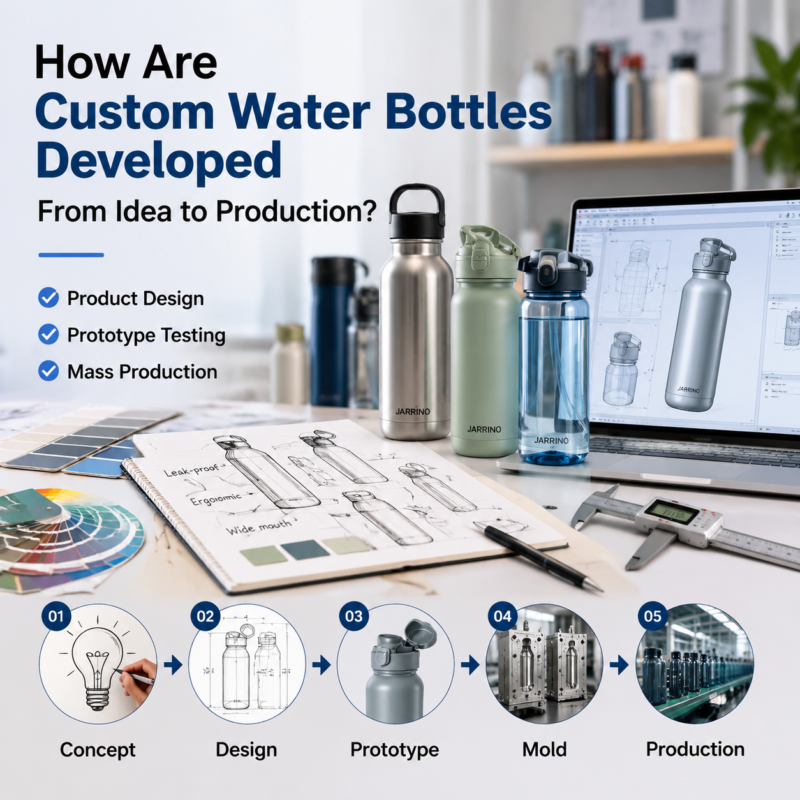
Comment les bouteilles d'eau personnalisées sont-elles développées, de l'idée à la production ??
Développer une bouteille d'eau personnalisée nécessite bien plus que choisir un design et ajouter un logo.. Du concept produit initial à l'ingénierie, prototypage, développement de moisissures, essai, et production de masse, chaque étape joue un rôle important dans la création d'un produit de boisson réussi. Ce guide explique comment les marques travaillent avec les fabricants de bouteilles d'eau OEM pour transformer les idées en produits de haute qualité., produits prêts à être commercialisés tout en gérant la conception, coût, et les défis de production.
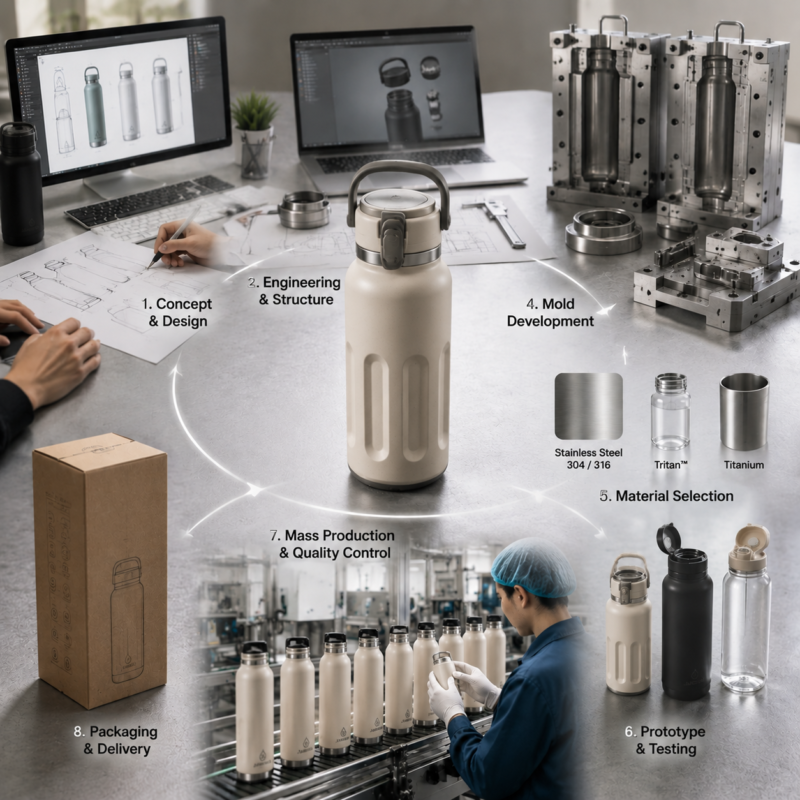
Comment sont fabriquées les bouteilles d’eau entièrement personnalisées?
Développer une bouteille d’eau entièrement personnalisée implique bien plus que l’ajout d’un logo à un produit existant. Ce guide explique comment les marques créent des bouteilles d'eau uniques grâce à la conception de produits., ingénierie, sélection des matériaux, développement de moisissures, tests de prototypes, et production de masse. Découvrez comment un fabricant de bouteilles d'eau OEM expérimenté contribue à transformer une idée en un produit prêt à être commercialisé tout en gérant la qualité., coût, et efficacité de production.
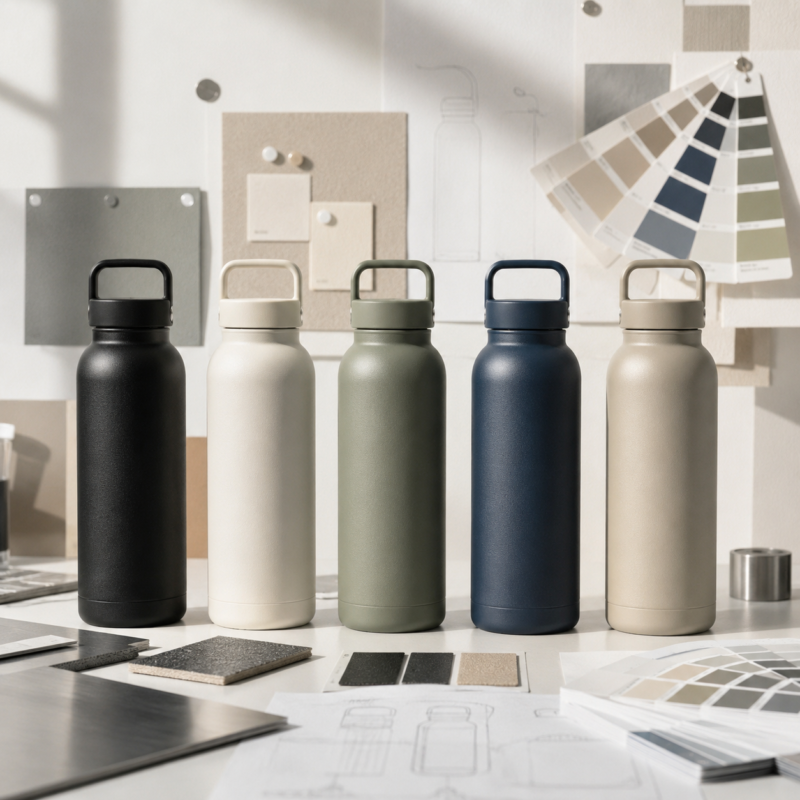
Comment choisir les couleurs et les finitions des bouteilles d'eau personnalisées
Le succès d’une collection de bouteilles d’eau personnalisées ne dépend pas seulement de couleurs attrayantes. Choisir la bonne palette de couleurs, état de surface, et la stratégie de fabrication contribue à renforcer l’identité de la marque, améliorer l'attractivité des clients, et assurer des ventes à long terme. Ce guide explique comment sélectionner les couleurs en fonction des préférences du marché, comparer les finitions mates et brillantes, optimiser les SKU, et obtenez une qualité constante grâce à une production OEM professionnelle.
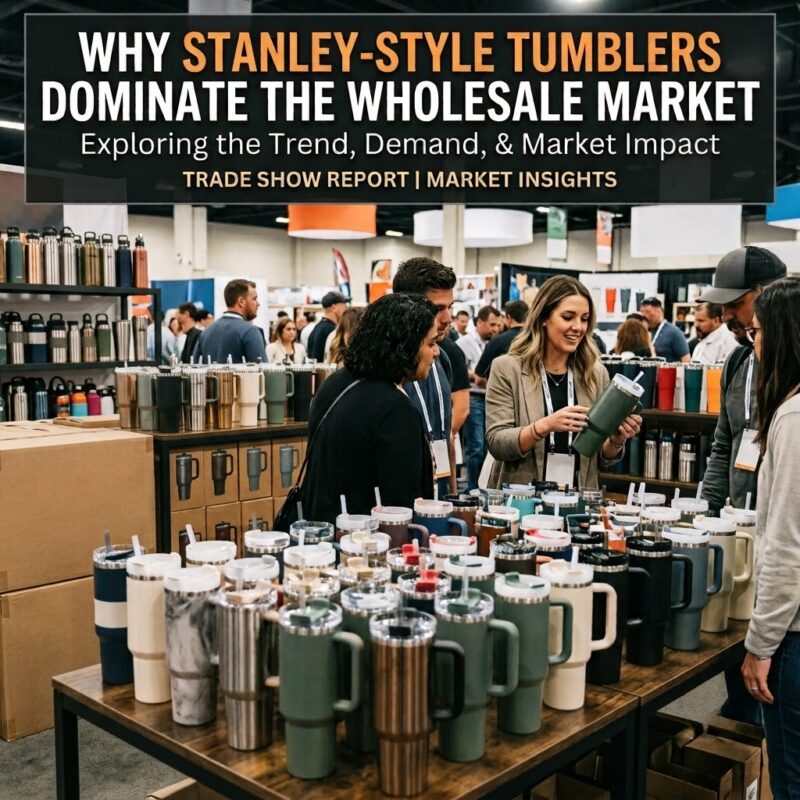
Pourquoi les gobelets de style Stanley dominent le marché de gros
Les gobelets de style Stanley sont devenus un phénomène culturel et un best-seller en gros. Cet article explore pourquoi – de 18/8 acier inoxydable et isolation sous vide à double paroi pour une valeur perçue élevée, potentiel de personnalisation, et une demande constante de commandes répétées. Découvrez ce qui fait de ces gobelets un produit fiable, catégorie rentable pour les acheteurs en gros.
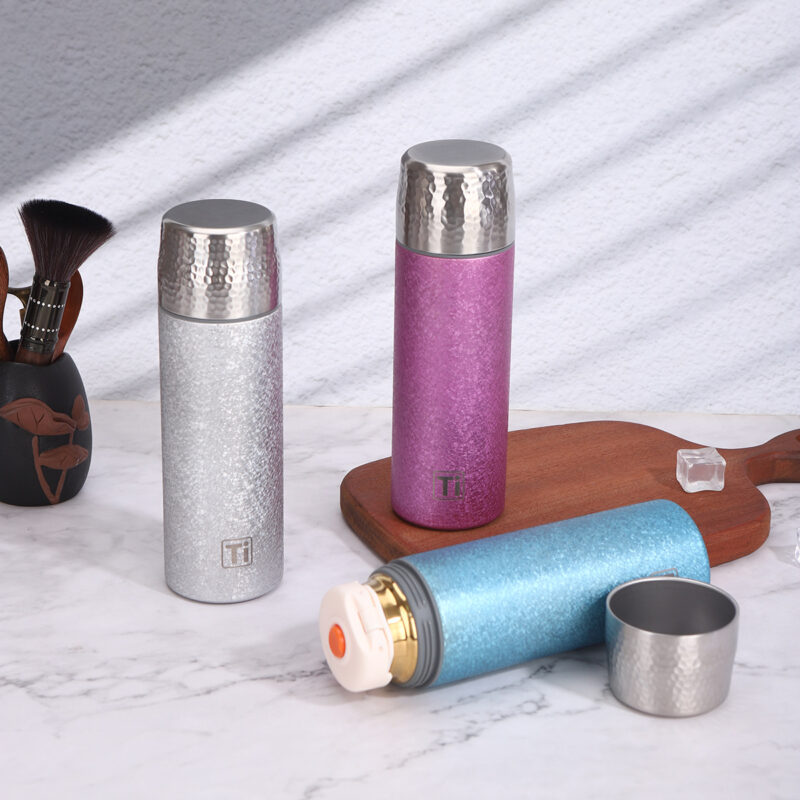
Les bouteilles d'eau en titane sont-elles sûres?
Le titane est sans danger. C'est aussi cher. Voici comment il se compare à l’acier inoxydable et à l’aluminium – et quel matériau est réellement adapté à votre marque..
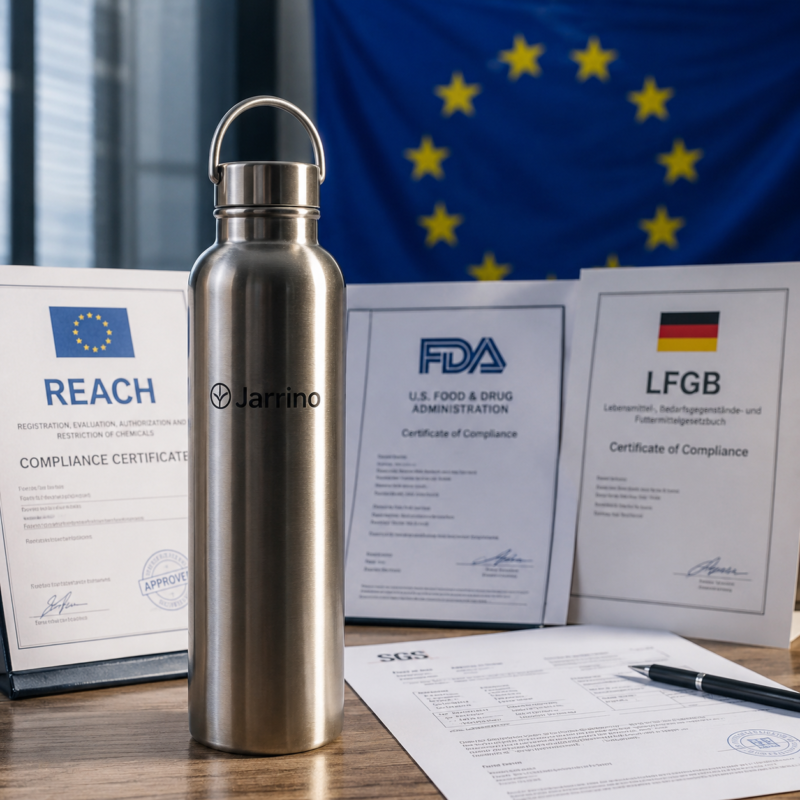
Règlement de l'UE sur les microplastiques 2026: Ce que tout fabricant de bouteilles d’eau personnalisées devrait savoir
Découvrez comment le règlement européen sur les microplastiques (UE) 2026/1168 impacte les fabricants de bouteilles d’eau personnalisées et les marques de verres de marque privée. Découvrez comment Jarrino aide les importateurs à rester conformes à REACH avec des bouteilles d'eau durables en acier inoxydable.
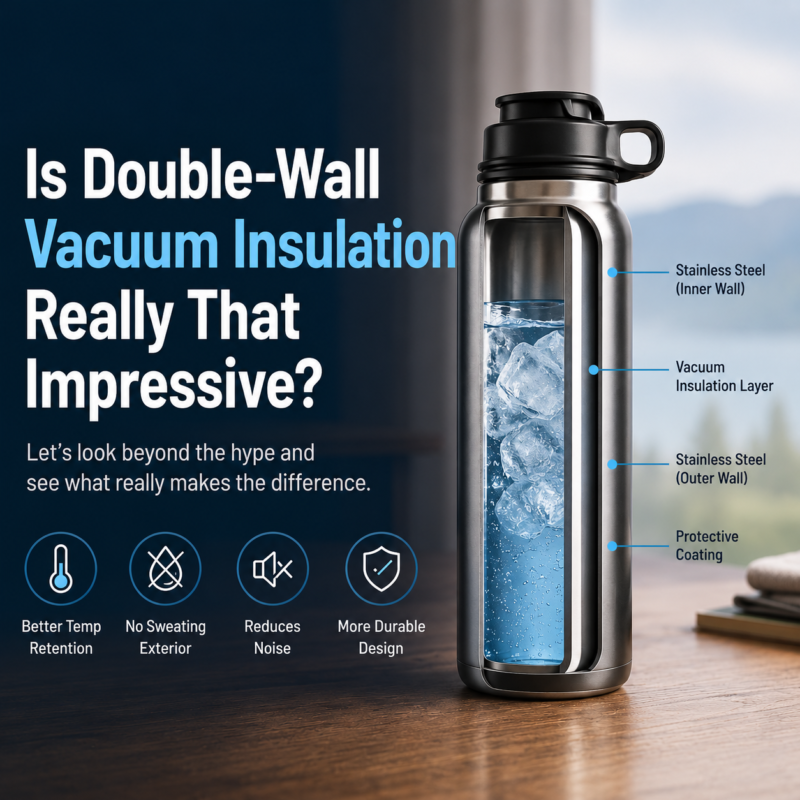
L’isolation sous vide à double paroi est-elle vraiment si impressionnante ??
Double‑wall vacuum insulation is standard in premium drinkware, but the difference between a bottle that performs and one that disappoints comes down to manufacturing quality. This guide explains how vacuum insulation works, sets realistic performance expectations, and gives B2B buyers a practical checklist for evaluating suppliers. Plus, why Jarrino’s strict quality standards ensure your custom bottles deliver on their promises.