
Bouteille isotherme ou bouteille en plastique pour les sports de plein air?
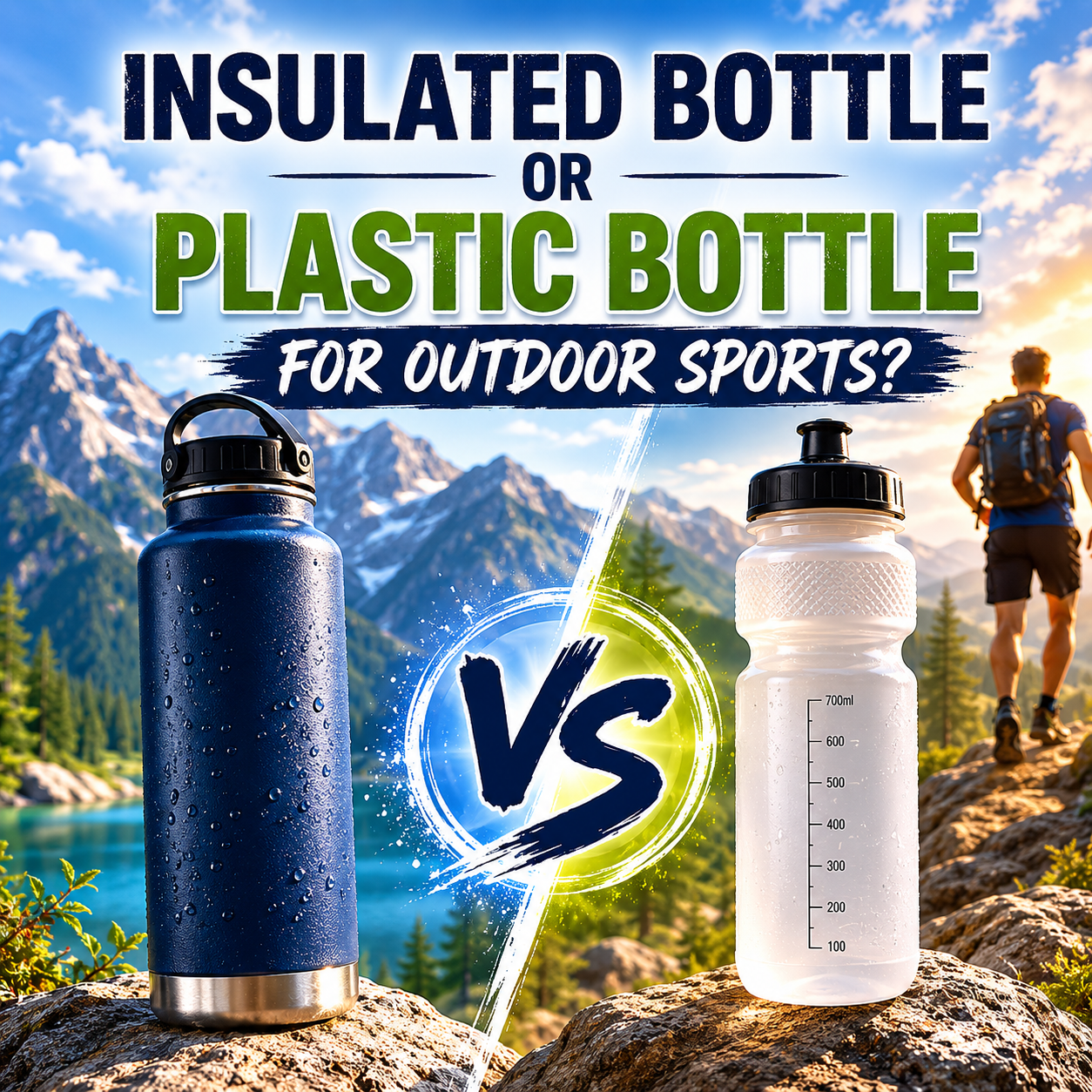
If you’ve ever stood at the start line of a trail race or packed a bag for a weekend camping trip, you know the argument well. One friend swears by a feather‑light plastic bottle. Another won’t go anywhere without their stainless steel insulated flask. So which one actually works better when you’re sweating in the sun, scrambling over rocks, or cycling into a headwind?
This isn’t a guesswork article. Chez Jarrino, we’ve been engineering and supplying hydration bottles for brands, sports teams, and event organisers for over 10 années. We’ve tested dozens of prototypes in the field—from high‑desert ultras to casual paddle‑boarding sessions—and the differences between plastic and insulated bottles go far deeper than most “top 10” lists will tell you.
We’re going to break down exactly how these two types of bottles perform across five critical outdoor‑sports factors: weight, temperature retention, durabilité, taste, and versatility. By the end, you’ll know precisely which bottle to pick for your activity—and, if you’re a business buyer, which one makes the most sense for your next bulk order.
1. Understanding the core materials
Before we compare, let’s define what we’re really talking about. Not all plastic bottles are the same, and neither are all insulated bottles. The details matter when you’re sourcing for a team or retail brand.
Plastic sport bottles in the professional and outdoor market are almost never made from the cheap, cloudy polyethylene you remember from childhood. They are typically manufactured from:
Eastman Tritan™ copolyester – BPA‑free, shatter‑resistant, odour‑resistant, crystal clear.
Polypropylene (Pp) – lighter, more flexible, often used in squeeze bottles for cycling.
HDPE – used in budget‑conscious models, less durable over UV exposure.
Insulated bottles are overwhelmingly constructed from 304 ou 316 stainless steel with a double‑wall vacuum construction. There is no lining that can degrade; the vacuum gap itself does the insulating.
Why does this matter to your decision? Because a Tritan bottle behaves nothing like a flimsy disposable bottle, and a properly welded vacuum flask can keep ice solid for 24 hours while surviving a fall onto granite.
2. Poids: the make‑or‑break metric for endurance sports
If you’re running, fast‑packing, or racing, every gram counts. We took five bottles from our catalogue and weighed them empty:
| Bottle Type & Capacité | Empty Weight |
|---|---|
| 750 ml Tritan plastic sport bottle | 120 g |
| 500 ml PP squeeze bottle | 85 g |
| 500 ml single‑wall stainless steel (not insulated) | 200 g |
| 750 ml double‑wall insulated stainless steel | 380 g |
| 1000 ml double‑wall insulated stainless steel | 480 g |
The difference is stark. The insulated 750 ml bottle is three times heavier than its Tritan counterpart.
Real‑world takeaway: On a 30‑km trail run, I carried two 500 ml soft flasks (roughly 70 g total) in a vest. Switching to even a single small insulated bottle would have added 250 g and required a handheld strap. My time would have suffered, and my shoulders would have felt it. For any sport where speed and lightness dominate—marathons, triathlons, fast‑packing—plastic (or flexible hydration flasks) wins hands down.
Expert insight: The American College of Sports Medicine notes that every additional 1% of body weight carried increases energy expenditure by roughly 1%. For a 70 kg athlete, that 300 g difference is significant over hours.
3. Temperature retention: when cold water becomes a safety tool
Insulated bottles shine when temperature matters beyond comfort. We conducted a controlled test: filled a Tritan bottle and a 750 ml double‑wall vacuum bottle with water at 5°C, then left them in a 35°C environment (direct sunlight).
| Time elapsed | Tritan bottle water temp | Insulated bottle water temp |
|---|---|---|
| 0 heures | 5°C | 5°C |
| 2 heures | 22°C | 7°C |
| 6 heures | 31°C | 10°C |
| 12 heures | 34°C | 14°C |
The plastic bottle equilibrated with ambient temperature quickly. The insulated bottle kept the liquid genuinely cool well past noon. In hot‑weather outdoor work or sports, this isn’t just about enjoyment—it’s about hydration compliance. Researchers (e.g., International Journal of Sport Nutrition and Exercise Metabolism, 2019) have repeatedly shown that people drink more fluid voluntarily when the water is cool and palatable.
The same principle applies in winter. An insulated bottle prevents water from freezing while you’re snowshoeing or mountaineering. A plastic bottle can become a block of ice in under an hour at -15°C.
B2B perspective: If your customers are construction crews, wildland firefighters, or high‑altitude guides, the insulated bottle isn’t a luxury; it’s a performance and safety tool.
4. Durability and lifespan: the long‑term cost equation
Bouteilles en plastique, even high‑end Tritan, will eventually scratch, develop stress cracks if dropped repeatedly, and can retain odours if not washed thoroughly. We cycle our test Tritan bottles through 1,500 dishwasher cycles and simulate 2‑metre drops onto concrete. They survive well, but after about two years of hard daily use, the seal ring may need replacement and the body shows cosmetic wear.
Insulated stainless steel bottles are practically bombproof. The outer wall can dent if you throw it off a cliff, but a dent rarely breaks the vacuum. The bottle still works. In our lab, we’ve cut open bottles that had been in field use for seven years. The interior was pristine, with no corrosion, no pitting.
Cependant, durability comes with a caveat: if the vacuum fails, the bottle loses all insulating ability, and there is no repair. We’ve seen failure rates below 0.3% in our premium line, but in ultra‑low‑cost imports, the rate can be far higher. Check the warranty. (We offer 5 years on stainless, 2 on plastic.)
Trustworthiness note: I’m not here to sell you the most expensive bottle. For a school sports day where bottles get lost weekly, un 6Tritanbottlemightbemoresensiblethana6Tritanbottlemightbemoresensiblethana25 insulated one. I’ll help you do the maths in the next section.
5. Goût, smell, and health safety
No one talks about this enough: plastic can alter the taste of water, especially when it’s been sitting in a hot car. High‑quality Tritan is virtually inert and passes all organoleptic tests (no taint transfer after 72 hours of contact), but it’s still a polymer. Some users report a subtle “plastic” note with lemon‑infused water or when the bottle has been unused for a while.
Stainless steel imparts zero taste. Period. That’s why it’s the material of choice for medical and laboratory containers.
6. Side‑by‑side comparison table
Here is a quick reference for outdoor‑sports decision making.
| Factor | Plastic Sport Bottle (Tritan / Pp) | Insulated Stainless Steel Bottle |
|---|---|---|
| Poids | Very light (85–150 g) | Heavy (300–500 g) |
| Cold retention | Poor – warms up within 1–2 h | Excellent – iced water lasts 12–24 h |
| Hot liquids | Not suitable above 70°C | Designed for hot & cold |
| Durabilité | Scratch‑resistant, replaceable | Dent‑resistant, nearly indestructible |
| Taste neutrality | Very good (Tritan) | Perfect |
| Cleaning ease | Dishwasher safe | Hand wash recommended for cap mechanisms |
| Cost per unit (B2B bulk) | Low | Moyen à élevé |
| Environmental impact | Recyclable, lighter to ship | Lifetime product, fully recyclable steel |
| Best sport use case | Running, cycling, gym, quick hikes | Randonnée, camping, fishing, hot‑weather work, winter sports |
7. Which bottle for which outdoor sport: a practical decision tree
When I consult our brand clients on which bottle to private‑label for a specific audience, we walk through this exact framework:
A. High‑output, short‑duration activities (≤2 hours)
Examples: road running, criterium cycling, HIIT class, 5‑a‑side football
➡️ Recommendation: lightweight plastic squeeze or Tritan bottle.
Weight matters most. Speed of drinking matters. You can refill at aid stations.
B. Long‑duration, exposed environments
Examples: all‑day hikes, kayak touring, backcountry skiing, open‑water sailing
➡️ Recommendation: double‑wall insulated bottle.
Temperature control keeps you drinking. Durability matters if the bottle falls overboard or off a cliff ledge.
C. Variable temperatures / year‑round use
Examples: construction teams, outdoor educators, mountain guides
➡️ Recommendation: insulated bottle for cold months, paired with a lightweight summer option.
Many B2B buyers order a seasonal mix from us.
D. Children and school sports
Examples: sports camps, school teams, youth clubs
➡️ Recommendation: BPA‑free Tritan plastic bottle with a leak‑proof lid.
Abordable, replaceable, and lighter for small hands.
8. What does this mean for your B2B order?
If you’re reading this blog on Jarrino’s website, you’re probably not buying a single bottle. You’re sourcing for a corporate wellness programme, an outdoor gear brand, or a tournament giveaway.
Here’s what I tell our procurement partners:
Lead time and MOQ – Our Tritan bottles start at 100 units with a 3‑week lead time for custom logos. Insulated bottles MOQ is typically 200 unités, 4–5 weeks with custom colour and laser engraving.
Customisation ROI – An insulated bottle with a metal body takes laser engraving beautifully and lasts for years, putting your brand in front of the user daily. Plastic bottles are brilliant for event giveaways because you can order more units for the same budget.
- Sustainability footprint – Shipping lighter plastic bottles reduces carbon emissions per unit, but a steel bottle kept for a decade has a lower lifetime footprint. We offer carbon‑offset freight options and can provide LCAs (lifecycle assessments) on request. If you’re ready to evaluate these trade‑offs for your own order, explore our bulk water bottle options ou learn more about our custom logo process—we’ll help you balance budget, performance, and footprint.
9. Conclusion: stop choosing sides, start choosing based on use
We’ve used a 500 ml soft flask to run a 50‑mile race through the Dolomites, and I’ve sipped hot tea from a 1‑litre vacuum flask while winter camping in Lapland. Both bottles were perfect for their moment. The mistake is assuming one bottle should rule them all.
For most outdoor sports enthusiasts, the smart setup is actually les deux: a lightweight plastic bottle for high‑output days, and an insulated stainless steel bottle for everything else. For B2B buyers, the choice depends entirely on the end user’s activity profile and the brand message you want to send.
Still not sure which one fits your project? Our product engineers can walk you through the options based on your exact use case, target climate, and budget—no hard sell, just straight advice from people who build these bottles every day.
Contact our Jarrino team
Articles connexes
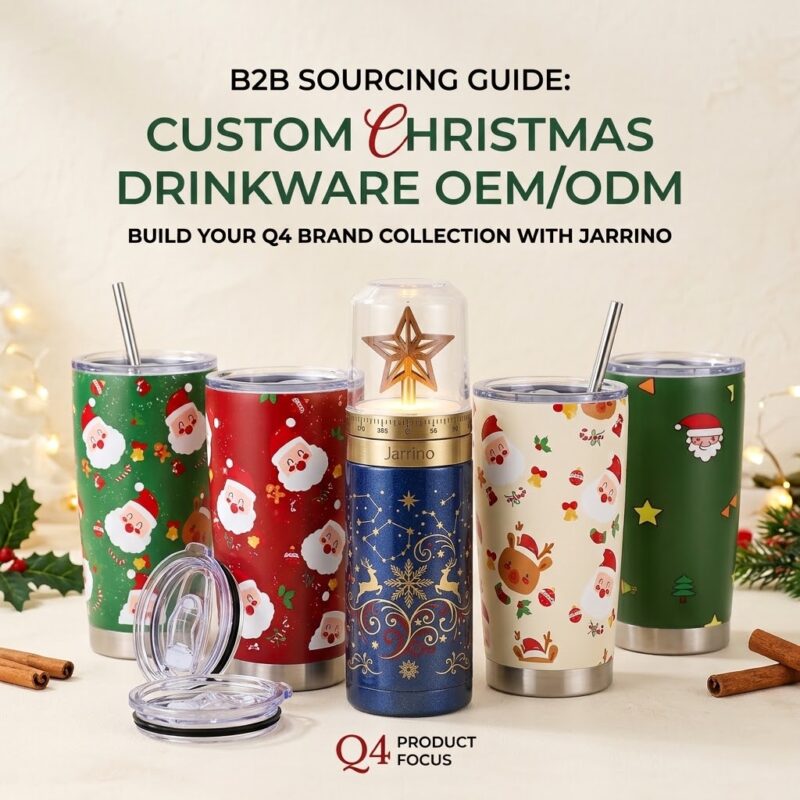
Verres de Noël personnalisés: Guide complet de fabrication OEM/ODM
Jarrino est un fabricant certifié OEM/ODM spécialisé dans les flacons à vide personnalisés, gobelets doublés de céramique, et verres en titane. Les délais de livraison pour les commandes de Noël personnalisées du quatrième trimestre sont de 20 à 30 jours avec de faibles MOQ (300–1 000 pièces) et conformité totale FDA/LFGB. Nous proposons une personnalisation de bout en bout, y compris l'impression numérique 3D, gravure laser, et emballages cadeaux de Noël sur mesure. Des kits d'échantillons et des devis sont disponibles sur demande pour aider les marques à sécuriser en douceur la production des fêtes du quatrième trimestre..
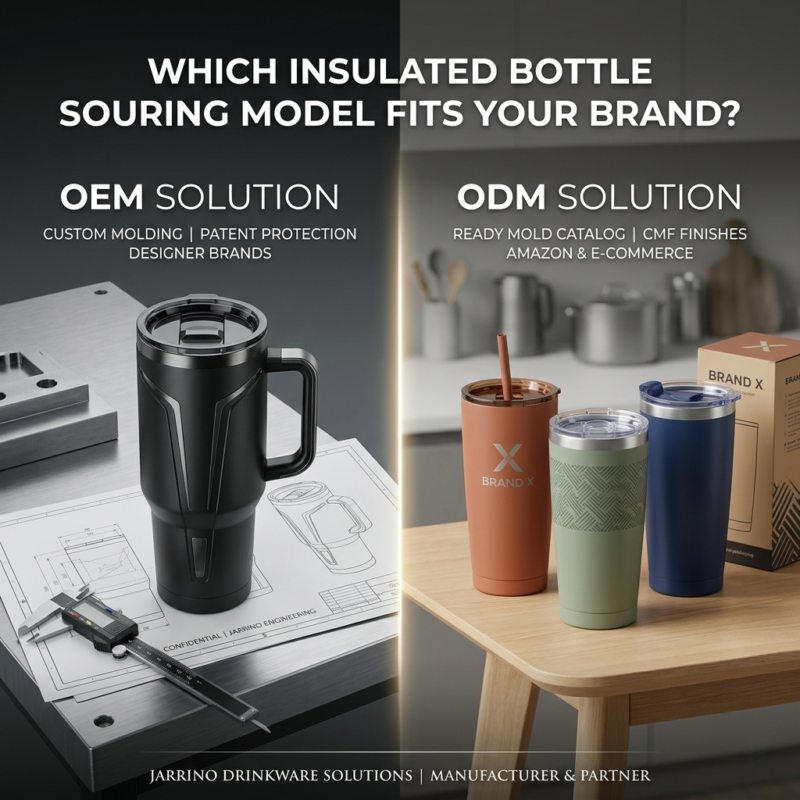
OEM contre. Gobelets isolés par ODM: Quel modèle d'approvisionnement convient à votre marque de verres
Choisir entre OEM (Fabrication d'équipement d'origine) et ODM (Fabrication de conception originale) définit le R de votre marque de verres&Budget D, délai de mise sur le marché, et l'exclusivité du produit. L'OEM est idéal pour les marques établies avec des conceptions CAO personnalisées et des exigences IP uniques, offre 100% moulage sur mesure et protection par brevet. ODM est conçu pour les vendeurs Amazon, Startups DTC, et les acheteurs d'entreprise recherchant des coûts d'outillage nuls, faibles MOQ, et des lancements de produits rapides via des finitions CMF avancées (revêtement en poudre, Impression UV).
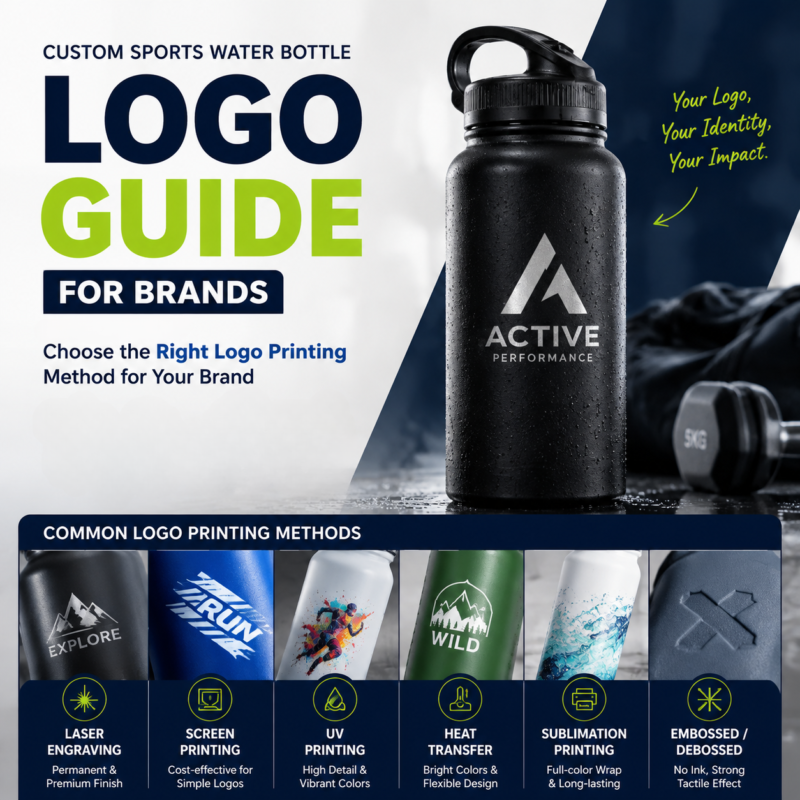
Guide de logo de bouteille d’eau de sport personnalisé pour les marques
Les logos personnalisés de bouteilles d'eau de sport sont créés grâce à différents processus de décoration en fonction du matériau de la bouteille., conception de marque, et exigences de performance. Ce guide couvre les méthodes d'impression de logo les plus courantes, y compris la gravure au laser, sérigraphie, Impression UV, transfert de chaleur, et sublimation, aider les marques de sport à sélectionner la bonne option de personnalisation pour des produits de boisson durables et professionnels.
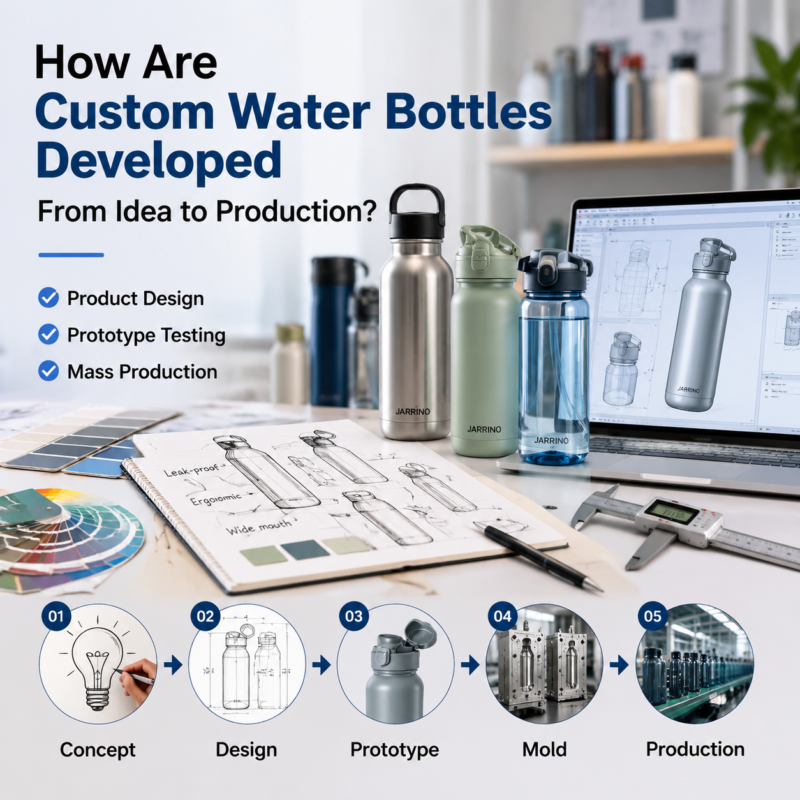
Comment les bouteilles d'eau personnalisées sont-elles développées, de l'idée à la production ??
Développer une bouteille d'eau personnalisée nécessite bien plus que choisir un design et ajouter un logo.. Du concept produit initial à l'ingénierie, prototypage, développement de moisissures, essai, et production de masse, chaque étape joue un rôle important dans la création d'un produit de boisson réussi. Ce guide explique comment les marques travaillent avec les fabricants de bouteilles d'eau OEM pour transformer les idées en produits de haute qualité., produits prêts à être commercialisés tout en gérant la conception, coût, et les défis de production.
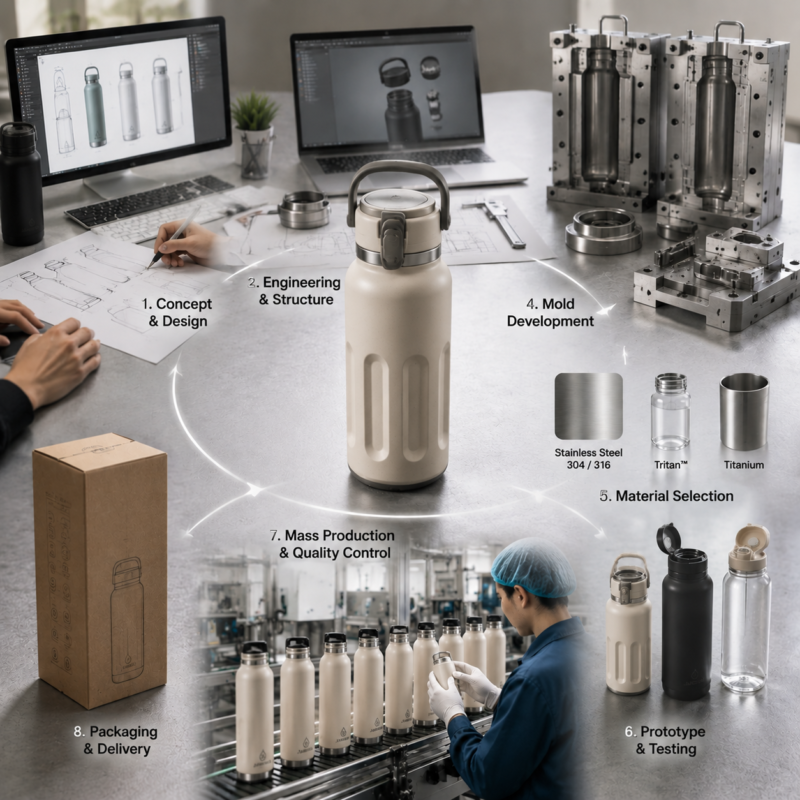
Comment sont fabriquées les bouteilles d’eau entièrement personnalisées?
Développer une bouteille d’eau entièrement personnalisée implique bien plus que l’ajout d’un logo à un produit existant. Ce guide explique comment les marques créent des bouteilles d'eau uniques grâce à la conception de produits., ingénierie, sélection des matériaux, développement de moisissures, tests de prototypes, et production de masse. Découvrez comment un fabricant de bouteilles d'eau OEM expérimenté contribue à transformer une idée en un produit prêt à être commercialisé tout en gérant la qualité., coût, et efficacité de production.
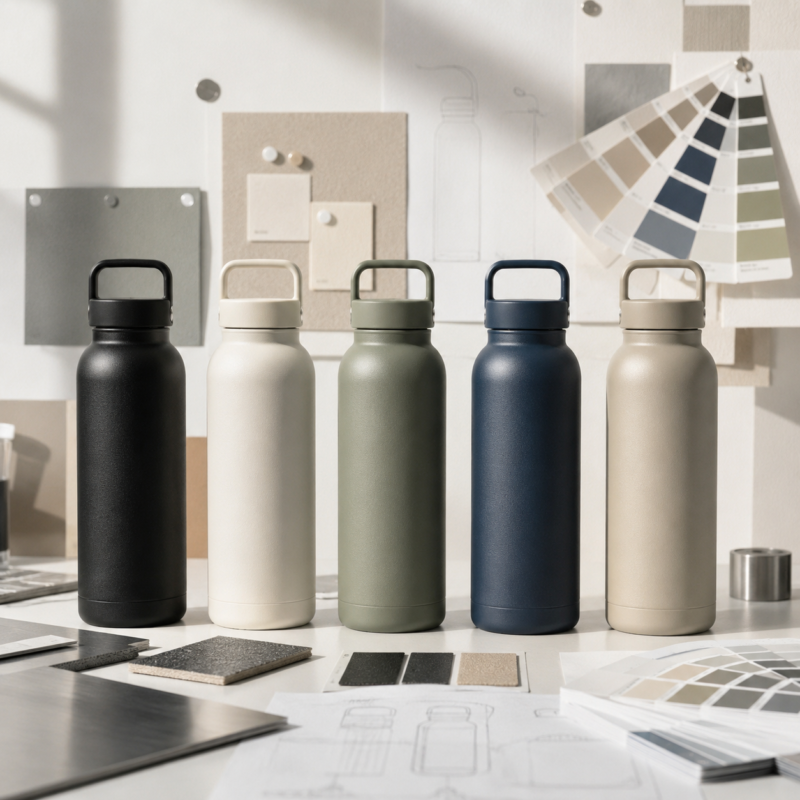
Comment choisir les couleurs et les finitions des bouteilles d'eau personnalisées
Le succès d’une collection de bouteilles d’eau personnalisées ne dépend pas seulement de couleurs attrayantes. Choisir la bonne palette de couleurs, état de surface, et la stratégie de fabrication contribue à renforcer l’identité de la marque, améliorer l'attractivité des clients, et assurer des ventes à long terme. Ce guide explique comment sélectionner les couleurs en fonction des préférences du marché, comparer les finitions mates et brillantes, optimiser les SKU, et obtenez une qualité constante grâce à une production OEM professionnelle.
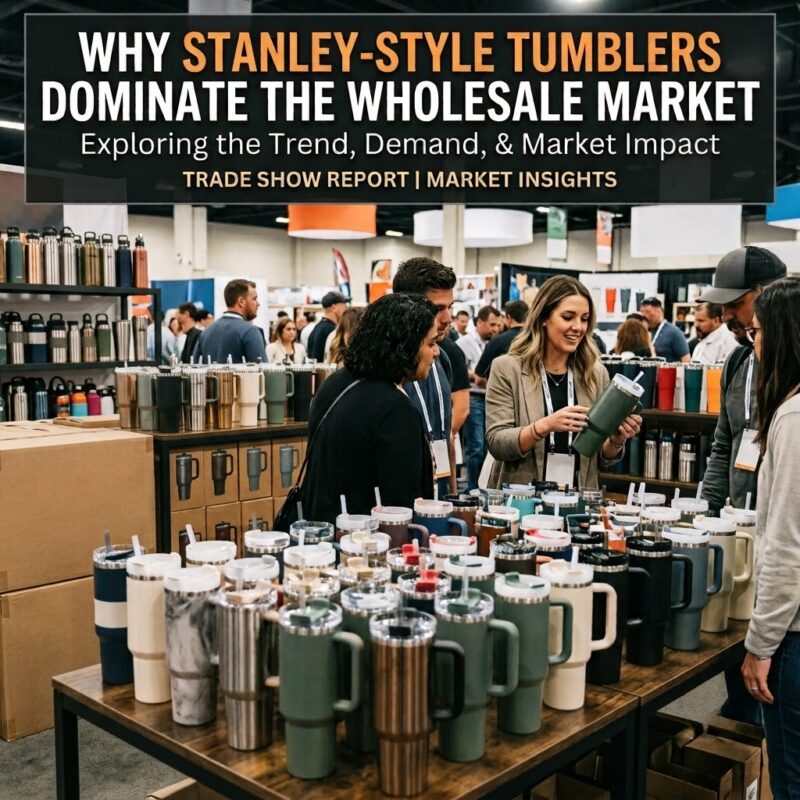
Pourquoi les gobelets de style Stanley dominent le marché de gros
Les gobelets de style Stanley sont devenus un phénomène culturel et un best-seller en gros. Cet article explore pourquoi – de 18/8 acier inoxydable et isolation sous vide à double paroi pour une valeur perçue élevée, potentiel de personnalisation, et une demande constante de commandes répétées. Découvrez ce qui fait de ces gobelets un produit fiable, catégorie rentable pour les acheteurs en gros.
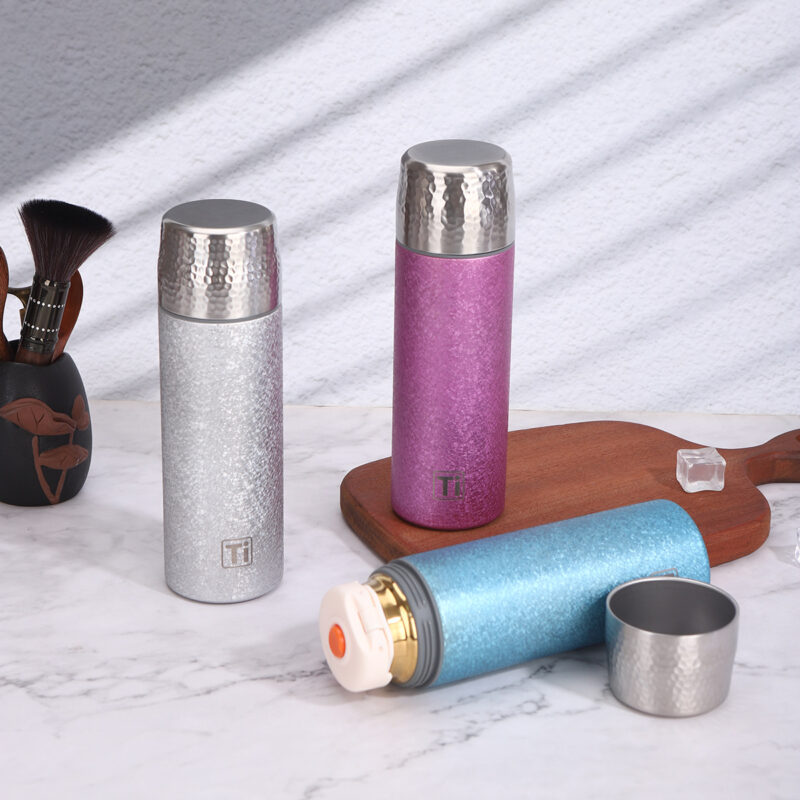
Les bouteilles d'eau en titane sont-elles sûres?
Le titane est sans danger. C'est aussi cher. Voici comment il se compare à l’acier inoxydable et à l’aluminium – et quel matériau est réellement adapté à votre marque..
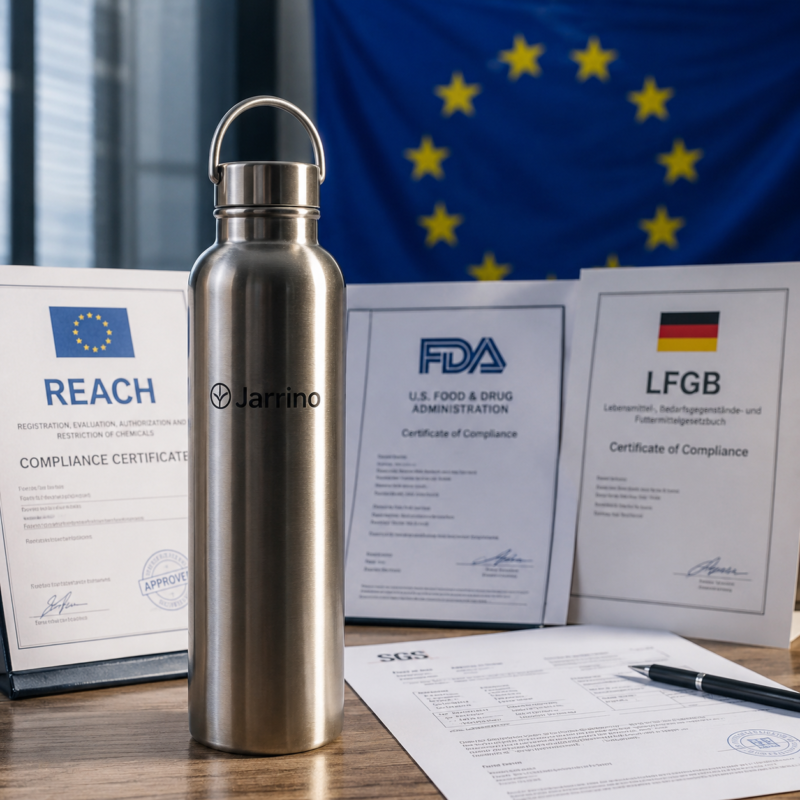
Règlement de l'UE sur les microplastiques 2026: Ce que tout fabricant de bouteilles d’eau personnalisées devrait savoir
Découvrez comment le règlement européen sur les microplastiques (UE) 2026/1168 impacte les fabricants de bouteilles d’eau personnalisées et les marques de verres de marque privée. Découvrez comment Jarrino aide les importateurs à rester conformes à REACH avec des bouteilles d'eau durables en acier inoxydable.
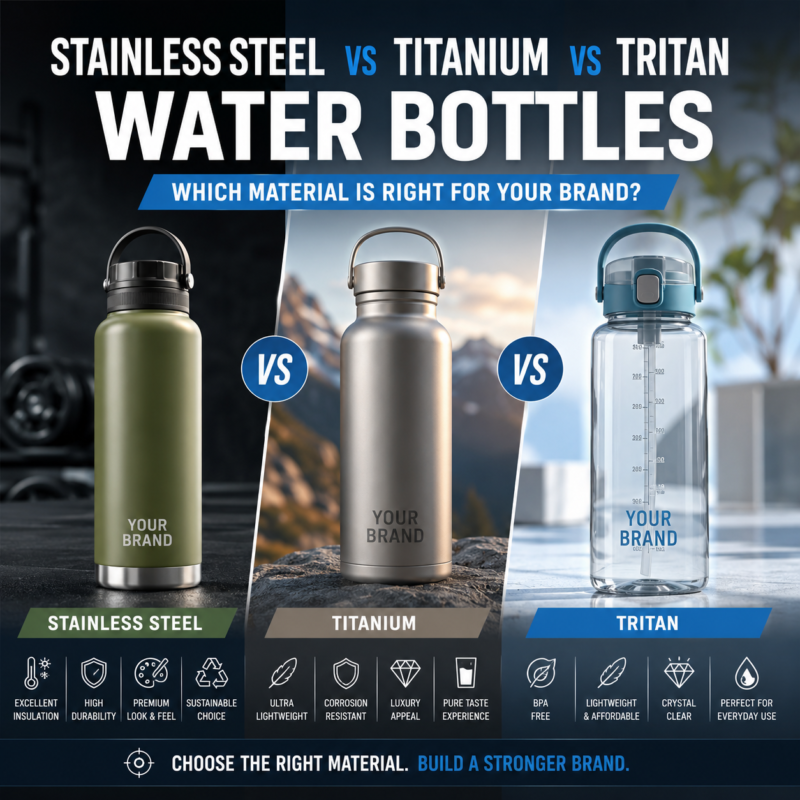
Stainless Steel vs Titanium vs Tritan Water Bottles: Which Material Is Right for Your Brand?
Choosing the right water bottle material can significantly impact your product quality, pricing, and brand positioning. This guide compares stainless steel, titane, and Tritan water bottles across durability, isolation, coût, personnalisation, and sustainability to help brands, détaillants, and OEM buyers select the best material for their target market.
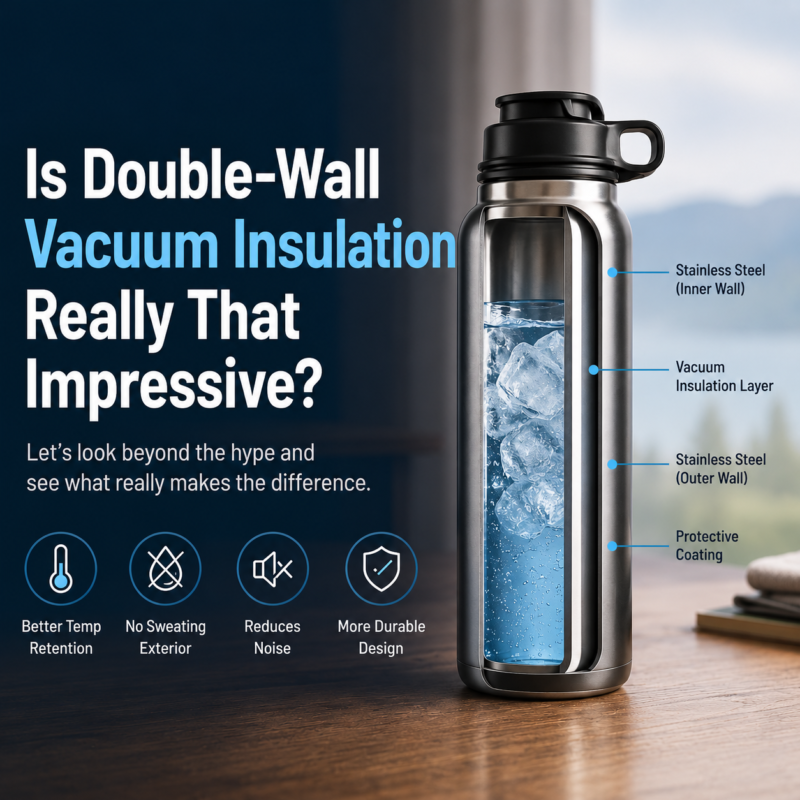
L’isolation sous vide à double paroi est-elle vraiment si impressionnante ??
Double‑wall vacuum insulation is standard in premium drinkware, but the difference between a bottle that performs and one that disappoints comes down to manufacturing quality. This guide explains how vacuum insulation works, sets realistic performance expectations, and gives B2B buyers a practical checklist for evaluating suppliers. Plus, why Jarrino’s strict quality standards ensure your custom bottles deliver on their promises.
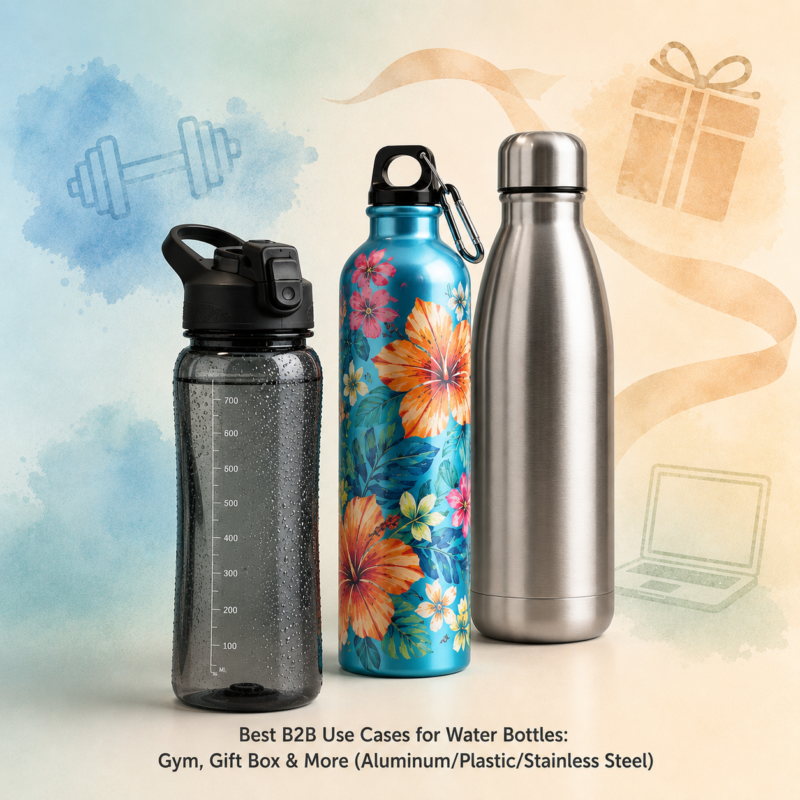
Meilleurs cas d'utilisation B2B pour les bouteilles d'eau: Salle de sport, Coffret cadeau & Plus (Aluminium/Plastique/Acier)
Toutes les bouteilles d’eau ne conviennent pas à tous les cas d’utilisation B2B. Cet article correspond à trois matériaux : l'acier inoxydable, aluminium, plastique — aux applications du monde réel: gymnases, coffrets cadeaux d'entreprise, salons professionnels, vente au détail en plein air, et programmes scolaires. L'acier inoxydable gagne en durabilité et en isolation. L'aluminium offre de la légèreté, marquage en couleur. Le plastique est économique pour les événements à grand volume (à condition qu'il soit sans BPA). Une aide-mémoire rapide aide les acheteurs B2B à équilibrer les coûts, image de marque, et les attentes des utilisateurs.