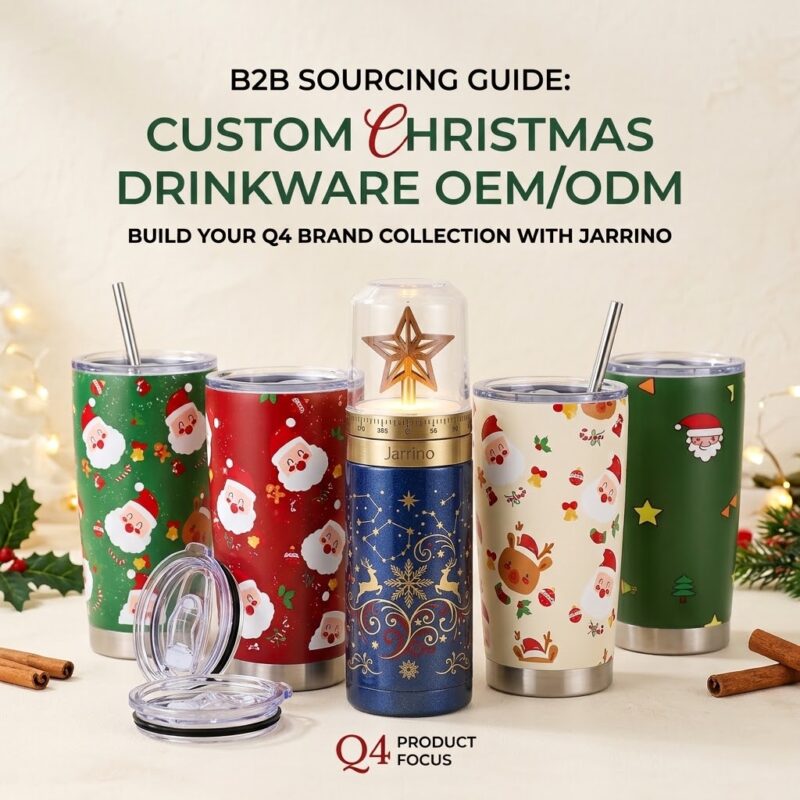

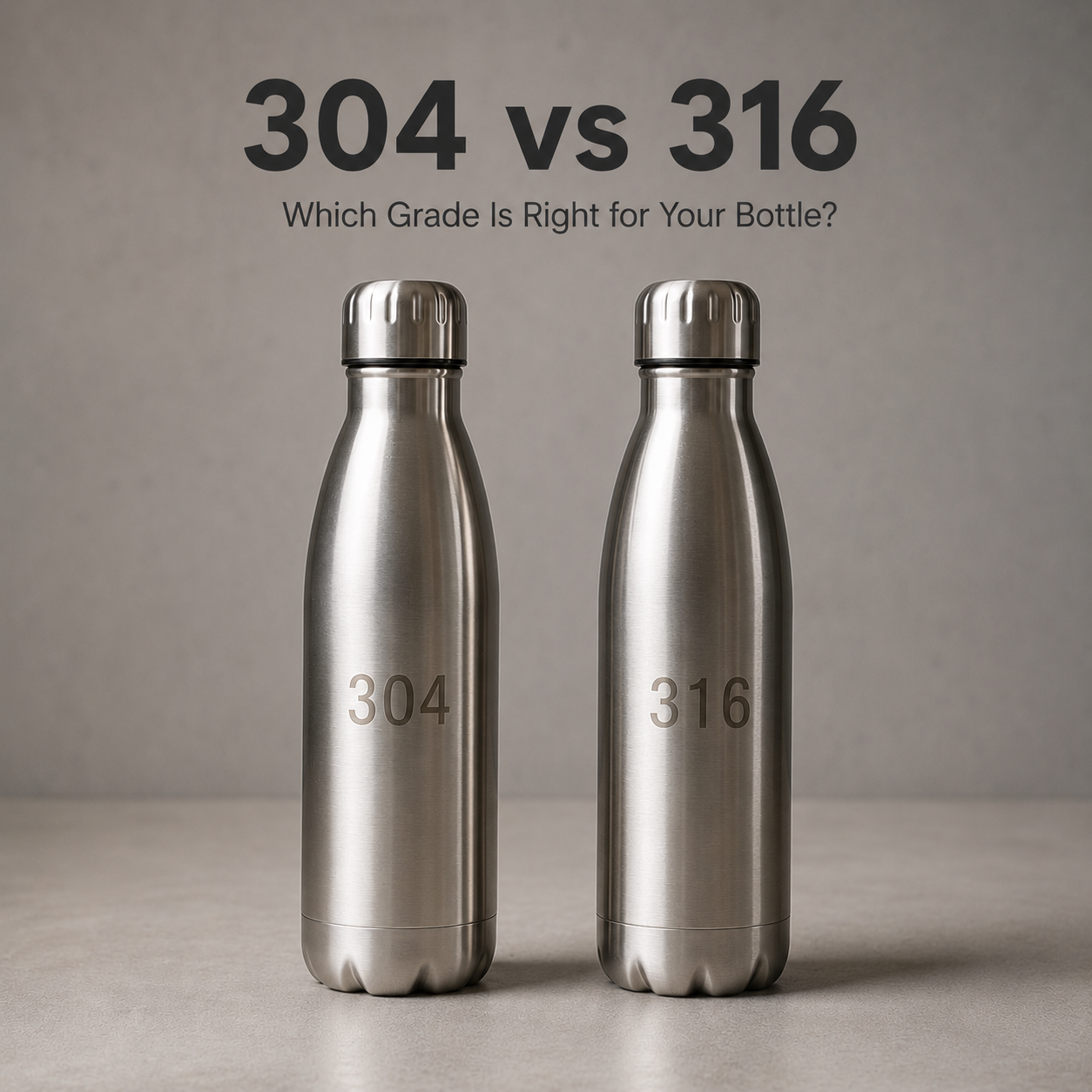
304 vs 316 Acier inoxydable: Which Grade Is Right for Your Bottle?
When you’re sourcing custom stainless steel bottles for your brand, one decision stands above most others: Which steel grade should you choose?
You’ve likely seen the numbers « 304 » et « 316 » stamped on product specs, maybe without fully understanding what they actually mean for your product.
This isn’t just a technical detail buried in a material data sheet. The steel grade you select affects your product’s corrosion resistance, safety compliance, manufacturing cost, and ultimately your brand’s reputation in the market.
Laisser’s break down the real differences between 304 et 316 stainless steel — and help you decide which one is right for your next production run.
The Quick Answer: When to Choose Which
Si tu’re short on time, here’s the practical verdict:
304 acier inoxydable is the industry standard — the workhorse grade used by most major brands. Il’s certified safe for food contact and offers excellent value. This is the right choice for the vast majority of drinkware applications: everyday water bottles, sports hydration, promotional items, and retail products.
316 acier inoxydable is the premium alternative. It contains an additional alloying element called molybdenum, which dramatically improves corrosion resistance in challenging environments. Choisir 316 if your product will hold acidic beverages (café, thé, citrus juices), serve coastal markets with salt air exposure, be used by outdoor enthusiasts in variable conditions, or target premium/baby/medical segments where « note médicale » material adds brand differentiation.
Both grades are safe. Both are food-grade. The difference is a question of durability and application, not safety.
The Science: What Makes Them Different?
Les deux 304 et 316 belong to the austenitic family of stainless steels — non-magnetic, highly durable, and known for excellent corrosion resistance. At a glance, they look nearly identical. But the difference lies in their chemical makeup.
304 acier inoxydable, often called « 18/8 » stainless, contains approximately 18% chrome et 8% nickel. Chromium creates a passive oxide layer on the surface that protects against corrosion, while nickel enhances toughness and gives the material its premium polished finish.
316 acier inoxydable starts with a similar base formula but adds one crucial element: approximately 2% à 3% molybdène. This small addition — just a tiny percentage of the total composition — transforms the material’s performance in ways that matter enormously to certain applications.
| Element | 304 Grade | 316 Grade |
|---|---|---|
| Chrome | 17.5–20.0% | 16.0–18.5% |
| Nickel | 8.0–11.0% | 10.0–14.0% |
| Molybdène | — | 2.0–3.0% |
| Carbon | ≤ 0.08% | ≤ 0.08% |
316 also contains slightly more nickel than 304 (10–14% versus 8–11%), which further contributes to its corrosion resistance profile.
The molybdenum in 316 improves corrosion resistance by more than three times compared to 304, making it particularly effective in chloride-rich environments such as seawater, coastal air, and even certain acidic food products.
Corrosion Resistance: Where the Difference Really Shows
In normal, everyday use — drinking water at room temperature, brief storage of non-acidic liquids — both 304 et 316 perform nearly identically. You wouldn’t notice a difference.
The divergence appears in more demanding conditions.
304 stainless steel has excellent general corrosion resistance, performing well in most atmospheric and freshwater environments. Cependant, it is vulnerable to pitting corrosion in chloride-rich conditions — saltwater, chlorinated disinfectants, or extended exposure to high-salt environments. In technical terms, 304’s Pitting Resistance Equivalent Number (PREN) is approximately 19, while 316’s PREN reaches approximately 26 — a substantial difference that directly translates to real-world durability.
316 acier inoxydable’s molybdenum creates a stronger, more stable protective oxide layer. In acidic solutions (pH around 3), 316 corrodes 66% less than 304. It resists pitting and crevice corrosion in chloride-exposed, acidic, or high-temperature environments significantly better than 304.
For a stainless steel bottle, this matters most when:
You’re storing acidic beverages. Coffee, thé, jus de fruits, boissons pour sportifs, and protein shakes all have elevated acidity levels. Over time — especially if beverages are left in the bottle for hours — the inner surface is exposed to compounds that can gradually degrade the protective oxide layer. 316’s molybdenum-enhanced layer handles acidic environments substantially better.
You’re in coastal or high-humidity markets. Salt in the air accelerates corrosion. If your target market includes coastal cities (San Francisco, Miami, Sydney, Singapore) or island nations, the ambient environment alone can affect product lifespan. 316’s salt resistance is why it’s often called « marine grade » acier inoxydable.
Your product will be used in hot climates. Temperature accelerates chemical reactions, including corrosion. 316 maintains its corrosion resistance at higher temperatures where 304 begins to show vulnerability.
Safety and Regulatory Compliance: Both Are Certified
Here’s where many buyers get confused. Les deux 304 et 316 stainless steel are certified food-grade materials.
The confusion often comes from encountering lower grades — particularly 201 stainless steel — which some manufacturers substitute to cut costs. 201 stainless steel contains only approximately 1% nickel and is not certified safe for food contact. Il’s prone to rust, can leave metallic taste, and may leach heavy metals. Yet because it’s technically « acier inoxydable, » less reputable factories sometimes pass it off to unsuspecting buyers.
This is why grade transparency matters. Some buyers have encountered rust issues with bottles labeled simply « acier inoxydable » — only to discover the material was actually 201, not any food-grade alloy.
Les deux 304 et 316 comply with major international food safety standards:
- FDA (NOUS): Both grades are fully compliant with FDA regulations 21 CFR for direct food contact
- LFGB (Germany/EU): Both pass migration testing for heavy metals under EU Regulation (CE) Non 1935/2004
- ISO and BSCI certifications: Available for both material grades
From a regulatory standpoint, les deux 304 et 316 are equally compliant and equally safe for food contact applications. The choice is not about safety — it’s about performance and durability in specific environments.
Cost and ROI: The Real Business Decision
316 stainless steel costs more. Significantly more.
The raw material cost for 316 est généralement 20% à 40% higher than 304. Molybdenum itself is over ten times more expensive than chromium or nickel, and even though it’s added in small quantities (2-3%), it substantially increases the bill of materials.
So is the premium worth it?
For most projects, the answer is no. 304 stainless steel offers the perfect balance of cost and performance. Il’s the standard across the industry precisely because it meets the needs of 90%+ of applications at a competitive price point.
For premium positioning or specific use cases, 316 can be the right investment. If your brand targets the premium outdoor, baby care, or coffee enthusiast segments, 316 adds legitimate value. It justifies higher MSRP (manufacturer’s suggested retail price) — typically 30% or more — while reducing warranty claims related to corrosion or staining over the product’s lifespan.
From an ROI perspective, 316 makes sense when:
Your price point supports premium positioning. Si tu’re selling a $40+ retail bottle, the marginal cost of upgrading to 316 is negligible compared to the perceived value. « Medical-grade stainless steel » is a legitimate selling point that commands premium pricing.
Your customers will use the bottle in demanding environments. Coastal markets, outdoor enthusiasts, daily coffee drinkers — these users will genuinely benefit from 316’s enhanced performance.
You want to eliminate future warranty risk. If rust or discoloration in high-acid use cases could trigger returns, le 316 premium may be cheaper than handling quality claims down the road.
How to Maximize Lifespan Regardless of Grade
Even the highest-grade stainless steel needs proper care. A bottle’s lifespan depends more on how it’s used and maintained than on whether it’s 304 ou 316.
Practical recommendations for your customers:
Replace thermal flasks every 1–2 years with regular use. Even high-grade stainless steel eventually shows wear, and the vacuum seal also degrades over time.
Clean bottles promptly after holding acidic beverages. Coffee, thé, jus de fruits, and sports drinks should not sit for extended periods. Rinse immediately after use.
Inspect the inner surface periodically. If you see rust spots, pitting, or visible wear, replace the bottle regardless of the steel grade. Once the protective inner layer is compromised, the material can no longer protect the drink.
Avoid aggressive cleaning methods. Steel wool, abrasive scrubbers, and harsh chemical cleaners can scratch the surface, creating sites where corrosion can initiate. Use soft sponges and mild dish soap instead.
Jarrino’s Approach: Transparency and Choice
Chez Jarrino, we work with both 304 et 316 stainless steel grades, and we’re completely transparent about which material your product is manufactured with.
We source only certified stainless steel that meets FDA and LFGB food safety standards. Every shipment is verified against mill test certificates, and we do not substitute lower-grade materials to cut costs. Our testing standards meet or exceed EU and Japanese quality requirements.
Why does this matter for your sourcing decision?
Because the bottle that arrives at your warehouse must match exactly what you specified — no substitutions, no surprises, just the material you paid for.
Whether you choose 304 ou 316, we manufacture to consistent quality standards. The difference is in the material spec, not in our production quality. And whichever grade you select, nous’ll provide full compliance documentation, including material certifications and test reports, so you can sell with confidence in your target markets.
Our recommendation for most B2B buyers: start with 304. Il’s cost-effective, fully certified, and perfectly suitable for the vast majority of applications. Only upgrade to 316 if your brand positioning, target use cases, or market demands genuinely require the additional performance — and you can explain to customers why it matters.
The Final Decision
Laisser’s cut through the technical details:
Choisir 304 si: You’re selling everyday water bottles for general hydration. Your customers will use the bottle primarily for water, occasionally for other beverages. Price is an important competitive factor in your market. You’re serving mainstream retail or promotional channels. This is the right choice for 90% of projects.
Choisir 316 si: Your bottle will hold coffee, thé, citrus drinks, or protein shakes daily. Your brand targets premium, de plein air, baby, or medical market segments. You’re selling in coastal or high-humidity regions. You can command higher prices and want « premium grade » as a legitimate selling point. The added material cost (20-40%) fits within your product’s margin structure.
Both grades are safe. Both are food-grade. Both are backed by the same regulatory certifications. The choice isn’t about finding the « better » material — it’s about finding the right material for your specific product, your target market, and your brand positioning.
Si tu’re still unsure which grade suits your upcoming project, reach out. We’ve helped hundreds of B2B buyers navigate this exact decision, and we can walk you through the trade-offs for your specific use case, target market, and volume requirements.
📧 Contact our sourcing team: [email protected]
Contactez-nous
Articles connexes
Verres de Noël personnalisés: Guide complet de fabrication OEM/ODM
Jarrino est un fabricant certifié OEM/ODM spécialisé dans les flacons à vide personnalisés, gobelets doublés de céramique, et verres en titane. Les délais de livraison pour les commandes de Noël personnalisées du quatrième trimestre sont de 20 à 30 jours avec de faibles MOQ (300–1 000 pièces) et conformité totale FDA/LFGB. Nous proposons une personnalisation de bout en bout, y compris l'impression numérique 3D, gravure laser, et emballages cadeaux de Noël sur mesure. Des kits d'échantillons et des devis sont disponibles sur demande pour aider les marques à sécuriser en douceur la production des fêtes du quatrième trimestre..
OEM contre. Gobelets isolés par ODM: Quel modèle d'approvisionnement convient à votre marque de verres
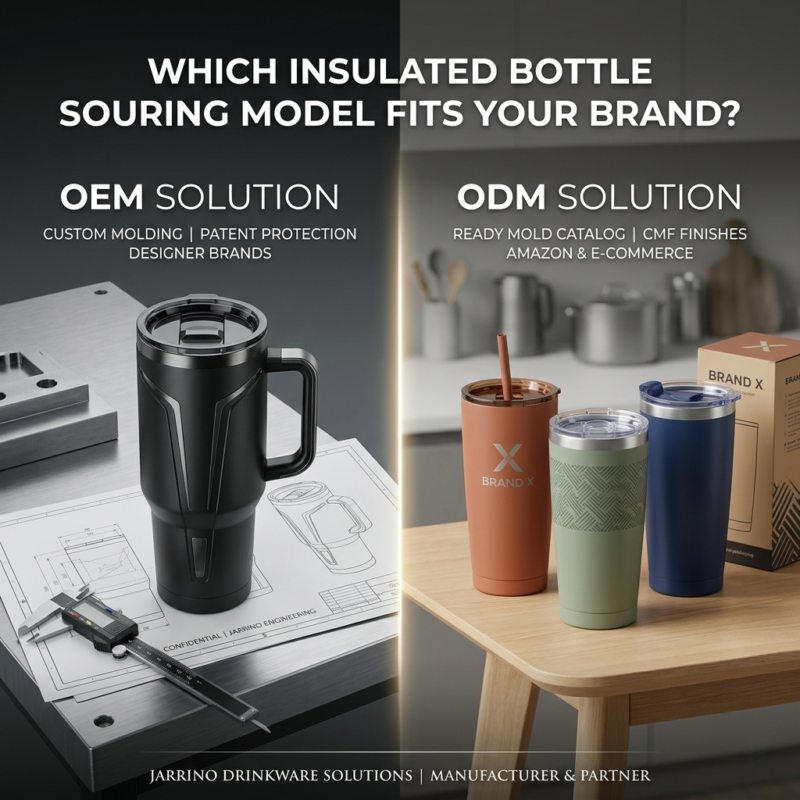
Choisir entre OEM (Fabrication d'équipement d'origine) et ODM (Fabrication de conception originale) définit le R de votre marque de verres&Budget D, délai de mise sur le marché, et l'exclusivité du produit. L'OEM est idéal pour les marques établies avec des conceptions CAO personnalisées et des exigences IP uniques, offre 100% moulage sur mesure et protection par brevet. ODM est conçu pour les vendeurs Amazon, Startups DTC, et les acheteurs d'entreprise recherchant des coûts d'outillage nuls, faibles MOQ, et des lancements de produits rapides via des finitions CMF avancées (revêtement en poudre, Impression UV).
Guide de logo de bouteille d’eau de sport personnalisé pour les marques
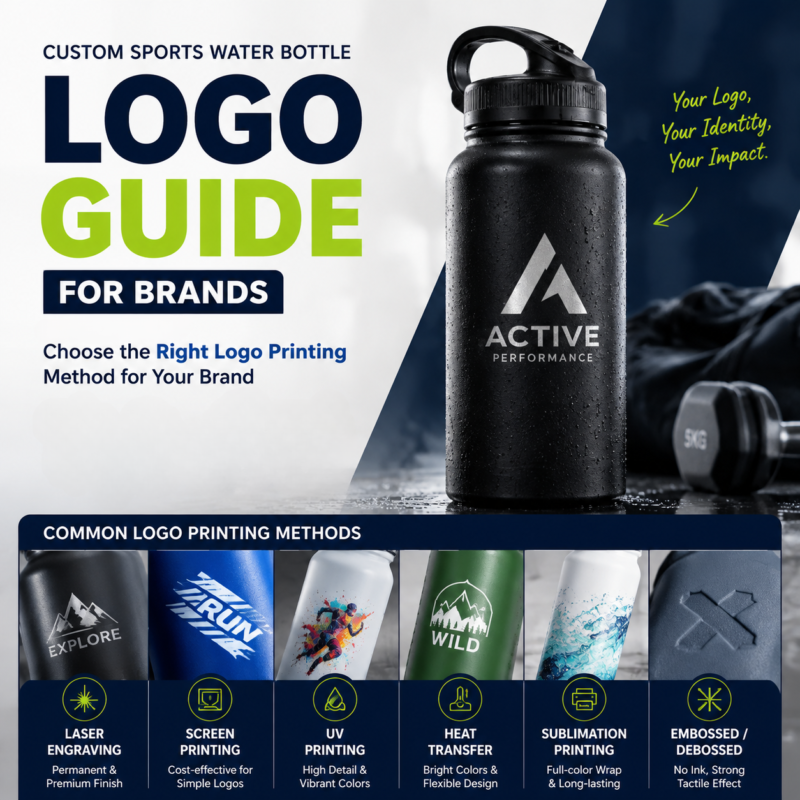
Les logos personnalisés de bouteilles d'eau de sport sont créés grâce à différents processus de décoration en fonction du matériau de la bouteille., conception de marque, et exigences de performance. Ce guide couvre les méthodes d'impression de logo les plus courantes, y compris la gravure au laser, sérigraphie, Impression UV, transfert de chaleur, et sublimation, aider les marques de sport à sélectionner la bonne option de personnalisation pour des produits de boisson durables et professionnels.
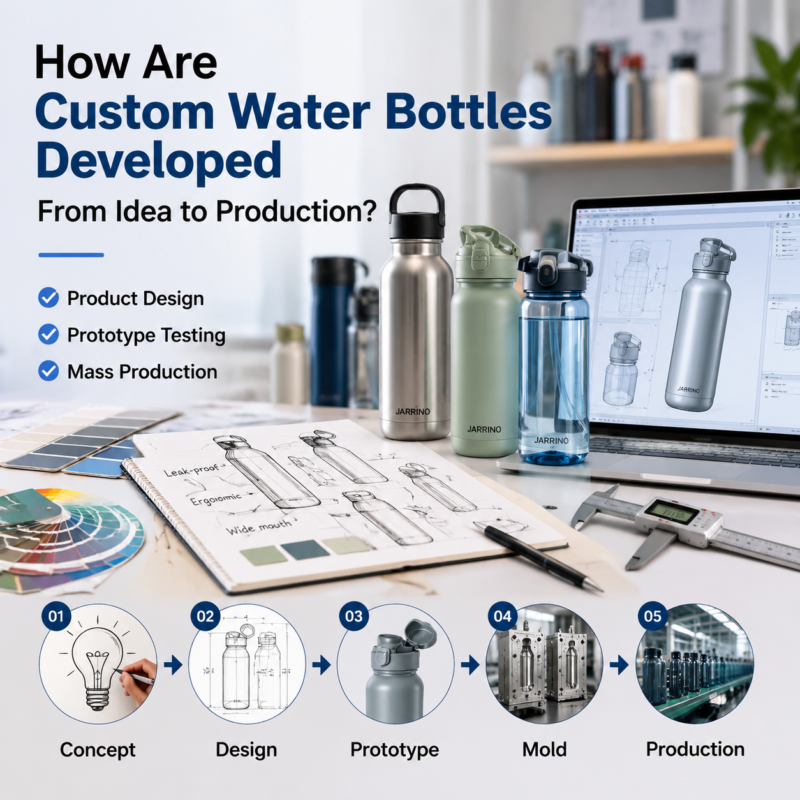
Comment les bouteilles d'eau personnalisées sont-elles développées, de l'idée à la production ??
Développer une bouteille d'eau personnalisée nécessite bien plus que choisir un design et ajouter un logo.. Du concept produit initial à l'ingénierie, prototypage, développement de moisissures, essai, et production de masse, chaque étape joue un rôle important dans la création d'un produit de boisson réussi. Ce guide explique comment les marques travaillent avec les fabricants de bouteilles d'eau OEM pour transformer les idées en produits de haute qualité., produits prêts à être commercialisés tout en gérant la conception, coût, et les défis de production.
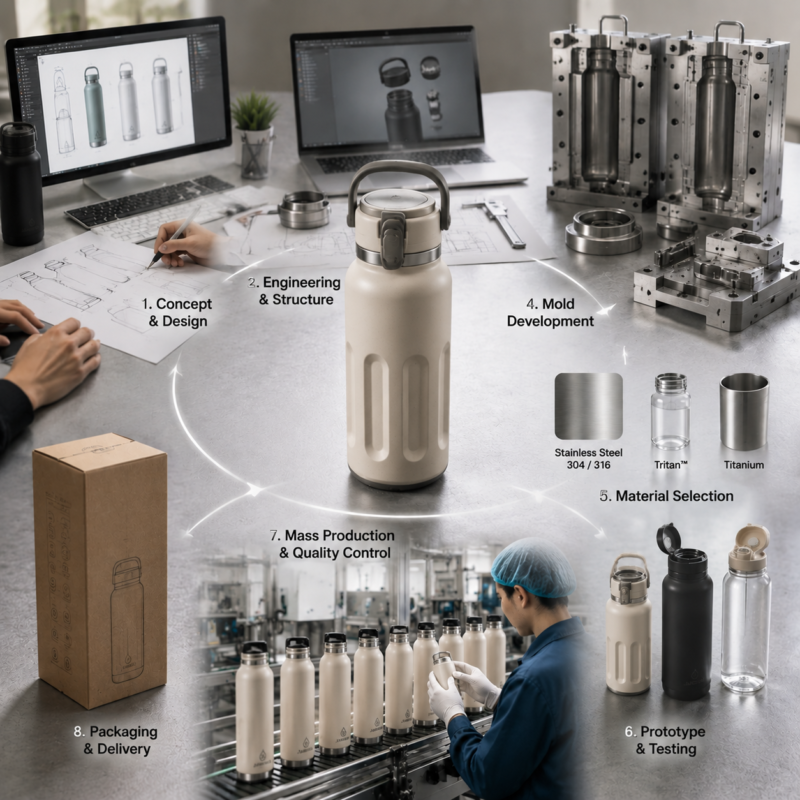
Comment sont fabriquées les bouteilles d’eau entièrement personnalisées?
Développer une bouteille d’eau entièrement personnalisée implique bien plus que l’ajout d’un logo à un produit existant. Ce guide explique comment les marques créent des bouteilles d'eau uniques grâce à la conception de produits., ingénierie, sélection des matériaux, développement de moisissures, tests de prototypes, et production de masse. Découvrez comment un fabricant de bouteilles d'eau OEM expérimenté contribue à transformer une idée en un produit prêt à être commercialisé tout en gérant la qualité., coût, et efficacité de production.
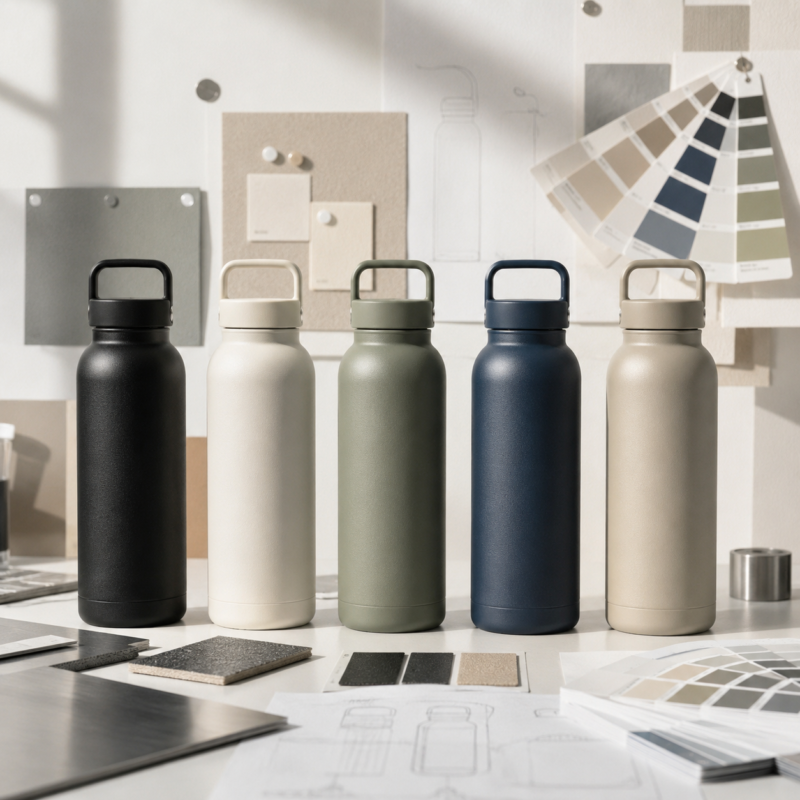
Comment choisir les couleurs et les finitions des bouteilles d'eau personnalisées
Le succès d’une collection de bouteilles d’eau personnalisées ne dépend pas seulement de couleurs attrayantes. Choisir la bonne palette de couleurs, état de surface, et la stratégie de fabrication contribue à renforcer l’identité de la marque, améliorer l'attractivité des clients, et assurer des ventes à long terme. Ce guide explique comment sélectionner les couleurs en fonction des préférences du marché, comparer les finitions mates et brillantes, optimiser les SKU, et obtenez une qualité constante grâce à une production OEM professionnelle.
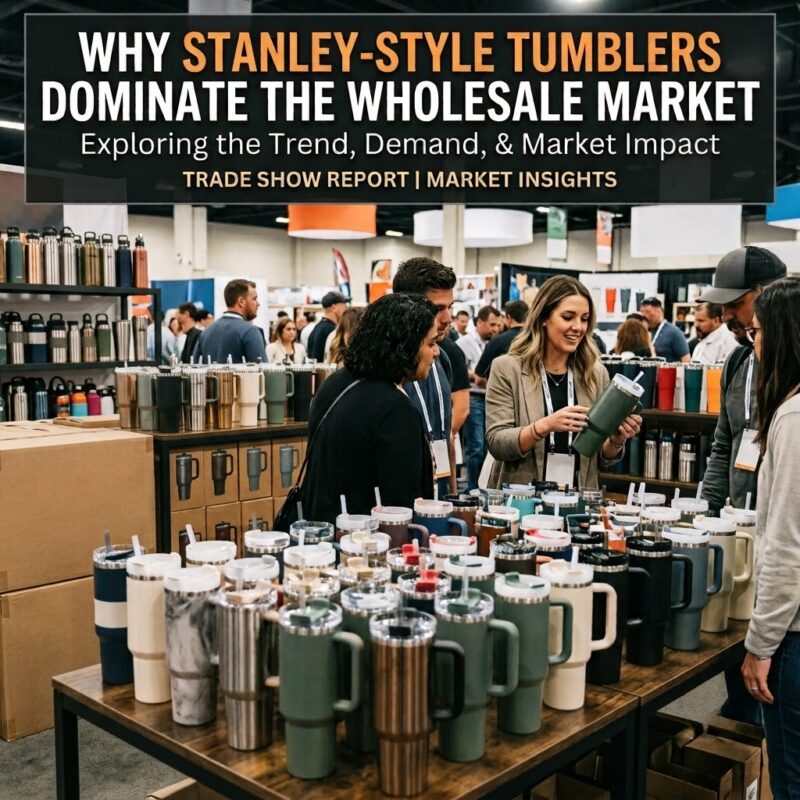
Pourquoi les gobelets de style Stanley dominent le marché de gros
Les gobelets de style Stanley sont devenus un phénomène culturel et un best-seller en gros. Cet article explore pourquoi – de 18/8 acier inoxydable et isolation sous vide à double paroi pour une valeur perçue élevée, potentiel de personnalisation, et une demande constante de commandes répétées. Découvrez ce qui fait de ces gobelets un produit fiable, catégorie rentable pour les acheteurs en gros.
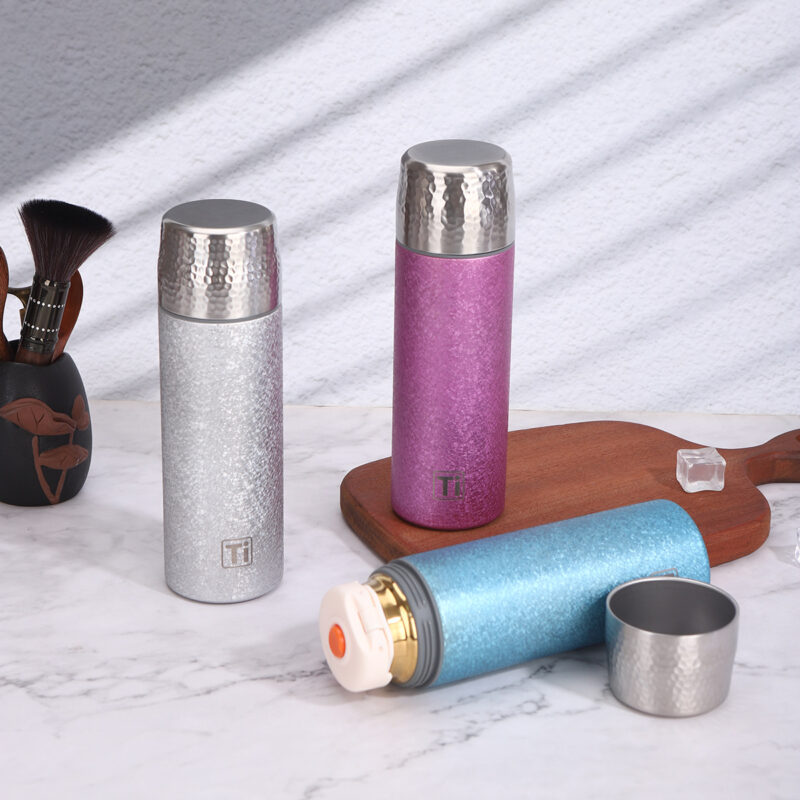
Les bouteilles d'eau en titane sont-elles sûres?
Le titane est sans danger. C'est aussi cher. Voici comment il se compare à l’acier inoxydable et à l’aluminium – et quel matériau est réellement adapté à votre marque..
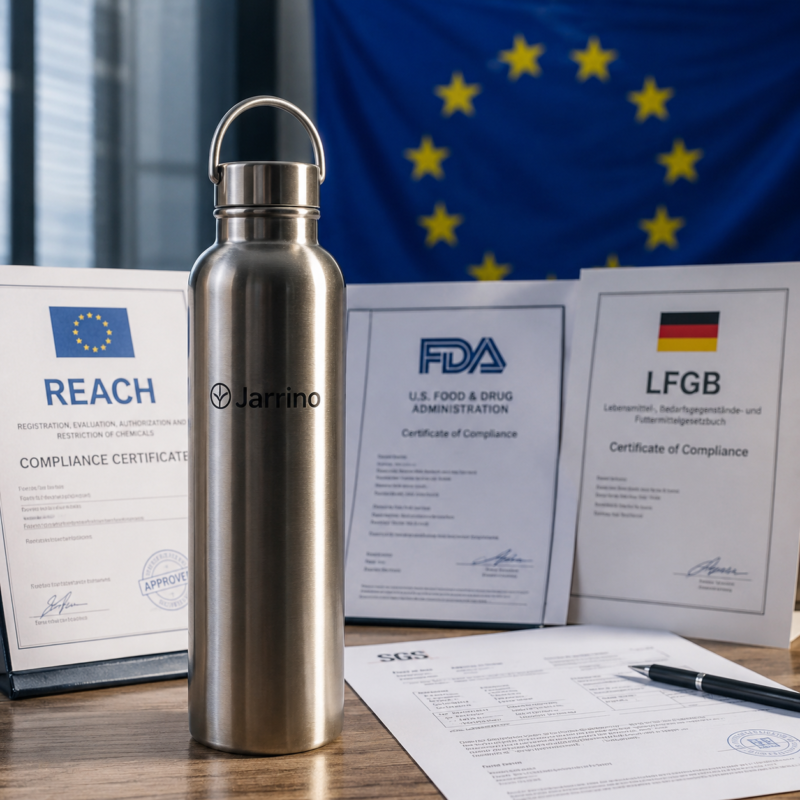
Règlement de l'UE sur les microplastiques 2026: Ce que tout fabricant de bouteilles d’eau personnalisées devrait savoir
Découvrez comment le règlement européen sur les microplastiques (UE) 2026/1168 impacte les fabricants de bouteilles d’eau personnalisées et les marques de verres de marque privée. Découvrez comment Jarrino aide les importateurs à rester conformes à REACH avec des bouteilles d'eau durables en acier inoxydable.
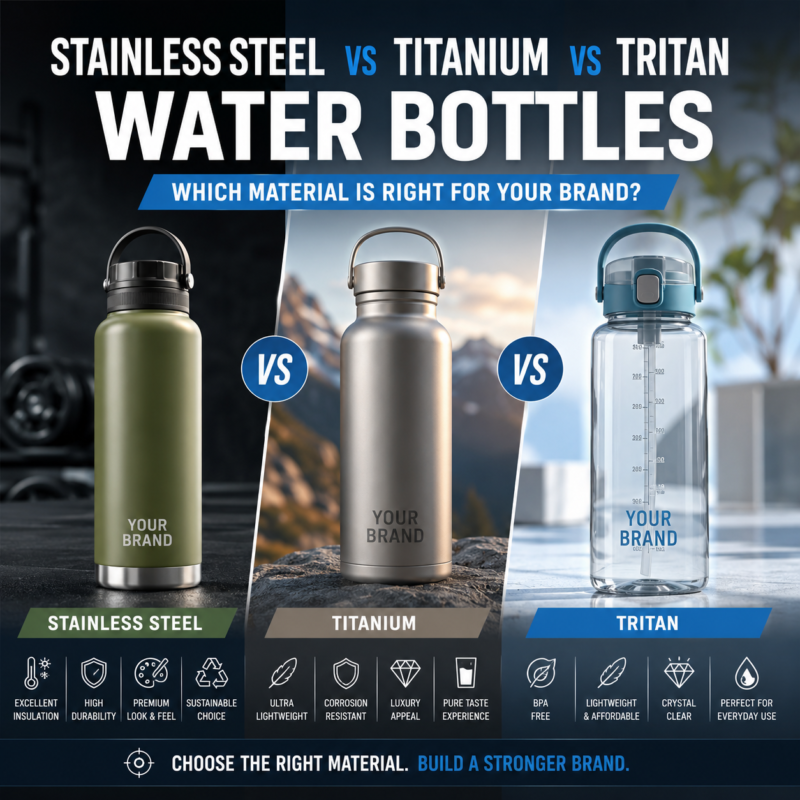
Stainless Steel vs Titanium vs Tritan Water Bottles: Which Material Is Right for Your Brand?
Choosing the right water bottle material can significantly impact your product quality, pricing, and brand positioning. This guide compares stainless steel, titane, and Tritan water bottles across durability, isolation, coût, personnalisation, and sustainability to help brands, détaillants, and OEM buyers select the best material for their target market.
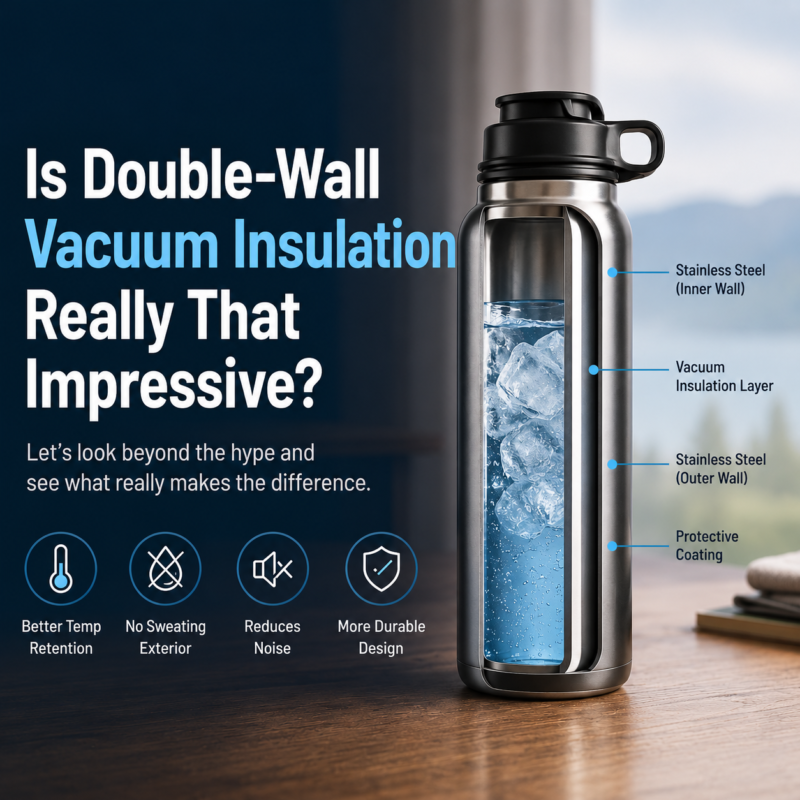
L’isolation sous vide à double paroi est-elle vraiment si impressionnante ??
Double‑wall vacuum insulation is standard in premium drinkware, but the difference between a bottle that performs and one that disappoints comes down to manufacturing quality. This guide explains how vacuum insulation works, sets realistic performance expectations, and gives B2B buyers a practical checklist for evaluating suppliers. Plus, why Jarrino’s strict quality standards ensure your custom bottles deliver on their promises.
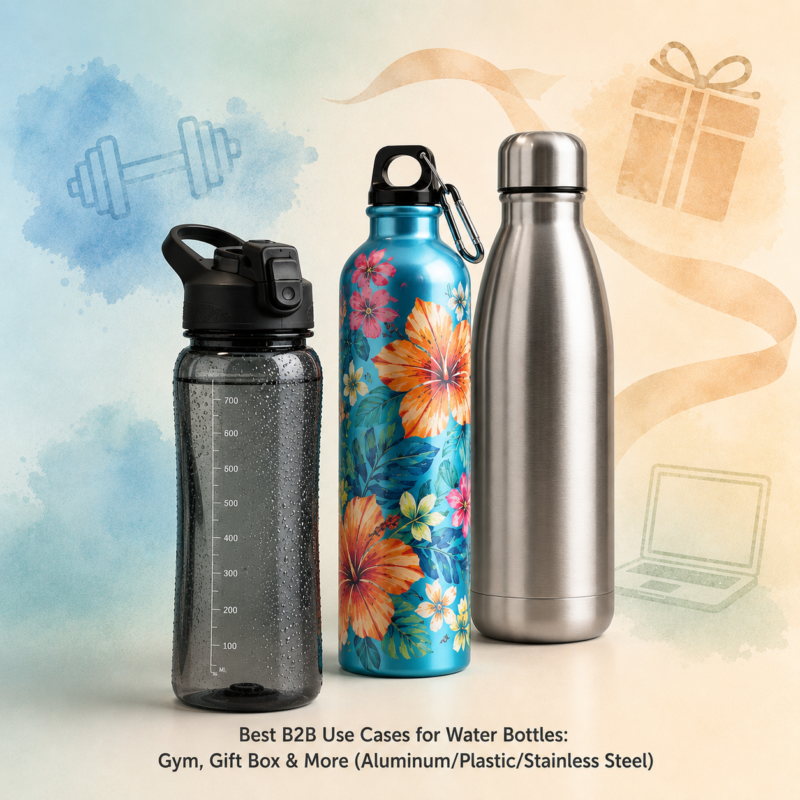
Meilleurs cas d'utilisation B2B pour les bouteilles d'eau: Salle de sport, Coffret cadeau & Plus (Aluminium/Plastique/Acier)
Toutes les bouteilles d’eau ne conviennent pas à tous les cas d’utilisation B2B. Cet article correspond à trois matériaux : l'acier inoxydable, aluminium, plastique — aux applications du monde réel: gymnases, coffrets cadeaux d'entreprise, salons professionnels, vente au détail en plein air, et programmes scolaires. L'acier inoxydable gagne en durabilité et en isolation. L'aluminium offre de la légèreté, marquage en couleur. Le plastique est économique pour les événements à grand volume (à condition qu'il soit sans BPA). Une aide-mémoire rapide aide les acheteurs B2B à équilibrer les coûts, image de marque, et les attentes des utilisateurs.