
Die Edelstahl-Wasserflasche: Von der bescheidenen Flüssigkeitszufuhr zur globalen Markenikone
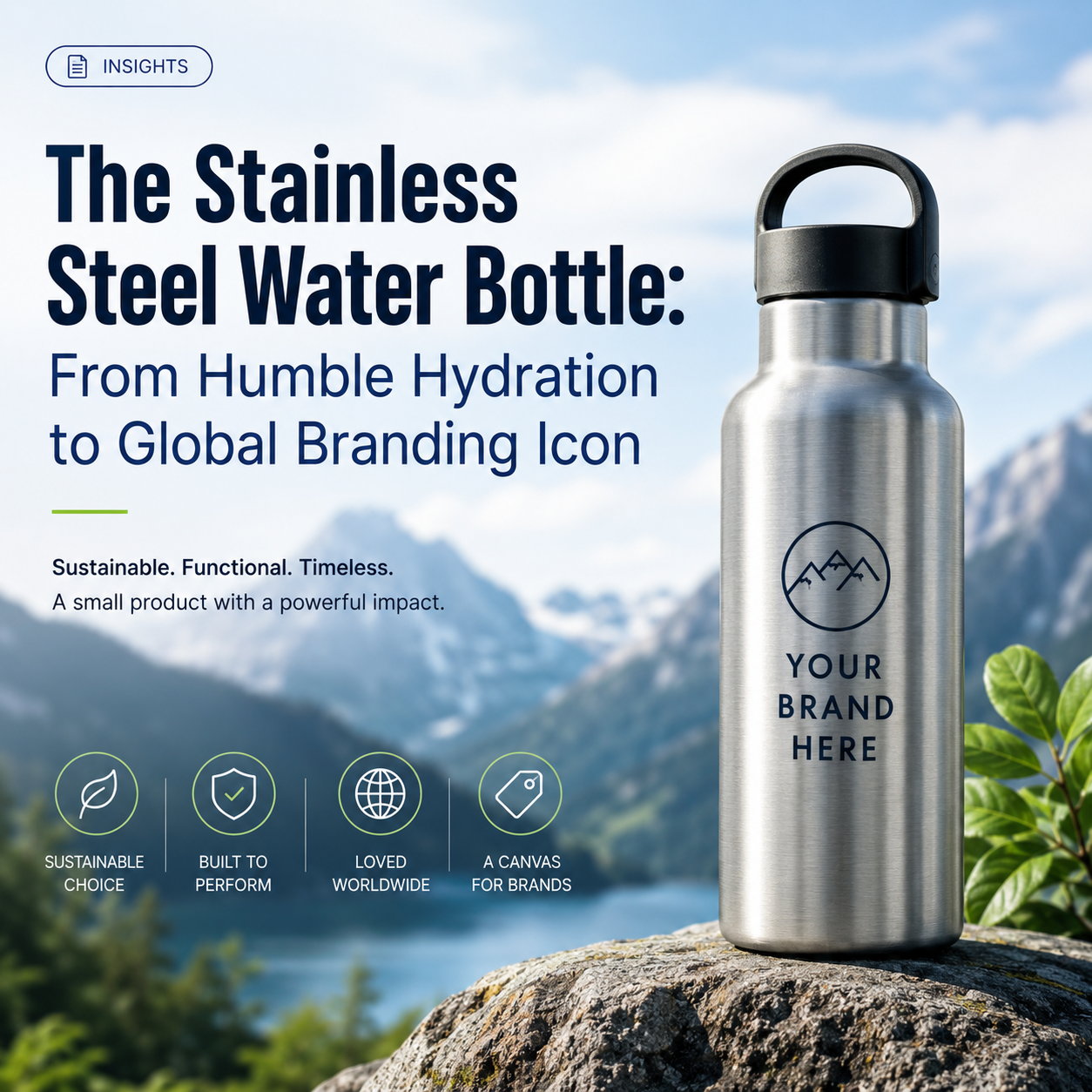
How a simple everyday object became the most sought-after canvas for corporate identity
Walk into any office, Fitnessstudio, or airport lounge today, and you’ll see them. Lining desk edges, clipped to backpacks, rolling around in cupholders. Stainless steel water bottles. But look closer. Those aren’t just vessels for water. They’re billboards. Handshakes. Statements.
Some bear minimalist logos in matte silver. Others explode with gradient sunsets or embossed typography. A few carry the weight of a company’s entire sustainability pledge.
So how did a piece of drinkware become one of the most powerful B2B branding tools of the decade? And more importantly, what makes a custom stainless steel bottle worth carrying?
The Quiet Takeover of Double‑Wall Vacuum Insulation
Let’s start with the tech. Because without it, the branding revolution never happens.
Remember the old promotional mug? Cheap ceramic, spongy foam sleeve, lukewarm coffee by 10 AM. That era ended when double‑wall vacuum insulation became affordable. Two walls of stainless steel, a vacuum seal between them. Heat can’t escape. Cold can’t creep in.
Suddenly, morning coffee stayed hot until the afternoon. Iced water remained cold through an entire worksite shift. And for the first time, A custom insulated water bottle became genuinely useful — not just another logo‑slapped giveaway that ended up in a drawer.
Heute, the best bottles hold temperature for 12 hours hot, 24 hours cold. Third‑party labs verify these claims. Buyers — corporate gift managers, event planners, retail buyers — now expect that kind of performance as a baseline.
Not as a bonus. As a given.
Why Stainless Steel, Why Now?
Material choice matters more than most buyers realize. Plastic carries baggage — environmental, perceptual, regulatory. Glass looks elegant but shatters. Aluminum dents easily and often needs a plastic liner.
304 (18/8) Edelstahl hits a sweet spot. It’s food‑safe, rust‑proof, and endlessly recyclable. It doesn’t retain flavors from yesterday’s coffee. It feels solid without being heavy. And it provides a pristine surface for logos — whether laser‑engraved, screen‑printed, or sublimated.
And then there’s the unspoken factor: trust. A stainless steel bottle looks premium. It signals durability. When a company hands one to an employee or client, the message isn’t “here’s a free thing.” It’s “we value quality, and we value you.”
That shift — from giveaway to gift — is what turned the category into a B2B powerhouse.
The Customization Spectrum: Beyond a Simple Logo
Here’s where things get interesting for brand owners and procurement professionals alike.
A decade ago, “custom” meant a single‑color screen‑printed logo on a pre‑selected bottle color. Choices were limited. Creativity was constrained.
Now? The spectrum has exploded.
- Lasergravur etches logos directly into the steel. No ink, no fading, no texture. It’s permanent, elegant, and feels high‑end.
- Screen printing remains the workhorse for large volumes — crisp, opaque, and cost‑effective for simple designs.
- Sublimation unlocked full‑color, photo‑realistic prints that wrap around the entire bottle. Your brand’s sunset gradient? Your mascot’s face? A donor wall of names? All possible.
- Embossing and debossing add physical texture. Logos you can feel. Surfaces that catch light differently.
Color matching has become surgical. Pantone numbers no longer cause headaches. Gradients no longer look like printer errors. And packaging — custom boxes, Einsätze, sleeves — now gets the same attention as the bottle itself.
For B2B buyers searching for custom stainless steel water bottles wholesale, this range of options means one thing: your bottle can look exactly like you imagined. Not “close enough.” Exactly.
What Procurement Professionals Actually Care About
If you’ve ever sourced bottles for a corporate event, a retail line, or an employee gifting program, you know that pretty pictures on a website aren’t enough. The real questions live deeper.
Who checks the steel grade?
Trustworthy manufacturers provide Mill Test Certificates (MTCs). These small documents verify that the bottle is actually 304 oder 316 stainless steel — not a cheaper, lower‑grade substitute. Serious buyers ask for them. Good suppliers provide them without hesitation.
What about safety certifications?
Selling into the US or Europe? FDA and LFGB certifications aren’t optional. They’re the price of entry. BSCI and ISO9001 signal ethical production and consistent quality control. Without these, customs delays and retail rejections become real risks.
How consistent is bulk production?
A perfect sample means nothing if batch #2 looks different. The best manufacturers control their entire production chain — deep‑drawing, welding, polishing, printing, packaging — under one roof. Fewer handoffs. Fewer surprises.
What’s the real lead time?
Transparent suppliers break down timelines: sample approval (7–20 days), mass production (15–30 days), shipping (18–35 days). Opaque ones give a single number and hope you don’t ask follow‑ups.
These aren’t nitpicks. They’re the difference between a smooth reorder and a crisis call three weeks before an event.
The Unspoken Value: Supply Chain Reliability
Here’s something that doesn’t make it into marketing brochures but keeps procurement managers awake at night.
A $0.10 cheaper bottle isn’t worth anything if it arrives two weeks late.
A beautiful matte finish doesn’t help if the factory suddenly stops responding to emails.
A low MOQ is meaningless if quality drops after the first batch.
The quiet superpower of a great stainless steel water bottle manufacturer isn’t just making bottles. It’s making bottles predictably. Same quality, same lead time, same communication — order after order.
That reliability becomes invisible when it works. But when it fails, everyone notices.
So when experienced B2B buyers evaluate suppliers, they ask soft questions that reveal hard truths: How do you handle rush orders? What’s your defect rate? Who manages your quality control?
The answers tell you everything.
Where the Market Is Headed (2026 and Beyond)
Stainless steel water bottles aren’t going anywhere. But the market is evolving in three clear directions.
1. Sustainability as a feature, not a footnote.
“Eco‑friendly” used to be a bonus. Now it’s a requirement. Brands want bottles made from recycled stainless steel. Factories are investing in renewable energy. Packaging is shifting away from single‑use plastics. Buyers are tracking these details — and favoring suppliers who can prove their green credentials.
2. Smarter, faster customization.
Digital printing technologies keep improving. Short‑run, full‑color custom bottles — once impossible — are now practical. This opens doors for smaller events, test campaigns, and highly personalized corporate gifts.
3. Integration with brand identity.
The bottle is no longer separate from the brand. It’s an extension. Companies want their exact brand blue. Their specific logo weight. Their unique tactile finish. Manufacturing partners who treat customization as a core capability — not a hassle — will win the next generation of B2B contracts.
How to Spot a Supplier That Will Grow With You
Not every supplier is built for the long haul. The right partner for your custom stainless steel water bottle project shares a few unmistakable traits:
- They speak the language of material science — freely discussing 304 vs. 316, mill certificates, and coating adhesion.
- They show, not just tell — offering pre‑production samples, case studies, and client references without being dragged.
- They price transparently — breaking down unit cost, tooling fees, Verpackung, and shipping so you can calculate true landed cost.
- They communicate in hours, not days — because you have deadlines, and so do your clients.
These aren’t nice‑to‑haves. They’re the baseline for a partnership that lasts beyond a single purchase order.
The Bottom Line
A stainless steel water bottle can be many things. A cheap giveaway that ends up in a landfill. A serviceable but forgettable piece of company swag. Or — when designed well, manufactured properly, and branded thoughtfully — a daily reminder of a brand worth remembering.
The difference isn’t luck. It’s choosing the right partner.
So whether you’re sourcing custom stainless steel water bottles wholesale for a global retail chain, a year‑end employee gift, or a convention giveaway, the same principles apply: verify the material, test the sample, and prioritize reliability over a slightly lower price.
Because the bottle that stays in someone’s hand does more than hold water. It holds your brand’s reputation.
Looking for a manufacturing partner that takes quality as seriously as you do? Jarrino produces LFGB‑ and FDA‑certified stainless steel bottles with full customization — from laser engraving to sublimation. Request a sample and see the difference.
Related Posts
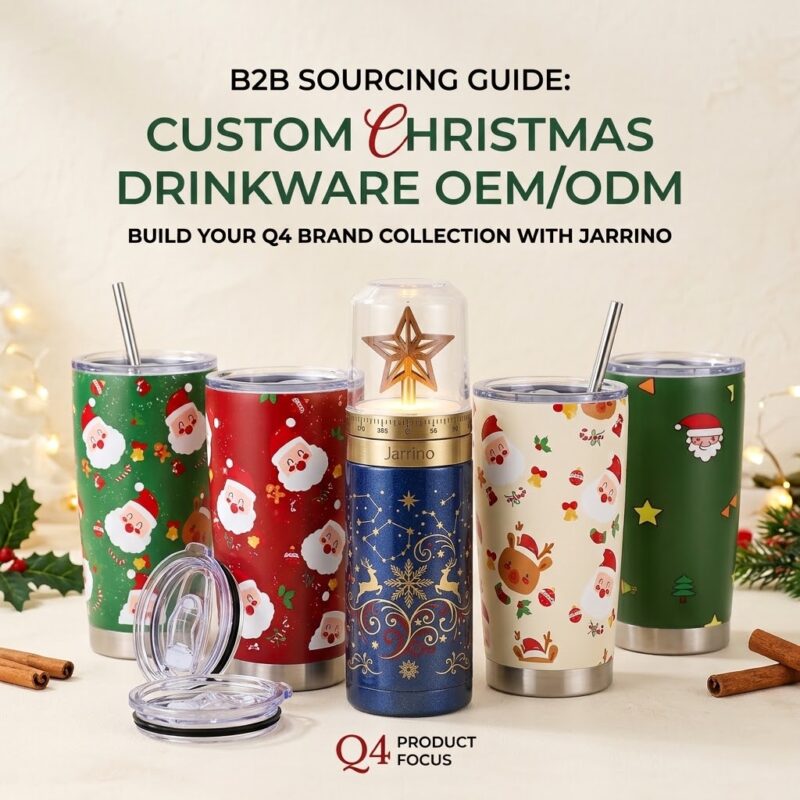
Custom Christmas Drinkware: Complete OEM/ODM Manufacturing Guide
Jarrino is a certified OEM/ODM manufacturer specializing in custom vacuum flasks, ceramic-lined tumblers, and titanium drinkware. Lead times for Q4 custom Christmas orders are 20–30 days with low MOQs (300–1,000 pcs) and full FDA/LFGB compliance. We offer end-to-end customization including 3D digital printing, Lasergravur, and bespoke Christmas gift packaging. Sample kits and the quotes are available upon request to help brands lock in Q4 holiday production smoothly.
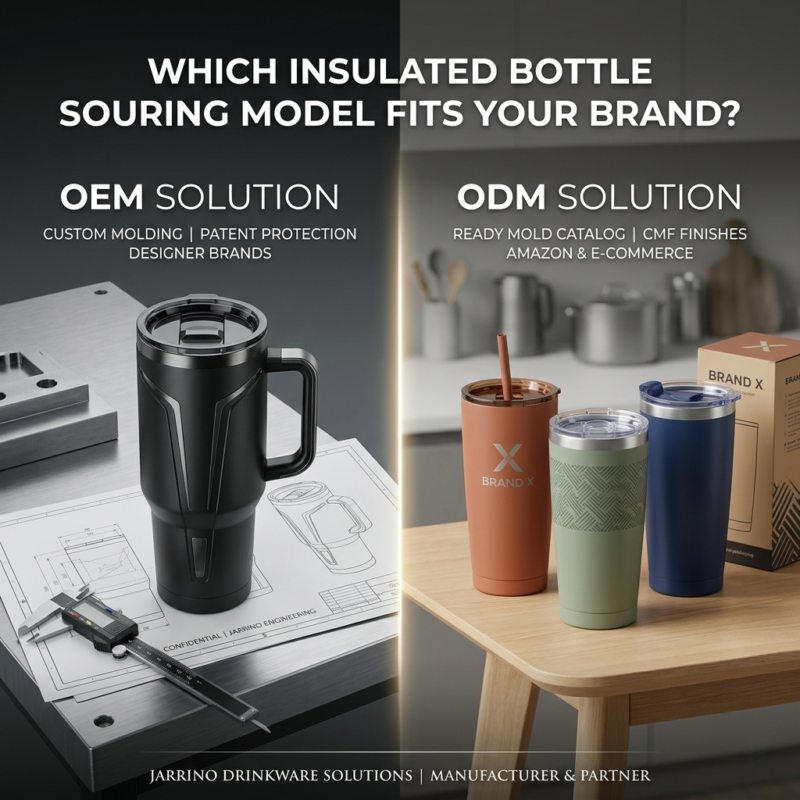
OEM vs. ODM-isolierte Becher: Welches Beschaffungsmodell passt zu Ihrer Getränkemarke?
Wahl zwischen OEM (Herstellung von Erstausrüstung) und ODM (Original-Design-Herstellung) definiert das R Ihrer Trinkgeschirrmarke&D-Budget, Time-to-Market, und Produktexklusivität. OEM ist ideal für etablierte Marken mit individuellen CAD-Designs und einzigartigen IP-Anforderungen, Angebot 100% kundenspezifisches Formen und Patentschutz. ODM wurde für Amazon-Verkäufer entwickelt, DTC-Startups, und Unternehmenskäufer, die keine Werkzeugkosten anstreben, niedrige MOQs, und schnelle Produkteinführungen durch fortschrittliche CMF-Oberflächen (Pulverbeschichtung, UV-Druck).
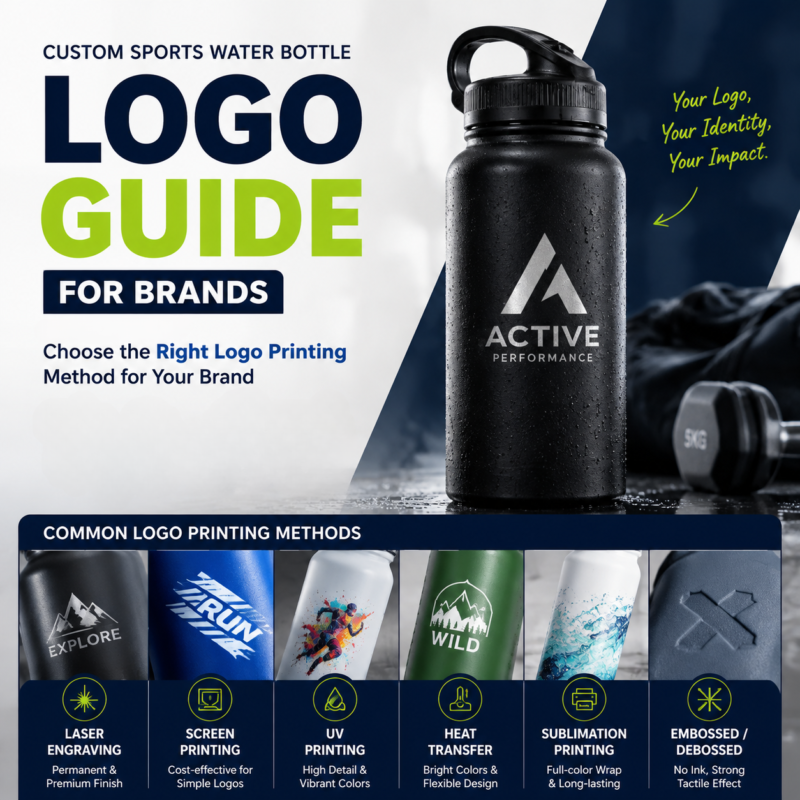
Leitfaden für individuelle Sportwasserflaschen-Logos für Marken
Individuelle Logos für Sportwasserflaschen werden je nach Flaschenmaterial durch unterschiedliche Dekorationsverfahren erstellt, Markendesign, und Leistungsanforderungen. In diesem Leitfaden werden die gängigsten Methoden zum Drucken von Logos behandelt, inklusive Lasergravur, Siebdruck, UV-Druck, Wärmeübertragung, und Sublimation, Unterstützung von Sportmarken bei der Auswahl der richtigen Individualisierungsoption für langlebige und professionelle Trinkgeschirrprodukte.
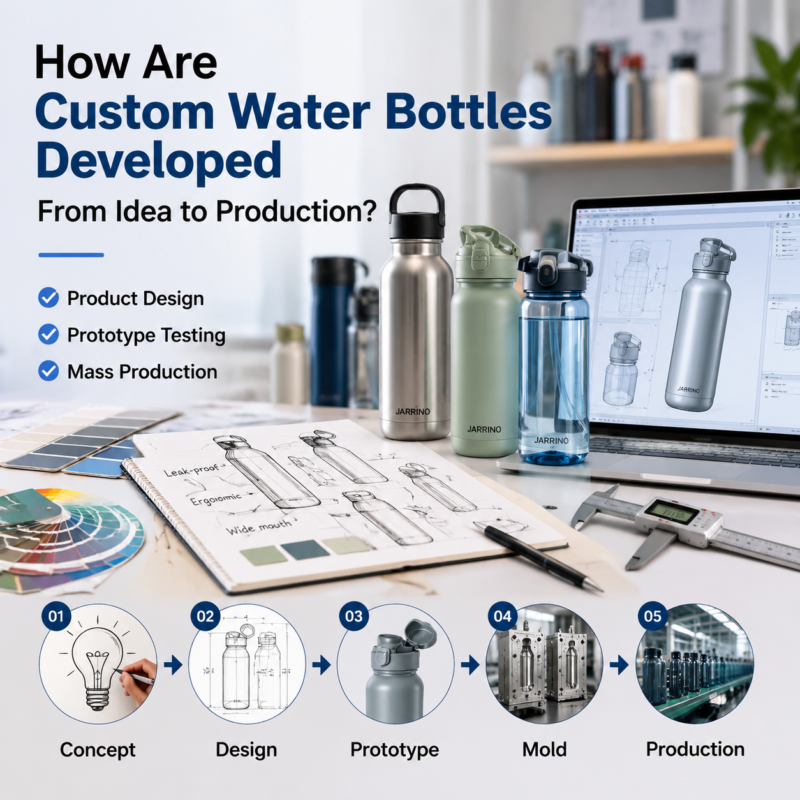
Wie werden maßgeschneiderte Wasserflaschen von der Idee bis zur Produktion entwickelt??
Die Entwicklung einer individuellen Wasserflasche erfordert mehr als nur die Auswahl eines Designs und das Hinzufügen eines Logos. Vom ersten Produktkonzept bis zum Engineering, Prototyping, Schimmelbildung, Testen, und Massenproduktion, Jede Phase spielt eine wichtige Rolle bei der Entwicklung eines erfolgreichen Trinkgeschirrprodukts. In diesem Leitfaden wird erläutert, wie Marken mit OEM-Wasserflaschenherstellern zusammenarbeiten, um Ideen in hochwertige Produkte umzusetzen, marktreife Produkte und managen gleichzeitig das Design, kosten, und Produktionsherausforderungen.
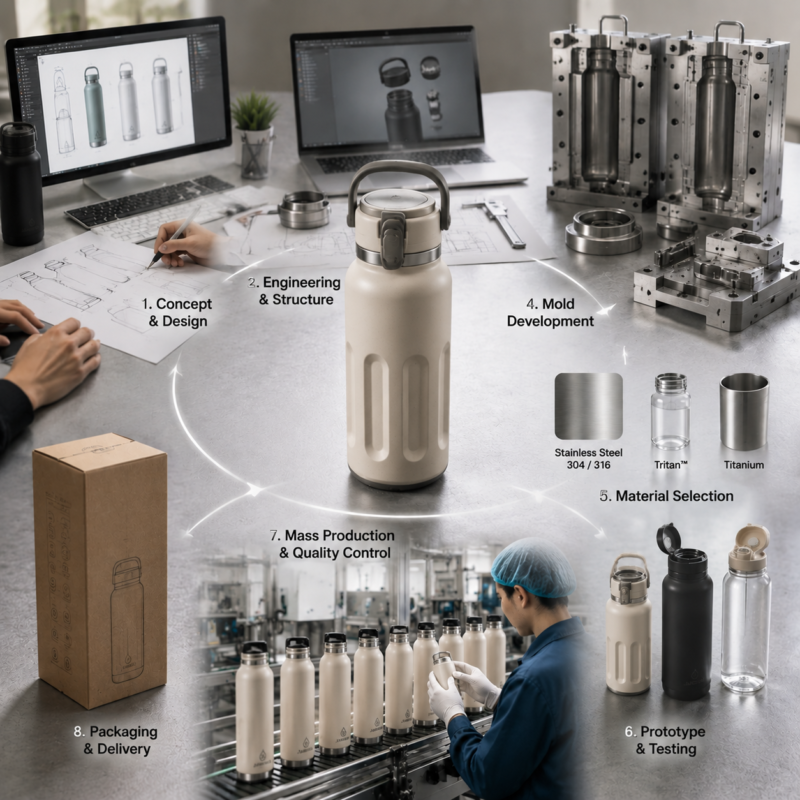
Wie werden vollständig maßgeschneiderte Wasserflaschen hergestellt??
Die Entwicklung einer vollständig maßgeschneiderten Wasserflasche erfordert viel mehr als nur das Hinzufügen eines Logos zu einem bestehenden Produkt. In diesem Leitfaden wird erklärt, wie Marken durch Produktdesign einzigartige Wasserflaschen schaffen, Maschinenbau, Materialauswahl, Schimmelbildung, Prototypentests, und Massenproduktion. Erfahren Sie, wie ein erfahrener OEM-Hersteller von Wasserflaschen dabei hilft, eine Idee in ein marktreifes Produkt umzuwandeln und gleichzeitig die Qualität zu verwalten, kosten, und Produktionseffizienz.
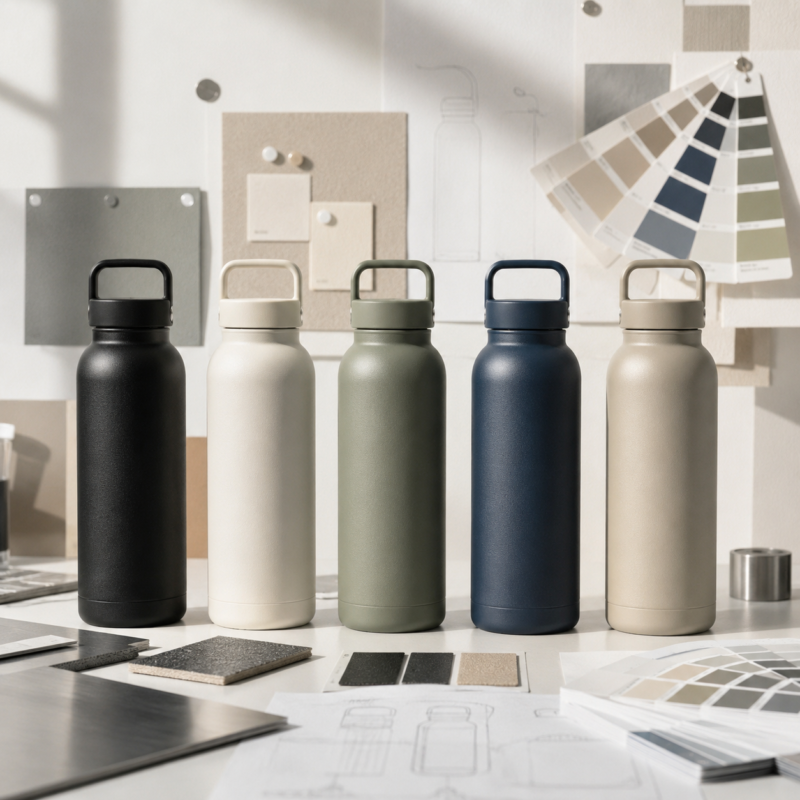
So wählen Sie Farben und Ausführungen für individuelle Wasserflaschen aus
Der Erfolg einer individuellen Wasserflaschenkollektion hängt nicht nur von attraktiven Farben ab. Auswahl der richtigen Farbpalette, Oberflächenbeschaffenheit, und die Fertigungsstrategie trägt zur Stärkung der Markenidentität bei, Kundenattraktivität verbessern, und sorgen für langfristige Umsätze. In diesem Leitfaden wird erläutert, wie Sie Farben basierend auf den Marktpräferenzen auswählen, Vergleichen Sie matte und glänzende Oberflächen, SKUs optimieren, und erreichen Sie durch professionelle OEM-Produktion eine gleichbleibende Qualität.
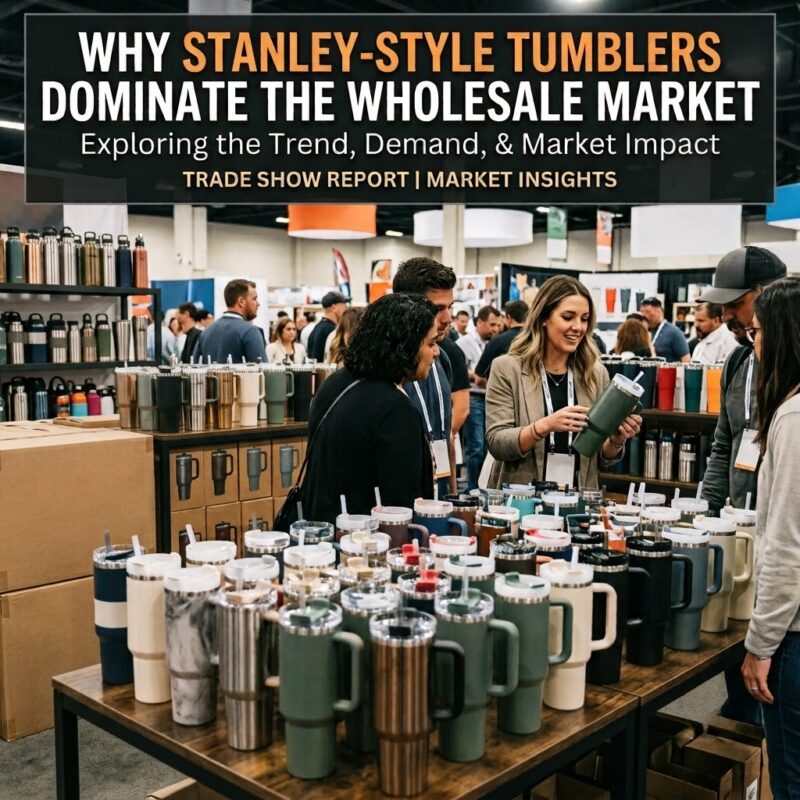
Warum Trinkgläser im Stanley-Stil den Großhandelsmarkt dominieren
Becher im Stanley-Stil sind zu einem kulturellen Phänomen und einem Bestseller geworden. In diesem Artikel wird untersucht, warum – von 18/8 Edelstahl und doppelwandige Vakuumisolierung mit hoher Wertanmutung, Anpassungspotenzial, und eine stetige Nachfrage nach Nachbestellungen. Erfahren Sie, was diese Becher zuverlässig macht, profitable Kategorie für Großhandelskäufer.
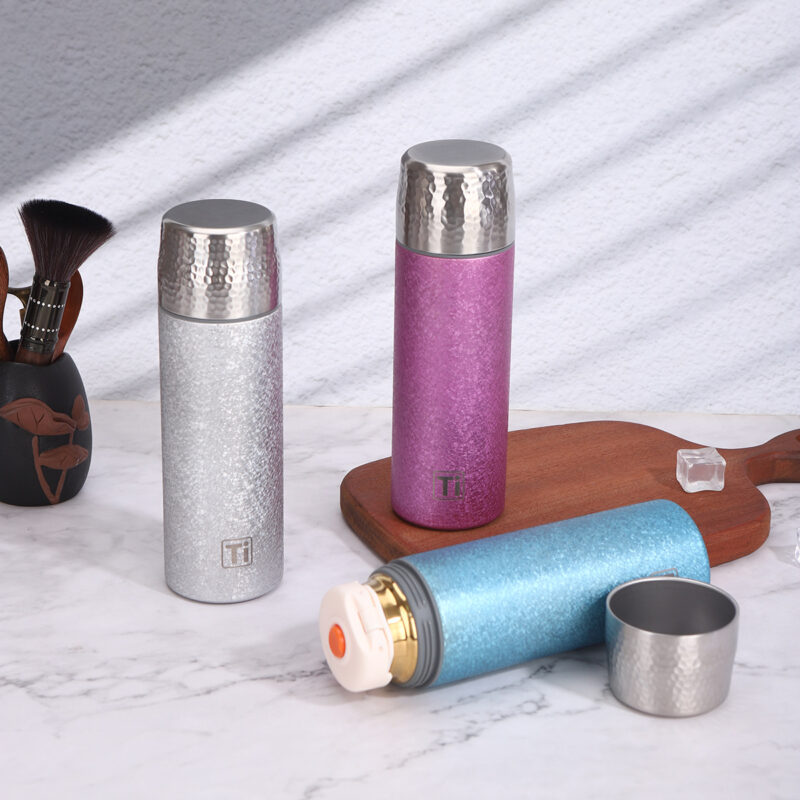
Sind Titanwasserflaschen sicher??
Titan ist sicher. Es ist auch teuer. Hier erfahren Sie, wie es im Vergleich zu Edelstahl und Aluminium abschneidet – und welches Material für Ihre Marke tatsächlich sinnvoll ist.
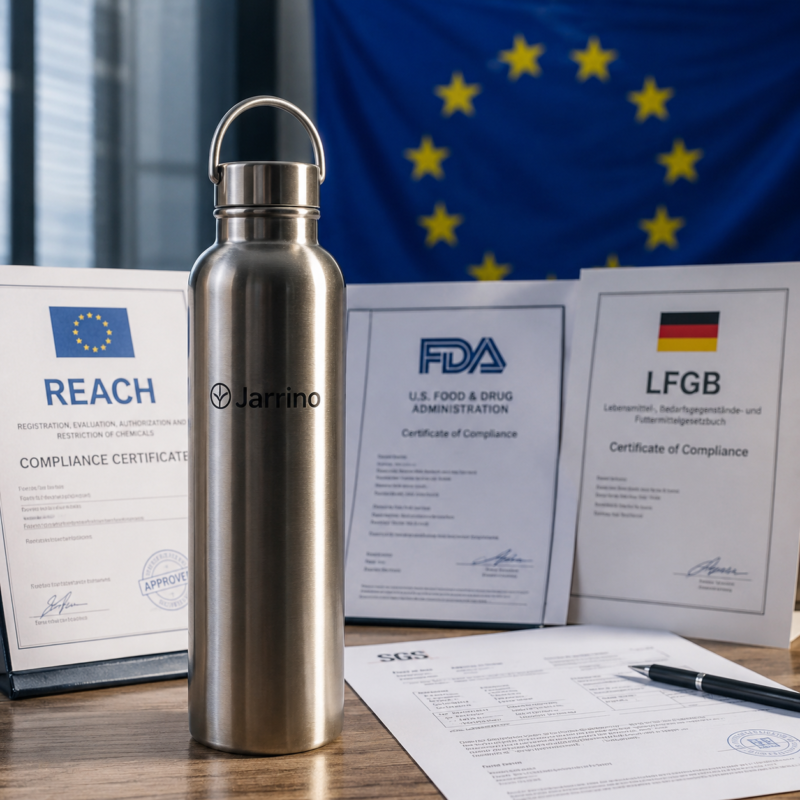
EU-Mikroplastik-Verordnung 2026: Was jeder Hersteller kundenspezifischer Wasserflaschen wissen sollte
Erfahren Sie, wie die EU-Mikroplastik-Verordnung funktioniert (EU) 2026/1168 wirkt sich auf Hersteller kundenspezifischer Wasserflaschen und Eigenmarken von Trinkgeschirr aus. Entdecken Sie, wie Jarrino Importeuren mit langlebigen Edelstahl-Wasserflaschen dabei hilft, REACH-konform zu bleiben.
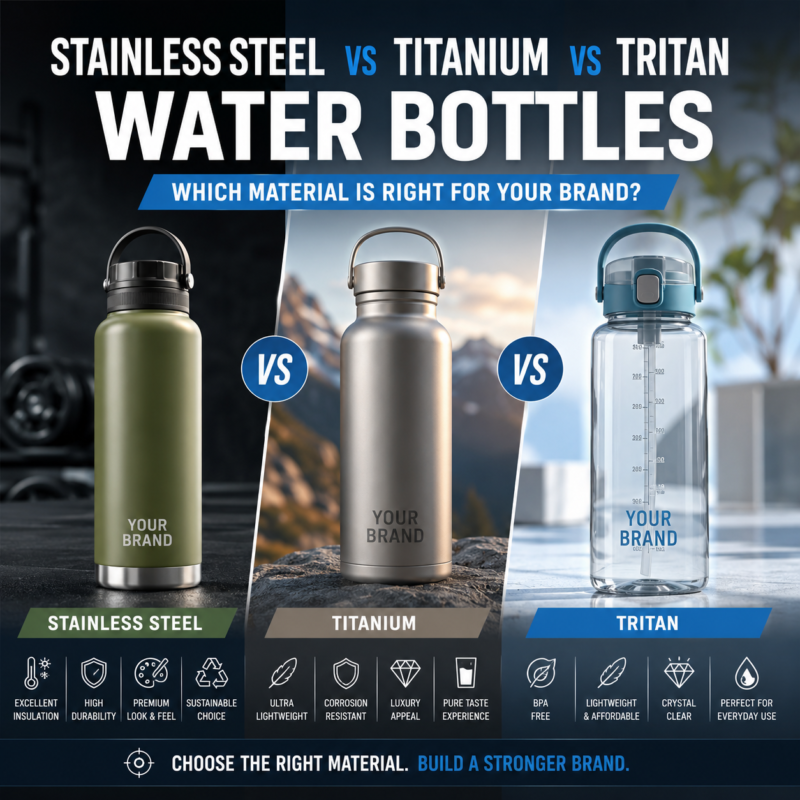
Stainless Steel vs Titanium vs Tritan Water Bottles: Which Material Is Right for Your Brand?
Choosing the right water bottle material can significantly impact your product quality, pricing, und Markenpositionierung. This guide compares stainless steel, Titan, and Tritan water bottles across durability, Isolierung, kosten, Anpassung, and sustainability to help brands, Einzelhändler, and OEM buyers select the best material for their target market.
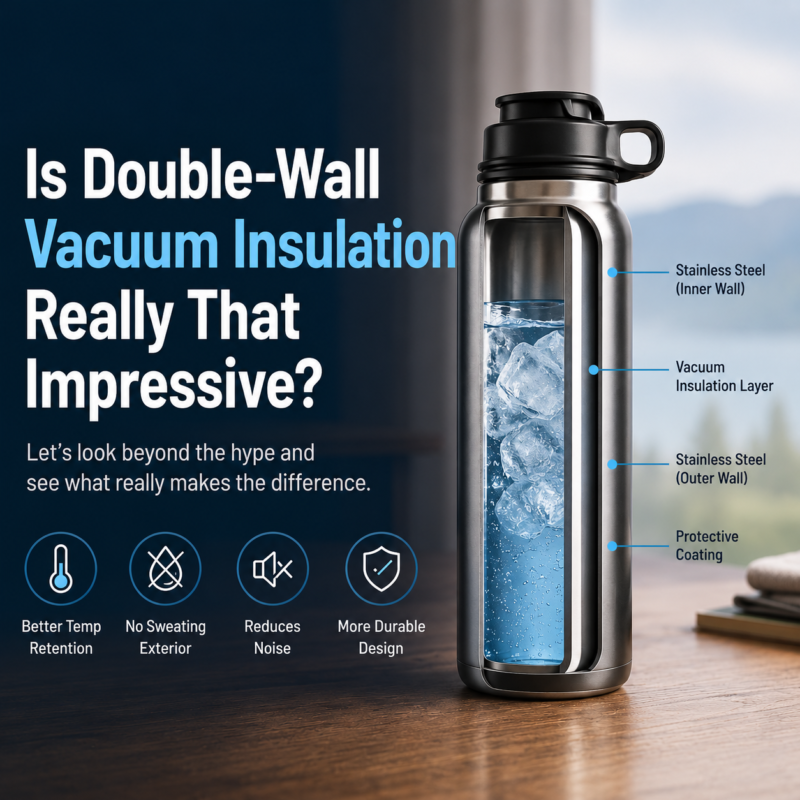
Ist die doppelwandige Vakuumisolierung wirklich so beeindruckend??
Double‑wall vacuum insulation is standard in premium drinkware, but the difference between a bottle that performs and one that disappoints comes down to manufacturing quality. This guide explains how vacuum insulation works, sets realistic performance expectations, and gives B2B buyers a practical checklist for evaluating suppliers. Plus, Warum die strengen Qualitätsstandards von Jarrino sicherstellen, dass Ihre maßgeschneiderten Flaschen halten, was sie versprechen.
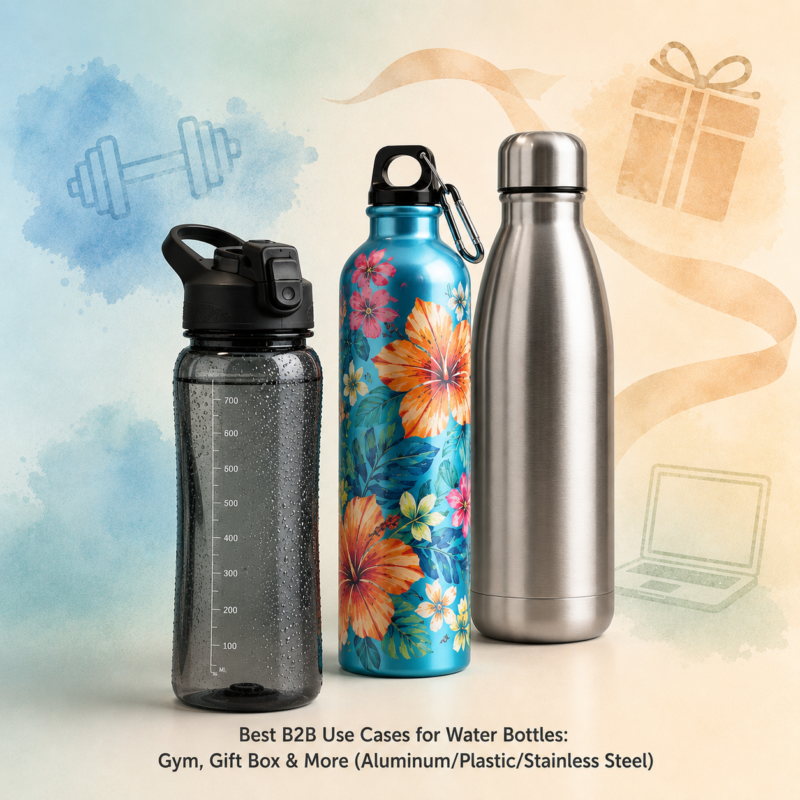
Beste B2B-Anwendungsfälle für Wasserflaschen: Fitnessstudio, Geschenkbox & Mehr (Aluminium/Kunststoff/Stahl)
Nicht jede Wasserflasche passt zu jedem B2B-Anwendungsfall. Dieser Artikel passt zu drei Materialien – Edelstahl, Aluminium, Kunststoff – bis hin zu realen Anwendungen: Fitnessstudios, Geschenkboxen für Unternehmen, Messen, Outdoor-Einzelhandel, und Schulprogramme. Edelstahl überzeugt durch Haltbarkeit und Isolierung. Aluminium bietet geringes Gewicht, Vollfarbiges Branding. Kunststoff ist für Großveranstaltungen budgetfreundlich (vorausgesetzt, es ist BPA-frei). Ein kurzer Spickzettel hilft B2B-Käufern, die Kosten auszugleichen, Markenimage, und Benutzererwartungen.