
Hören Sie auf, das MOQ-Spiel zu spielen: Eine intelligentere Möglichkeit, Ihre Marke zu skalieren
Inhaltsverzeichnis
Most brand founders treat MOQ (Minimum Order Quantity) as an obstacle to negotiate around. They push, plead, and sometimes walk away from good factories because the numbers feel too high.
Here’s the thing: you‘re playing the wrong game.
A factory’s MOQ isn’t a barrier designed to keep small brands out. It‘s a structural signal about how their operation is built. Stop trying to “win“ the negotiation — and start using MOQ as the strategic tool it was meant to be.
What MOQ Actually Tells You (That Most Buyers Miss)
When a manufacturer quotes a high MOQ, they‘re not being difficult. They’re telling you something real about their fixed costs:
- Production line setup. A vacuum-insulated bottle passes through 40–60 process steps before it‘s finished. Each setup takes hours and is amortised over the run quantity. Below a certain volume, the per-unit cost makes the job uneconomical for both parties.
- Tooling economics. High-volume manufacturers invest in hardened steel, multi-cavity moulds rated for millions of cycles. That investment delivers the dimensional consistency that makes your product look identical across a 10,000-unit run — but it needs volume to justify.
- Quality system overhead. A factory running BSCI audits, ISO 9001 certification, in‑process SPC, and outbound QC inspection carries a cost per batch that a small factory simply doesn‘t incur. That overhead has to be spread across enough units to land at a competitive per-unit price.
When a manufacturer quotes you an MOQ, the number is telling you something real about how their operation is structured. Pushing aggressively below it doesn’t get you a better deal — it gets you a reluctant run on equipment that isn‘t optimally configured for your volume. And that usually shows up in quality.
The takeaway: Stop negotiating against MOQ. Start reading it.
Why Chasing Low MOQs Can Kill Your Brand
The global stainless steel water bottle market was valued at USD 2.87 billion in 2025, with projected growth to USD 5.33 billion by 2035 at a CAGR of 6.37%. That’s a large and growing opportunity. But here’s what actually limits most brands — not market size, but poor MOQ strategy.
Low MOQ suppliers often carry hidden costs that don‘t appear on the initial quote:
Batch inconsistency. Color variation, dimensional drift, and finish defects are significantly more common across small-factory batches. A study on startup inventory risk found that style failure risk multiplies with MOQ requirements — a single design that doesn’t resonate with customers can saddle you with thousands of pieces of dead inventory that tie up cash and warehouse space.
Certification gaps. If your market requires LFGB, FDA, or Prop 65 compliance documentation, a small factory that can‘t provide audited test reports isn’t a real option — regardless of how low their MOQ is.
Scale penalties. The factory that accepts 500 units may look cheaper on paper. But when you need 10,000 units six months later, their per-unit cost stays high, their lead time stretches, and their quality control breaks under pressure.
A supplier with a 1,000-unit MOQ Und dedicated production lines will consistently outperform a 300-unit supplier that squeezes your order between other jobs. The higher number isn‘t the enemy — it’s often the better partner.
How to Build an MOQ Strategy That Scales With You
Instead of fighting MOQ, build a strategy that works with it. Here‘s how experienced brand owners approach this.
1. Map Your Volume Tiers — Then Price Them
Most brands treat MOQ as a single number. Smarter brands think in tiers.
| Order volume | What unlocks | Price movement |
|---|---|---|
| At MOQ threshold | Production run viable | Full per-unit cost |
| 2–3× MOQ | Preferred run size | 5–8% reduction typical |
| 5–10× MOQ | Dedicated line allocation | Meaningful tiered discount |
| 10× MOQ+ | Strategic partnership | Best achievable pricing |
Volume‑based tiered pricing works because it rewards commitment. Customers who commit to higher volumes feel rewarded through better pricing, making them more likely to return. Tiered pricing fosters long-term relationships by providing tangible value as purchasing levels grow.
Share this tier structure with your factory. Say: “We‘re planning 3,000 units this year. We’ll take 1,000 now, then reorder every quarter. Can we lock in the 3,000‑unit price?”
Most factories will say yes. They‘d rather see a predictable annual volume than fight over every purchase order.
2. Negotiate the Whole Package, Not Just the Number
Experienced B2B buyers use a more complete approach. Smart negotiators don’t focus on MOQ alone — they negotiate the entire deal: unit price, MOQ, payment terms, Vorlaufzeit, Verpackung, labeling, and quality control together.
When you’re at the table, bring multiple leverage points:
- Payment terms. Offer a larger deposit or faster payment schedule. Factories discount for cash flow certainty.
- Forecast visibility. Share your 12-month volume projection. Manufacturers will often lower MOQ for buyers who show predictable reorder patterns.
- Consolidated SKUs. Order multiple colorways or designs in the same run. Setup costs are shared, so MOQ per SKU often drops.
One effective strategy is to offer to pay a separate machine setup fee or a higher per-unit cost for the first run in exchange for a lower MOQ. This aligns incentives: the factory doesn’t lose money on the setup, and you get the lower volume you need to start.
3. Use Framework Agreements for Phased Delivery
A well-structured supplier relationship doesn‘t require you to take delivery of the full MOQ at once. Framework agreements — long-term contracts often lasting one to four years — define the terms and conditions without obligating either party to purchase or deliver until a call-off contract is executed.
What does this look like in practice? You commit to 6,000 units over 12 Monate. The factory gives you the 6,000-unit price. But you take delivery in three shipments of 2,000 units each, spaced every four months.
This gives you production continuity and pricing stability without a single large inventory event. And critically, the framework approach can reduce inventory costs by up to 30% through demand-driven just‑in‑time deliveries.
The Two Paths to Market — and Which MOQ Works for Each
Not every brand needs the same MOQ structure. The right number depends on how you‘re going to market.
Private Label (ODM)
You take an existing factory design and add your logo, Farben, Verpackung, and sometimes finishes. The factory handles the mould and production engineering.
- Typisches MOQ: 200–1,000 units per design/color
- Vorteil: Fastest path to market, lowest upfront investment
- Trade‑off: Limited differentiation; other brands may use similar silhouettes
Vollständiger OEM
You develop a completely new bottle shape, Deckelmechanismus, or surface finish. Tooling is custom to your specifications.
- Typisches MOQ: 3,000–10,000+ units
- Vorteil: True differentiation; your product looks like nothing else on the shelf
- Trade‑off: Höhere Vorabinvestitionen; longer lead times
Higher customization (OEM) means higher cost, longer lead time, more risk of error — but higher reward in brand differentiation. Lower customization (ODM) means lower cost, faster market entry, but less differentiation and possibly higher competition.
Which path is right? Start with ODM. Prove your product-market fit. Build reorder volume. Then migrate your hero SKU to OEM once you know it sells.
Making the Switch: A 12-Month MOQ Roadmap
Here‘s how to stop fighting MOQ and start using it strategically, month by month.
Month 1–2: Research and Validation
Order physical samples from at least two suppliers at different MOQ tiers. Compare not just price, but coating quality, lead time transparency, and certification documentation.
Month 3–4: Private Label Pilot
Place your first ODM order at the lowest MOQ the supplier offers. Focus on one core product, not six variations.
Month 5–6: Market Testing
Get your product in front of customers. Capture feedback obsessively. Identify which colors, Größen, and finishes actually move.
Month 7–9: Reorder and Scale
Place your second order at 2–3× your initial volume. Use the volume tier to negotiate better pricing. Show the factory your 12‑month forecast.
Month 10–12: OEM Migration (Optional)
If a specific SKU is consistently selling out, take it to full OEM. Develop your own mould, own the tooling, and lock in exclusivity.
This isn‘t a guess-and-hope approach. It’s a structured plan built on actual market data, not assumptions.
The Volume Advantage Nobody Talks About
As you scale, your relationship with your factory transforms. At 5× MOQ, you typically move from “standard customer“ to “dedicated line“ status. Lead times shorten. Quality improves. The factory starts offering you first look at new finishes and capabilities.
This isn‘t because they like you more — it’s because you‘ve become operationally important to them. The MOQ that felt like a barrier in year one becomes the foundation of a strategic partnership in year three.
Volume‑focused businesses benefit from faster inventory turnover and compounded profits through scale. What feels like a stretch at the start becomes the engine of sustainable growth.
Global demand for this material is driven by its strength, Korrosionsbeständigkeit, and superior thermal insulation — demand that’s projected to grow consistently over the next decade. Those who build the right supply relationships now will capture the most value as the market expands.
Start the Right Way
You don‘t need a massive first order. You don’t need custom tooling before you‘ve sold a single unit. But you do need a partner willing to work with you on a roadmap — not just a purchase order.
Bei Jarrino, we don’t believe MOQ should lock you out. We‘ve helped hundreds of B2B buyers navigate from small test runs to full production scale. Our approach isn’t “our number or nothing.” It‘s “tell us where you’re going, and we‘ll build a plan to get you there.”
A few hundred pieces. A thousand. Twenty thousand. Every brand starts somewhere.
The game isn‘t beating MOQ. It’s understanding what it really means — and using it to grow.
📧 Ready to build your MOQ strategy? Contact our team
Related Posts
Custom Christmas Drinkware: Complete OEM/ODM Manufacturing Guide
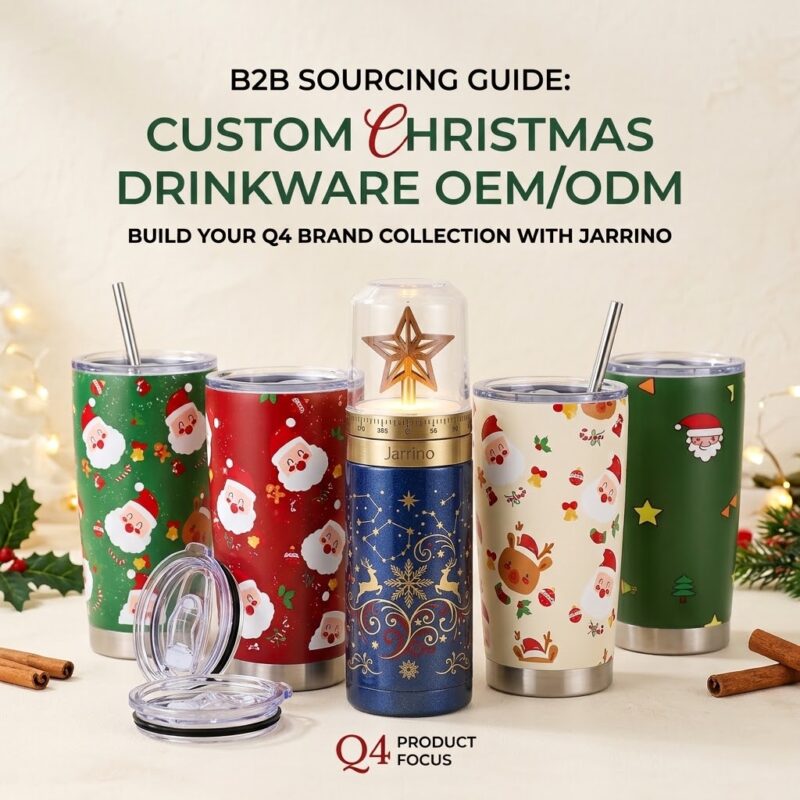
Jarrino is a certified OEM/ODM manufacturer specializing in custom vacuum flasks, ceramic-lined tumblers, and titanium drinkware. Lead times for Q4 custom Christmas orders are 20–30 days with low MOQs (300–1,000 pcs) and full FDA/LFGB compliance. We offer end-to-end customization including 3D digital printing, Lasergravur, and bespoke Christmas gift packaging. Sample kits and the quotes are available upon request to help brands lock in Q4 holiday production smoothly.
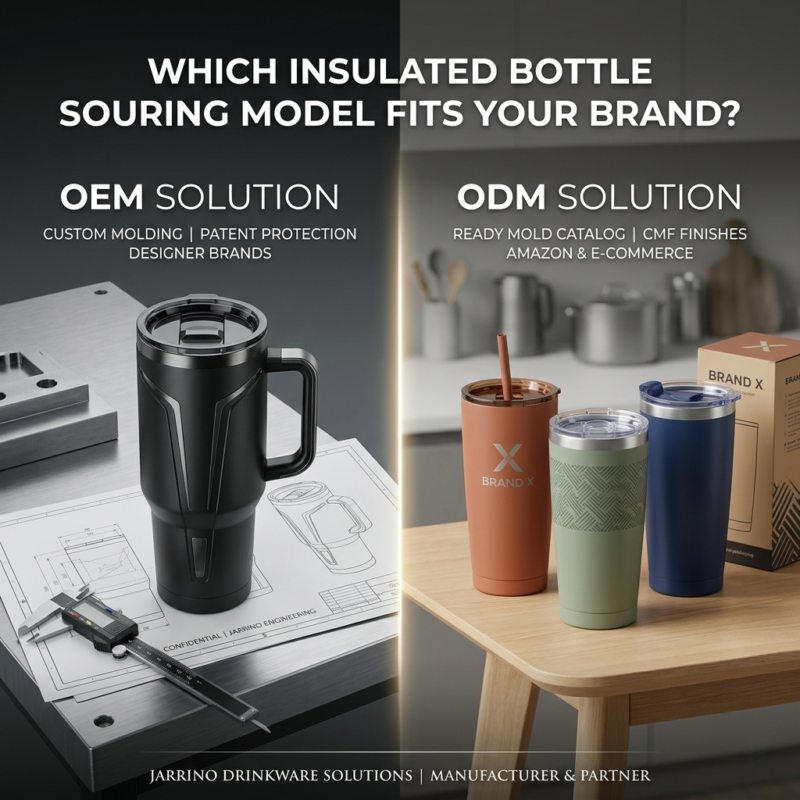
OEM vs. ODM-isolierte Becher: Welches Beschaffungsmodell passt zu Ihrer Getränkemarke?
Wahl zwischen OEM (Herstellung von Erstausrüstung) und ODM (Original-Design-Herstellung) definiert das R Ihrer Trinkgeschirrmarke&D-Budget, Time-to-Market, und Produktexklusivität. OEM ist ideal für etablierte Marken mit individuellen CAD-Designs und einzigartigen IP-Anforderungen, Angebot 100% kundenspezifisches Formen und Patentschutz. ODM wurde für Amazon-Verkäufer entwickelt, DTC-Startups, und Unternehmenskäufer, die keine Werkzeugkosten anstreben, niedrige MOQs, und schnelle Produkteinführungen durch fortschrittliche CMF-Oberflächen (Pulverbeschichtung, UV-Druck).
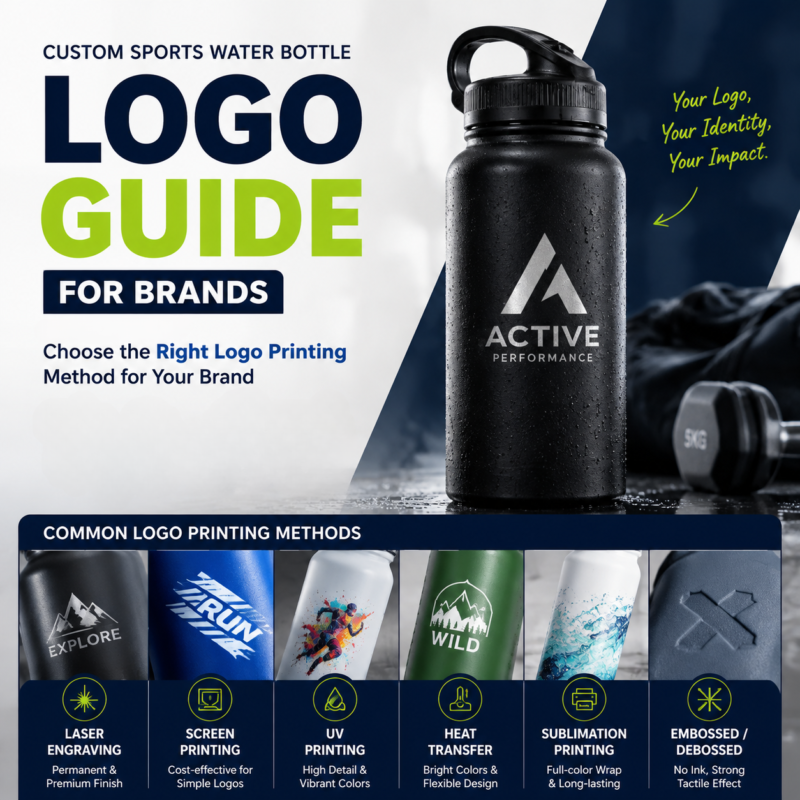
Leitfaden für individuelle Sportwasserflaschen-Logos für Marken
Individuelle Logos für Sportwasserflaschen werden je nach Flaschenmaterial durch unterschiedliche Dekorationsverfahren erstellt, Markendesign, und Leistungsanforderungen. In diesem Leitfaden werden die gängigsten Methoden zum Drucken von Logos behandelt, inklusive Lasergravur, Siebdruck, UV-Druck, Wärmeübertragung, und Sublimation, Unterstützung von Sportmarken bei der Auswahl der richtigen Individualisierungsoption für langlebige und professionelle Trinkgeschirrprodukte.
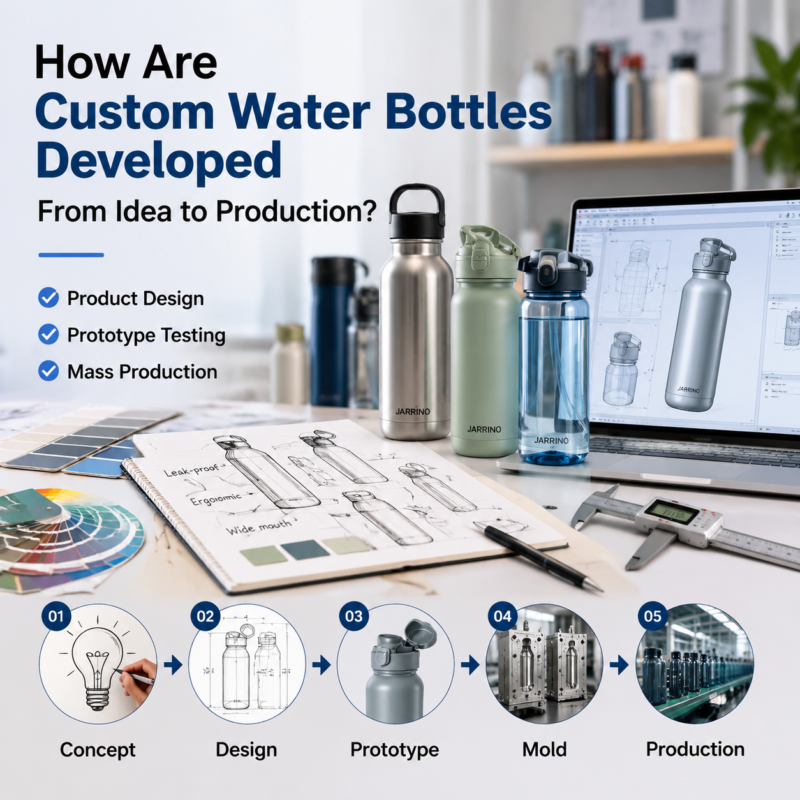
Wie werden maßgeschneiderte Wasserflaschen von der Idee bis zur Produktion entwickelt??
Die Entwicklung einer individuellen Wasserflasche erfordert mehr als nur die Auswahl eines Designs und das Hinzufügen eines Logos. Vom ersten Produktkonzept bis zum Engineering, Prototyping, Schimmelbildung, Testen, und Massenproduktion, Jede Phase spielt eine wichtige Rolle bei der Entwicklung eines erfolgreichen Trinkgeschirrprodukts. In diesem Leitfaden wird erläutert, wie Marken mit OEM-Wasserflaschenherstellern zusammenarbeiten, um Ideen in hochwertige Produkte umzusetzen, marktreife Produkte und managen gleichzeitig das Design, kosten, und Produktionsherausforderungen.
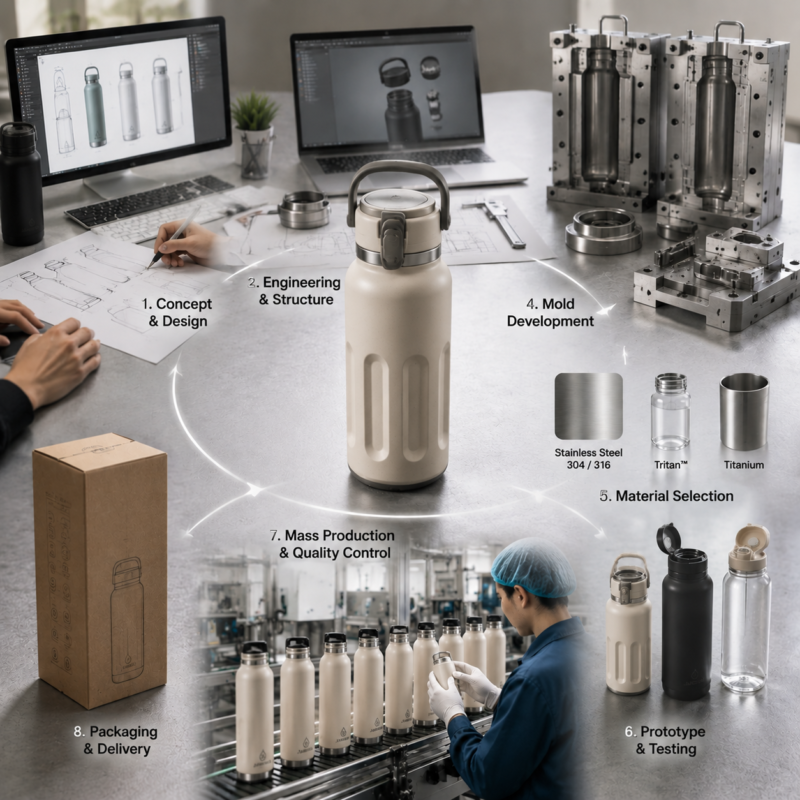
Wie werden vollständig maßgeschneiderte Wasserflaschen hergestellt??
Die Entwicklung einer vollständig maßgeschneiderten Wasserflasche erfordert viel mehr als nur das Hinzufügen eines Logos zu einem bestehenden Produkt. In diesem Leitfaden wird erklärt, wie Marken durch Produktdesign einzigartige Wasserflaschen schaffen, Maschinenbau, Materialauswahl, Schimmelbildung, Prototypentests, und Massenproduktion. Erfahren Sie, wie ein erfahrener OEM-Hersteller von Wasserflaschen dabei hilft, eine Idee in ein marktreifes Produkt umzuwandeln und gleichzeitig die Qualität zu verwalten, kosten, und Produktionseffizienz.
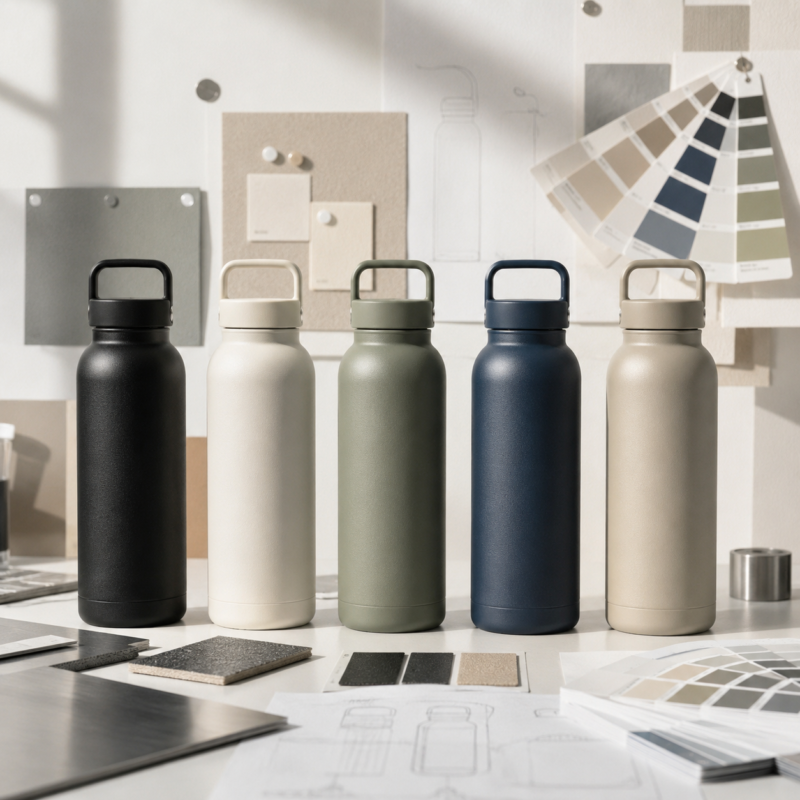
So wählen Sie Farben und Ausführungen für individuelle Wasserflaschen aus
Der Erfolg einer individuellen Wasserflaschenkollektion hängt nicht nur von attraktiven Farben ab. Auswahl der richtigen Farbpalette, Oberflächenbeschaffenheit, und die Fertigungsstrategie trägt zur Stärkung der Markenidentität bei, Kundenattraktivität verbessern, und sorgen für langfristige Umsätze. In diesem Leitfaden wird erläutert, wie Sie Farben basierend auf den Marktpräferenzen auswählen, Vergleichen Sie matte und glänzende Oberflächen, SKUs optimieren, und erreichen Sie durch professionelle OEM-Produktion eine gleichbleibende Qualität.
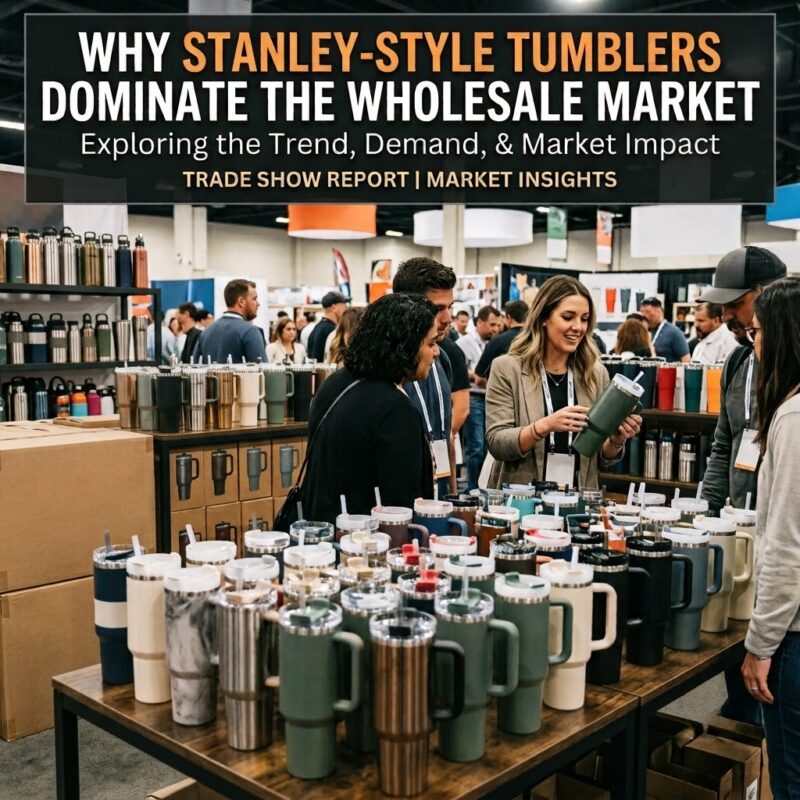
Warum Trinkgläser im Stanley-Stil den Großhandelsmarkt dominieren
Becher im Stanley-Stil sind zu einem kulturellen Phänomen und einem Bestseller geworden. In diesem Artikel wird untersucht, warum – von 18/8 Edelstahl und doppelwandige Vakuumisolierung mit hoher Wertanmutung, Anpassungspotenzial, und eine stetige Nachfrage nach Nachbestellungen. Erfahren Sie, was diese Becher zuverlässig macht, profitable Kategorie für Großhandelskäufer.
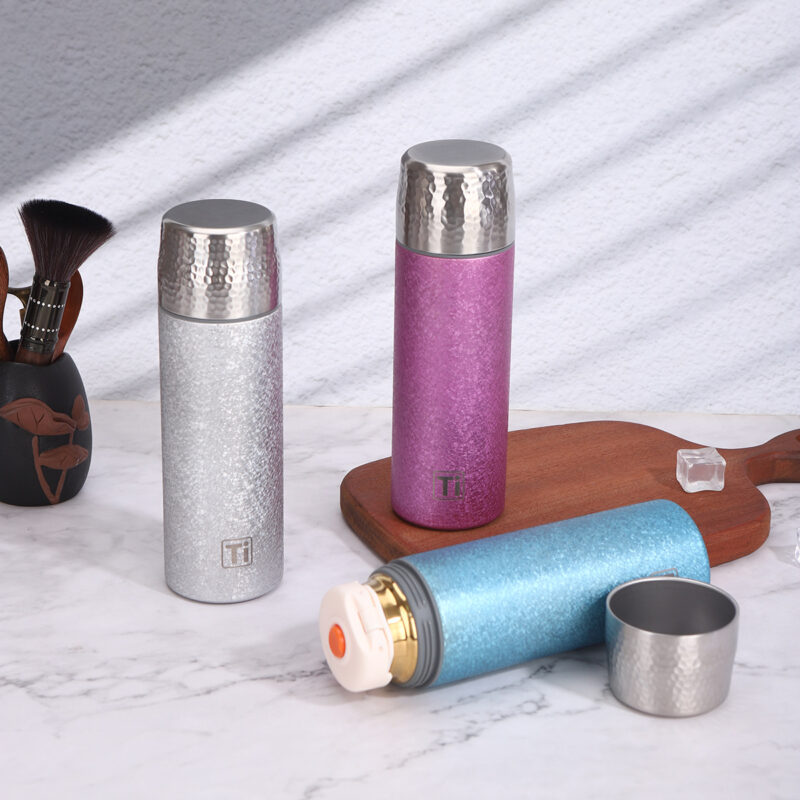
Sind Titanwasserflaschen sicher??
Titan ist sicher. Es ist auch teuer. Hier erfahren Sie, wie es im Vergleich zu Edelstahl und Aluminium abschneidet – und welches Material für Ihre Marke tatsächlich sinnvoll ist.
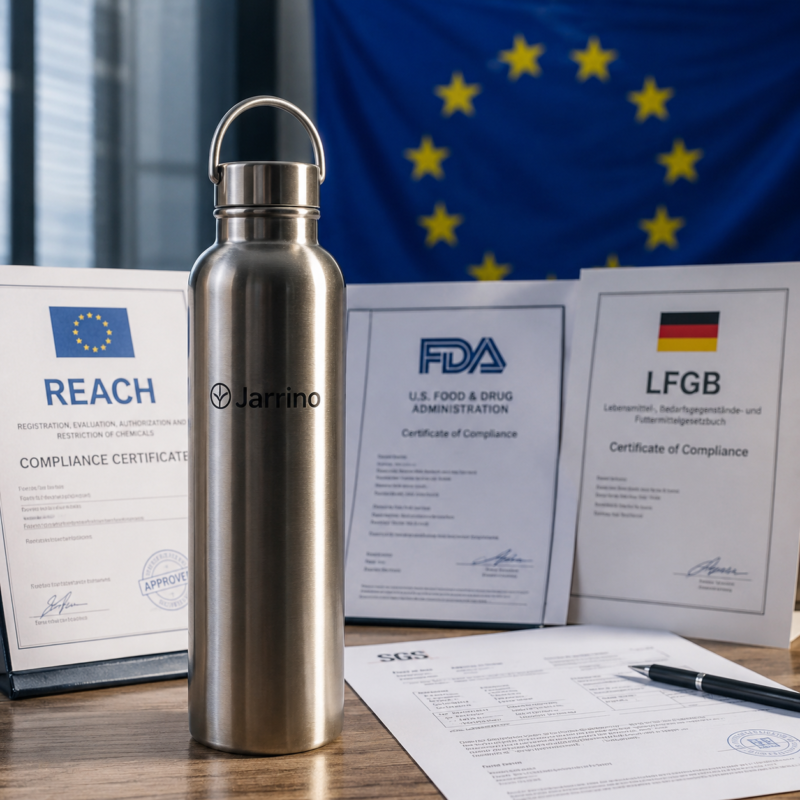
EU-Mikroplastik-Verordnung 2026: Was jeder Hersteller kundenspezifischer Wasserflaschen wissen sollte
Erfahren Sie, wie die EU-Mikroplastik-Verordnung funktioniert (EU) 2026/1168 wirkt sich auf Hersteller kundenspezifischer Wasserflaschen und Eigenmarken von Trinkgeschirr aus. Entdecken Sie, wie Jarrino Importeuren mit langlebigen Edelstahl-Wasserflaschen dabei hilft, REACH-konform zu bleiben.
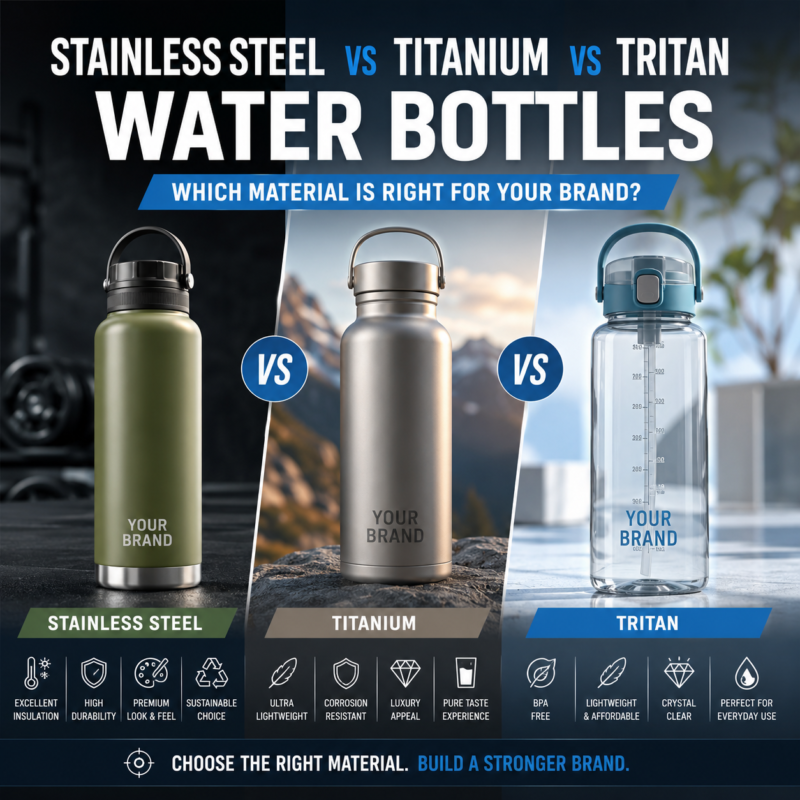
Stainless Steel vs Titanium vs Tritan Water Bottles: Which Material Is Right for Your Brand?
Choosing the right water bottle material can significantly impact your product quality, pricing, und Markenpositionierung. This guide compares stainless steel, Titan, and Tritan water bottles across durability, Isolierung, kosten, Anpassung, and sustainability to help brands, Einzelhändler, and OEM buyers select the best material for their target market.
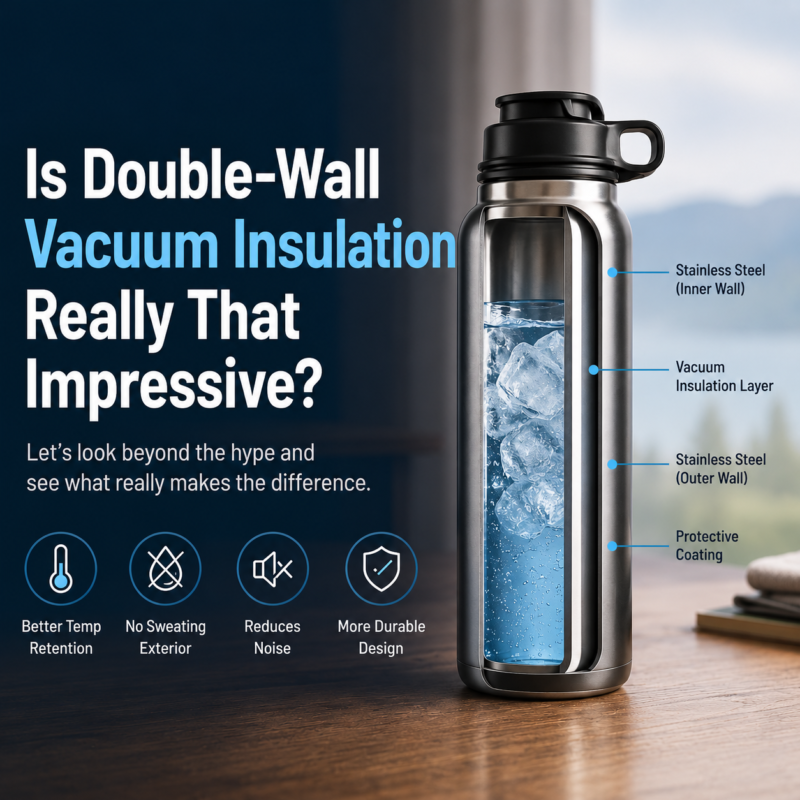
Ist die doppelwandige Vakuumisolierung wirklich so beeindruckend??
Double‑wall vacuum insulation is standard in premium drinkware, but the difference between a bottle that performs and one that disappoints comes down to manufacturing quality. This guide explains how vacuum insulation works, sets realistic performance expectations, and gives B2B buyers a practical checklist for evaluating suppliers. Plus, Warum die strengen Qualitätsstandards von Jarrino sicherstellen, dass Ihre maßgeschneiderten Flaschen halten, was sie versprechen.
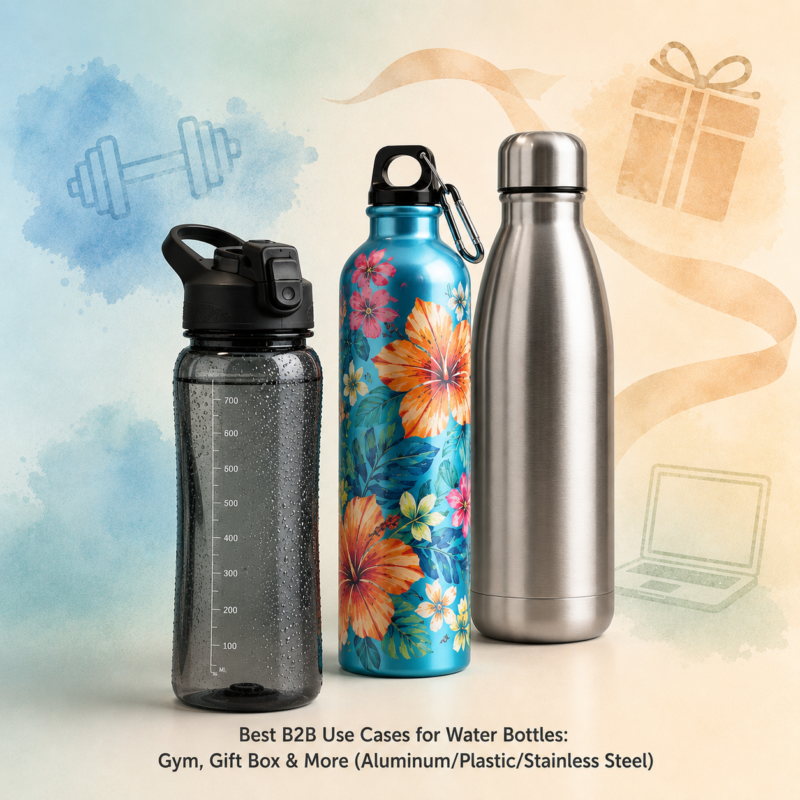
Beste B2B-Anwendungsfälle für Wasserflaschen: Fitnessstudio, Geschenkbox & Mehr (Aluminium/Kunststoff/Stahl)
Nicht jede Wasserflasche passt zu jedem B2B-Anwendungsfall. Dieser Artikel passt zu drei Materialien – Edelstahl, Aluminium, Kunststoff – bis hin zu realen Anwendungen: Fitnessstudios, Geschenkboxen für Unternehmen, Messen, Outdoor-Einzelhandel, und Schulprogramme. Edelstahl überzeugt durch Haltbarkeit und Isolierung. Aluminium bietet geringes Gewicht, Vollfarbiges Branding. Kunststoff ist für Großveranstaltungen budgetfreundlich (vorausgesetzt, es ist BPA-frei). Ein kurzer Spickzettel hilft B2B-Käufern, die Kosten auszugleichen, Markenimage, und Benutzererwartungen.