Best B2B Use Cases for Water Bottles: Gym, Gift Box & More (Aluminum/Plastic/Steel)에 댓글 닫힘
목차
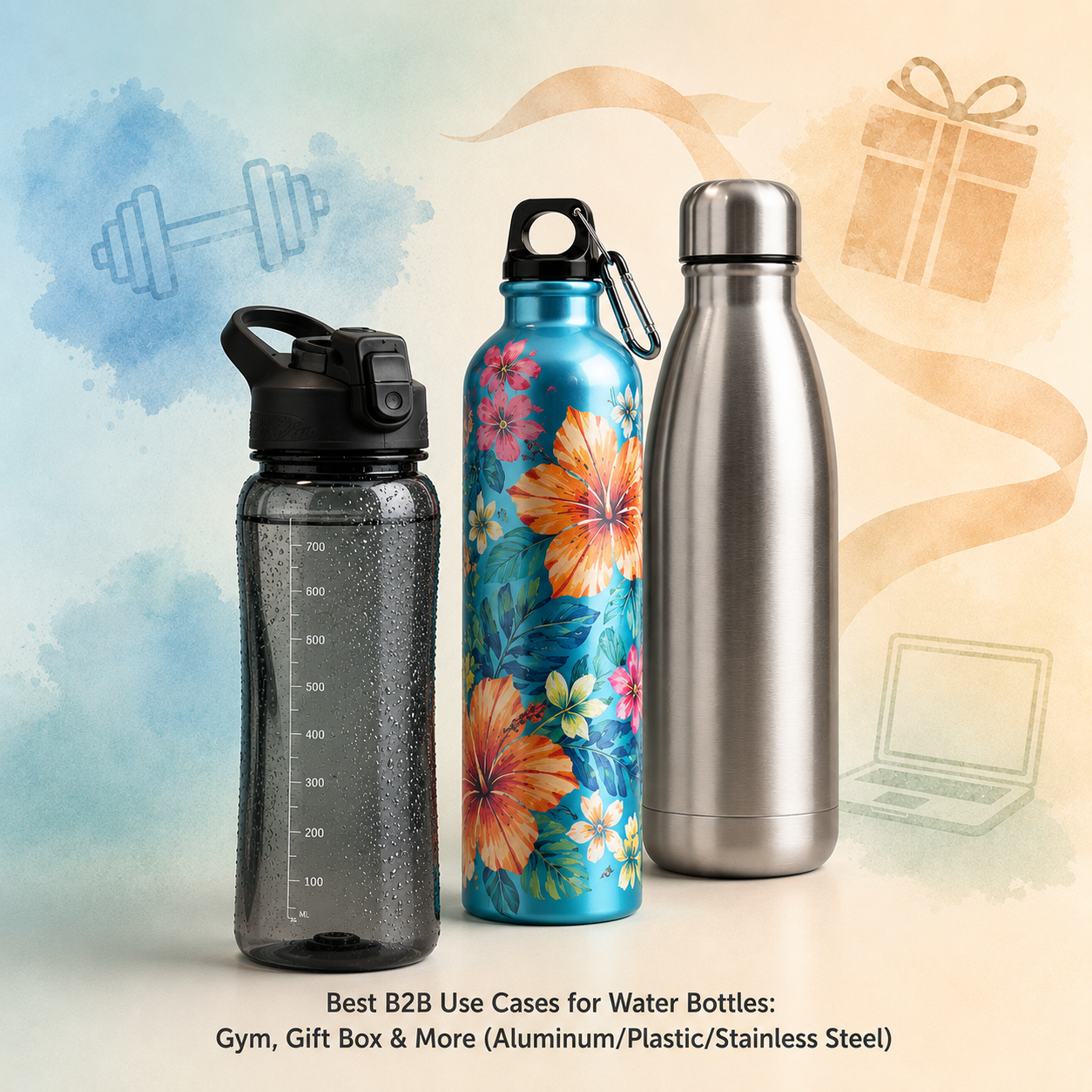
If you’re sourcing water bottles for a B2B project, you’ve probably noticed the material choice alone can be overwhelming. Aluminum, 플라스틱, stainless steel – each has its own personality, cost structure, and ideal home. And the truth is, there’s no universal “best” material. There’s only what fits your customer’s real use case.
Over the years working with corporate buyers, promotional distributors, and brand owners, I’ve seen the same question pop up again and again: “Which bottle should I put in my gym welcome kit, my holiday gift box, or my outdoor event swag bag?”
Let’s walk through the most common B2B scenarios – from sweaty gym floors to polished gift boxes – and match them with the material that actually makes sense.
1. The Gym & Fitness Center – Stainless Steel (Mostly)
Gyms hand out water bottles like coffee shops hand out loyalty cards. But not all gym bottles are created equal.
Think about the environment: high humidity, constant dropping on rubber floors, people expecting cold water after a hard workout. Plastic bottles feel cheap to regular gym-goers. Aluminum dents easily when knocked off a treadmill.
Stainless steel– specifically double‑wall vacuum insulated – has become the unofficial standard for mid‑tier and premium gyms. Here’s why:
It keeps water cold for hours, even in a hot yoga studio.
It survives drops without deforming.
The premium feel signals “we care about quality” to members.
That said, budget gyms or high‑volume fitness events (like a charity run) still use plastic. But if your client wants retention and repeat brand exposure, stainless steel wins.
Pro tip for B2B buyers ordering for gyms:Go for 500‑750ml capacity, and choose a powder‑coated finish. Sweaty hands slip on bare stainless steel. Also, wide mouths are easier to clean – gym staff will thank you later.
2. Corporate Gift Boxes – Aluminum & 스테인레스 스틸
Corporate gifting is a different beast. Here, it’s not about durability under physical stress. It’s about unboxing experience, aesthetics, and perceived value.
When a company puts a water bottle inside a holiday gift box or a client welcome package, they want something that looks good on a desk, not something that screams “survival gear.”
Aluminumshines here – literally. It takes vibrant sublimation printing beautifully, so you can wrap a full‑color logo or an artistic pattern around the bottle. And aluminum feels lighter and more refined in hand than stainless steel, which can feel a bit industrial.
But there’s a catch: aluminum bottles need an internal liner. For corporate gifts, always request BPA‑free liner certification. No one wants to gift a bottle with questionable coating.
스테인레스 스틸also works for premium gift boxes – especially if the brand wants to emphasize sustainability and long‑term use. A sleek, minimalist stainless bottle with a laser‑engraved logo says “this is built to last.” It’s a different message: not flashy, but solid.
플라스틱? Generally a no for corporate gift boxes unless the budget is extremely tight or the brand is specifically targeting a young, casual vibe.
Real example:A tech company once ordered 2,000 aluminum bottles for their developer conference swag bags. They did a full‑wrap galaxy print. People actually kept and used them for years. That’s the power of matching material to context.
Trade show freebies have one job: get picked up, carried around the expo floor, and maybe used a few times after the event. The per‑unit budget is usually small.
플라스틱dominates here. It’s cheap, 경량, and easy to print with a single‑color logo. You can order thousands without blowing the marketing budget. And if someone leaves it on a conference room table, it’s not a big loss.
That said, plastic is losing favor among eco‑conscious event organizers. More trade shows now require “sustainable giveaways.”
So what’s the alternative? Entry‑level aluminum. It’s still affordable (more than plastic but less than stainless steel), fully recyclable, and looks more premium. An aluminum bottle with a simple screen‑printed logo can feel like a thoughtful gift instead of another piece of event trash.
Avoid stainless steel for large‑scale promotional eventsunless the brand is luxury or the event is high‑ticket. The unit cost is hard to justify for tens of thousands of attendees.
If your customer is an outdoor gear brand, a camping retailer, or a hiking tour operator, they need bottles that can take a beating.
Stainless steel– specifically 304 또는 316 grade with double‑wall vacuum insulation – is the only real option. 왜?
It insulates: hot coffee on a cold trail, cold water in summer heat.
It resists rust and corrosion from rain, mud, and sweat.
It doesn’t crack when strapped to a backpack and dropped on a rock.
Plastic and aluminum can’t match that performance. Plastic cracks in freezing temperatures. Aluminum dents easily and its liner can fail under rough use.
For outdoor B2B orders, also consider capacity: 1L or even 1.5L bottles are popular. And always offer a carabiner or a robust handle – outdoor users love attachment points.
5. School & Camp Programs – Plastic (with caveats)
Schools, summer camps, and youth sports leagues need water bottles in bulk. The key requirements: low cost, 경량, and child‑safe.
플라스틱is the practical choice here. Kids lose bottles, trade them, and drop them constantly. You don’t want to hand a 10‑year‑old a $20 스테인레스 스틸 병.
But – and this is important – the plastic must be BPA‑free and preferably Tritan or similar. Don’t cheap out to the point of using low‑grade polycarbonate. Schools increasingly demand safety documentation.
Some premium camps are switching to알류미늄as a middle ground. It’s more durable than plastic, still light, and can be printed with camp logos or cabin names. The liner is the only question mark – for kids, double‑check that the coating is truly safe and non‑leaching.
Stainless steel is overkill for most school programs, unless it’s a private academy with a budget to match.
6. Retail Shelves – All Three, But Different Aisles
If you’re supplying bottles to retailers, the material dictates which shelf you belong on.
플라스틱bottles live in the budget sports aisle, dollar stores, and seasonal sections. They sell on price and impulse.
Aluminumbottles sit in the “lifestyle” or “eco‑friendly” section – think Urban Outfitters, museum gift shops, or airport convenience stores. They attract customers who want something colorful and Instagrammable.
스테인레스 스틸owns the outdoor, fitness, and premium kitchenware aisles (REI, Dick’s Sporting Goods, Williams‑Sonoma). These customers are willing to pay $20–$40 for a bottle they’ll use for years.
If you’re a B2B supplier, understand your retail client’s target customer. Don’t push stainless steel to a discount retailer. Don’t offer plastic to a premium outdoor brand. Match the material to the shelf price and shopper expectation.
A Quick Cheat Sheet for B2B Buyers
Scenario
Best Material
왜
Gym welcome kit (mid‑tier)
스테인레스 스틸
격리, 내구성, perceived value
Corporate holiday gift
Aluminum or Stainless steel
Aesthetics & unboxing experience
Trade show giveaway (high volume)
Plastic or entry‑level aluminum
Low cost, 경량
Outdoor / camping retail
스테인레스 스틸
열 성능, ruggedness
School / camp program
BPA‑free Plastic
입수 가능한, safe, replaceable
Premium retail shelf
스테인레스 스틸
Long‑term use, premium pricing
Final Thoughts from a Supplier’s Perspective
At the end of the day, the best B2B water bottle material is the one that disappears into the user’s daily life without complaint. Gym members shouldn’t think about their bottle – it should just keep water cold. Gift recipients shouldn’t wonder about safety – they should just enjoy the design. Outdoor users shouldn’t worry about breaking it – they should trust it.
That’s why we always start by asking our B2B clients: Where will this bottle actually be used?The answer tells us whether to reach for plastic, 알류미늄, or stainless steel.
If you’re planning your next custom water bottle order – for a gym chain, a corporate gift program, or a retail launch – send us your use case. We’ll help you pick the material that fits both your budget and your brand’s promise.
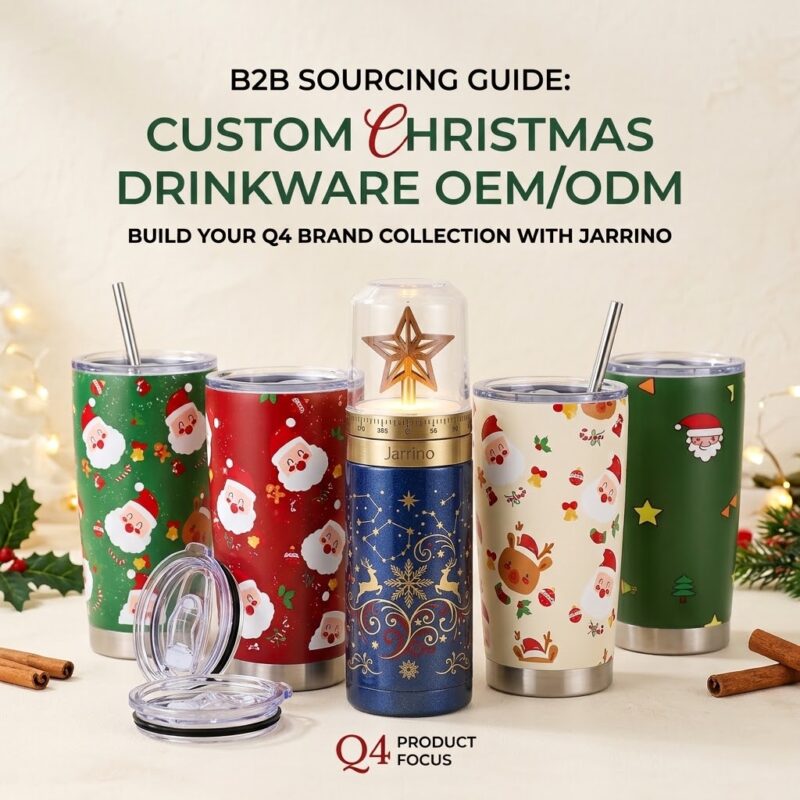
Jarrino is a certified OEM/ODM manufacturer specializing in custom vacuum flasks, ceramic-lined tumblers, and titanium drinkware. Lead times for Q4 custom Christmas orders are 20–30 days with low MOQs (300–1,000 pcs) and full FDA/LFGB compliance. We offer end-to-end customization including 3D digital printing, 레이저 조각, and bespoke Christmas gift packaging. Sample kits and the quotes are available upon request to help brands lock in Q4 holiday production smoothly.
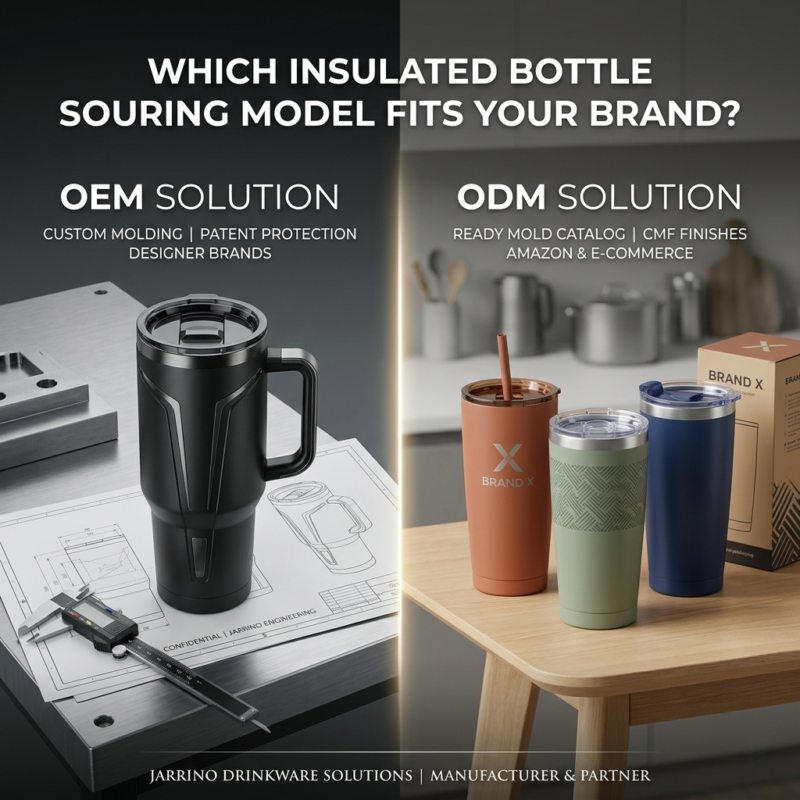
OEM 중에서 선택 (OEM 제조) 그리고 ODM (독창적인 디자인 제조) 귀하의 음료 용기 브랜드의 R을 정의합니다&D 예산, 출시 시간, 그리고 제품 독점성. OEM은 맞춤형 CAD 설계와 고유한 IP 요구 사항을 갖춘 기존 브랜드에 이상적입니다., 헌금 100% 맞춤형 성형 및 특허 보호. ODM은 Amazon 판매자를 위해 만들어졌습니다., DTC 스타트업, 툴링 비용 제로를 추구하는 기업 구매자, 낮은 MOQ, 고급 CMF 마감을 통한 신속한 제품 출시 (분체 도장, UV 인쇄).
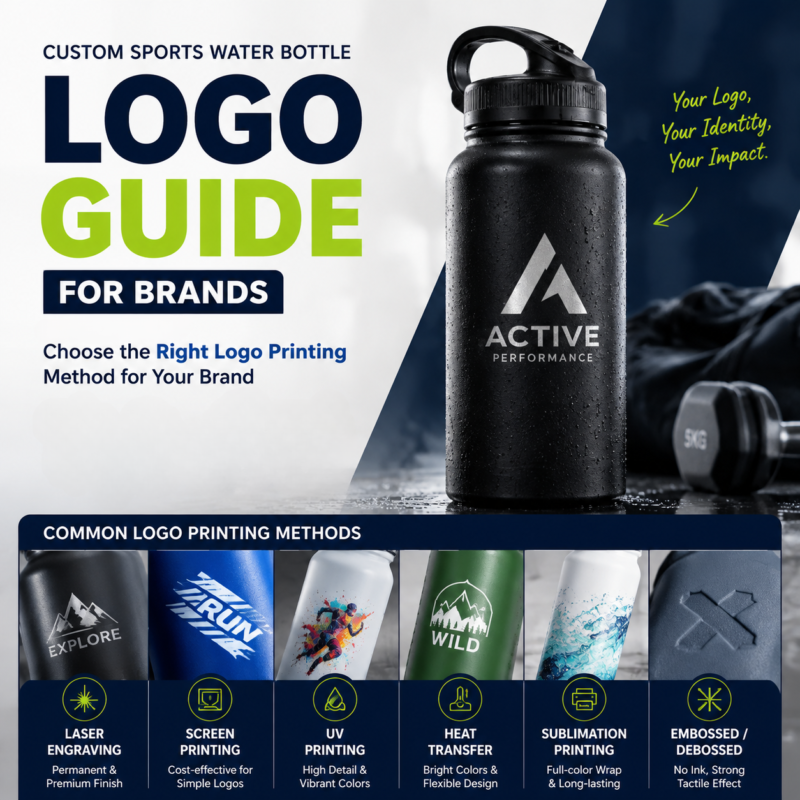
맞춤형 스포츠 물병 로고는 병 재질에 따라 다양한 장식 과정을 거쳐 제작됩니다., 브랜드 디자인, 및 성능 요구 사항. 이 가이드에서는 가장 일반적인 로고 인쇄 방법을 다룹니다., 레이저 각인을 포함해, 스크린 인쇄, UV 인쇄, 열 전달, 그리고 승화, 스포츠 브랜드가 내구성이 뛰어나고 전문적인 음료 용기 제품에 적합한 맞춤 옵션을 선택할 수 있도록 지원.
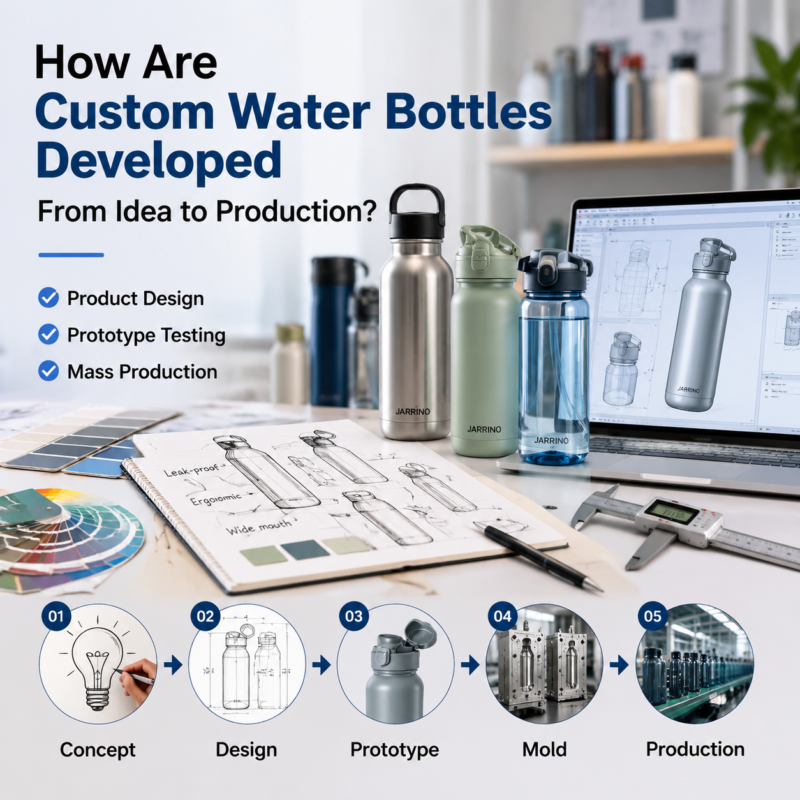
맞춤형 물병을 개발하려면 디자인을 선택하고 로고를 추가하는 것 이상이 필요합니다.. 초기 제품 컨셉부터 엔지니어링까지, 프로토타이핑, 금형 개발, 테스트, 그리고 대량생산, 모든 단계는 성공적인 음료 용기 제품을 만드는 데 중요한 역할을 합니다.. 이 가이드에서는 브랜드가 OEM 물병 제조업체와 협력하여 아이디어를 고품질로 전환하는 방법을 설명합니다., 시장에 바로 출시되는 제품과 디자인 관리, 비용, 그리고 생산 문제.
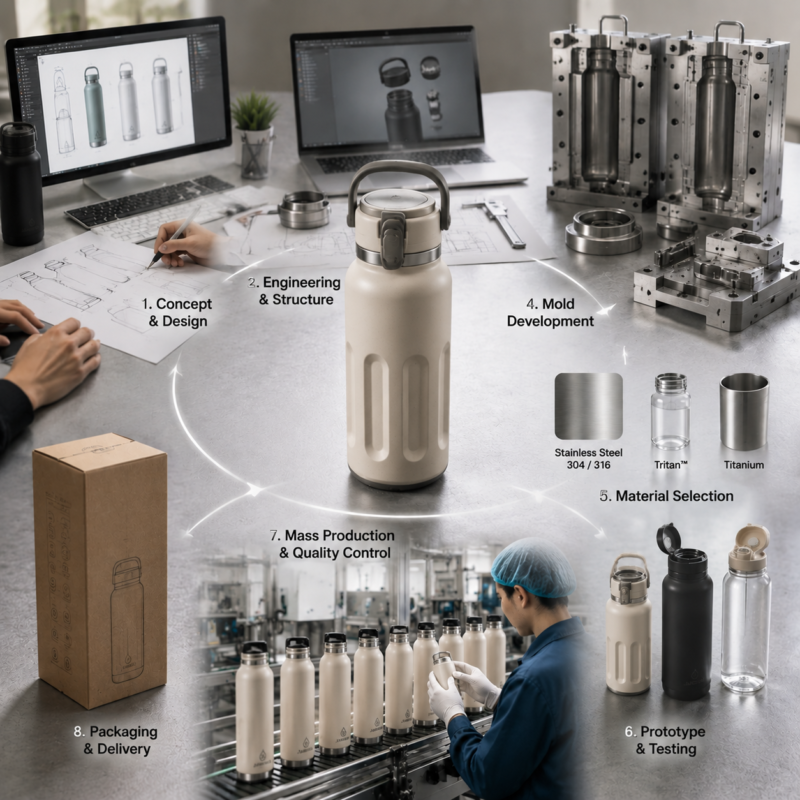
완전 맞춤형 물병을 개발하려면 기존 제품에 로고를 추가하는 것보다 훨씬 더 많은 것이 필요합니다.. 이 가이드에서는 브랜드가 제품 디자인을 통해 독특한 물병을 만드는 방법을 설명합니다., 공학, 재료 선택, 금형 개발, 프로토타입 테스트, 그리고 대량생산. 숙련된 OEM 물병 제조업체가 품질을 관리하면서 아이디어를 시장에 출시할 수 있는 제품으로 전환하는 데 어떻게 도움을 주는지 알아보세요., 비용, 생산 효율성.
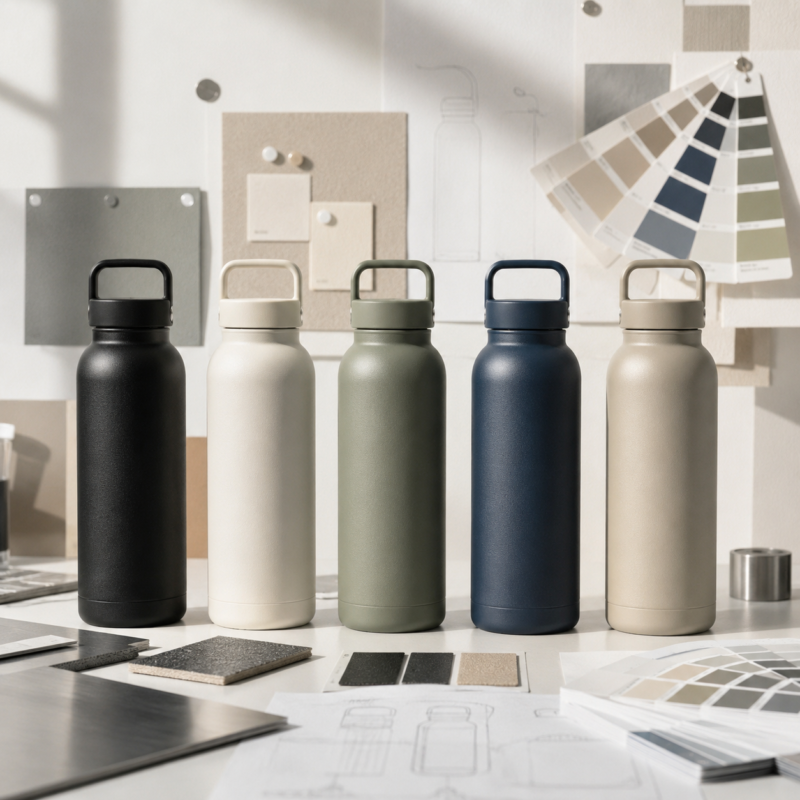
맞춤형 물병 컬렉션의 성공은 매력적인 색상 그 이상에 달려 있습니다.. 올바른 색상 팔레트 선택, 표면 마무리, 제조 전략은 브랜드 아이덴티티 강화에 도움이 됩니다., 고객 매력 향상, 그리고 장기적인 판매를 보장합니다. 이 가이드에서는 시장 선호도에 따라 색상을 선택하는 방법을 설명합니다., 무광택 마감과 유광 마감 비교, SKU 최적화, 전문적인 OEM 생산을 통해 일관된 품질을 실현합니다..
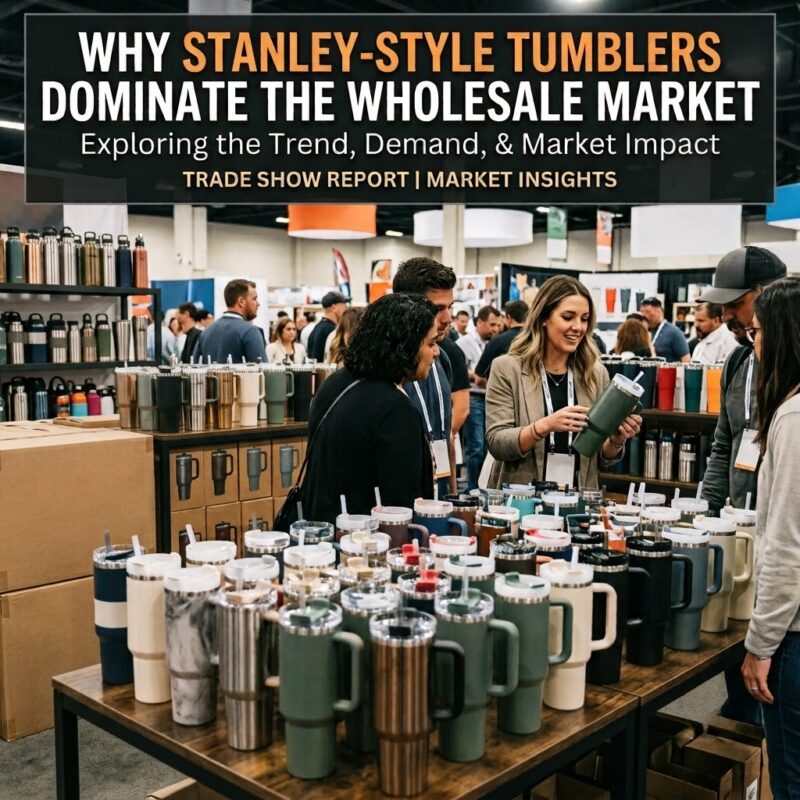
스탠리 스타일 텀블러는 문화 현상이자 도매 베스트셀러가 되었습니다.. 이 기사에서는 그 이유를 살펴봅니다. 18/8 높은 인식 가치를 제공하는 스테인리스 스틸 및 이중벽 진공 단열재, 맞춤화 가능성, 꾸준한 재주문 수요. 무엇이 이 텀블러를 믿을 수 있게 만드는지 알아보세요, 도매 구매자에게 유리한 카테고리.
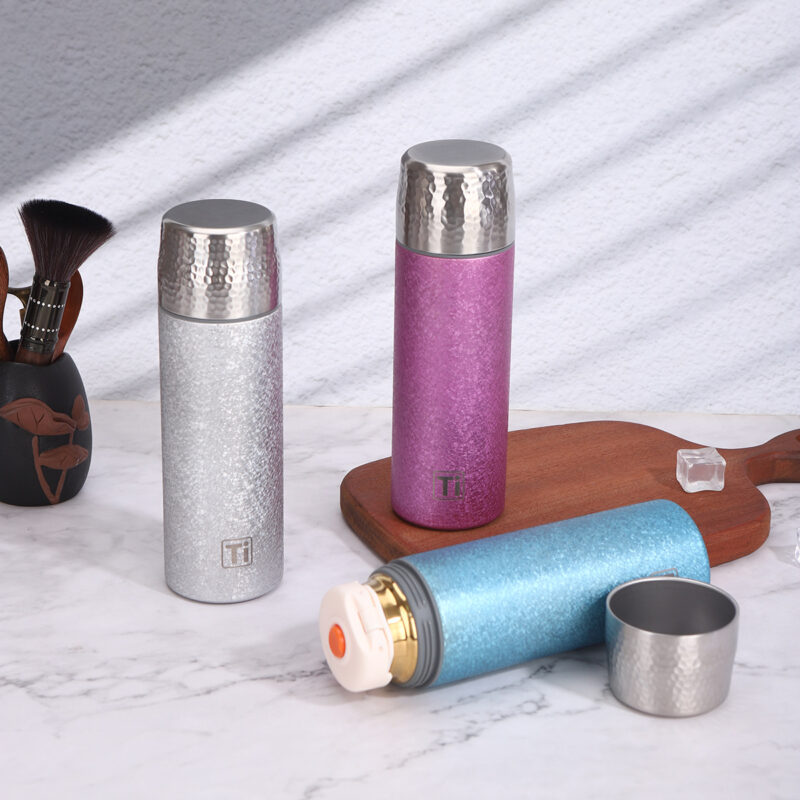
Titanium is safe. It’s also expensive. Here’s how it stacks up against stainless steel and aluminum – and which material actually makes sense for your brand.
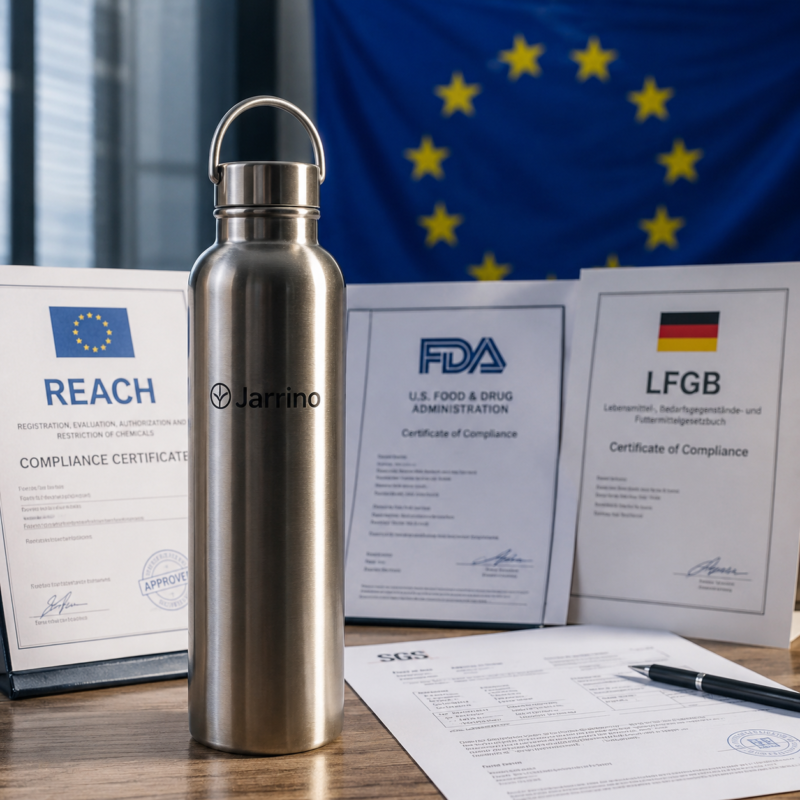
Learn how the EU Microplastics Regulation (EU) 2026/1168 impacts custom water bottle manufacturers and private label drinkware brands. Discover how Jarrino helps importers stay REACH compliant with durable stainless steel water bottles.
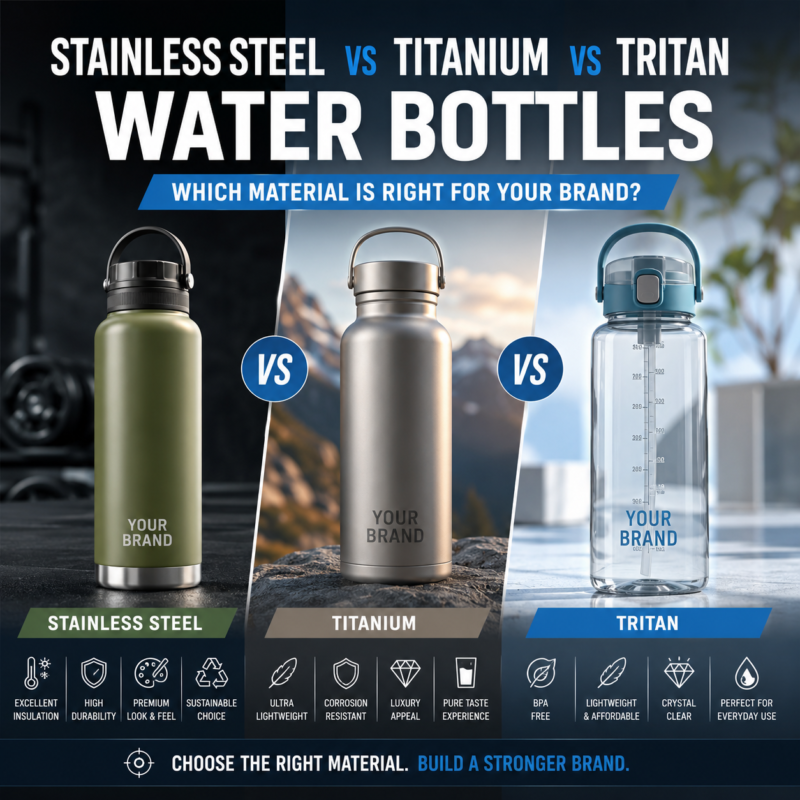
Choosing the right water bottle material can significantly impact your product quality, pricing, and brand positioning. This guide compares stainless steel, 티탄, and Tritan water bottles across durability, 격리, 비용, customization, and sustainability to help brands, 소매점, and OEM buyers select the best material for their target market.
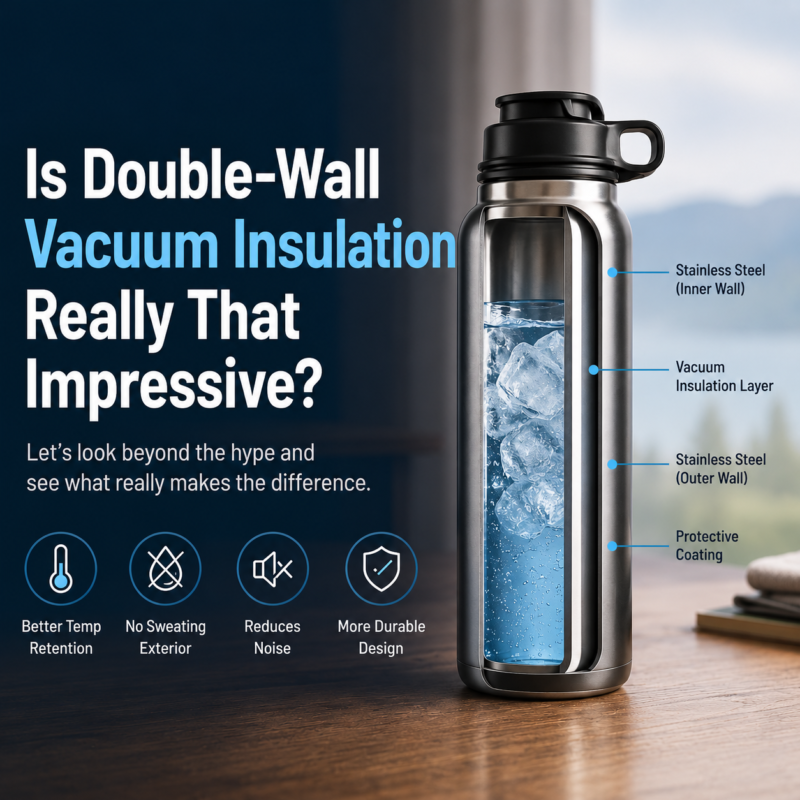
Double‑wall vacuum insulation is standard in premium drinkware, but the difference between a bottle that performs and one that disappoints comes down to manufacturing quality. This guide explains how vacuum insulation works, sets realistic performance expectations, and gives B2B buyers a practical checklist for evaluating suppliers. Plus, why Jarrino’s strict quality standards ensure your custom bottles deliver on their promises.
최고의 경험을 제공하기 위해, 당사는 장치 정보를 저장 및/또는 액세스하기 위해 쿠키와 같은 기술을 사용합니다.. 이러한 기술에 동의하면 당사는 이 사이트의 탐색 행동이나 고유 ID와 같은 데이터를 처리할 수 있습니다.. 동의하지 않거나 동의를 철회하는 경우, 특정 특징 및 기능에 부정적인 영향을 미칠 수 있습니다..
기능성
항상 활성
가입자 또는 사용자가 명시적으로 요청한 특정 서비스의 이용을 가능하게 하는 적법한 목적을 위해 기술적 저장 또는 접근이 반드시 필요한 경우, 또는 전자 통신 네트워크를 통해 통신을 전송하기 위한 목적으로만 사용됩니다..
환경설정
가입자나 이용자가 요청하지 않은 기본 설정을 저장하는 적법한 목적을 위해 기술적 저장이나 접근이 필요한 경우.
통계
통계 목적으로만 사용되는 기술적 저장 또는 액세스.익명 통계 목적으로만 사용되는 기술적 저장 또는 액세스. 소환장 없이, 인터넷 서비스 제공업체의 자발적인 준수, 또는 제3자의 추가 기록, 이러한 목적으로 저장되거나 검색된 정보만으로는 일반적으로 귀하를 식별하는 데 사용할 수 없습니다..
마케팅
광고 전송을 위한 사용자 프로필 생성을 위해 기술적 저장 또는 접근권한이 필요합니다., 또는 유사한 마케팅 목적으로 웹사이트나 여러 웹사이트에서 사용자를 추적하기 위해.