
2024 Globaler Thermosemarkt beschleunigt die Transformation
—— - Interpretieren der "2024 Globaler Thermos -Markttrendbericht" und die "Stainless Steel Material Selection Guide"
Yongkang, China, July 15, 2024 – The global thermos market is undergoing unprecedented structural changes. According to the "2024 Globaler Thermos -Markttrendbericht" jointly released by Jarrino Research Institute and international consulting firms, the market will continue to expand at a compound annual growth rate of 8.2% in the next three years, with its scale expected to exceed $32 billion USD. Simultaneously, consumer demand for material safety and functional innovation is forcing the industrial chain to upgrade. Der "Stainless Steel Material Selection Guide" reveals that "performance adaptation" Und "environmental certification" of 304/316 stainless steel are becoming key factors for companies to differentiate themselves in the competition.
ICH. Market Growth Dual Engines: Health Consumption and Scenario Diversification
The report points out that the global thermos market in 2024 exhibits two major explosive growth points:
- Health Awareness Drives Upgrades: 72% of consumers list "material safety" as the primary purchasing standard. Demand for food-grade 304 stainless steel has increased by 35%, and the penetration rate of medical-grade 316 stainless steel in the high-end market has risen to 18%.
- Refinement of Scenario Needs: Sales of outdoor sports thermoses (drop-proof, ultra-lightweight design) have surged by 42% year-on-year, while working professionals are driving "smart temperature-display coffee cups" to become the fastest-growing segment (annual growth rate of 61%).
Thermoses have evolved from functional tools to lifestyle symbols," said Emily Zhou, Global Marketing Director at Jarrino. "Consumers not only demand 24-hour insulation but also pay more attention to design aesthetics, lightweight experiences, and even carbon footprint labels.
II. Stainless Steel Material Selection: From "Basic Compliance" Zu "Performance Game"
Der "Stainless Steel Material Selection Guide" reveals disruptive trends in the industry:
- Material Performance Grading:
- 304 Edelstahl: Remains the mainstream choice (accounting for 68%), but needs to pass SGS heavy metal migration testing.
- 316L Stainless Steel: Replacing 304 in the high-end market, its resistance to chloride ion corrosion is improved by 3 times, making it the first choice for marine sports and medical fields.
- New Composite Materials: Titanium alloy liners + stainless steel outer shell combination balances ultra-lightweight and durability, with market share in Japan exceeding 12%.
- Environmental Certification Becomes a Hard Threshold:
- The EU's latest "Circular Economy Act" requires a 90% recycling rate for thermoses by 2030, prompting companies to prioritize 100% recyclable stainless steel. Leading manufacturers like Jarrino have achieved full-process carbon tracking "from raw materials to finished products" and have passed EPEAT certification.
III. Technology Breakthroughs: Intelligent Interaction and Sustainable Manufacturing
To respond to market segmentation, leading companies are accelerating technological iteration:
- Intelligent Sensing: Products with built-in temperature sensors + APP linkage functions (such as drinking water reminders, disinfection records) have a premium of up to 30%.
- Coating Revolution: Water-based ceramic coatings are replacing traditional spraying processes, improving scratch resistance by 50% and achieving zero VOCs emissions.
- Lightweight Competition: Through precision spin-thinning technology, the weight of a 550ml thermos cup has been reduced from 450g to 280g while maintaining 24-hour insulation performance.
„True innovation must balance performance and sustainability,“ emphasized Dr. Li, Head of R&D at Jarrino. „Our newly launched EcoShield™ technology makes stainless steel cups achieve an antibacterial rate of over 99.9%, while reducing the water consumption of electrolytic polishing by 20%.“
IV. Future Outlook: Customization and Regional Market Competition
The report predicts that the industry will usher in three major turning points in 2025:
- Rise of Flexible Supply Chains: The cost of small-batch customization (minimum order of 500 Stücke) has decreased by 40%, driving independent brands to enter the market.
- Battle for Emerging Markets: The per capita consumption of thermoses in Southeast Asia is growing at an average annual rate of 19%, and localized designs (such as mosquito-proof filters) have become the focus of competition.
- Material Science Breakthroughs: Biodegradable stainless steel plating is entering the experimental stage, which may rewrite the ecological rules of the industry.
Verwandte Beiträge
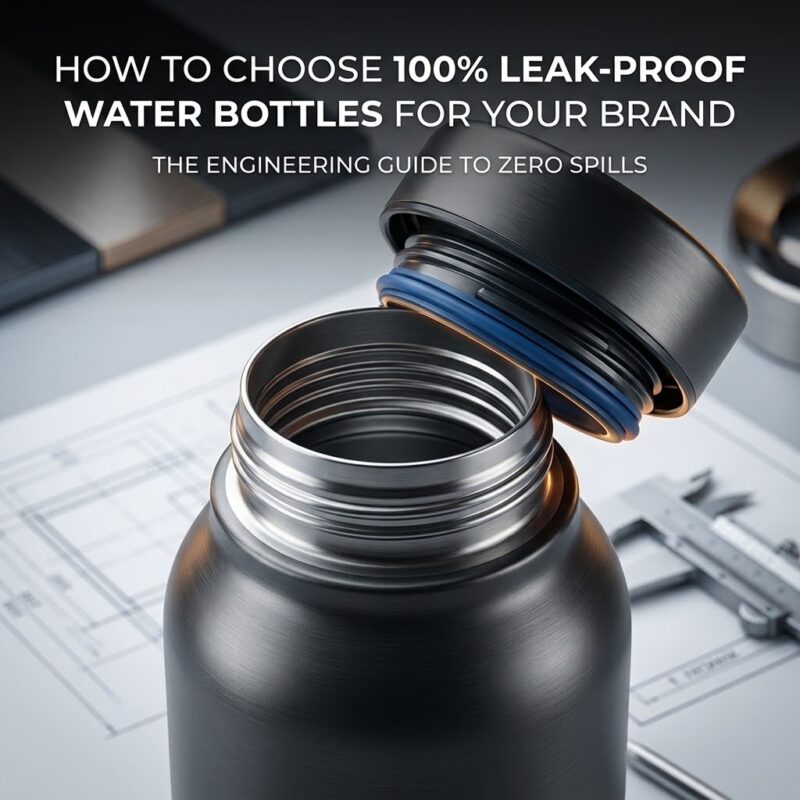
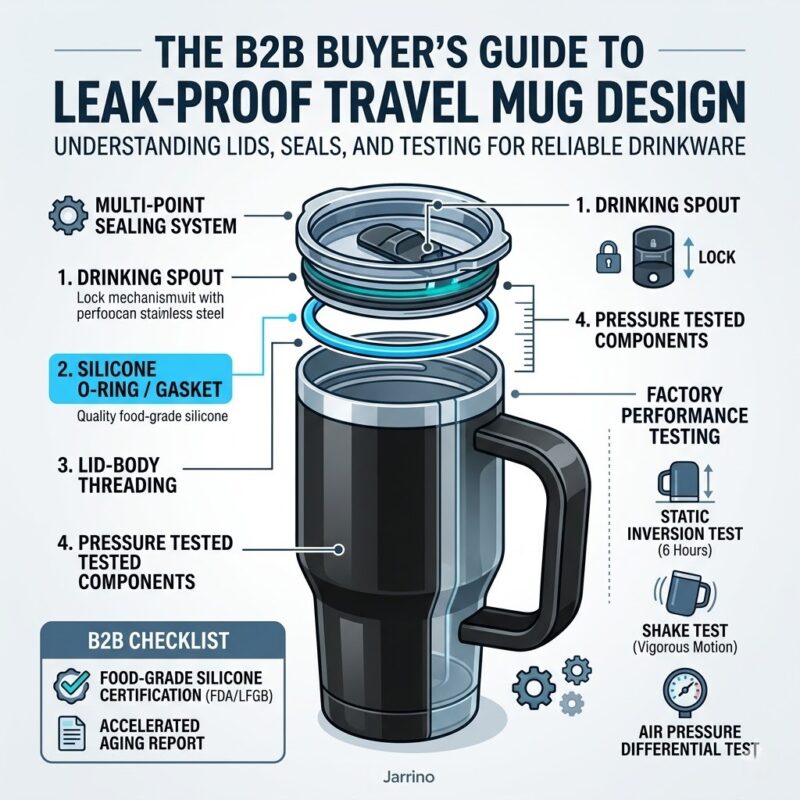
So wählen Sie aus 100% Auslaufsichere Edelstahl-Wasserflaschen für Ihre Marke?
Dieser Leitfaden hilft Getränkemarken bei der Auswahl 100% Auslaufsichere Edelstahlflaschen durch Analyse von QC-Tests und Deckeltechnik. Hersteller wie Jarrino verwenden invertiert, zittern, und Luftdrucktests zur Überprüfung der Dichtungen. Herkömmliche Schraubverschlüsse bieten absoluten Auslaufschutz, während das Verschließen von Klappdeckeln und Strohhalmkappen präzise Silikondichtungen erfordert, CNC-Gewindepräzision, und Einweg-Luftventile, um ein Verschütten zu verhindern.
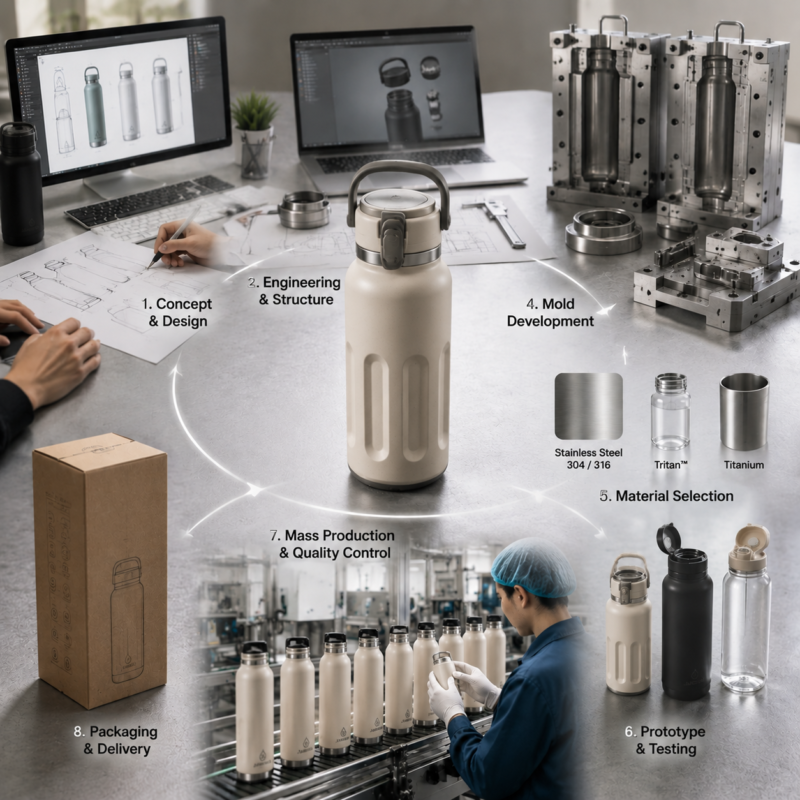
Wie werden vollständig maßgeschneiderte Wasserflaschen hergestellt??
Die Entwicklung einer vollständig maßgeschneiderten Wasserflasche erfordert viel mehr als nur das Hinzufügen eines Logos zu einem bestehenden Produkt. In diesem Leitfaden wird erklärt, wie Marken durch Produktdesign einzigartige Wasserflaschen schaffen, Maschinenbau, Materialauswahl, Schimmelbildung, Prototypentests, und Massenproduktion. Erfahren Sie, wie ein erfahrener OEM-Hersteller von Wasserflaschen dabei hilft, eine Idee in ein marktreifes Produkt umzuwandeln und gleichzeitig die Qualität zu verwalten, kosten, und Produktionseffizienz.
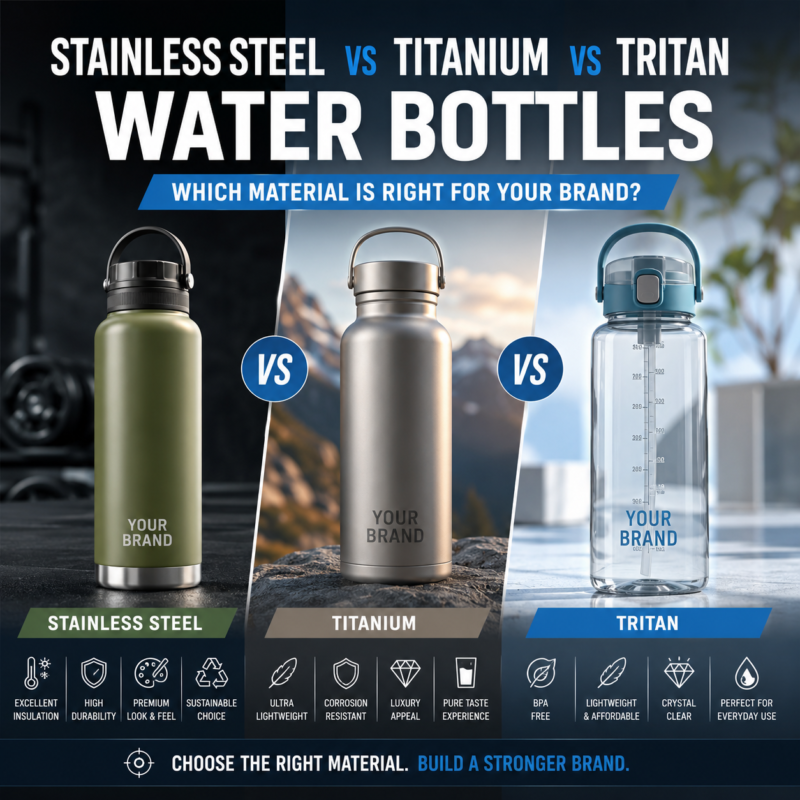
Wasserflaschen aus Edelstahl vs. Titan vs. Tritan: Welches Material ist das richtige für Ihre Marke??
Die Wahl des richtigen Wasserflaschenmaterials kann sich erheblich auf die Qualität Ihres Produkts auswirken, Preisgestaltung, und Markenpositionierung. Dieser Leitfaden vergleicht Edelstahl, Titan, und Tritan-Wasserflaschen in Bezug auf Haltbarkeit, Isolierung, kosten, Anpassung, und Nachhaltigkeit, um Marken zu helfen, Einzelhändler, und OEM-Käufer wählen das beste Material für ihren Zielmarkt aus.
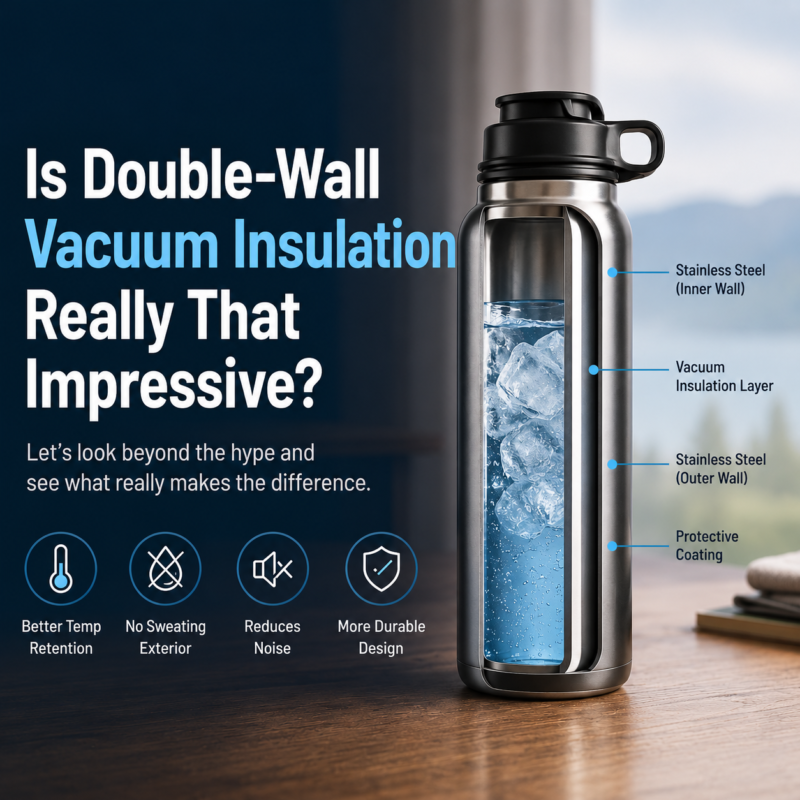
Ist die doppelwandige Vakuumisolierung wirklich so beeindruckend??
Eine doppelwandige Vakuumisolierung ist bei Premium-Trinkgeschirr Standard, Aber der Unterschied zwischen einer Flasche, die Leistung bringt, und einer Flasche, die enttäuscht, liegt in der Herstellungsqualität. Dieser Leitfaden erklärt, wie Vakuumisolierung funktioniert, setzt realistische Leistungserwartungen, und gibt B2B-Einkäufern eine praktische Checkliste zur Lieferantenbewertung an die Hand. Plus, Warum die strengen Qualitätsstandards von Jarrino sicherstellen, dass Ihre maßgeschneiderten Flaschen halten, was sie versprechen.
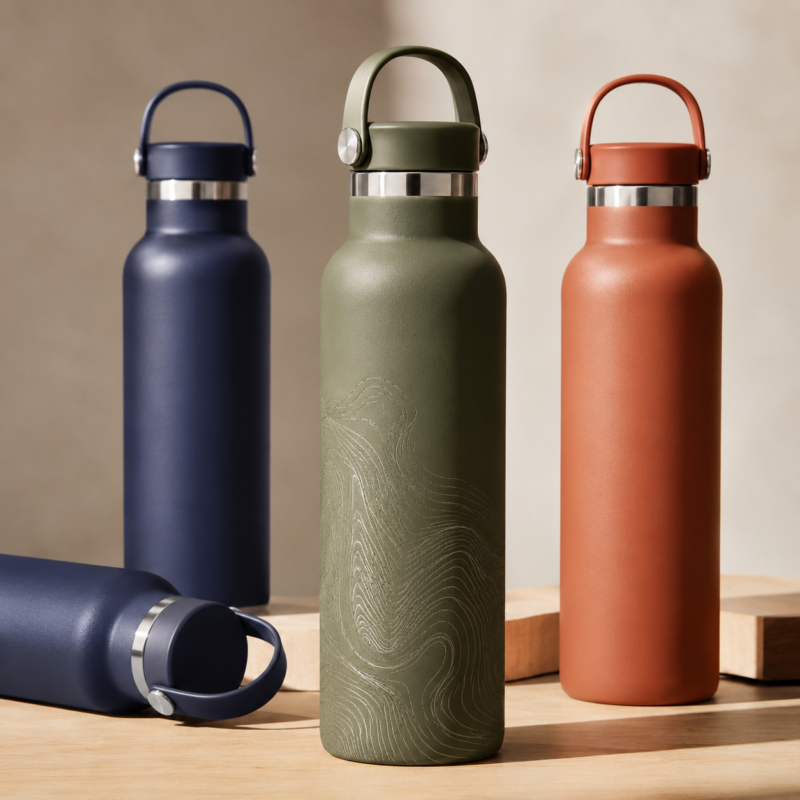
Welche individuelle Methode zur Dekoration von Wasserflaschen tatsächlich hält??
Lasergravur, Sublimation, UV, oder Siebdruck – welche individuelle Flaschendekoration tatsächlich den täglichen Gebrauch übersteht? Wir haben sie getestet. Lesen Sie die Ergebnisse.
Isolierflasche oder Plastikflasche für Outdoor-Sportarten?
Sollten Sie bei Ihrer nächsten Wanderung eine Isolierflasche oder eine Plastikflasche mitnehmen?, laufen, oder fahren? Beides haben wir mit echten Sportlern auf die Probe gestellt. Lesen Sie unseren ausführlichen Vergleich, um die beste Trinkausrüstung für Ihren Outdoor-Sport – und für Ihre B2B-Bestellung – auszuwählen.