
2024 Global Thermos Market은 혁신을 가속화합니다
—— 해석 "2024 글로벌 열 시장 동향 보고서" 그리고 "Stainless Steel Material Selection Guide"
Yongkang, 중국, July 15, 2024 – The global thermos market is undergoing unprecedented structural changes. According to the "2024 글로벌 열 시장 동향 보고서" jointly released by Jarrino Research Institute and international consulting firms, the market will continue to expand at a compound annual growth rate of 8.2% in the next three years, with its scale expected to exceed $32 billion USD. Simultaneously, consumer demand for material safety and functional innovation is forcing the industrial chain to upgrade. 그만큼 "Stainless Steel Material Selection Guide" reveals that "performance adaptation" 그리고 "environmental certification" of 304/316 stainless steel are becoming key factors for companies to differentiate themselves in the competition.
I. Market Growth Dual Engines: Health Consumption and Scenario Diversification
The report points out that the global thermos market in 2024 exhibits two major explosive growth points:
- Health Awareness Drives Upgrades: 72% of consumers list "material safety" as the primary purchasing standard. Demand for food-grade 304 stainless steel has increased by 35%, and the penetration rate of medical-grade 316 stainless steel in the high-end market has risen to 18%.
- Refinement of Scenario Needs: Sales of outdoor sports thermoses (drop-proof, ultra-lightweight design) have surged by 42% year-on-year, while working professionals are driving "smart temperature-display coffee cups" to become the fastest-growing segment (annual growth rate of 61%).
Thermoses have evolved from functional tools to lifestyle symbols," said Emily Zhou, Global Marketing Director at Jarrino. "Consumers not only demand 24-hour insulation but also pay more attention to design aesthetics, lightweight experiences, and even carbon footprint labels.
II. Stainless Steel Material Selection: 에서 "Basic Compliance" 에게 "Performance Game"
그만큼 "Stainless Steel Material Selection Guide" reveals disruptive trends in the industry:
- Material Performance Grading:
- 304 스테인레스 스틸: Remains the mainstream choice (accounting for 68%), but needs to pass SGS heavy metal migration testing.
- 316L 스테인레스 스틸: Replacing 304 in the high-end market, its resistance to chloride ion corrosion is improved by 3 타임스, making it the first choice for marine sports and medical fields.
- New Composite Materials: Titanium alloy liners + stainless steel outer shell combination balances ultra-lightweight and durability, with market share in Japan exceeding 12%.
- Environmental Certification Becomes a Hard Threshold:
- The EU's latest "Circular Economy Act" requires a 90% recycling rate for thermoses by 2030, prompting companies to prioritize 100% recyclable stainless steel. Leading manufacturers like Jarrino have achieved full-process carbon tracking "from raw materials to finished products" and have passed EPEAT certification.
III. Technology Breakthroughs: Intelligent Interaction and Sustainable Manufacturing
To respond to market segmentation, leading companies are accelerating technological iteration:
- Intelligent Sensing: Products with built-in temperature sensors + APP linkage functions (such as drinking water reminders, disinfection records) have a premium of up to 30%.
- Coating Revolution: Water-based ceramic coatings are replacing traditional spraying processes, improving scratch resistance by 50% and achieving zero VOCs emissions.
- Lightweight Competition: Through precision spin-thinning technology, the weight of a 550ml thermos cup has been reduced from 450g to 280g while maintaining 24-hour insulation performance.
“True innovation must balance performance and sustainability,” emphasized Dr. Li, Head of R&D at Jarrino. “Our newly launched EcoShield™ technology makes stainless steel cups achieve an antibacterial rate of over 99.9%, while reducing the water consumption of electrolytic polishing by 20%.”
IV. Future Outlook: Customization and Regional Market Competition
The report predicts that the industry will usher in three major turning points in 2025:
- Rise of Flexible Supply Chains: The cost of small-batch customization (minimum order of 500 조각들) has decreased by 40%, driving independent brands to enter the market.
- Battle for Emerging Markets: The per capita consumption of thermoses in Southeast Asia is growing at an average annual rate of 19%, and localized designs (such as mosquito-proof filters) have become the focus of competition.
- Material Science Breakthroughs: Biodegradable stainless steel plating is entering the experimental stage, which may rewrite the ecological rules of the industry.
관련 게시물
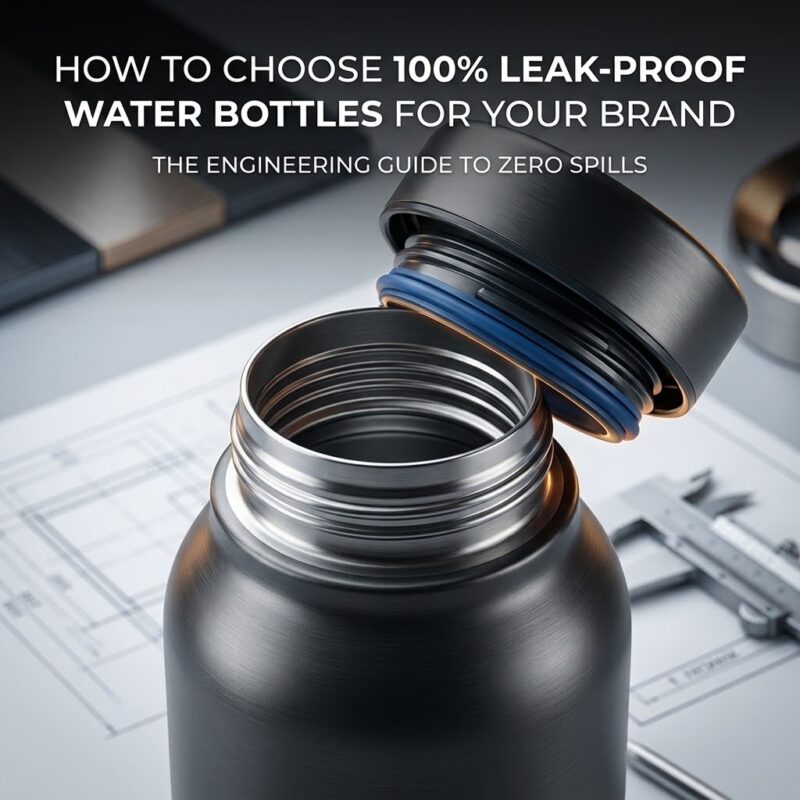
선택 방법 100% 귀하의 브랜드를 위한 누출 방지 스테인레스 스틸 물병?
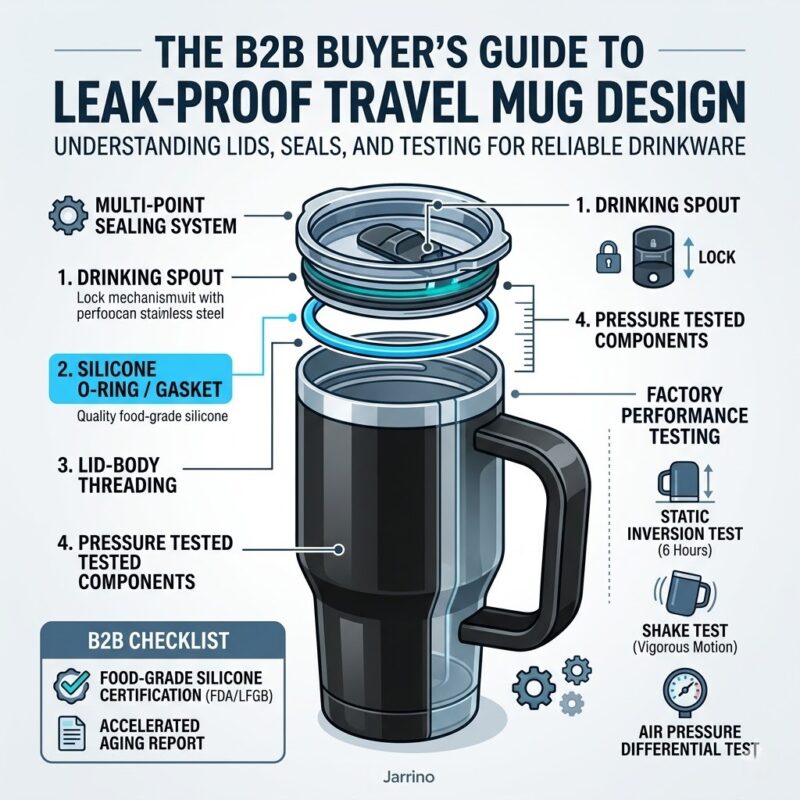
이 가이드는 음료 용기 브랜드가 제품을 선택하는 데 도움이 됩니다. 100% QC 테스트 및 뚜껑 엔지니어링을 분석하여 누출 방지 스테인레스 스틸 병. Jarrino와 같은 제조업체는 거꾸로 된 제품을 사용합니다., 흔들리는, 씰을 확인하기 위한 공기압 테스트. 기존 스크류 캡은 완벽한 누출 방지 기능을 제공합니다., 플립 뚜껑과 밀짚 모자를 잠그려면 정밀한 실리콘 개스킷이 필요합니다., CNC 스레드 정밀도, 누출을 방지하기 위한 일방향 공기 밸브.
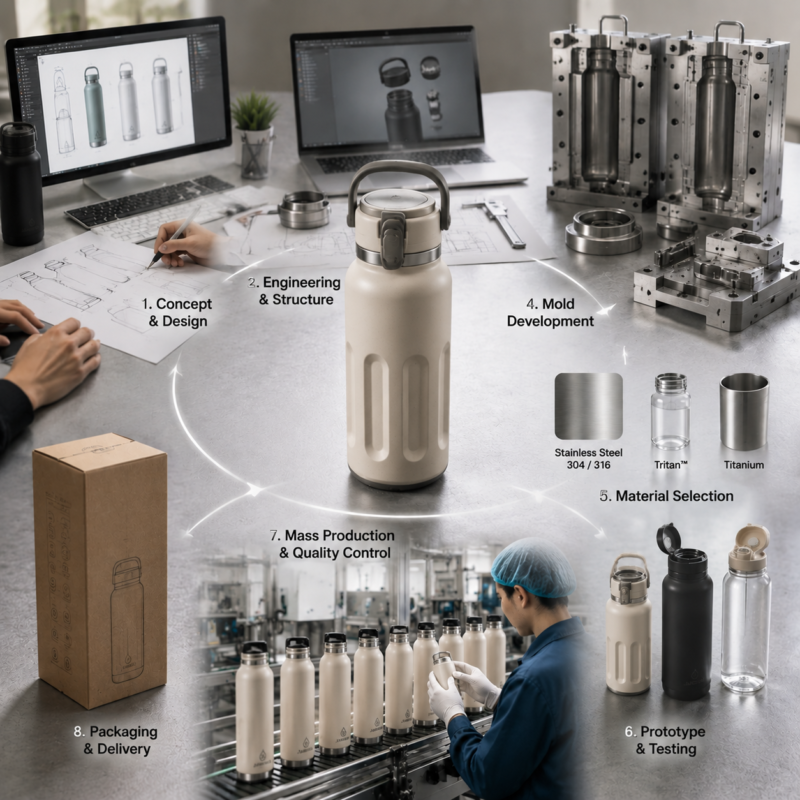
완전 맞춤형 물병은 어떻게 만들어지나요??
완전 맞춤형 물병을 개발하려면 기존 제품에 로고를 추가하는 것보다 훨씬 더 많은 것이 필요합니다.. 이 가이드에서는 브랜드가 제품 디자인을 통해 독특한 물병을 만드는 방법을 설명합니다., 공학, 재료 선택, 금형 개발, 프로토타입 테스트, 그리고 대량생산. 숙련된 OEM 물병 제조업체가 품질을 관리하면서 아이디어를 시장에 출시할 수 있는 제품으로 전환하는 데 어떻게 도움을 주는지 알아보세요., 비용, 생산 효율성.
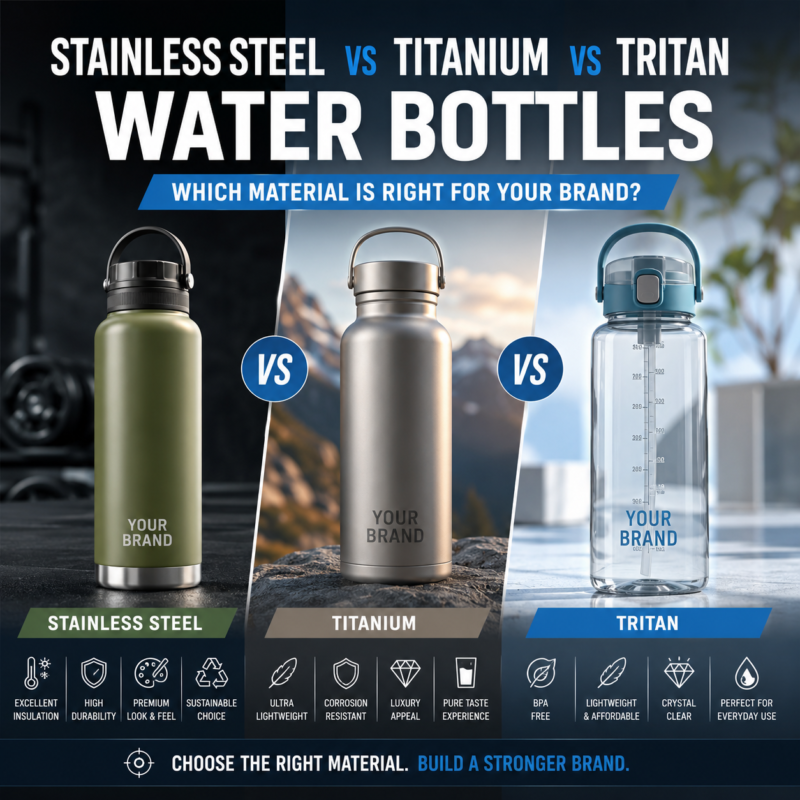
스테인레스 스틸 vs 티타늄 vs 트라이탄 물병: 귀하의 브랜드에 적합한 소재는 무엇입니까??
올바른 물병 소재를 선택하면 제품 품질에 큰 영향을 미칠 수 있습니다., 가격, 그리고 브랜드 포지셔닝. 이 가이드에서는 스테인레스 스틸을 비교합니다., 티탄, 내구성을 갖춘 트라이탄 물병, 격리, 비용, 맞춤화, 브랜드에 도움이 되는 지속가능성, 소매점, OEM 구매자는 목표 시장에 가장 적합한 재료를 선택합니다..
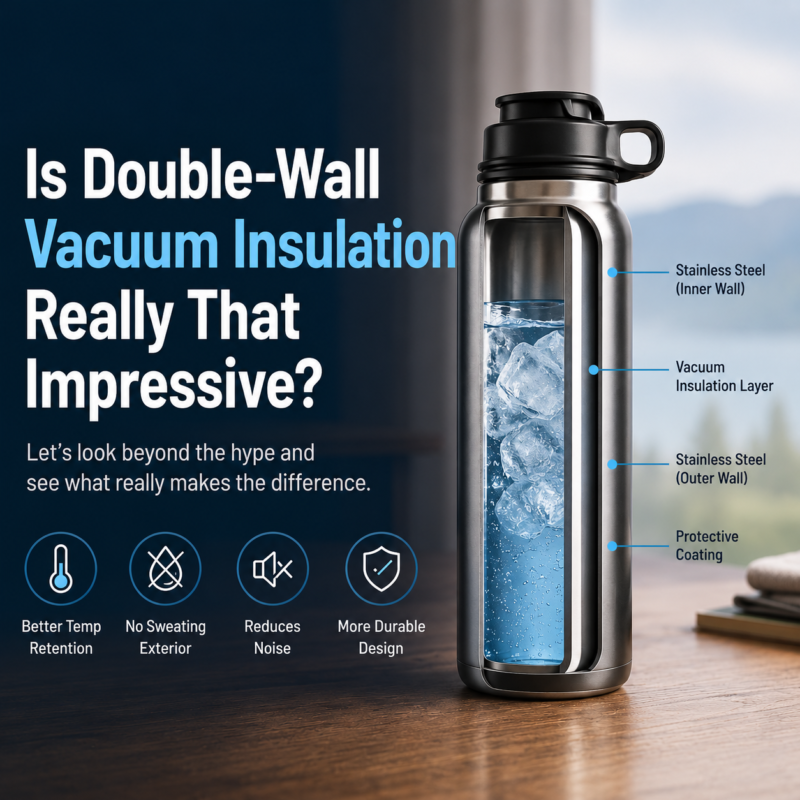
이중벽 진공 단열재가 정말 인상적입니까??
이중벽 진공 단열재는 프리미엄 음료 용기의 표준입니다., 하지만 성능이 뛰어난 병과 실망스러운 병의 차이는 제조 품질에 달려 있습니다.. 이 가이드에서는 진공 단열이 어떻게 작동하는지 설명합니다., 현실적인 성능 기대치를 설정합니다., B2B 구매자에게 공급업체 평가를 위한 실용적인 체크리스트를 제공합니다.. 을 더한, Jarrino의 엄격한 품질 표준이 귀하의 맞춤형 병이 약속을 이행하도록 보장하는 이유.
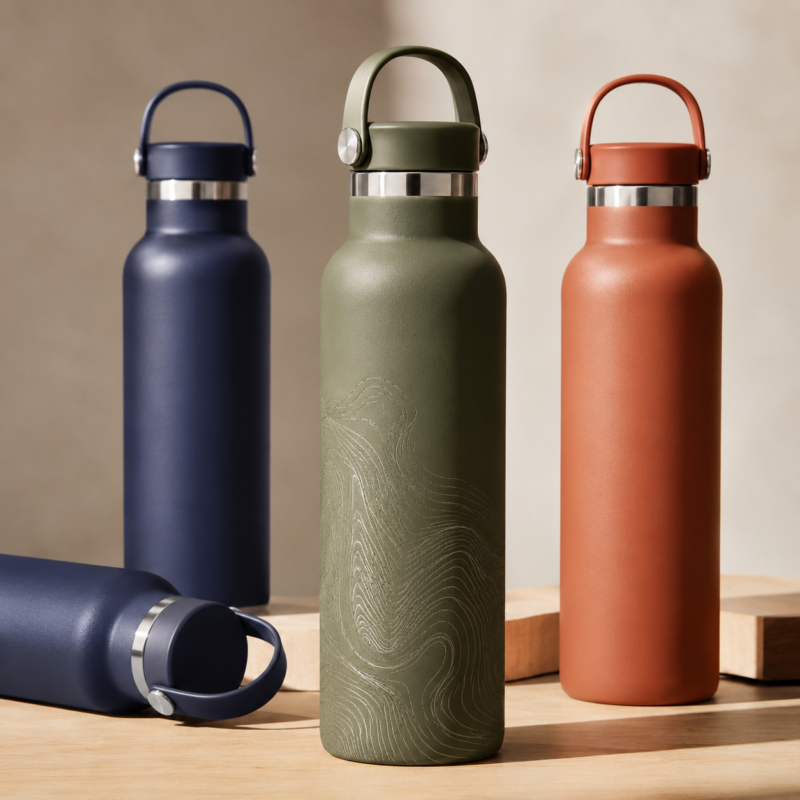
실제로 지속되는 맞춤형 물병 장식 방법?
레이저 조각, 승화, 자외선, 또는 스크린 인쇄 - 맞춤형 병 장식이 실제로 매일 사용해도 유지됩니다.? 우리는 그들을 테스트했습니다. 결과 읽기.
Insulated Bottle or Plastic Bottle for Outdoor Sports?
Should you carry an insulated bottle or a plastic bottle on your next hike, run, or ride? We put both to the test with real athletes. Read our in‑depth comparison to choose the best hydration gear for your outdoor sport—and for your B2B order.