

Stainless Steel vs Titanium vs Tritan Water Bottles: Which Material Is Right for Your Brand?
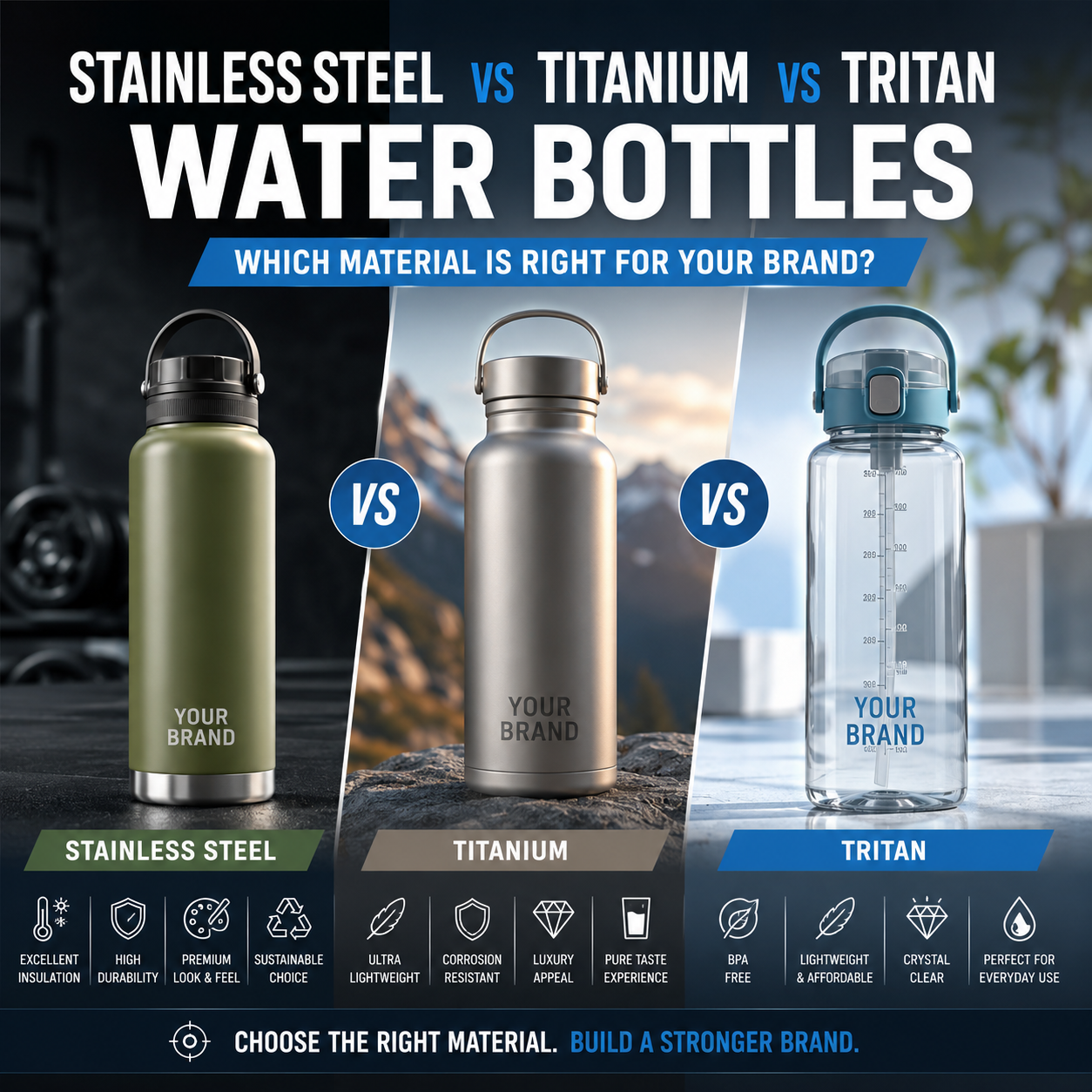
When launching a custom drinkware collection, one of the first decisions isn’t color or logo placement—it’s material selection.
Should you choose stainless steel, titanium, or Tritan™ plastic?
Each material targets different customer segments, price points, and use cases. The wrong choice can increase manufacturing costs, reduce customer satisfaction, or weaken your brand positioning. The right one can improve margins, strengthen your value proposition, and increase repeat purchases.
If you’re sourcing from a water bottle manufacturer for OEM or private-label production, understanding the strengths and limitations of each material is essential.
This guide compares stainless steel, titanium, and Tritan across performance, durability, branding potential, sustainability, and manufacturing considerations to help you choose the best material for your business.
Quick Comparison
| Feature | Stainless Steel | Titanium | Tritan |
|---|---|---|---|
| Durability | ★★★★★ | ★★★★★ | ★★★☆☆ |
| Weight | Medium | Very Light | Light |
| Insulation | Excellent | Good | None |
| Taste Neutrality | Excellent | Outstanding | Good |
| Premium Perception | High | Luxury | Medium |
| Cost | $$ | $$$$ | $ |
| BPA-Free | Yes | Yes | Yes |
| Dishwasher Safe | Usually | Yes | Yes |
| OEM Customization | Excellent | Good | Excellent |
| Typical Customers | Outdoor, Corporate, Retail | Premium Outdoor, Luxury | Sports, Schools, Promotional |
Why Material Choice Matters More Than Ever
Consumers today don’t simply buy a water bottle.
They buy:
-
Sustainability
-
Health and safety
-
Brand identity
-
Lifestyle
-
Performance
Material selection influences:
-
Manufacturing cost
-
Retail pricing
-
Shipping expenses
-
Product lifespan
-
Customer reviews
-
Environmental impact
-
Brand positioning
For B2B buyers, material directly affects profitability.
Stainless Steel Water Bottles


Stainless steel remains the global standard for premium reusable drinkware.
Most high-quality bottles use food-grade 18/8 (304) stainless steel, while vacuum insulation creates excellent temperature retention.
Advantages
Outstanding Temperature Performance
Double-wall vacuum insulation can keep drinks:
-
Cold for up to 24 hours
-
Hot for up to 12 hours
This makes stainless steel ideal for:
-
Coffee brands
-
Outdoor brands
-
Travel products
-
Corporate gifts
Extremely Durable
304 stainless steel resists:
-
Rust
-
Corrosion
-
Dents
-
Daily wear
Many bottles remain functional after years of use.
Excellent Branding Surface
Manufacturers can apply:
-
Powder coating
-
UV printing
-
Laser engraving
-
Silk screen printing
-
Full-wrap graphics
-
Custom Pantone colors
This flexibility makes stainless steel the preferred choice for private-label brands.
Sustainable
Because stainless steel is highly recyclable and designed for long-term use, it aligns well with brands emphasizing environmental responsibility.
Limitations
-
Heavier than titanium or Tritan
-
Higher shipping costs
-
Slightly more expensive than plastic
Titanium Water Bottles


Titanium occupies the luxury end of the drinkware market.
Originally popular among mountaineers and backpackers, titanium bottles are now increasingly used by premium lifestyle brands.
Advantages
Incredibly Lightweight
Titanium offers steel-like strength while weighing significantly less.
Perfect for:
-
Hiking
-
Camping
-
Travel
-
Minimalist EDC products
Exceptional Corrosion Resistance
Titanium naturally forms an oxide layer that protects against:
-
Saltwater
-
Acids
-
Moisture
It will not rust.
Pure Drinking Experience
Titanium is highly inert.
It doesn’t affect:
-
Coffee
-
Tea
-
Mineral water
-
Electrolytes
Many enthusiasts describe titanium as delivering the cleanest taste.
Luxury Positioning
Titanium immediately communicates:
-
Premium quality
-
Engineering excellence
-
Outdoor performance
Brands often sell titanium bottles at two to four times the price of comparable stainless steel products.
Limitations
-
High material cost
-
More difficult machining
-
Smaller OEM production ecosystem
-
Longer lead times
-
Fewer color-finishing options
Tritan Water Bottles


Tritan is a BPA-free copolyester developed specifically for reusable drinkware.
Unlike ordinary plastic bottles, Tritan combines clarity with durability.
Advantages
Lightweight
Ideal for:
-
Schools
-
Gyms
-
Sports
-
Daily commuting
Lower product weight also reduces freight costs.
Affordable
Tritan bottles typically have the lowest production cost.
This makes them suitable for:
-
Promotional campaigns
-
Giveaways
-
Retail chains
-
Event merchandise
Crystal Clear Appearance
Unlike many plastics, Tritan remains transparent over long-term use.
Customers appreciate its glass-like appearance without the fragility.
Easy Customization
Manufacturers can produce:
-
Transparent colors
-
Frosted finishes
-
Flip lids
-
Straw lids
-
Fruit infusers
-
Measurement markings
Limitations
-
No vacuum insulation
-
Lower premium perception
-
Can scratch over time
-
Not intended for keeping beverages hot
Performance Comparison
| Criteria | Stainless Steel | Titanium | Tritan |
|---|---|---|---|
| Keeps Drinks Hot | Excellent | Good | No |
| Keeps Drinks Cold | Excellent | Good | No |
| Weight | Medium | Excellent | Excellent |
| Durability | Excellent | Excellent | Good |
| Corrosion Resistance | Excellent | Outstanding | N/A |
| Luxury Appeal | High | Outstanding | Moderate |
| Production Cost | Moderate | High | Low |
| Shipping Cost | Medium | Low | Very Low |
| Color Options | Excellent | Limited | Excellent |
Which Material Fits Different Brand Types?
| Brand Type | Recommended Material |
|---|---|
| Outdoor Equipment | Titanium or Stainless Steel |
| Corporate Gifts | Stainless Steel |
| Coffee Brands | Stainless Steel |
| Luxury Lifestyle | Titanium |
| Fitness Brands | Tritan or Stainless Steel |
| School Products | Tritan |
| Promotional Products | Tritan |
| Premium E-commerce | Stainless Steel |
| Travel Accessories | Stainless Steel |
| High-End Adventure | Titanium |
OEM Manufacturing Considerations
Choosing the right manufacturing partner matters just as much as choosing the right material.
When evaluating suppliers, ask about:
-
Food-grade material certifications
-
Factory audit reports
-
Vacuum insulation testing
-
Leak-proof testing
-
Production capacity
-
MOQ flexibility
-
Logo printing options
-
Packaging customization
-
Lead times
-
Quality control procedures
Experienced OEM manufacturers can also recommend the most cost-effective material based on your target market, retail price, and order volume.
Cost vs Retail Positioning
| Material | Typical Manufacturing Cost | Typical Retail Position |
|---|---|---|
| Tritan | Low | Entry-Level |
| Stainless Steel | Medium | Mid-to-Premium |
| Titanium | High | Luxury |
Higher material cost doesn’t always reduce profit.
Premium materials often support significantly higher retail pricing and stronger brand differentiation.
Which Material Should Your Brand Choose?
Choose stainless steel if you want:
-
The broadest market appeal
-
Excellent insulation
-
Premium branding
-
Long product lifespan
-
Strong OEM customization options
Choose titanium if you want:
-
Luxury positioning
-
Ultra-lightweight products
-
High-end outdoor customers
-
Maximum durability
-
Premium pricing
Choose Tritan if you want:
-
Affordable manufacturing
-
Lightweight products
-
Promotional campaigns
-
School and fitness markets
-
Large-volume production
Frequently Asked Questions
Is titanium better than stainless steel?
Titanium is lighter and more corrosion-resistant, while stainless steel offers better value, stronger insulation performance, and a wider range of manufacturing options. For most brands, stainless steel provides the best balance of performance and cost.
Is Tritan safer than stainless steel?
Both are considered safe for food and beverage use when manufactured to appropriate standards. Tritan is BPA-free, while food-grade stainless steel is non-reactive and widely used for insulated drinkware.
Which material lasts the longest?
Titanium and stainless steel generally have the longest service life due to their resistance to impact and corrosion. Tritan is durable for everyday use but can become scratched with heavy wear.
Which material is easiest to customize?
Stainless steel offers the greatest flexibility, supporting powder coating, laser engraving, silk-screen printing, UV printing, and a wide range of finishes. Tritan also allows colorful molded designs, while titanium typically has more limited finishing options.
Final Thoughts
There is no single “best” water bottle material—only the best choice for your brand’s positioning and customers.
-
Stainless steel remains the most versatile option, balancing durability, insulation, customization, and value.
-
Titanium is ideal for premium brands seeking differentiation through lightweight performance and luxury appeal.
-
Tritan is a practical solution for high-volume, budget-conscious, and sports-oriented product lines.
For most OEM and private-label projects, stainless steel continues to deliver the strongest combination of manufacturing flexibility, consumer appeal, and long-term brand value. Selecting the right material early in product development will help optimize costs, strengthen your positioning, and create a drinkware collection that resonates with your target market.
Related Posts
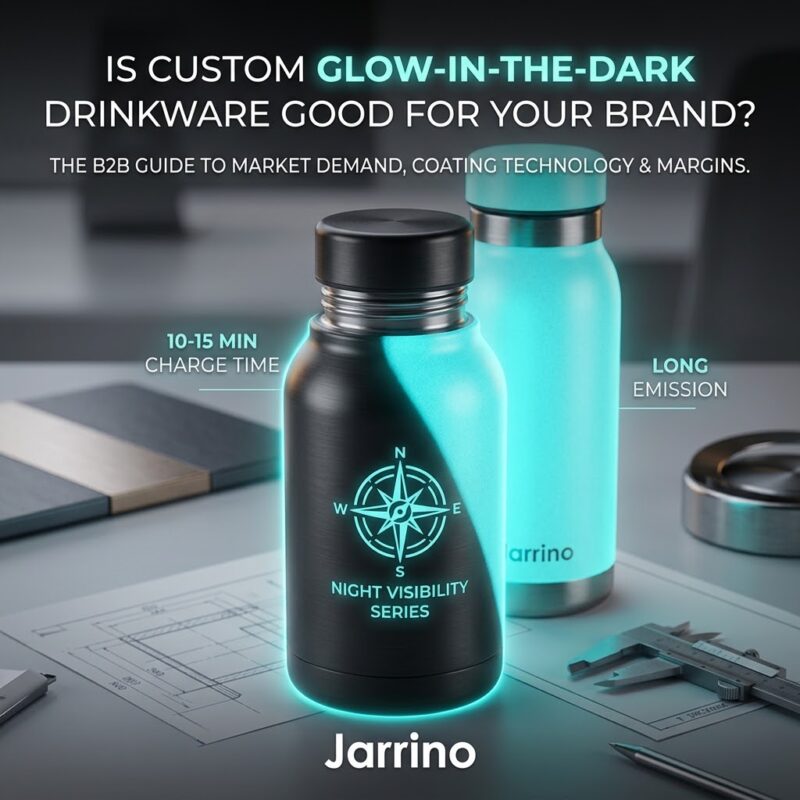
Is Custom Glow-in-the-Dark Drinkware Good for Your Brand?
Custom glow-in-the-dark drinkware offers private-label brands a high-margin opportunity in a competitive market. Jarrino provides industrial-grade, food-safe photoluminescent coatings, ensuring durability and compliance while targeting outdoor and youth sectors, driving viral social media appeal and product differentiation.
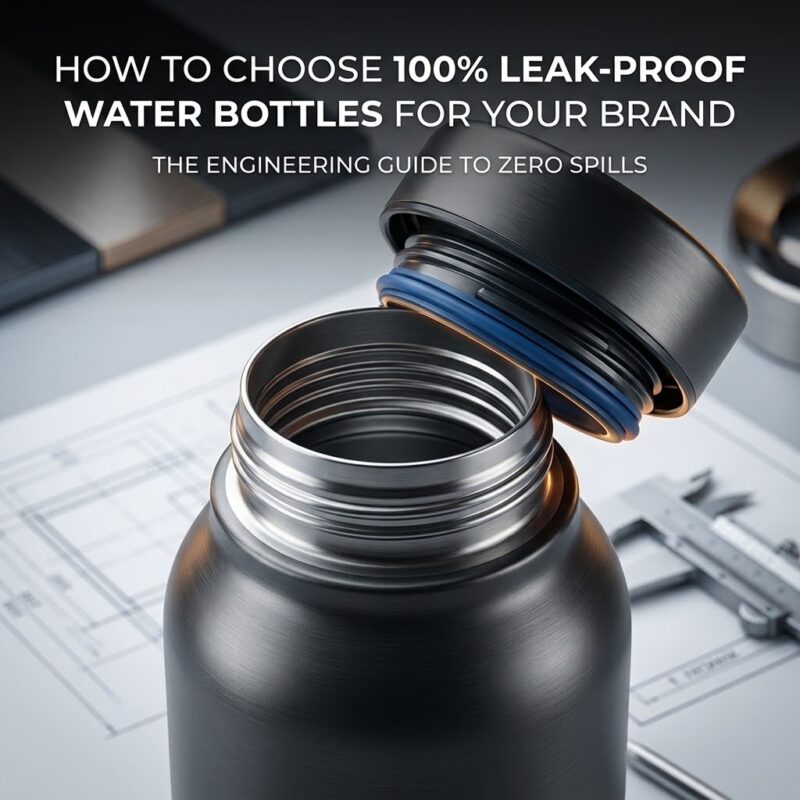
How to Choose 100% Leak-Proof Stainless Steel Water Bottles for Your Brand?
This guide helps drinkware brands select 100% leak-proof stainless steel bottles by analyzing QC testing and lid engineering. Manufacturers like Jarrino use inverted, shaking, and air pressure tests to verify seals. Traditional screw-caps offer absolute leak protection, while locking flip-lids and straw caps require precise silicone gaskets, CNC thread precision, and one-way air valves to prevent spills.
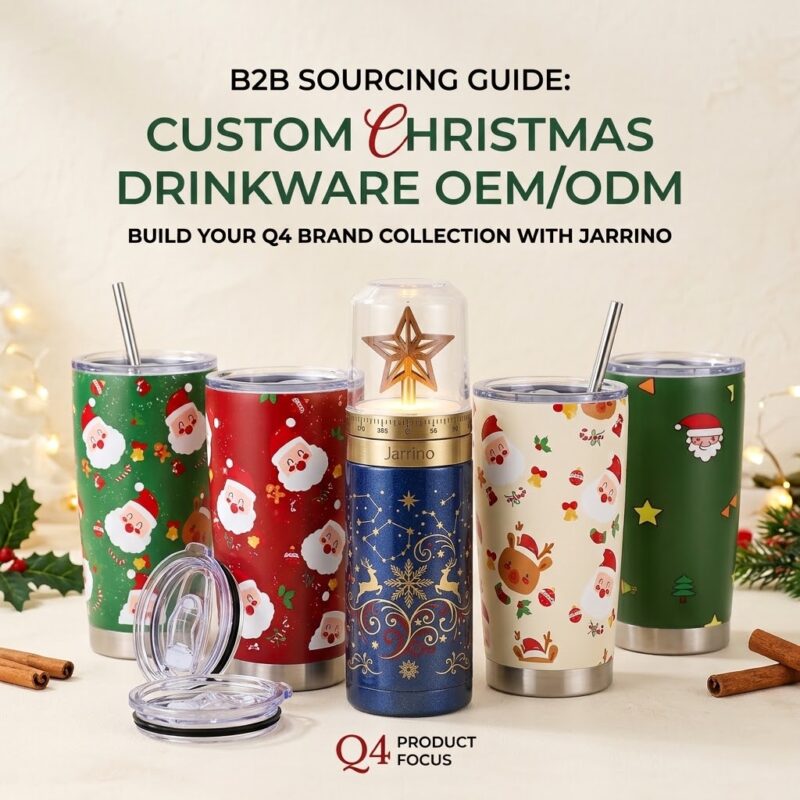
Custom Christmas Drinkware: Complete OEM/ODM Manufacturing Guide
Jarrino is a certified OEM/ODM manufacturer specializing in custom vacuum flasks, ceramic-lined tumblers, and titanium drinkware. Lead times for Q4 custom Christmas orders are 20–30 days with low MOQs (300–1,000 pcs) and full FDA/LFGB compliance. We offer end-to-end customization including 3D digital printing, laser engraving, and bespoke Christmas gift packaging. Sample kits and the quotes are available upon request to help brands lock in Q4 holiday production smoothly.
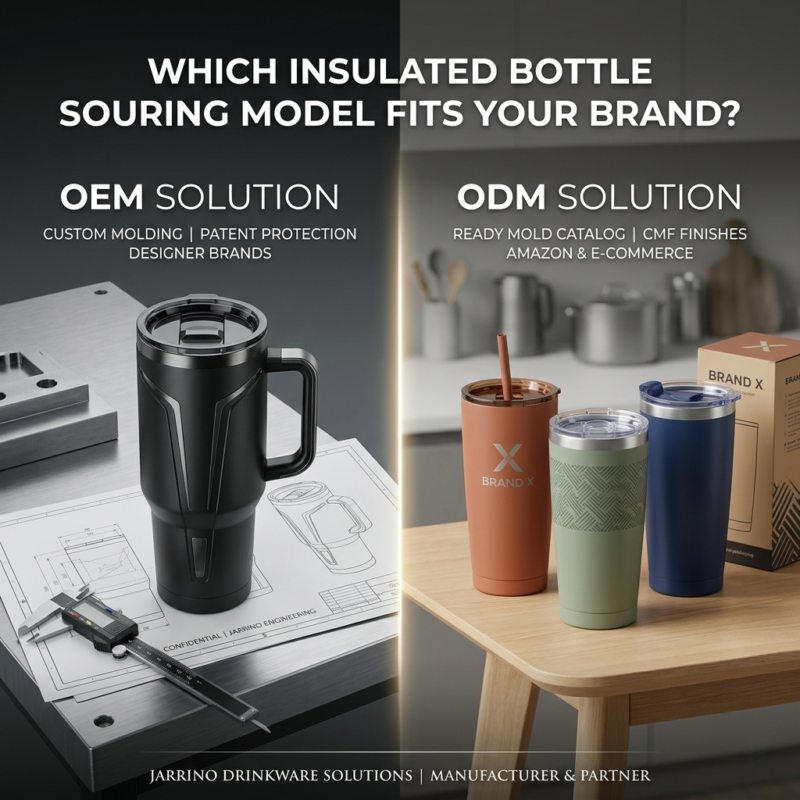
OEM vs. ODM Insulated Tumblers: Which Sourcing Model Fits Your Drinkware Brand
Choosing between OEM (Original Equipment Manufacturing) and ODM (Original Design Manufacturing) defines your drinkware brand’s R&D budget, time-to-market, and product exclusivity. OEM is ideal for established brands with custom CAD designs and unique IP requirements, offering 100% custom molding and patent protection. ODM is built for Amazon sellers, DTC startups, and corporate buyers seeking zero tooling costs, low MOQs, and rapid product launches via advanced CMF finishes (powder coating, UV printing).
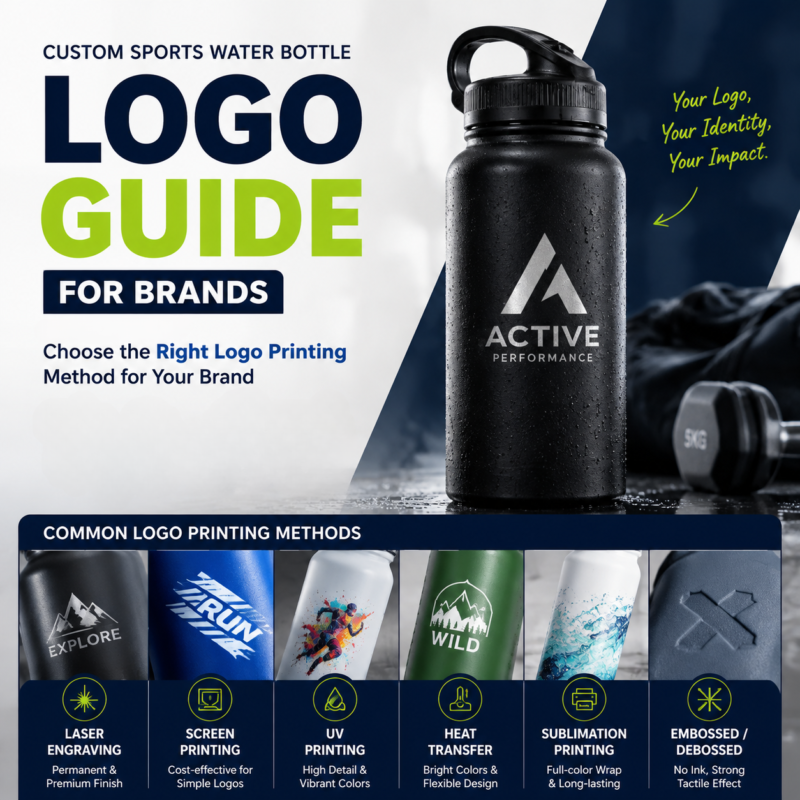
Custom Sports Water Bottle Logo Guide for Brands
Custom sports water bottle logos are created through different decoration processes depending on the bottle material, brand design, and performance requirements. This guide covers the most common logo printing methods, including laser engraving, screen printing, UV printing, heat transfer, and sublimation, helping sports brands select the right customization option for durable and professional drinkware products.
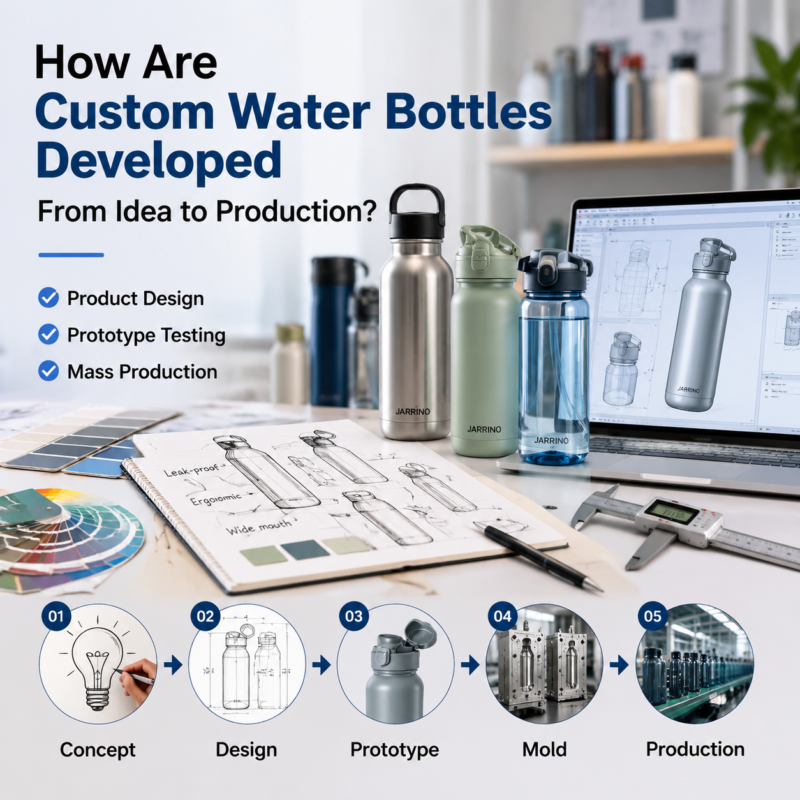
How Are Custom Water Bottles Developed From Idea to Production?
Developing a custom water bottle requires more than choosing a design and adding a logo. From the initial product concept to engineering, prototyping, mold development, testing, and mass production, every stage plays an important role in creating a successful drinkware product. This guide explains how brands work with OEM water bottle manufacturers to transform ideas into high-quality, market-ready products while managing design, cost, and production challenges.
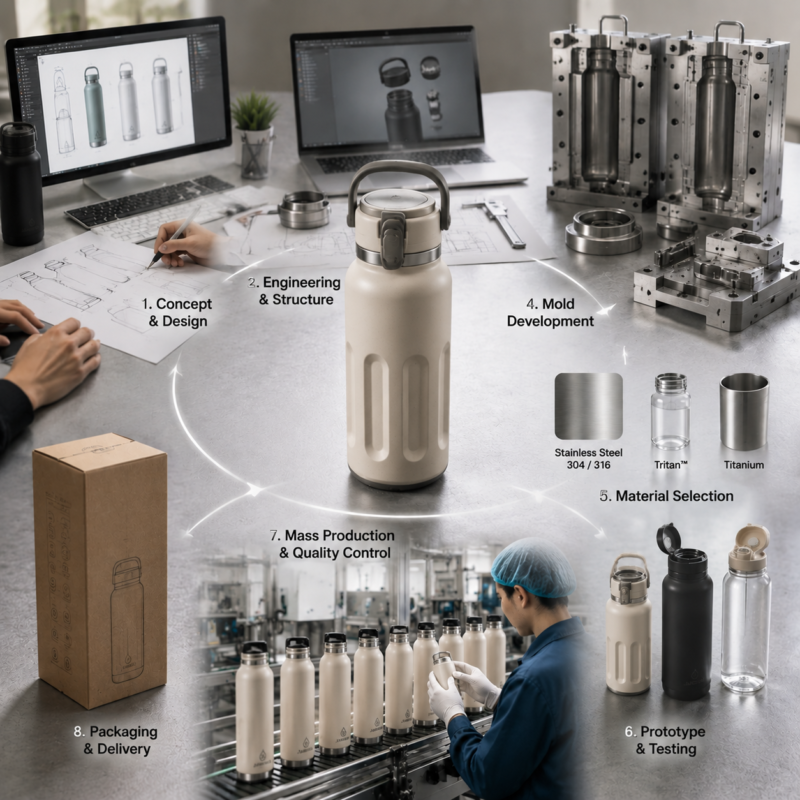
How Are Fully Custom Water Bottles Made?
Developing a fully custom water bottle involves much more than adding a logo to an existing product. This guide explains how brands create unique water bottles through product design, engineering, material selection, mold development, prototype testing, and mass production. Learn how an experienced OEM water bottle manufacturer helps transform an idea into a market-ready product while managing quality, cost, and production efficiency.
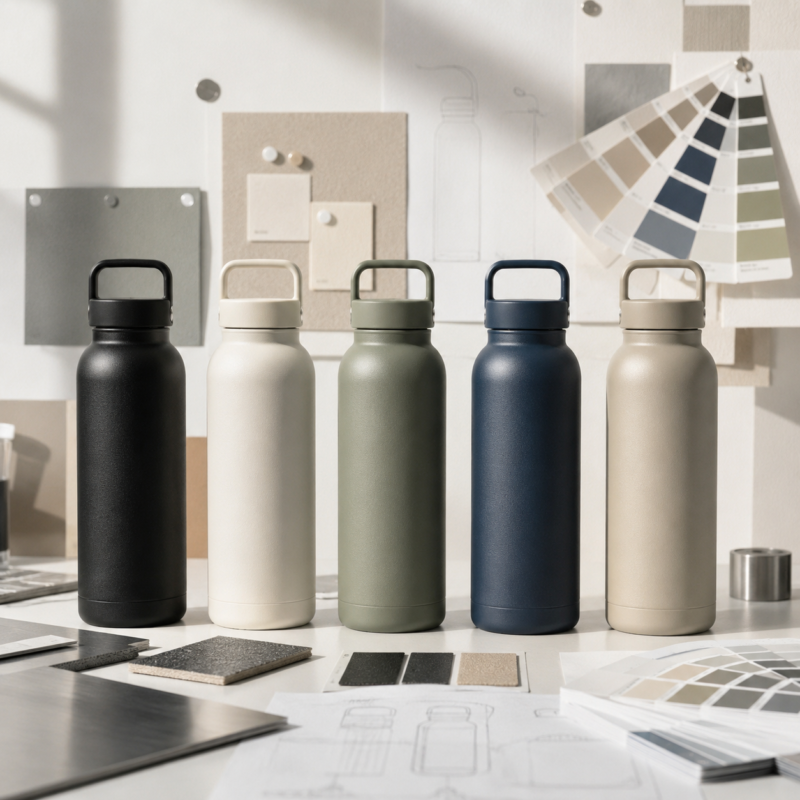
How to Choose Colors and Finishes for Custom Water Bottles
The success of a custom water bottle collection depends on more than attractive colors. Choosing the right color palette, surface finish, and manufacturing strategy helps strengthen brand identity, improve customer appeal, and ensure long-term sales. This guide explains how to select colors based on market preferences, compare matte and glossy finishes, optimize SKUs, and achieve consistent quality through professional OEM production.

Why Stanley‑Style Tumblers Dominate the Wholesale Market
Stanley‑style tumblers have become a cultural phenomenon and a wholesale bestseller. This article explores why – from 18/8 stainless steel and double‑wall vacuum insulation to high perceived value, customization potential, and steady repeat‑order demand. Learn what makes these tumblers a reliable, profitable category for wholesale buyers.
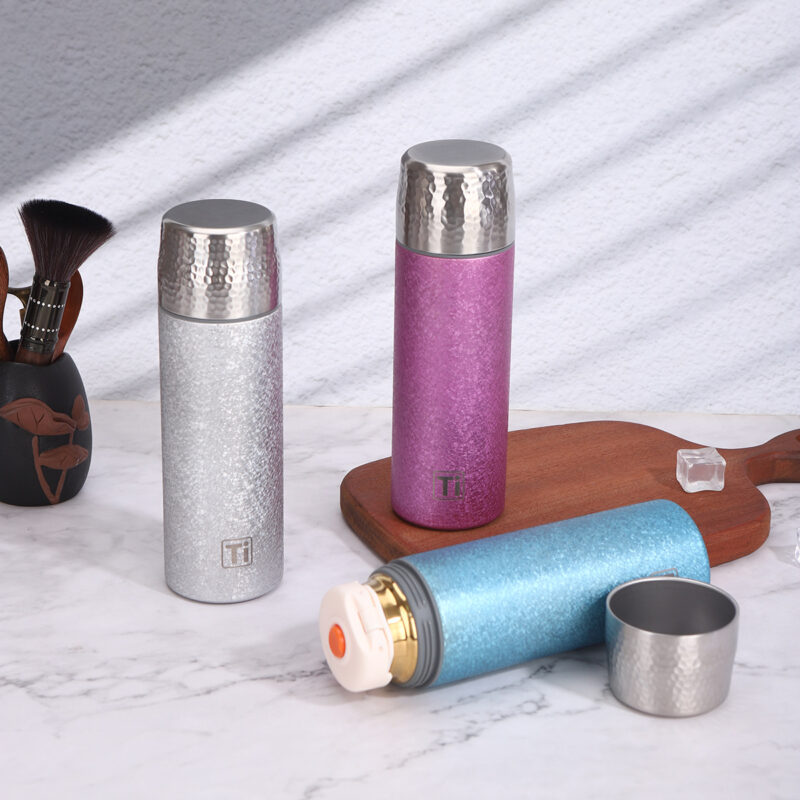
Are Titanium Water Bottles Safe?
Titanium is safe. It’s also expensive. Here’s how it stacks up against stainless steel and aluminum – and which material actually makes sense for your brand.
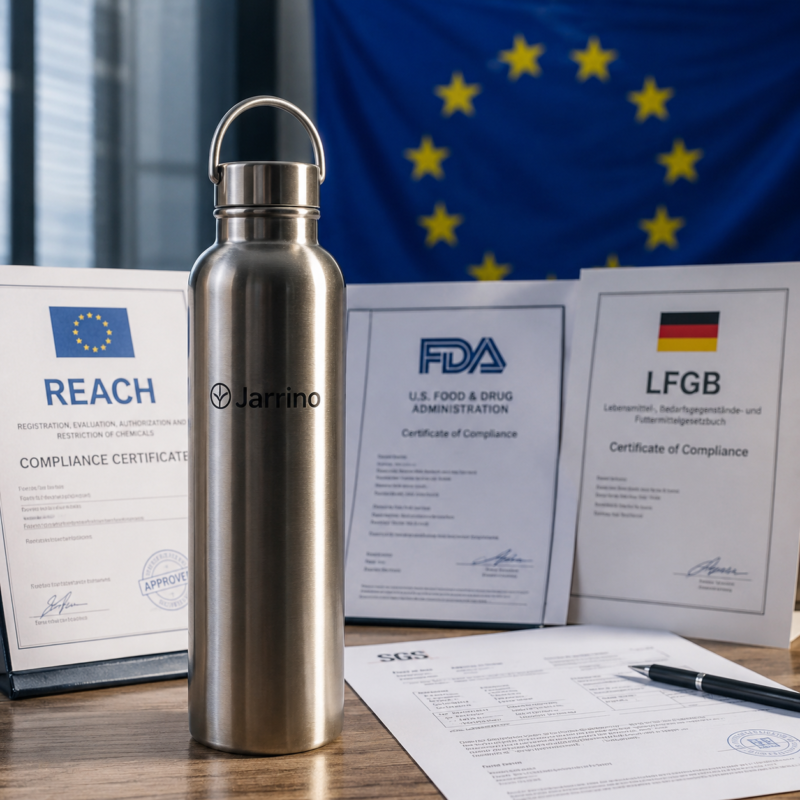
EU Microplastics Regulation 2026: What Every Custom Water Bottle Manufacturer Should Know
Learn how the EU Microplastics Regulation (EU) 2026/1168 impacts custom water bottle manufacturers and private label drinkware brands. Discover how Jarrino helps importers stay REACH compliant with durable stainless steel water bottles.
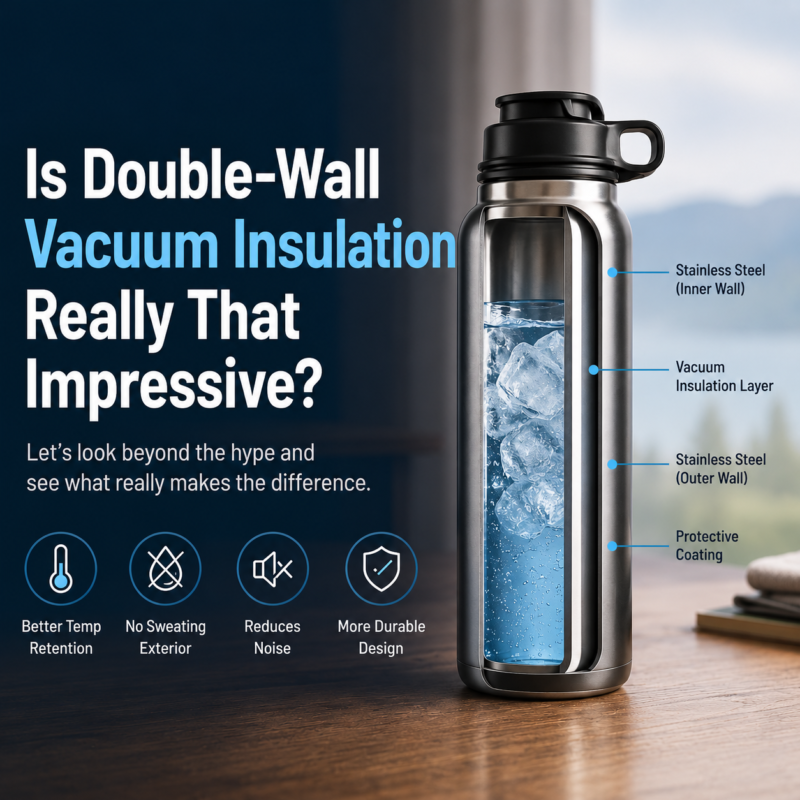
Is Double‑Wall Vacuum Insulation Really That Impressive?
Double‑wall vacuum insulation is standard in premium drinkware, but the difference between a bottle that performs and one that disappoints comes down to manufacturing quality. This guide explains how vacuum insulation works, sets realistic performance expectations, and gives B2B buyers a practical checklist for evaluating suppliers. Plus, why Jarrino’s strict quality standards ensure your custom bottles deliver on their promises.