
Looking For Custom Leak-proof Travel Mugs?

Explore the engineering behind lid seals, O-rings, and pressure tests that make insulated coffee cups truly spill-proof.
The B2B Buyer’s Guide to Leak-Proof Travel Mug Design
Nothing kills brand trust faster than a travel mug that leaks. For B2B buyers — whether you’re sourcing promotional merchandise, retail-ready drinkware, or corporate gifts — leak-proof performance isn’t a nice-to-have. It’s the baseline expectation your customer takes for granted until the product fails.
But “leak-proof” is a loaded term. It involves lid geometry, gasket materials, pressure equalization, and production tolerances you rarely see on a spec sheet. This guide breaks down what actually makes a travel mug leak-proof and what to check when sourcing insulated mugs in bulk.
1. Where Leaks Actually Happen
Most leaks don’t come from the stainless steel body, but from the lid closure system. In a typical travel mug with handle, there are three potential failure points:
- Drinking spout area – where liquid exits during use but must seal when closed.
- Main lid-body threading – the interface between the lid and the vacuum-insulated body.
- Gasket or O-ring groove – the silicone ring that compresses to form a tight seal.
A well-engineered lid addresses all three simultaneously. If a supplier only talks about “tighter threads,” you’re missing half the picture.
2. Types of Leak-Proof Lid Mechanisms
Different lid designs suit different end users. Understanding the trade-offs helps you pick the right model for your market.
a. Threaded Lid with Silicone Gasket (Classic Flip)
- How it works: A screw-on lid compresses a removable silicone O-ring against the inner wall.
- Best for: Basic travel mugs, cost-effective promotional cups.
- Leak-proof reliability: High, but only if the gasket is properly seated after cleaning.
- Watch out for: O-rings that are too thin or made of low-quality silicone that deforms after repeated dishwashing.
b. Spring-Loaded Flip Lock (One-Handed)
- How it works: A push-button opens the spout; releasing locks it back into a silicone seal plug.
- Best for: Car cups, commuter mugs, “driving-friendly” products.
- Leak-proof reliability: Depends on spring fatigue life and precision of the seal plug. Cheap springs lose tension, causing slow drips after a few months of use.
c. Screw-On Full-Seal Lid (Thermos Style)
- How it works: No open spout when closed; the user unscrews the whole lid to drink.
- Best for: Maximum heat retention and total leak-proof guarantee.
- Trade-off: Not operable with one hand; less convenient for driving.
d. Dual-Lock Slide Lids
- How it works: A manual sliding cover blocks the spout, often with a secondary safety lock.
- Common in: Sporty designs, larger 750ml+ mugs with handles.
- Leak-proof level: Medium to high. Needs a robust slide track that doesn’t loosen over time.
For a 750ml stainless steel travel mug with handle — a typical “car coffee cup” size — a well-constructed flip lock or screw-on lid tends to be the most practical leak-proof solution.
3. The Material Behind the Seal: Silicone Matter
The invisible hero of a leak-proof mug is the silicone O-ring or gasket. In B2B procurement, you can’t afford to overlook this.
- Food-grade platinum silicone withstands temperatures from -40°C to 220°C without hardening or shrinking. It retains elasticity even after hundreds of hot-cold cycles.
- Cheaper peroxide-cured silicone may off-odor, degrade faster, and lose compression set. A mug that passes initial leak tests can start leaking after 2–3 months of daily use.
B2B checklist:
Ask for silicone gasket certification (FDA or LFGB depending on your market). Also request an accelerated aging test report for the sealing ring — a reliable factory will have this on file. No certificate, no confidence.
4. How Reliable Suppliers Test Leak-Proof Performance
Factory-level testing goes way beyond “fill it with water and turn it upside down.” When sourcing custom logo thermo mugs, look for suppliers who perform at minimum:
- Static inversion test – mug filled with hot water (95°C+), lid closed, inverted for 6 hours. Zero leakage tolerated.
- Shake test – partially filled mug, lid closed, vigorously shaken in multiple orientations for 15 minutes.
- Air pressure differential test – applies positive/negative air pressure through the lid assembly to detect micro leaks invisible to water testing.
- Thermal shock test – pour boiling water, seal immediately, chill the outside. This simulates extreme on-the-go conditions that warp poor-quality lids.
A factory that can walk you through these four tests openly is one that treats leak-proofing as an engineered feature, not marketing fluff.
5. Common B2B Pitfalls When Customizing Leak-Proof Mugs
If you’re putting your own logo on a leak-proof travel mug, beware of these specification traps:
- Lid-body tolerance mismatch: Even a 0.1mm deviation in the bottle neck finish can compromise the seal. Ensure the lid and body are matched from the same production batch.
- Over-tightened O-ring grooves: A groove that’s too deep crushes the gasket permanently; too shallow, and there’s no compression seal. Leave this to the injection mold engineer, not a guess.
- Decorating interference: Laser engraving or print on the neck area can subtly alter the surface finish where the seal sits. Always verify that decoration doesn’t encroach on sealing surfaces.
- Hot liquid vs. cold liquid: A mug that seals perfectly with cold water may leak with hot coffee due to internal vapor pressure build-up. Request hot-liquid leak tests specifically.
6. Sourcing Leak-Proof Travel Mugs: The Jarrino Approach
At Jarrino, our B2B insulated mug range — including the 750ml handled travel mug — is built around a multi-point leak-proof system that covers the three failure points mentioned earlier. Rather than marketing claims, our specification sheets include actual test parameters: gasket compression rate, silicone part lifetime cycles, and hot-liquid retention test results.
For custom logo orders, we provide pre-production lid samples sealed to the exact body you’ll receive, so you can conduct your own leak tests before mass production begins. That’s simply good manufacturing practice, whether you partner with us or any other serious factory. Use our inspection criteria above as your benchmark.
Related Posts
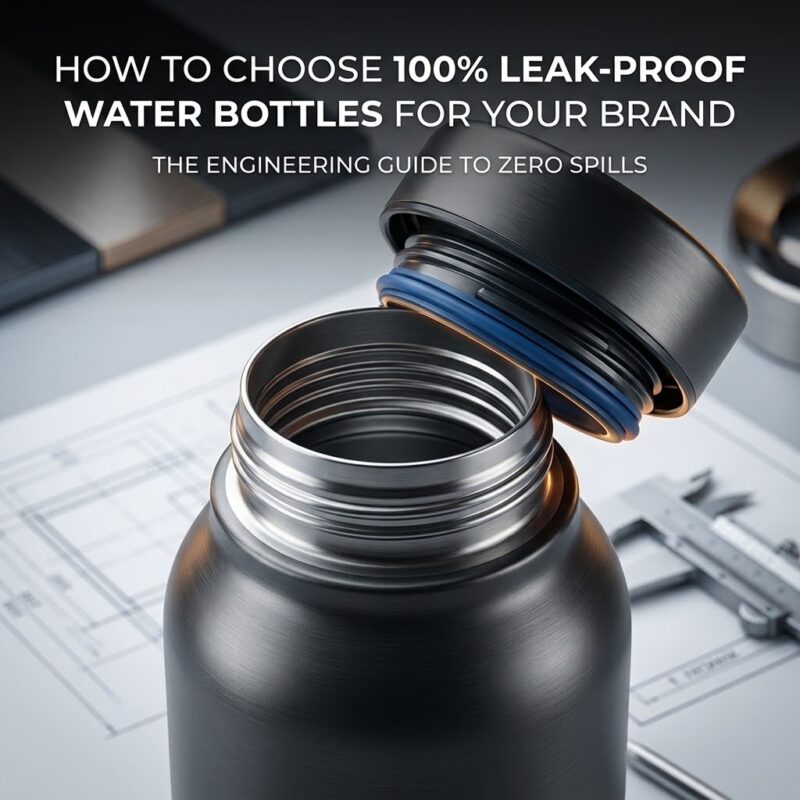
How to Choose 100% Leak-Proof Stainless Steel Water Bottles for Your Brand?
This guide helps drinkware brands select 100% leak-proof stainless steel bottles by analyzing QC testing and lid engineering. Manufacturers like Jarrino use inverted, shaking, and air pressure tests to verify seals. Traditional screw-caps offer absolute leak protection, while locking flip-lids and straw caps require precise silicone gaskets, CNC thread precision, and one-way air valves to prevent spills.
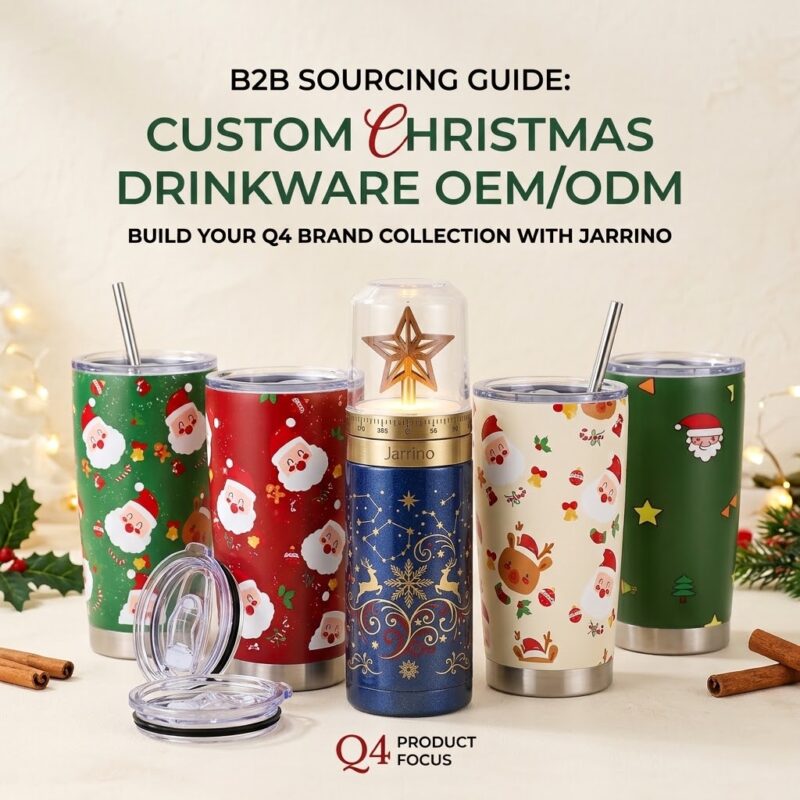
Custom Christmas Drinkware: Complete OEM/ODM Manufacturing Guide
Jarrino is a certified OEM/ODM manufacturer specializing in custom vacuum flasks, ceramic-lined tumblers, and titanium drinkware. Lead times for Q4 custom Christmas orders are 20–30 days with low MOQs (300–1,000 pcs) and full FDA/LFGB compliance. We offer end-to-end customization including 3D digital printing, laser engraving, and bespoke Christmas gift packaging. Sample kits and the quotes are available upon request to help brands lock in Q4 holiday production smoothly.
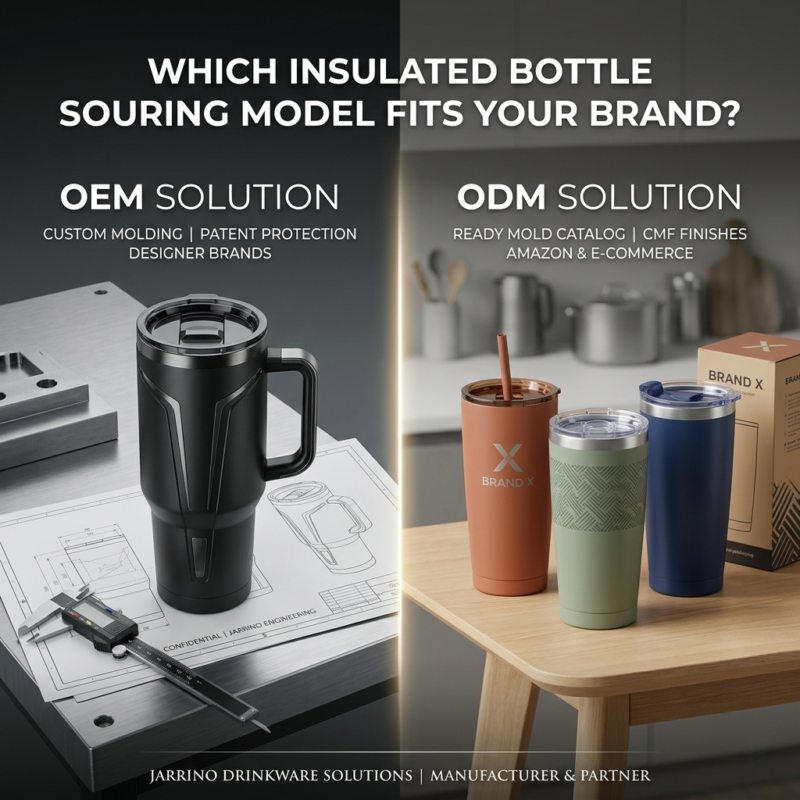
OEM vs. ODM Insulated Tumblers: Which Sourcing Model Fits Your Drinkware Brand
Choosing between OEM (Original Equipment Manufacturing) and ODM (Original Design Manufacturing) defines your drinkware brand’s R&D budget, time-to-market, and product exclusivity. OEM is ideal for established brands with custom CAD designs and unique IP requirements, offering 100% custom molding and patent protection. ODM is built for Amazon sellers, DTC startups, and corporate buyers seeking zero tooling costs, low MOQs, and rapid product launches via advanced CMF finishes (powder coating, UV printing).
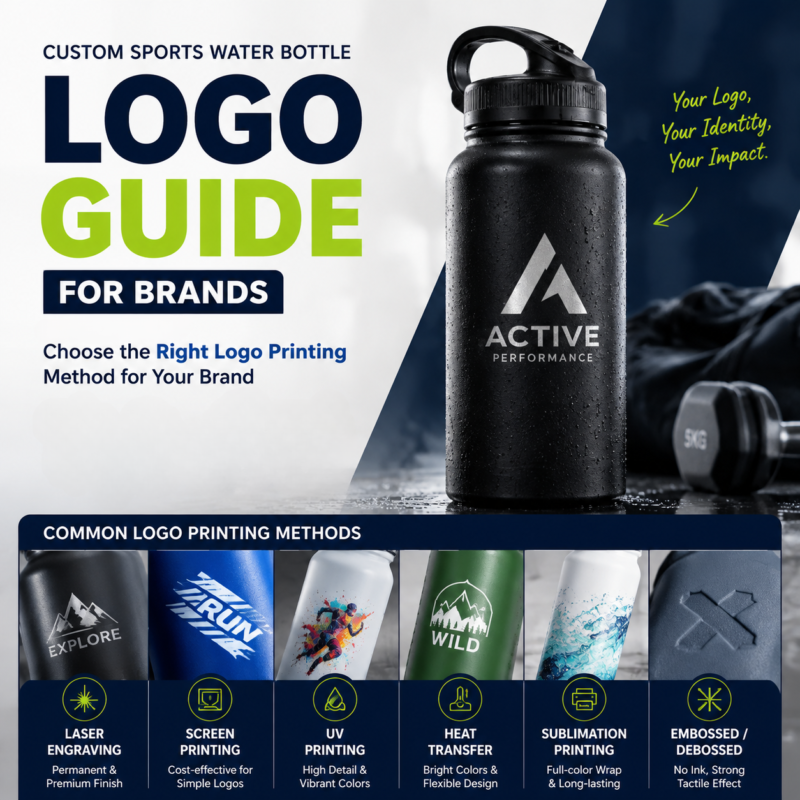
Custom Sports Water Bottle Logo Guide for Brands
Custom sports water bottle logos are created through different decoration processes depending on the bottle material, brand design, and performance requirements. This guide covers the most common logo printing methods, including laser engraving, screen printing, UV printing, heat transfer, and sublimation, helping sports brands select the right customization option for durable and professional drinkware products.
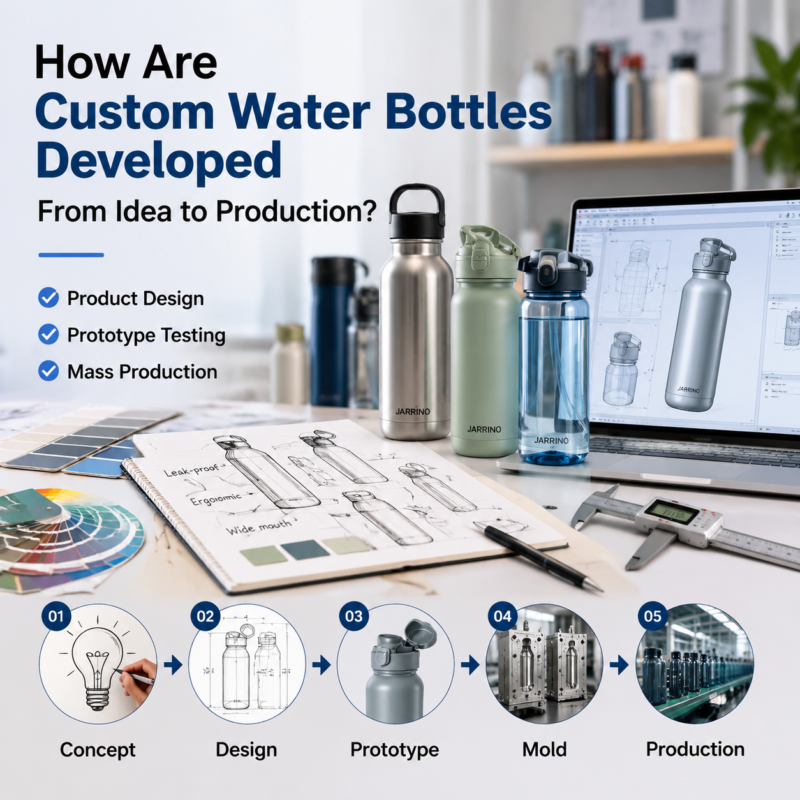
How Are Custom Water Bottles Developed From Idea to Production?
Developing a custom water bottle requires more than choosing a design and adding a logo. From the initial product concept to engineering, prototyping, mold development, testing, and mass production, every stage plays an important role in creating a successful drinkware product. This guide explains how brands work with OEM water bottle manufacturers to transform ideas into high-quality, market-ready products while managing design, cost, and production challenges.
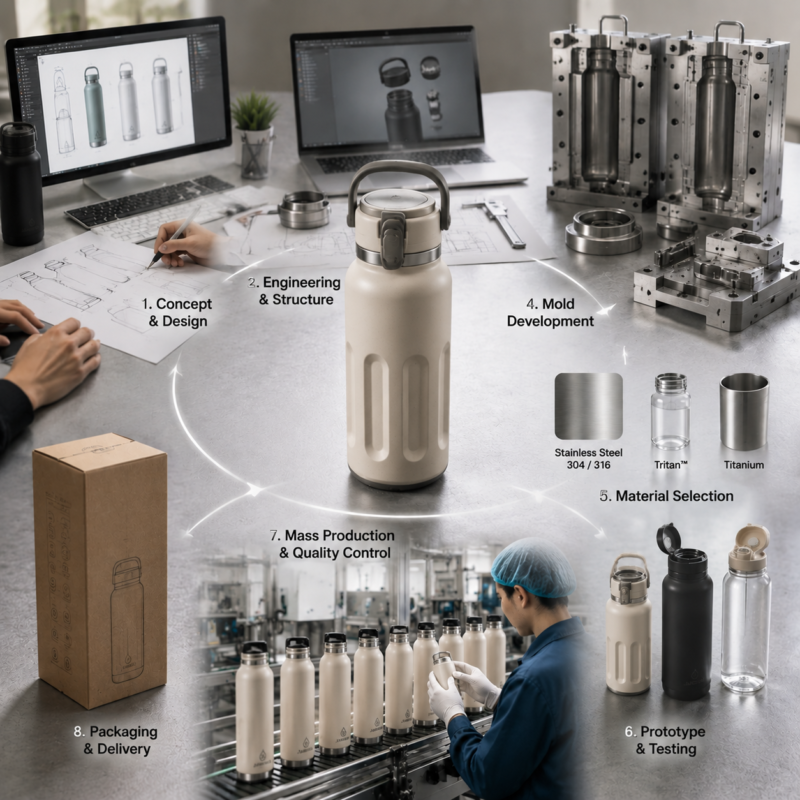
How Are Fully Custom Water Bottles Made?
Developing a fully custom water bottle involves much more than adding a logo to an existing product. This guide explains how brands create unique water bottles through product design, engineering, material selection, mold development, prototype testing, and mass production. Learn how an experienced OEM water bottle manufacturer helps transform an idea into a market-ready product while managing quality, cost, and production efficiency.
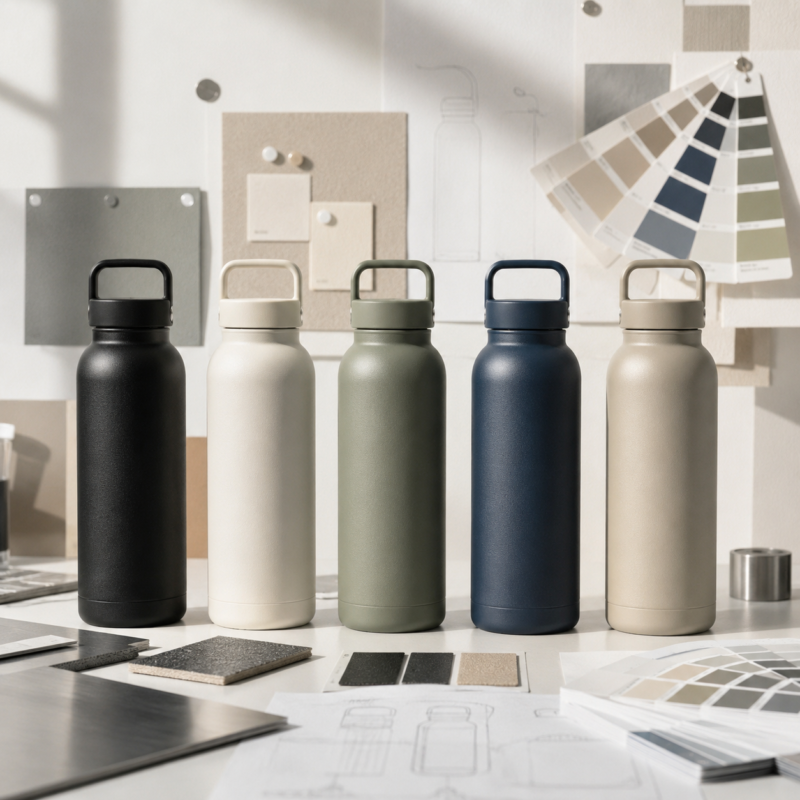
How to Choose Colors and Finishes for Custom Water Bottles
The success of a custom water bottle collection depends on more than attractive colors. Choosing the right color palette, surface finish, and manufacturing strategy helps strengthen brand identity, improve customer appeal, and ensure long-term sales. This guide explains how to select colors based on market preferences, compare matte and glossy finishes, optimize SKUs, and achieve consistent quality through professional OEM production.

Why Stanley‑Style Tumblers Dominate the Wholesale Market
Stanley‑style tumblers have become a cultural phenomenon and a wholesale bestseller. This article explores why – from 18/8 stainless steel and double‑wall vacuum insulation to high perceived value, customization potential, and steady repeat‑order demand. Learn what makes these tumblers a reliable, profitable category for wholesale buyers.
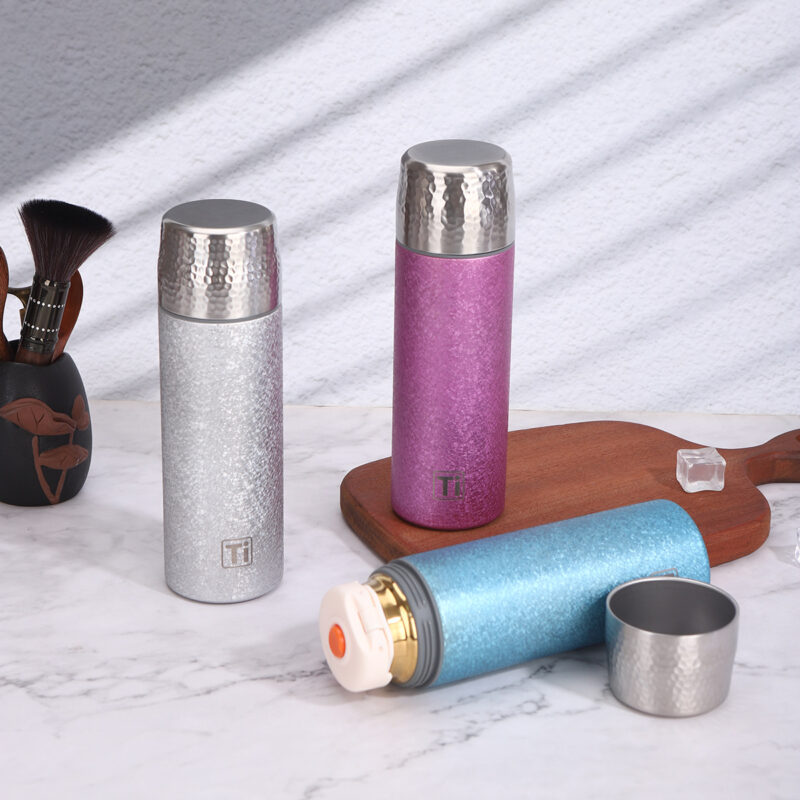
Are Titanium Water Bottles Safe?
Titanium is safe. It’s also expensive. Here’s how it stacks up against stainless steel and aluminum – and which material actually makes sense for your brand.
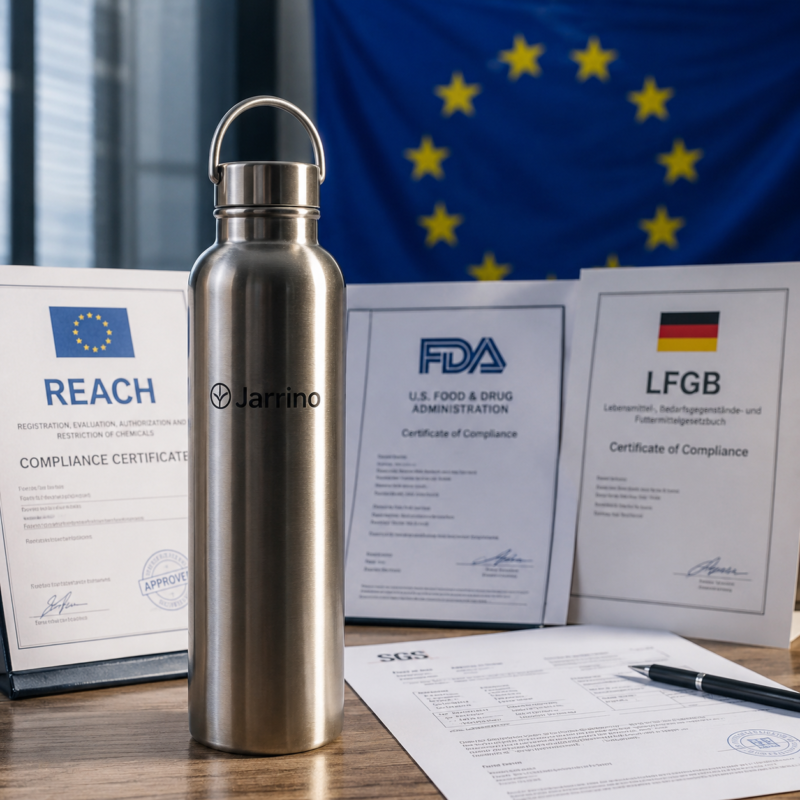
EU Microplastics Regulation 2026: What Every Custom Water Bottle Manufacturer Should Know
Learn how the EU Microplastics Regulation (EU) 2026/1168 impacts custom water bottle manufacturers and private label drinkware brands. Discover how Jarrino helps importers stay REACH compliant with durable stainless steel water bottles.
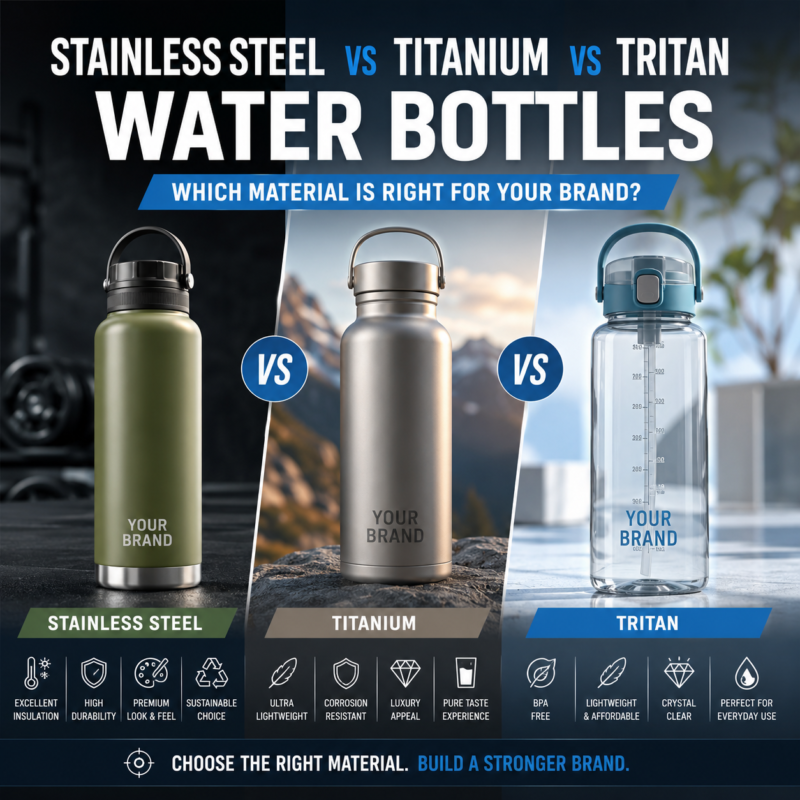
Stainless Steel vs Titanium vs Tritan Water Bottles: Which Material Is Right for Your Brand?
Choosing the right water bottle material can significantly impact your product quality, pricing, and brand positioning. This guide compares stainless steel, titanium, and Tritan water bottles across durability, insulation, cost, customization, and sustainability to help brands, retailers, and OEM buyers select the best material for their target market.
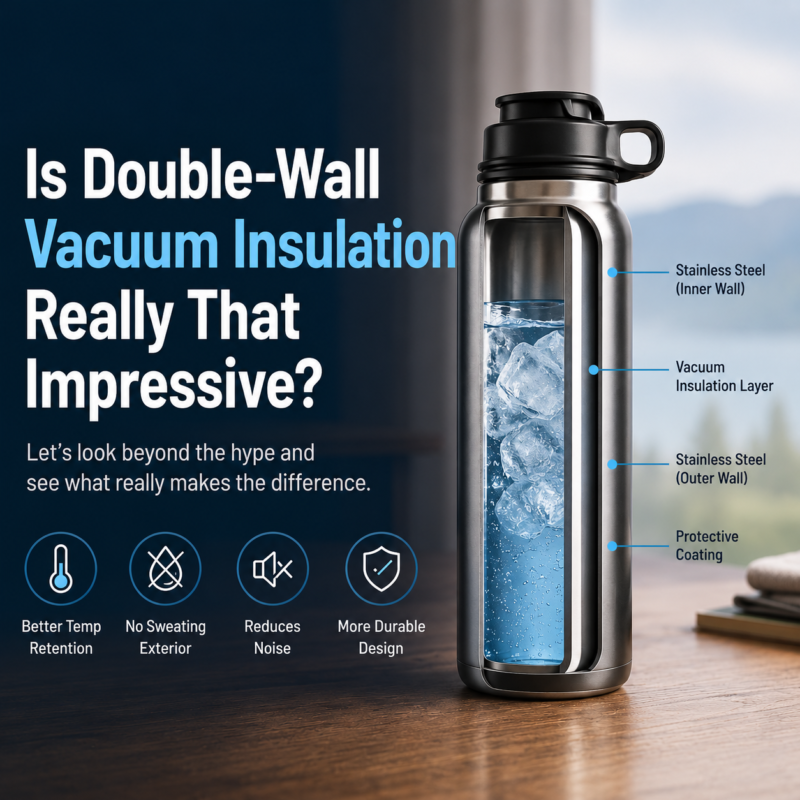
Is Double‑Wall Vacuum Insulation Really That Impressive?
Double‑wall vacuum insulation is standard in premium drinkware, but the difference between a bottle that performs and one that disappoints comes down to manufacturing quality. This guide explains how vacuum insulation works, sets realistic performance expectations, and gives B2B buyers a practical checklist for evaluating suppliers. Plus, why Jarrino’s strict quality standards ensure your custom bottles deliver on their promises.