
FDA vs LFGB vs REACH: Which Certification Does Your Custom Water Bottle Need?
목차
When sourcing custom water bottles, 텀블러, mugs, or insulated drinkware, many buyers focus on design, price, and lead time. 하지만, one factor that directly affects product safety, market access, and customer trust is compliance certification.
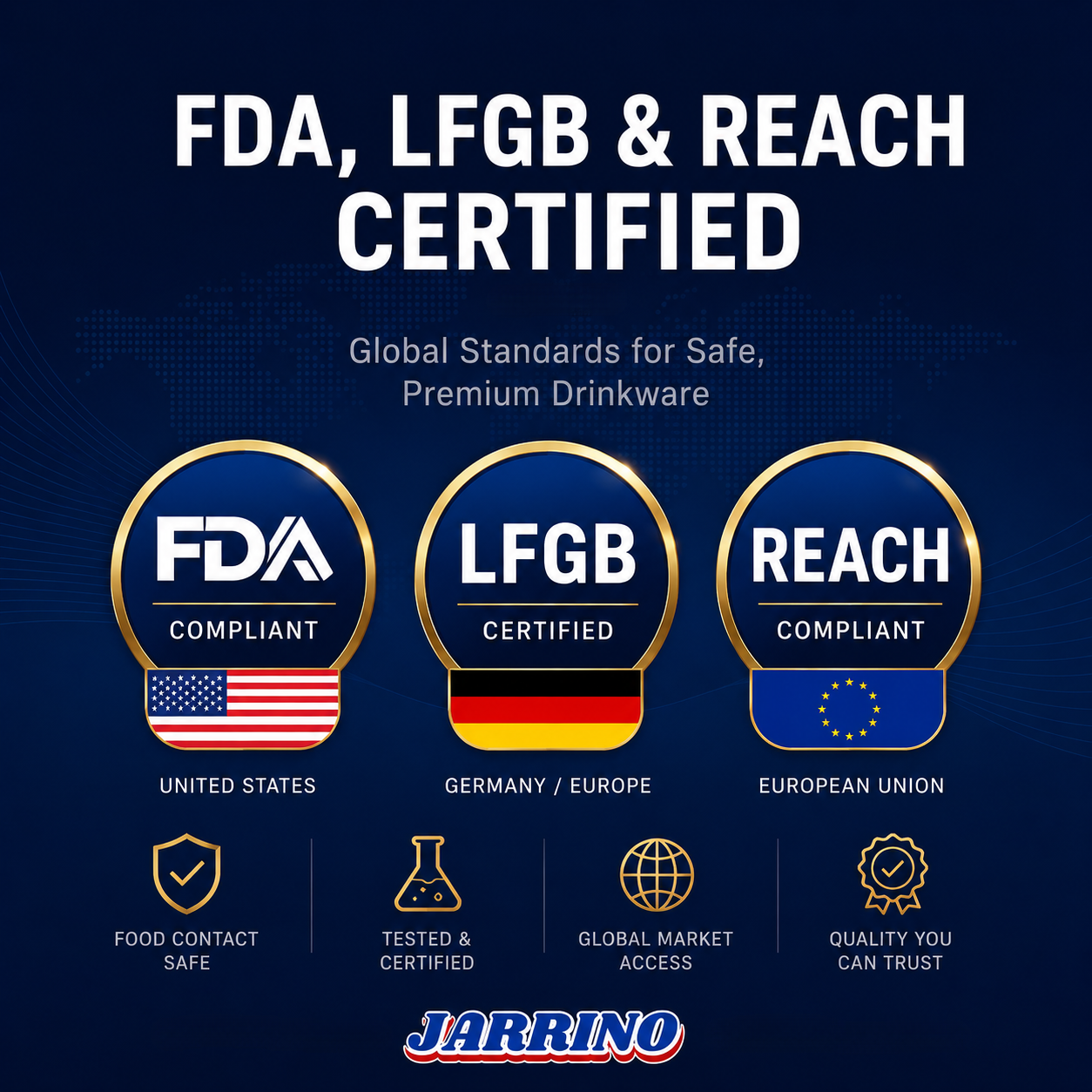
Three certifications frequently mentioned in the drinkware industry are FDA, LFGB, 그리고 REACH. While they are often grouped together, they serve very different purposes and apply to different markets.
For brands importing custom stainless steel water bottles into the United States, Europe, or global markets, understanding these standards is essential.
Why Certifications Matter for Drinkware
Water bottles are considered food-contact products. Every material that touches beverages—including stainless steel, plastic lids, silicone seals, coatings, and straws—must comply with relevant safety regulations.
Failing compliance testing can lead to:
- Customs clearance issues
- Product recalls
- Retailer rejection
- Legal liabilities
- Damage to brand reputation
Choosing a manufacturer that understands global compliance requirements can significantly reduce these risks.
What Is FDA Certification?
FDA refers to regulations established by the U.S. Food and Drug Administration for materials that come into contact with food and beverages.
Although the FDA does not “approve” every water bottle individually, manufacturers must ensure that materials comply with FDA food-contact regulations.
FDA Requirements Typically Cover:
- Stainless steel food-contact safety
- Plastic material migration limits
- Silicone component safety
- Coating and lining compliance
- Heavy metal restrictions
Markets Covered
FDA compliance is primarily required for:
- United States
- North America
- Amazon USA sellers
- Retailers serving the U.S. market
Advantages of FDA Compliance
✔ Easier entry into the U.S. market
✔ Improved customer confidence
✔ Better acceptance by retailers and distributors
✔ Reduced regulatory risks
For brands targeting American consumers, FDA compliance is often considered the minimum requirement.
What Is LFGB Certification?
LFGB stands for Lebensmittel-, Bedarfsgegenstände- und Futtermittelgesetzbuch, Germany’s Food and Feed Code.
LFGB is widely regarded as one of the strictest food-contact safety standards in the world.
Many European retailers and importers require LFGB testing because it places stricter limits on material migration and sensory performance.
LFGB Testing Commonly Includes
- Odor transfer testing
- Taste transfer testing
- Heavy metal migration
- Chemical migration analysis
- Silicone safety evaluation
- Material composition verification
Markets Covered
LFGB is commonly required for:
- Germany
- European Union
- Switzerland
- High-end European retailers
Why LFGB Is Considered More Strict
Compared with FDA testing, LFGB often includes additional sensory testing to ensure that materials do not alter the taste or smell of food and beverages.
For premium drinkware brands, LFGB certification is often used as a quality benchmark.
What Is REACH Compliance?
Unlike FDA and LFGB, REACH is not specifically a food-contact regulation.
REACH stands for:
Registration, Evaluation, Authorisation and Restriction of Chemicals
It is a European Union regulation designed to protect human health and the environment from hazardous chemicals.
REACH Focuses On:
- Restricted substances
- SVHC (Substances of Very High Concern)
- Chemical safety
- Environmental compliance
Products Commonly Tested
- Stainless steel components
- Plastic parts
- Powder coatings
- Silicone seals
- Paints and decorative finishes
- Packaging materials
Markets Covered
REACH compliance is important for:
- European Union countries
- European distributors
- Global brands with sustainability requirements
REACH helps ensure that products do not contain harmful chemicals that could pose risks to users or the environment.
FDA vs LFGB vs REACH: Key Differences
| Standard | Region | Main Focus | Typical Requirement |
|---|---|---|---|
| FDA | United States | Food-contact safety | Required for U.S. market |
| LFGB | Germany & Europe | Food-contact safety with stricter migration testing | Preferred by European buyers |
| REACH | European Union | Chemical safety and environmental compliance | Required for EU market access |
Simplified Comparison
FDA = Safe for food contact in the United States.
LFGB = Higher-level food-contact safety standard widely recognized in Europe.
REACH = Controls hazardous chemicals used in products and manufacturing.
For many international brands, all three standards are requested simultaneously.
Which Certification Should Your Water Bottle Have?
The answer depends on where you plan to sell.
Selling in the United States
Recommended:
- FDA Compliance
Selling in Europe
Recommended:
- LFGB Certification
- REACH Compliance
Selling Globally
Recommended:
- FDA Compliance
- LFGB Certification
- REACH Compliance
Having all three provides greater flexibility when entering new markets and working with international retailers.
How Jarrino Ensures Product Compliance
Jarrino에서, product safety and regulatory compliance are built into every stage of manufacturing.
Our custom drinkware products can be tested according to:
- FDA Food Contact Requirements
- LFGB Food Safety Standards
- REACH Chemical Compliance
- BPA-Free Requirements
- Stainless Steel Safety Testing
Our product range includes:
- Stainless Steel Water Bottles
- Vacuum Insulated Bottles
- 텀블러
- Travel Mugs
- Sports Bottles
- Coffee Cups
- Promotional Drinkware
Whether you are launching a private label brand, sourcing wholesale drinkware, or developing a custom OEM bottle project, our team helps ensure your products meet the compliance requirements of your target market.
Final Thoughts
FDA, LFGB, and REACH are not competing certifications—they serve different purposes.
If you are sourcing custom water bottles for international markets:
- FDA helps you access the U.S. market.
- LFGB demonstrates premium food-contact safety in Europe.
- REACH ensures chemical compliance and environmental responsibility.
The most successful brands work with manufacturing partners that understand all three standards and can provide the necessary testing documentation before shipment.
Jarrino에서, we help brands create custom drinkware that is not only attractive and functional but also compliant with global safety regulations.
Because when it comes to food-contact products, compliance is not an option—it is a requirement.