Someone has a great idea for a water bottle brand. Maybe they spotted a gap in the outdoor market. Maybe they want to launch a corporate wellness line. Maybe they just love the Stanley and Hydro Flask aesthetic and think, “I could do that.”
So they ask us: “I want to start my own insulated bottle brand. Where do I begin?”
After 15 years in drinkware manufacturing — and after helping more than 100+ global brands bring their bottle ideas to market — we have learned that the answer is not what most people want to hear. So we are going to give you the straight truth: who should do this, who absolutely should not, and what it really costs.
We are writing this from the factory floor, not from a marketing agency. If you are serious about building a bottle brand, this is the conversation we would have with you over coffee before you spend a single dollar.
1. The Market Looks Tempting — And It Actually Is
Let us start with the good news: the numbers are real, and the opportunity is not a mirage.
The global insulated water bottle market was valued at approximately $3.31 billion in 2025 and is projected to reach $4.95 billion by 2032., growing at a compound annual growth rate of 5.89%. The broader reusable drinkware market is even larger — estimated at $28.75 billion in 2024 and expected to reach $37.62 billion by 2031.
What is driving this growth is not just “people drinking water.” The entire category has undergone a fundamental shift. Insulated bottles have evolved from simple functional containers into fashion accessories, status symbols, and lifestyle statements. Consumers now own multiple bottles — one for the office, one for the gym, one for the car — and they buy new ones not because the old one broke, but because the new one looks better.
Regional demand patterns are even more interesting. North America dominates with 35.26% of the global insulated bottle market, driven by high car ownership (84% per capita) and a culture of carrying beverages everywhere. European consumers show a strong willingness to pay 20% or more in premium for eco-friendly materials and recyclable packaging. Meanwhile, emerging markets in Southeast Asia and the Middle East are growing at rates exceeding 40% year-over-year, creating new pockets of opportunity for agile brands.
For a new brand, this means: there is room.You do not have to beat Stanley. You just have to find 5,000 people who love what you are doing. That is achievable.
2. So Can an “Ordinary Person” Actually Do This?
The short answer: yes, but not the way most people imagine.
Let us be clear about what “ordinary person” means in this context. If you have zero capital, zero industry knowledge, and expect to launch in 30 days — stop here. This is not for you. No factory, no matter how supportive, can turn that into a successful brand.
But if you are an ordinary person with8,000–8,000–25,000 in startup capital, a clear understanding of who your customer is, and the willingness to spend 6–12 months building before you see meaningful revenue, then yes — this is genuinely achievable.
Here is why: you do not need to build a factory. You do not need to invent a new bottle from scratch. The manufacturing industry in China has matured to the point where factories like ours at Jarrino — with 400+ designers and engineers on staff, 50+ international certifications, and experience serving 10+ global brands — can handle everything from material selection to quality testing to logistics. Your job is brand, marketing, and distribution. Our job is making sure the bottle works.
This is the fundamental shift that has made “branded bottle entrepreneurship” accessible: the barrier to entry is no longer manufacturing capability. The barrier is everything else.
3. What It Actually Costs (Real Numbers from Real Orders)
This is the section most people skip to. Good. Let us be precise.
A. Product Costs (FOB China)
Bottle Type
Unit Cost (1,000+ ユニット)
Typical MOQ
Basic 304 SS insulated bottle, single color
2.50–2.50–4.50
500 ユニット
316 SS premium insulated bottle, custom color
3.50–3.50–6.50
500–1,000 units
Tritan™ plastic sport bottle
1.50–1.50–3.00
500 ユニット
Pure titanium ultralight bottle
8.00–8.00–15.00
200–500 units
注記: Stainless steel prices fluctuate with global nickel markets. Budget for ±15% variance.
At Jarrino, our standard MOQ is 500 個, but we accept lower quantities for initial trial orders — typically 200 pieces for existing stock models with custom logo and color modifications. This is important because many factories demand 3,000+ pieces before they will even talk to you. A factory willing to start small is a factory that understands brand incubation.
For a typical first order of 500 stainless steel bottles at 4.00/unit, plus custom logo setup(4.00/unit, plus customlogo setup(0.30/unit for laser engraving), your product cost before shipping is approximately$2,150.
B. The Costs Nobody Warns You About
Cost Item
Estimated Range
Notes
配送 (sea freight, 500 ユニット)
400–400–800
Depends on destination and fuel surcharges
Customs duties & tariffs
Variable
Can add 0–25% depending on country of import
3PL warehousing & fulfillment
3–3–6 per order
If using a third-party logistics provider
Product photography
500–500–2,000
Non-negotiable. Bad photos kill brands.
Website (ショッピファイ, domain, theme)
300–300–800/year
Basic setup
Packaging design & production
500–500–1,500
Custom boxes, インサート, ハングタグ
Compliance testing (if needed)
1,000–1,000–3,000
FDA, LFGB, 到着, Proposition 65
Trademark registration
225–225–400 per class
US cost via USPTO
C. Realistic Startup Budget Scenarios
Scenario
Product Order
All-In Costs
Best For
Micro-test (200 units ODM)
~$1,000
~3,500–3,500–6,000
Testing a concept, small audience
Lean launch (500 units ODM)
~$2,150
~8,000–8,000–15,000
First serious brand launch
Full launch (1,000 units OEM)
~$4,500
~18,000–18,000–30,000
Established audience, retail-ready
These figures align with industry-wide benchmarks showing that water bottle business startup costs typically range from 8,000ontheleanestendto8,000ontheleanestendto30,000 for a professional launch. Is it cheap? いいえ. But compared to almost any other physical product business — apparel, electronics, food — it is remarkably accessible.
One note: if you go thefully custom OEM route (your own unique design, your own mold), the cost jumps significantly. Custom mold tooling for stainless steel bottles runs 2,000–2,000–8,000 per mold. That is the price of owning a design no competitor can copy. Worth it for a brand with distribution locked in. A money pit if you have not validated demand yet.
4. Three Paths to Launch (And Who Should Pick Each)
Based on the brands we have worked with, there are three viable launch paths. Each has different risk profiles and timelines. Choose carefully.
What it is:You select an existing bottle design from the factory‘s catalog. You customize the color, add your logo via laser engraving or silk screen, and design your own packaging. The bottle itself is not unique — but your branding and positioning are.
Who should take this path:First-time brand owners, influencers with an audience but no manufacturing experience, corporate gift buyers.
Pros:
No mold or tooling investment
Fastest time to market (samples in 5–7 days, production in 25–30 days)
Lowest financial risk
Jarrino’s catalog includes hundreds of bottle shapes and cap options, so you are not limited to generic designs
Cons:
The same bottle body is available to competitors
You compete on brand story and marketing, not product uniqueness
Margins may be thinner if the market gets crowded
Realistic timeline: 6–10 weeks from order to having inventory in hand.
Path B: Full OEM — “Build Your Own Bottle from Scratch”
What it is:You bring your own design concept — sketches, CAD files, reference images — and the factory builds tooling specifically for your product. You own the mold. The design is exclusively yours.
Who should take this path:Established brands with proven demand, companies with unique functional requirements (例えば, a patented lid mechanism), brands that have already validated their market through ODM and are ready to scale.
Pros:
Complete product exclusivity — nobody else can sell your bottle
Full control over materials, wall thickness, lid mechanism, 表面仕上げ
Stronger brand identity and defensibility
Cons:
Higher upfront investment (tooling + higher MOQ)
Longer lead times (sampling alone takes 4–6 weeks)
Mistakes are more expensive — if the design has a flaw, you eat the cost
Realistic timeline: 4–6 months from concept to finished inventory.
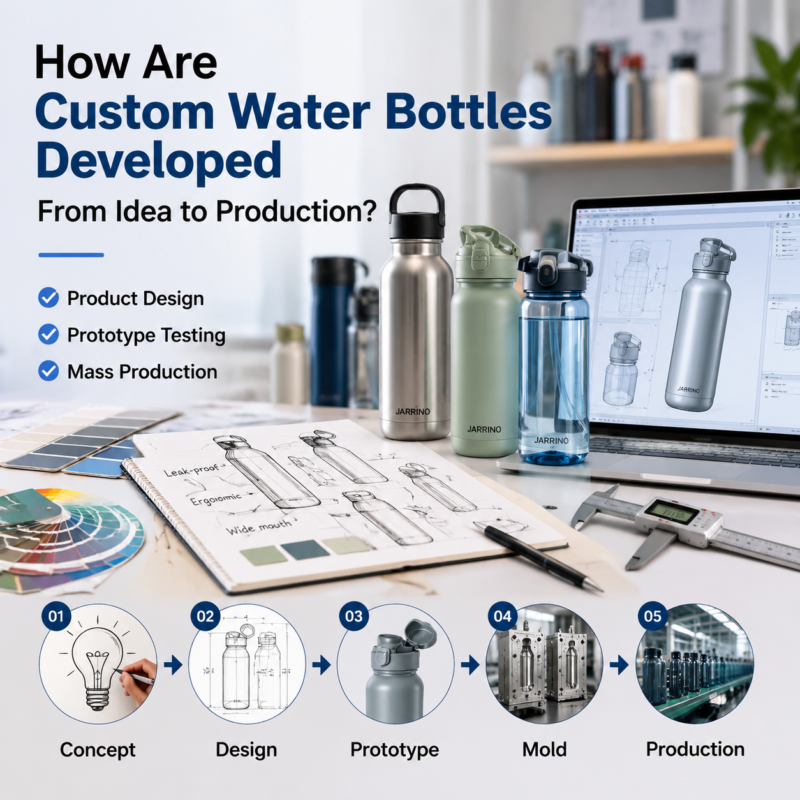
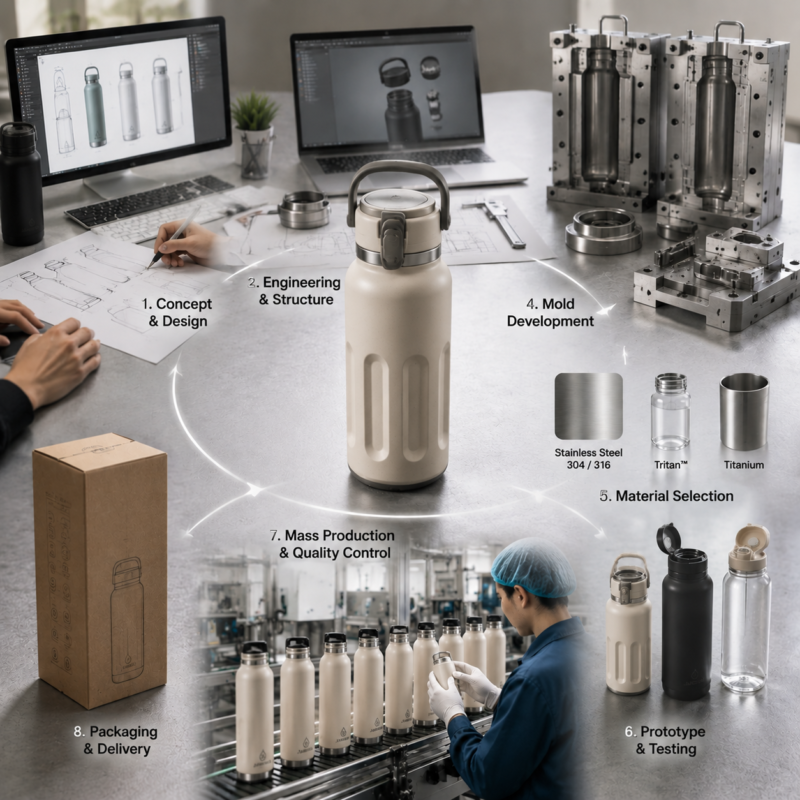
At Jarrino, our OEM process follows a structured three-phase workflow: Concept to Blueprint (72-hour rapid 3D visualization), Prototyping Perfection (3–5 physical prototypes within 10 days for functional testing), and Scalable Manufacturing (pilot batch of 500 units followed by 40-day lab testing covering 10,000+ use cycles, 熱衝撃, and corrosion simulation). This process exists specifically to catch problems before they become expensive mistakes.
Path C: Hybrid — “ODM with Custom Modifications”
What it is:A middle ground. You start with an existing bottle body but request custom modifications — a different lid, a unique surface finish, customize color matching to a specific Pantone code. You get partial exclusivity without full mold costs.
Who should take this path:Brands that want to stand out but are not ready for full OEM investment. This is the most common path for brands in their second year.
Example from our experience:A fitness brand wanted a matte sandblasted finish that was not in our standard catalog. We adapted the finishing process for their order. The per-unit cost increased by about $0.80, but the finish became their signature look — and competitors using our standard finishes could not replicate it.
Realistic timeline: 8–14 weeks.
5. The Brutal Truth: Why Most Bottle Brands Fail
We have watched brands succeed. We have also watched brands fail — sometimes before they even received their first shipment. The failure patterns are remarkably consistent. Here they are, so you can avoid them.
Mistake 1: Obsessing over the product, ignoring distribution. We see this constantly. A founder spends six months perfecting every millimeter of the bottle design, negotiates every surface finish, agonizes over the exact Pantone shade of green, and then has no plan for how to actually sell 500 bottles when they arrive. The bottle sits in a warehouse (or worse, the founder‘s garage), and the brand dies quietly.
At Jarrino, we’ve manufactured for over 100 brands, and we’ve learned that a great product means nothing without a clear path to market. That’s why, before we take your order, we’ll encourage you to walk through three questions with us: Who exactly is buying these bottles? How will they find out about your brand? And what does your first month of sales actually look like?
If you don’t have confident answers yet, that’s okay — most founders don’t at the start. What matters is that you don’t have to figure it out alone. Our team can share real distribution playbooks from brands we’ve helped launch, so you’re not guessing; you’re building on proven moves. Once you’re clear on your go‑to‑market plan, placing your order with Jarrino becomes the simplest, lowest‑risk step in your journey — because we’ll have already made sure you’re set up to sell, not just to stock.
Mistake 2: Underestimating post-manufacturing costs. The bottle is not the only expense. 配送, customs, warehousing, パッケージング, photography, website, payment processing fees, marketing, samples sent to influencers, the one order that gets lost and you have to reship… these costs compound quickly. We have seen founders budget 10,000forproductanddiscovertheyactuallyneed10,000fまたはproductanddiscovertheyactuallyneed18,000+ to get to first sale. Build a buffer of at least 30% into your budget for costs you have not thought of yet.
Mistake 3: Treating it as a side project when it needs full attention. A water bottle brand is not a passive income stream. It is a business. The founders who succeed treat it that way — even if they start part-time, they have a clear timeline for when they will go all-in. The ones who fail treat it like a hobby and are surprised when hobby effort produces hobby results.
Mistake 4: Believing “if the product is good, people will find it.” They will not. Not in 2026. The internet is too noisy. You need a marketing engine — social media content, influencer partnerships, email marketing, maybe paid ads, maybe retail outreach. The product is necessary but insufficient. Distribution and brand storytelling are what separate winners from the graveyard of forgotten bottles.
6. What the Winners Do Differently
Based on the successful brands we have manufactured for, here is what the winners have in common:
They start with a specific audience, not a “great product idea.”The brands that succeed do not said “I want to make a really good water bottle.” They say “I want to make a water bottle for ultrarunners who need a one-hand-operated cap that does not leak at altitude.” Specificity wins. It makes your marketing sharper, your product decisions clearer, and your customer acquisition cheaper. A bottle for “everyone” is a bottle for no one.
They test with ODM before investing in OEM.Almost without exception, the brands we see succeed start by putting their logo on an existing design, selling 200–500 units to a real audience, gathering feedback, and only then investing in custom tooling. This approach validates demand before committing serious capital. It is not glamorous, but it works.
They budget for the invisible costs.The smart founders add 30–40% to whatever number they initially think they need. They understand that shipping from a Chinese port to a US warehouse involves freight forwarders, customs brokers, 義務, tariffs, and last-mile delivery — and that each link in that chain costs money.
They build a relationship with their factory, not a transaction.The brands that stay with us for years do not treat us like a vending machine. They visit the factory floor. They ask for our engineering team‘s input on material choices. They understand that a good factory partnership is a strategic asset, not a commodity. We have helped brands catch design flaws before tooling, suggested material substitutions that saved 15% on unit costs, and adjusted production schedules to hit critical launch dates — but only for clients who invested in the relationship.
They have patience and staying power.The overnight success stories you read about? Most of them took 2–3 years of quiet grinding before anyone noticed. Building a brand takes time. The insulated bottle market is growing steadily, not explosively — which means there is room for patient builders, not just fast movers.
7. So, Should You Do It? A Decision Framework
We promised you an honest answer. Here it is.
You SHOULD consider starting a branded bottle business if:
You have identified a specific audience with a real, unmet need
You have 8,000–8,000–25,000 you are willing to invest and potentially lose
You are comfortable with a 6–12 month timeline before seeing meaningful revenue
You have a plan for how you will reach customers (existing audience, marketing expertise, retail relationships)
You are willing to start with private label/ODM to test before scaling
You should probably NOT do this if:
You have less than $5,000 in total available capital
You are looking for quick, passive income
You have no idea who your customer is or how to reach them
You are not willing to handle logistics (shipping, customs, warehousing, fulfillment)
You think the product alone will sell itself without sustained marketing effort
You might be ready to go the OEM route if:
You have already sold 500+ units through ODM/private label and validated demand
Your customers are asking for features that existing designs cannot provide
You have the capital for tooling investment (2,000–2,000–8,000+) and larger inventory commitments
You have a clear understanding of your unit economics at OEM-scale volumes
8. If You Decide to Move Forward
If you have read this far and are still serious about building your bottle brand, here is what we suggest as a concrete next step: open a conversation with a manufacturer that actually makes bottles — not just sells them.
A good first conversation should cover:
Your target audience and what problem your bottle solves for them
Your estimated order volume and timeline
What certifications you need for your target market (FDA for the US, LFGB for the EU, 等)
Whether private label or OEM makes more sense for your stage
A realistic cost breakdown including shipping and packaging
At Jarrino, we have these conversations every day with founders at every stage — from someone with nothing but a sketch to established brands scaling their fifth product line. Our engineering team can walk you through material options, surface finish possibilities, and the trade-offs between different manufacturing approaches. No hard sell. Just straight answers from the people who will actually build your bottle.
And if you are still on the fence? That is okay. The market is not going anywhere. Take your time. Do your research. Talk to multiple factories (real ones, not trading companies). The insulated bottle industry rewards people who prepare — and punishes those who rush.
The best time to start was two years ago. The second best time is when you are actually ready.
9. Quick-Reference Table: Private Label vs OEM at a Glance
Factor
Private Label / ODM
Full OEM
Moq
200–500 units
1,000–3,000 units
Tooling cost
$0 (既存の金型)
2,000–2,000–8,000+
Per-unit cost
Lower
Slightly higher
Time to market
6–10 weeks
4–6 months
Design ownership
Shared with factory
Exclusively yours
Risk level
Low
Medium-High
Best for
First launch, market testing
Scaling, brand defensibility
Customization depth
ロゴ, 色, パッケージング
Full control over shape, 蓋, 材料, finish
10. Frequently Asked Questions from Real Founders
Q: Can I really start with just 200 bottles? A: Yes — if you work with a factory that supports small-batch ODM orders. At Jarrino, our standard MOQ is 500 個, but we accept lower quantities (typically 200 ユニット) for initial trial orders. This allows you to test the market without committing to a full production run. Some factories demand 3,000+ units minimum — avoid those for your first order.
Q: How long does it take from placing an order to receiving bottles? A: For ODM/private label: approximately 2–3 days for existing samples, 5–7 days for customized samples, and 25–30 days for mass production. Add 3–5 weeks for sea freight depending on destination. Total: roughly 8–12 weeks from order to delivery. For OEM: double that timeline.
Q: What certifications do I need? A: Depends on your market. For the US: FDA 21 CFR compliance. For the EU: LFGB and EU 10/2011. For California specifically: Proposition 65. Reputable factories hold these certifications already — ask to see them before placing an order. Jarrino maintains LFGB, 到着, and multiple other international certifications as standard. We also hold RCS, EPR, and ISO certifications, reflecting our investment in quality management systems.
Q: Can I customize the packaging? A: はい. Custom packaging — including boxes, 袖, ハングタグ, and retail-ready packaging — is standard for both ODM and OEM orders. The minimum order quantity for custom packaging is typically 500–1,000 units.
Q: What if my bottles arrive with quality issues? A: This is where factory selection matters. A reputable factory has a documented quality control process spanning raw material testing, in-process inspection, and post-production lab testing. Ask about the defect rate (industry standard for premium manufacturers is under 0.5%) and warranty terms before you order. Do not accept vague assurances — get specifics.
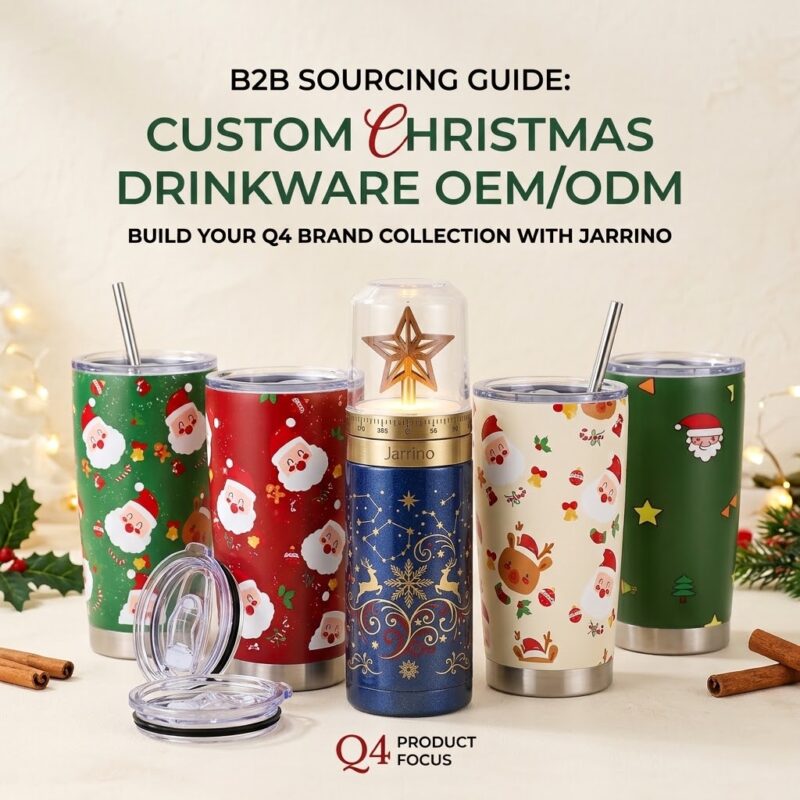
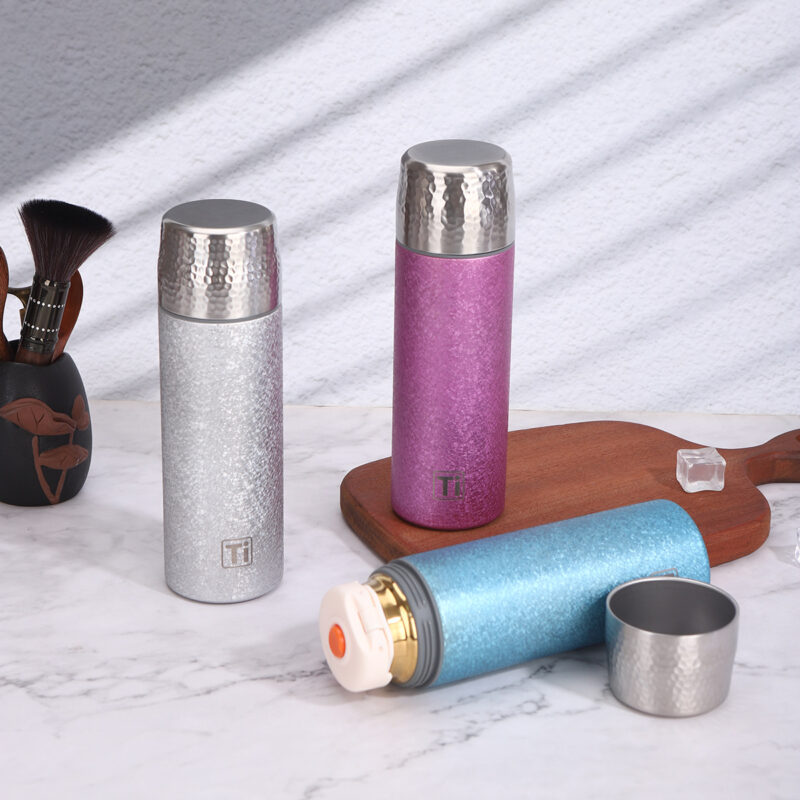
Jarrino is a certified OEM/ODM manufacturer specializing in custom vacuum flasks, ceramic-lined tumblers, and titanium drinkware. Lead times for Q4 custom Christmas orders are 20–30 days with low MOQs (300–1,000 pcs) and full FDA/LFGB compliance. We offer end-to-end customization including 3D digital printing, レーザー彫刻, and bespoke Christmas gift packaging. Sample kits and the quotes are available upon request to help brands lock in Q4 holiday production smoothly.
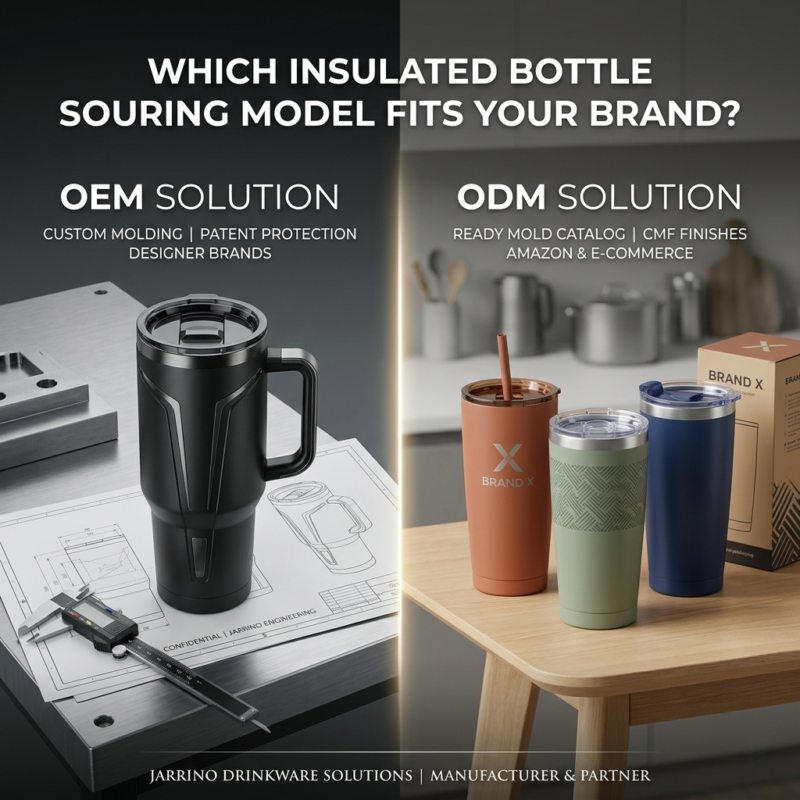
Choosing between OEM (Original Equipment Manufacturing) and ODM (Original Design Manufacturing) defines your drinkware brand’s R&D budget, time-to-market, and product exclusivity. OEM is ideal for established brands with custom CAD designs and unique IP requirements, offering 100% custom molding and patent protection. ODM is built for Amazon sellers, DTC startups, and corporate buyers seeking zero tooling costs, low MOQs, and rapid product launches via advanced CMF finishes (powder coating, UV印刷).
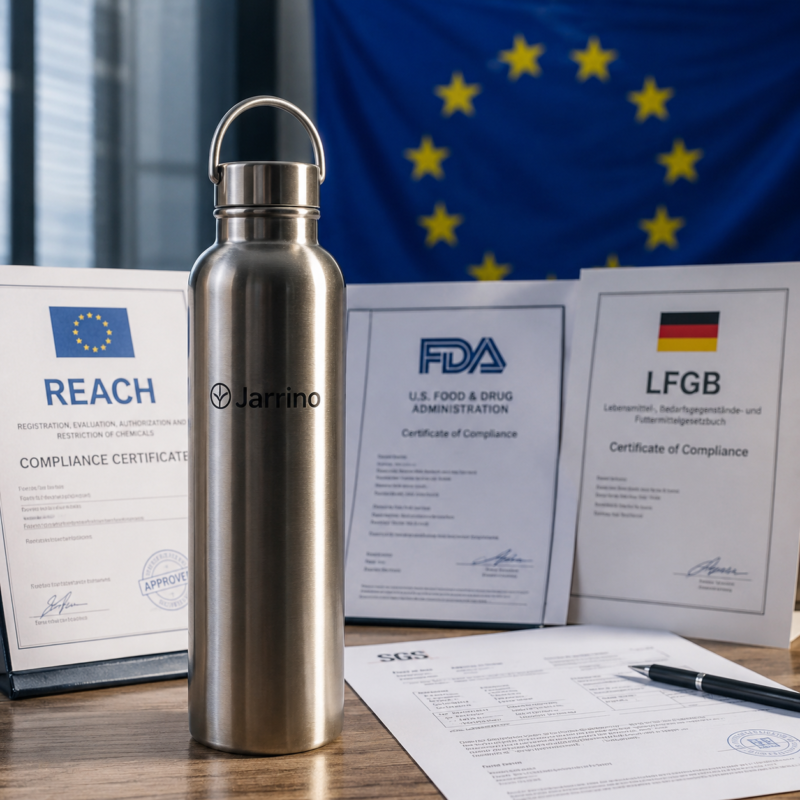
Learn how the EU Microplastics Regulation (EU) 2026/1168 impacts custom water bottle manufacturers and private label drinkware brands. Discover how Jarrino helps importers stay REACH compliant with durable stainless steel water bottles.
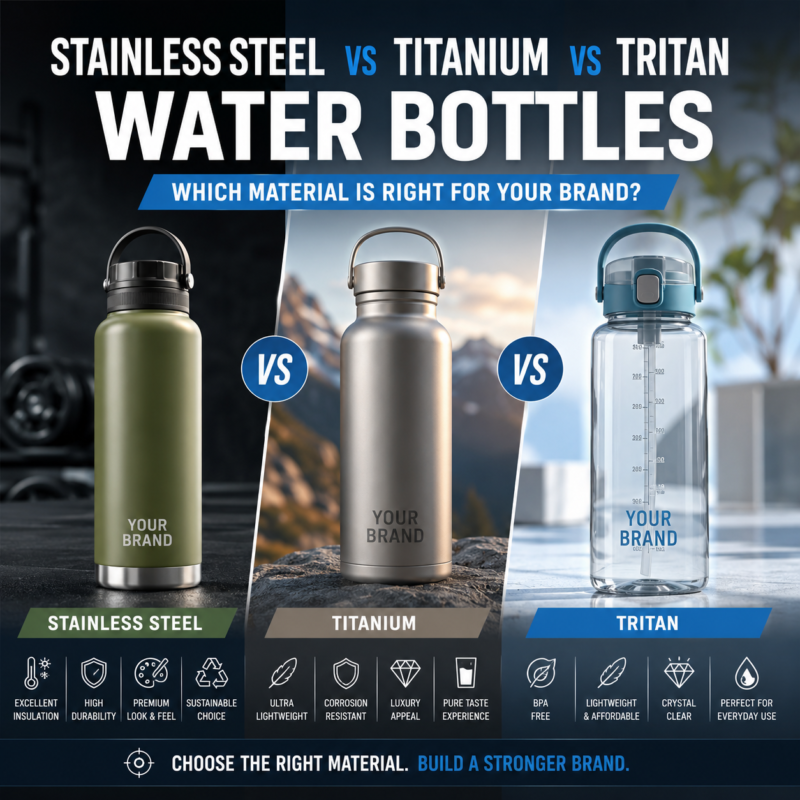
Choosing the right water bottle material can significantly impact your product quality, pricing, and brand positioning. This guide compares stainless steel, チタン, and Tritan water bottles across durability, insulation, 料金, カスタマイズ, and sustainability to help brands, 小売業者, and OEM buyers select the best material for their target market.
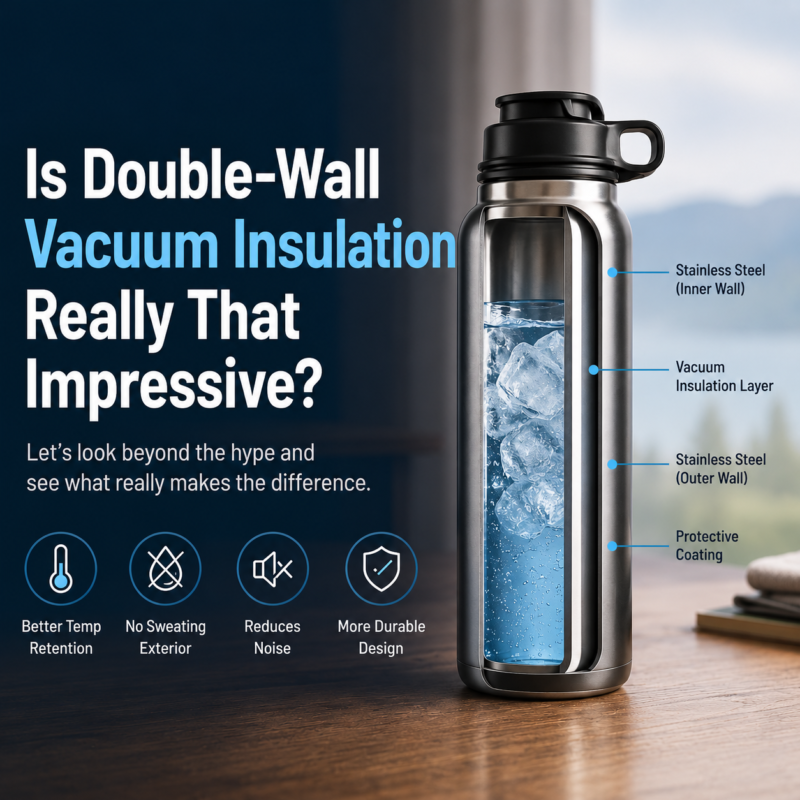
Double‑wall vacuum insulation is standard in premium drinkware, but the difference between a bottle that performs and one that disappoints comes down to manufacturing quality. This guide explains how vacuum insulation works, sets realistic performance expectations, and gives B2B buyers a practical checklist for evaluating suppliers. Plus, why Jarrino’s strict quality standards ensure your custom bottles deliver on their promises.