Comments Off on 304 vs 316 Stainless Steel: Which Grade Is Right for Your Bottle?
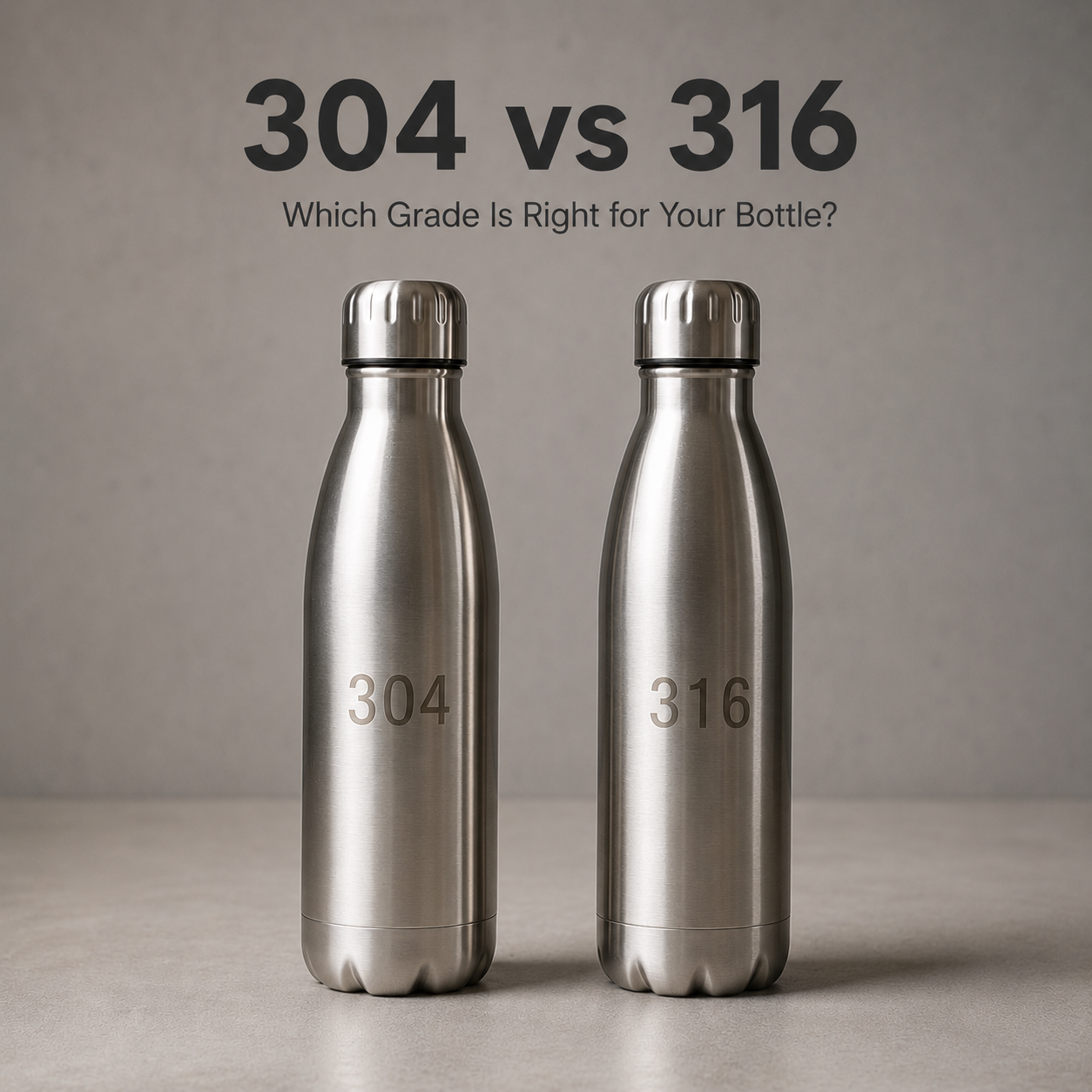
When you’re sourcing custom stainless steel bottles for your brand, one decision stands above most others: Which steel grade should you choose?
You’ve likely seen the numbers “304” and “316” stamped on product specs, maybe without fully understanding what they actually mean for your product.
This isn’t just a technical detail buried in a material data sheet. The steel grade you select affects your product’s corrosion resistance, safety compliance, manufacturing cost, and ultimately your brand’s reputation in the market.
Let’s break down the real differences between 304 and 316 stainless steel — and help you decide which one is right for your next production run.
The Quick Answer: When to Choose Which
If you’re short on time, here’s the practical verdict:
304 stainless steel is the industry standard — the workhorse grade used by most major brands. It’s certified safe for food contact and offers excellent value. This is the right choice for the vast majority of drinkware applications: everyday water bottles, sports hydration, promotional items, and retail products.
316 stainless steel is the premium alternative. It contains an additional alloying element called molybdenum, which dramatically improves corrosion resistance in challenging environments. Choose 316 if your product will hold acidic beverages (coffee, tea, citrus juices), serve coastal markets with salt air exposure, be used by outdoor enthusiasts in variable conditions, or target premium/baby/medical segments where “medical grade” material adds brand differentiation.
Both grades are safe. Both are food-grade. The difference is a question of durability and application, not safety.
The Science: What Makes Them Different?
Both 304 and 316 belong to the austenitic family of stainless steels — non-magnetic, highly durable, and known for excellent corrosion resistance. At a glance, they look nearly identical. But the difference lies in their chemical makeup.
304 stainless steel, often called “18/8” stainless, contains approximately 18% chromium and 8% nickel. Chromium creates a passive oxide layer on the surface that protects against corrosion, while nickel enhances toughness and gives the material its premium polished finish.
316 stainless steel starts with a similar base formula but adds one crucial element: approximately 2% to 3% molybdenum. This small addition — just a tiny percentage of the total composition — transforms the material’s performance in ways that matter enormously to certain applications.
Element
304 Grade
316 Grade
Chromium
17.5–20.0%
16.0–18.5%
Nickel
8.0–11.0%
10.0–14.0%
Molybdenum
—
2.0–3.0%
Carbon
≤ 0.08%
≤ 0.08%
316 also contains slightly more nickel than 304 (10–14% versus 8–11%), which further contributes to its corrosion resistance profile.
The molybdenum in 316 improves corrosion resistance by more than three times compared to 304, making it particularly effective in chloride-rich environments such as seawater, coastal air, and even certain acidic food products.
Corrosion Resistance: Where the Difference Really Shows
In normal, everyday use — drinking water at room temperature, brief storage of non-acidic liquids — both 304 and 316 perform nearly identically. You wouldn’t notice a difference.
The divergence appears in more demanding conditions.
304 stainless steel has excellent general corrosion resistance, performing well in most atmospheric and freshwater environments. However, it is vulnerable to pitting corrosion in chloride-rich conditions — saltwater, chlorinated disinfectants, or extended exposure to high-salt environments. In technical terms, 304’s Pitting Resistance Equivalent Number (PREN) is approximately 19, while 316’s PREN reaches approximately 26 — a substantial difference that directly translates to real-world durability.
316 stainless steel’s molybdenum creates a stronger, more stable protective oxide layer. In acidic solutions (pH around 3), 316 corrodes 66% less than 304. It resists pitting and crevice corrosion in chloride-exposed, acidic, or high-temperature environments significantly better than 304.
For a stainless steel bottle, this matters most when:
You’re storing acidic beverages. Coffee, tea, fruit juices, sports drinks, and protein shakes all have elevated acidity levels. Over time — especially if beverages are left in the bottle for hours — the inner surface is exposed to compounds that can gradually degrade the protective oxide layer. 316’s molybdenum-enhanced layer handles acidic environments substantially better.
You’re in coastal or high-humidity markets. Salt in the air accelerates corrosion. If your target market includes coastal cities (San Francisco, Miami, Sydney, Singapore) or island nations, the ambient environment alone can affect product lifespan. 316’s salt resistance is why it’s often called “marine grade” stainless steel.
Your product will be used in hot climates. Temperature accelerates chemical reactions, including corrosion. 316 maintains its corrosion resistance at higher temperatures where 304 begins to show vulnerability.
Safety and Regulatory Compliance: Both Are Certified
Here’s where many buyers get confused. Both 304 and 316 stainless steel are certified food-grade materials.
The confusion often comes from encountering lower grades — particularly 201 stainless steel — which some manufacturers substitute to cut costs. 201 stainless steel contains only approximately 1% nickel and is not certified safe for food contact. It’s prone to rust, can leave metallic taste, and may leach heavy metals. Yet because it’s technically “stainless steel,” less reputable factories sometimes pass it off to unsuspecting buyers.
This is why grade transparency matters. Some buyers have encountered rust issues with bottles labeled simply “stainless steel” — only to discover the material was actually 201, not any food-grade alloy.
Both 304 and 316 comply with major international food safety standards:
FDA (US): Both grades are fully compliant with FDA regulations 21 CFR for direct food contact
LFGB (Germany/EU): Both pass migration testing for heavy metals under EU Regulation (EC) No 1935/2004
ISO and BSCI certifications: Available for both material grades
From a regulatory standpoint, both 304 and 316 are equally compliant and equally safe for food contact applications. The choice is not about safety — it’s about performance and durability in specific environments.
Cost and ROI: The Real Business Decision
316 stainless steel costs more. Significantly more.
The raw material cost for 316 is typically 20% to 40% higher than 304. Molybdenum itself is over ten times more expensive than chromium or nickel, and even though it’s added in small quantities (2-3%), it substantially increases the bill of materials.
So is the premium worth it?
For most projects, the answer is no. 304 stainless steel offers the perfect balance of cost and performance. It’s the standard across the industry precisely because it meets the needs of 90%+ of applications at a competitive price point.
For premium positioning or specific use cases, 316 can be the right investment. If your brand targets the premium outdoor, baby care, or coffee enthusiast segments, 316 adds legitimate value. It justifies higher MSRP (manufacturer’s suggested retail price) — typically 30% or more — while reducing warranty claims related to corrosion or staining over the product’s lifespan.
From an ROI perspective, 316 makes sense when:
Your price point supports premium positioning. If you’re selling a $40+ retail bottle, the marginal cost of upgrading to 316 is negligible compared to the perceived value. “Medical-grade stainless steel” is a legitimate selling point that commands premium pricing.
Your customers will use the bottle in demanding environments. Coastal markets, outdoor enthusiasts, daily coffee drinkers — these users will genuinely benefit from 316’s enhanced performance.
You want to eliminate future warranty risk. If rust or discoloration in high-acid use cases could trigger returns, the 316 premium may be cheaper than handling quality claims down the road.
How to Maximize Lifespan Regardless of Grade
Even the highest-grade stainless steel needs proper care. A bottle’s lifespan depends more on how it’s used and maintained than on whether it’s 304 or 316.
Practical recommendations for your customers:
Replace thermal flasks every 1–2 years with regular use. Even high-grade stainless steel eventually shows wear, and the vacuum seal also degrades over time.
Clean bottles promptly after holding acidic beverages. Coffee, tea, fruit juices, and sports drinks should not sit for extended periods. Rinse immediately after use.
Inspect the inner surface periodically. If you see rust spots, pitting, or visible wear, replace the bottle regardless of the steel grade. Once the protective inner layer is compromised, the material can no longer protect the drink.
Avoid aggressive cleaning methods. Steel wool, abrasive scrubbers, and harsh chemical cleaners can scratch the surface, creating sites where corrosion can initiate. Use soft sponges and mild dish soap instead.
Jarrino’s Approach: Transparency and Choice
At Jarrino, we work with both 304 and 316 stainless steel grades, and we’re completely transparent about which material your product is manufactured with.
We source only certified stainless steel that meets FDA and LFGB food safety standards. Every shipment is verified against mill test certificates, and we do not substitute lower-grade materials to cut costs. Our testing standards meet or exceed EU and Japanese quality requirements.
Why does this matter for your sourcing decision?
Because the bottle that arrives at your warehouse must match exactly what you specified — no substitutions, no surprises, just the material you paid for.
Whether you choose 304 or 316, we manufacture to consistent quality standards. The difference is in the material spec, not in our production quality. And whichever grade you select, we’ll provide full compliance documentation, including material certifications and test reports, so you can sell with confidence in your target markets.
Our recommendation for most B2B buyers: start with 304. It’s cost-effective, fully certified, and perfectly suitable for the vast majority of applications. Only upgrade to 316 if your brand positioning, target use cases, or market demands genuinely require the additional performance — and you can explain to customers why it matters.
The Final Decision
Let’s cut through the technical details:
Choose 304 if: You’re selling everyday water bottles for general hydration. Your customers will use the bottle primarily for water, occasionally for other beverages. Price is an important competitive factor in your market. You’re serving mainstream retail or promotional channels. This is the right choice for 90% of projects.
Choose 316 if: Your bottle will hold coffee, tea, citrus drinks, or protein shakes daily. Your brand targets premium, outdoor, baby, or medical market segments. You’re selling in coastal or high-humidity regions. You can command higher prices and want “premium grade” as a legitimate selling point. The added material cost (20-40%) fits within your product’s margin structure.
Both grades are safe. Both are food-grade. Both are backed by the same regulatory certifications. The choice isn’t about finding the “better” material — it’s about finding the right material for your specific product, your target market, and your brand positioning.
If you’re still unsure which grade suits your upcoming project, reach out. We’ve helped hundreds of B2B buyers navigate this exact decision, and we can walk you through the trade-offs for your specific use case, target market, and volume requirements.
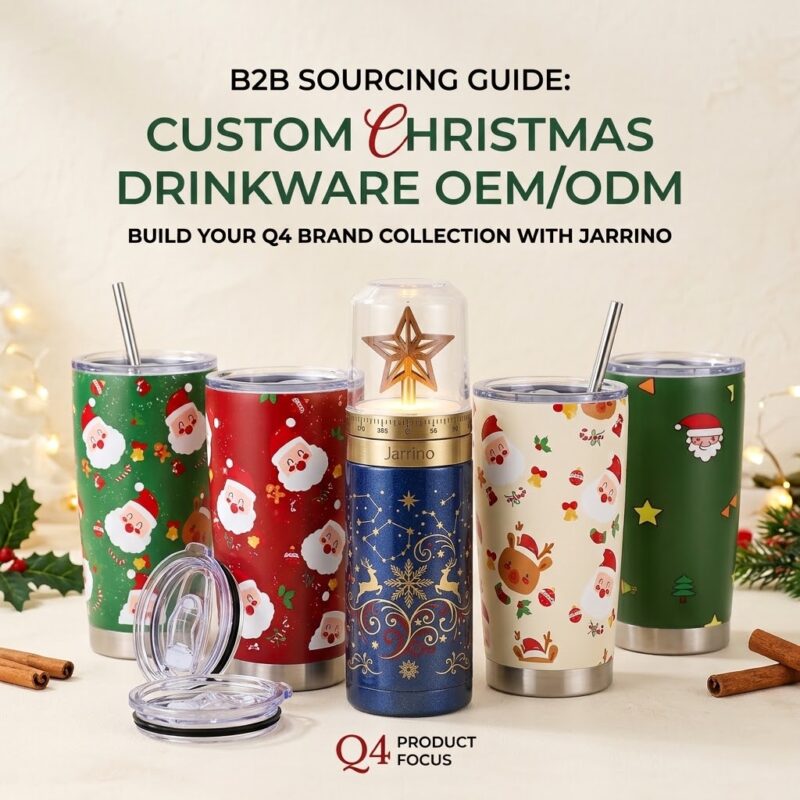
Jarrino is a certified OEM/ODM manufacturer specializing in custom vacuum flasks, ceramic-lined tumblers, and titanium drinkware. Lead times for Q4 custom Christmas orders are 20–30 days with low MOQs (300–1,000 pcs) and full FDA/LFGB compliance. We offer end-to-end customization including 3D digital printing, laser engraving, and bespoke Christmas gift packaging. Sample kits and the quotes are available upon request to help brands lock in Q4 holiday production smoothly.
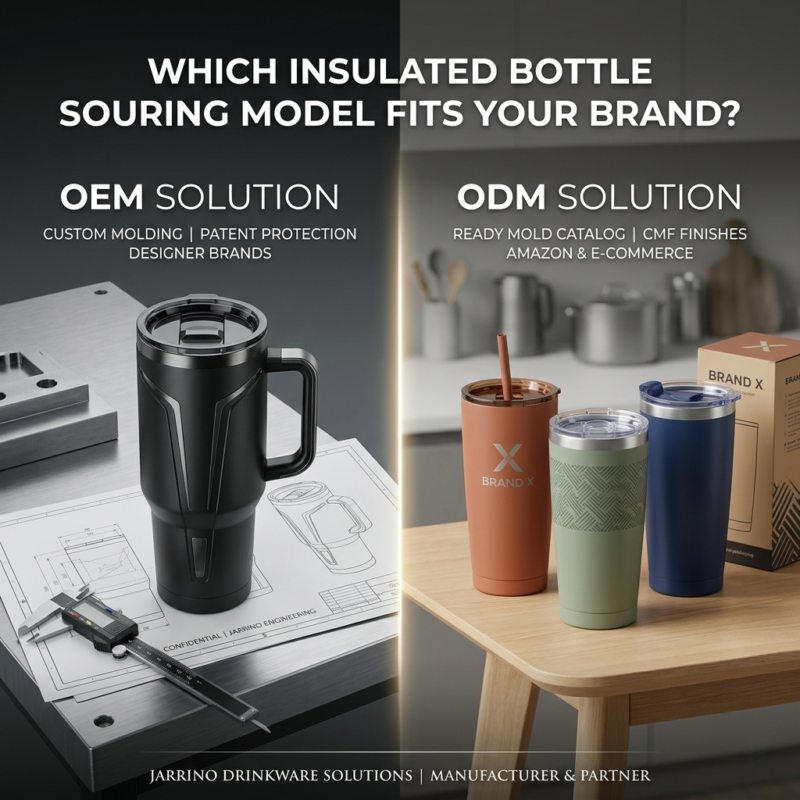
Choosing between OEM (Original Equipment Manufacturing) and ODM (Original Design Manufacturing) defines your drinkware brand’s R&D budget, time-to-market, and product exclusivity. OEM is ideal for established brands with custom CAD designs and unique IP requirements, offering 100% custom molding and patent protection. ODM is built for Amazon sellers, DTC startups, and corporate buyers seeking zero tooling costs, low MOQs, and rapid product launches via advanced CMF finishes (powder coating, UV printing).
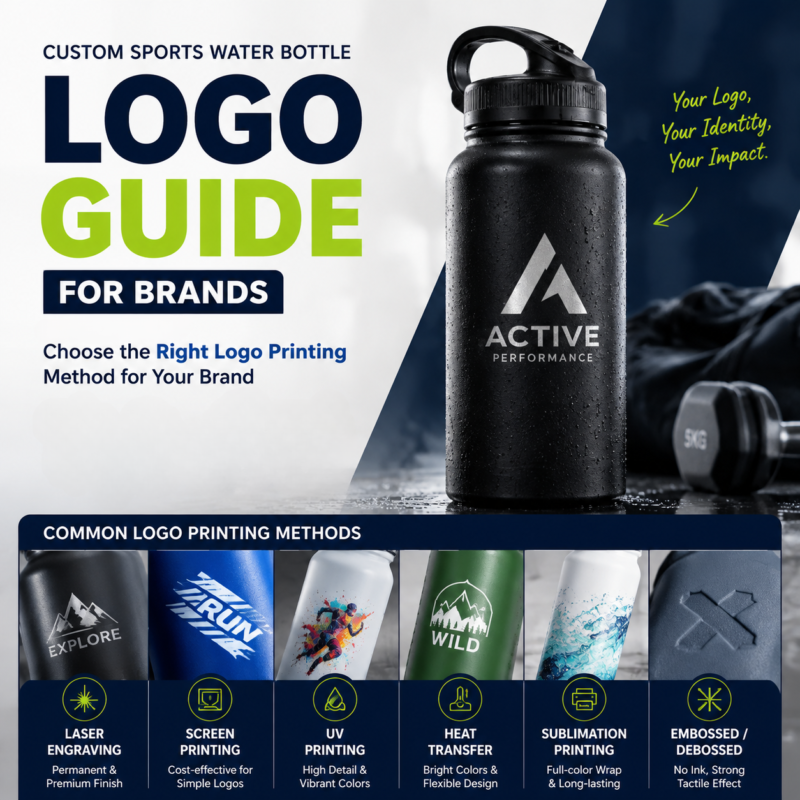
Custom sports water bottle logos are created through different decoration processes depending on the bottle material, brand design, and performance requirements. This guide covers the most common logo printing methods, including laser engraving, screen printing, UV printing, heat transfer, and sublimation, helping sports brands select the right customization option for durable and professional drinkware products.
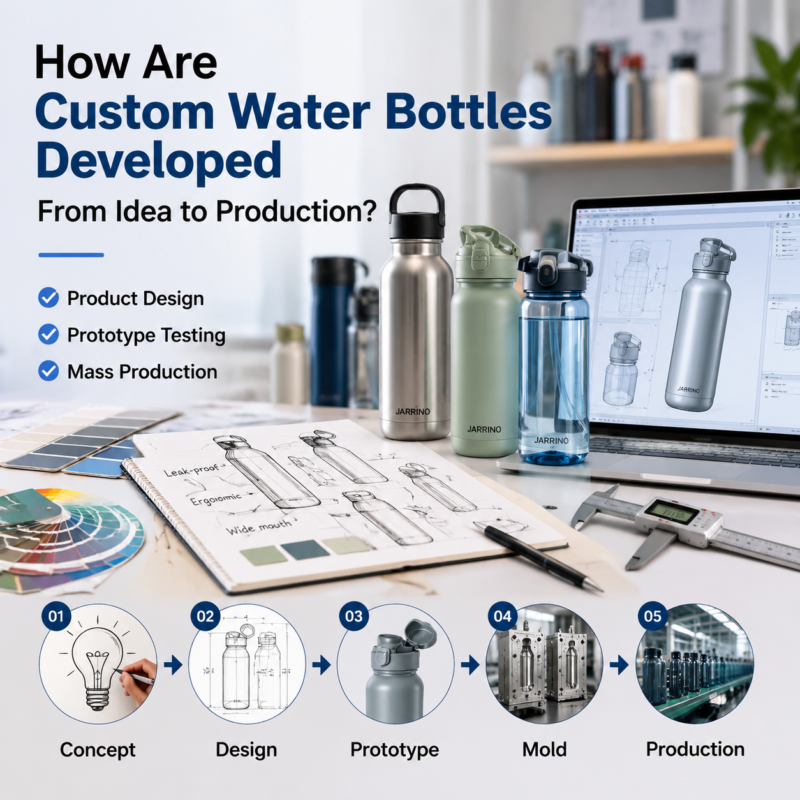
Developing a custom water bottle requires more than choosing a design and adding a logo. From the initial product concept to engineering, prototyping, mold development, testing, and mass production, every stage plays an important role in creating a successful drinkware product. This guide explains how brands work with OEM water bottle manufacturers to transform ideas into high-quality, market-ready products while managing design, cost, and production challenges.
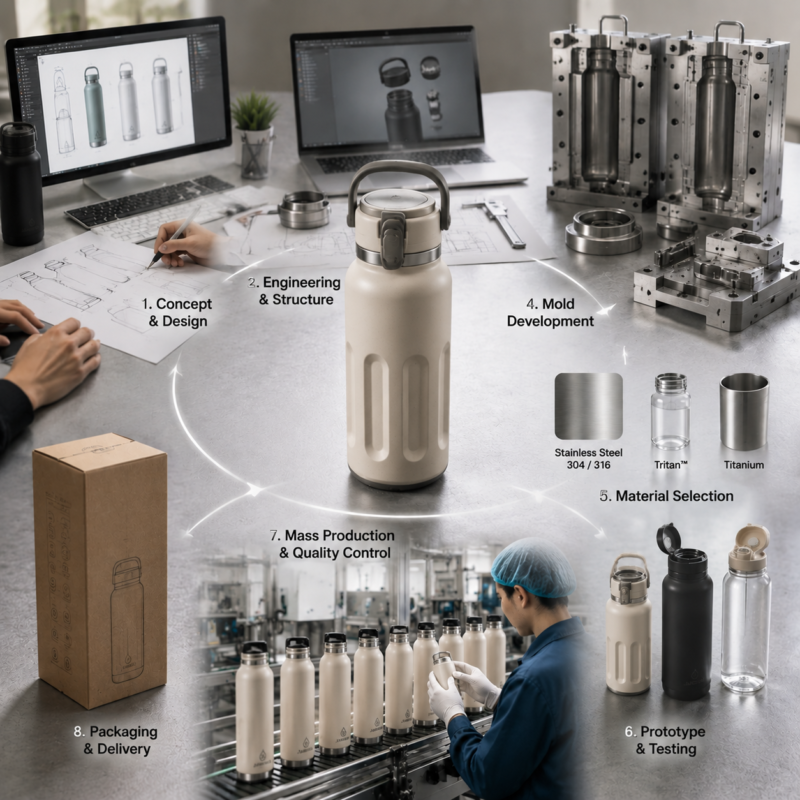
Developing a fully custom water bottle involves much more than adding a logo to an existing product. This guide explains how brands create unique water bottles through product design, engineering, material selection, mold development, prototype testing, and mass production. Learn how an experienced OEM water bottle manufacturer helps transform an idea into a market-ready product while managing quality, cost, and production efficiency.
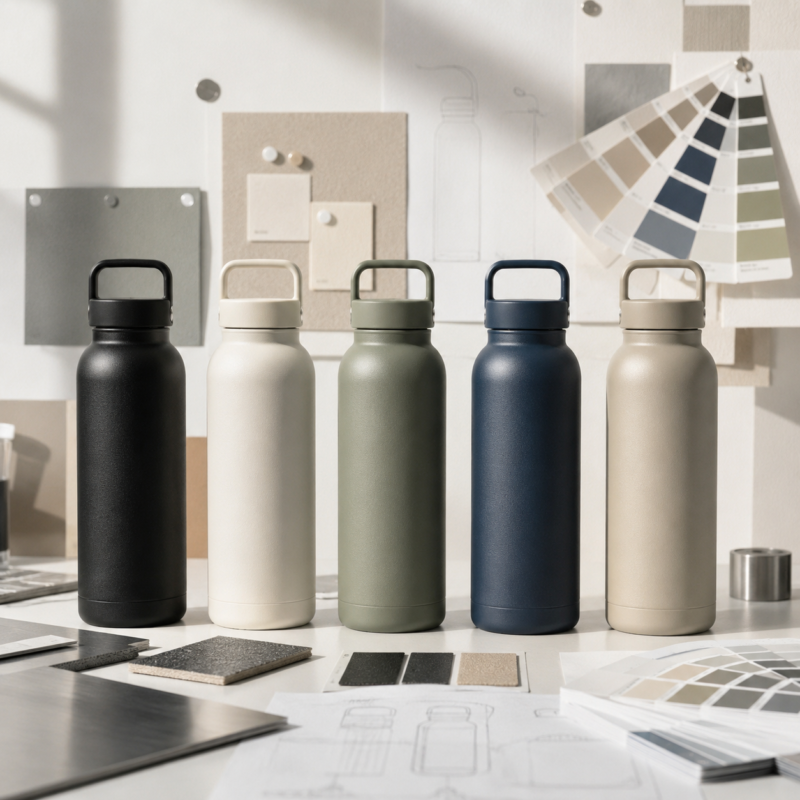
The success of a custom water bottle collection depends on more than attractive colors. Choosing the right color palette, surface finish, and manufacturing strategy helps strengthen brand identity, improve customer appeal, and ensure long-term sales. This guide explains how to select colors based on market preferences, compare matte and glossy finishes, optimize SKUs, and achieve consistent quality through professional OEM production.
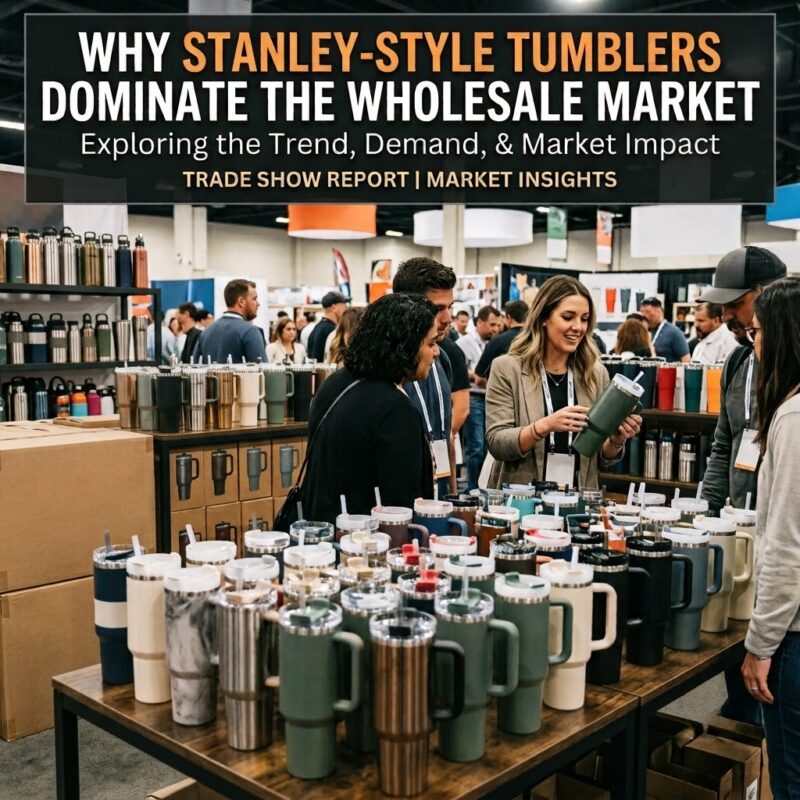
Stanley‑style tumblers have become a cultural phenomenon and a wholesale bestseller. This article explores why – from 18/8 stainless steel and double‑wall vacuum insulation to high perceived value, customization potential, and steady repeat‑order demand. Learn what makes these tumblers a reliable, profitable category for wholesale buyers.
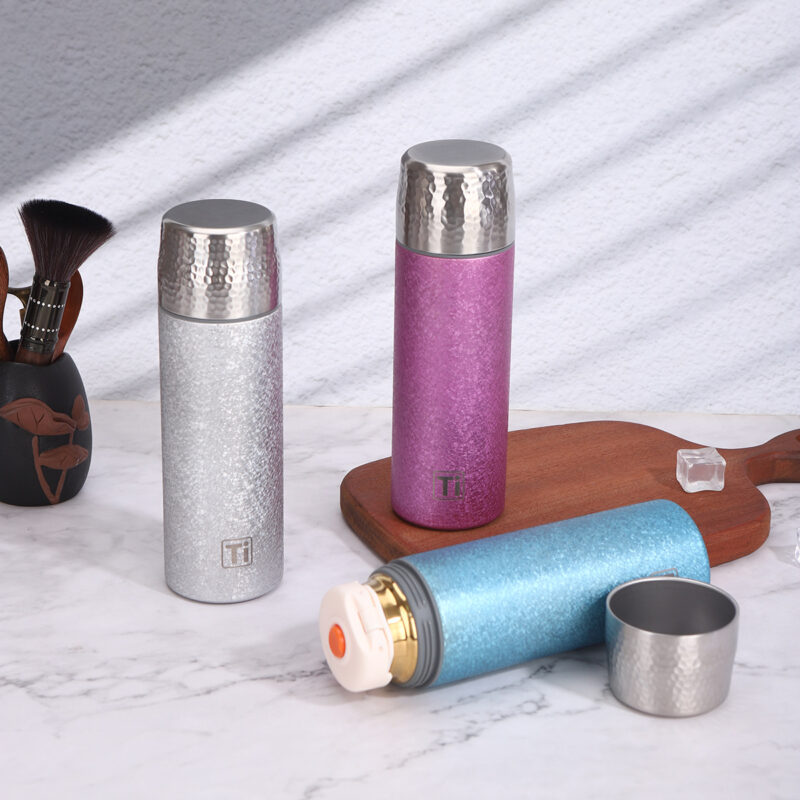
Titanium is safe. It’s also expensive. Here’s how it stacks up against stainless steel and aluminum – and which material actually makes sense for your brand.
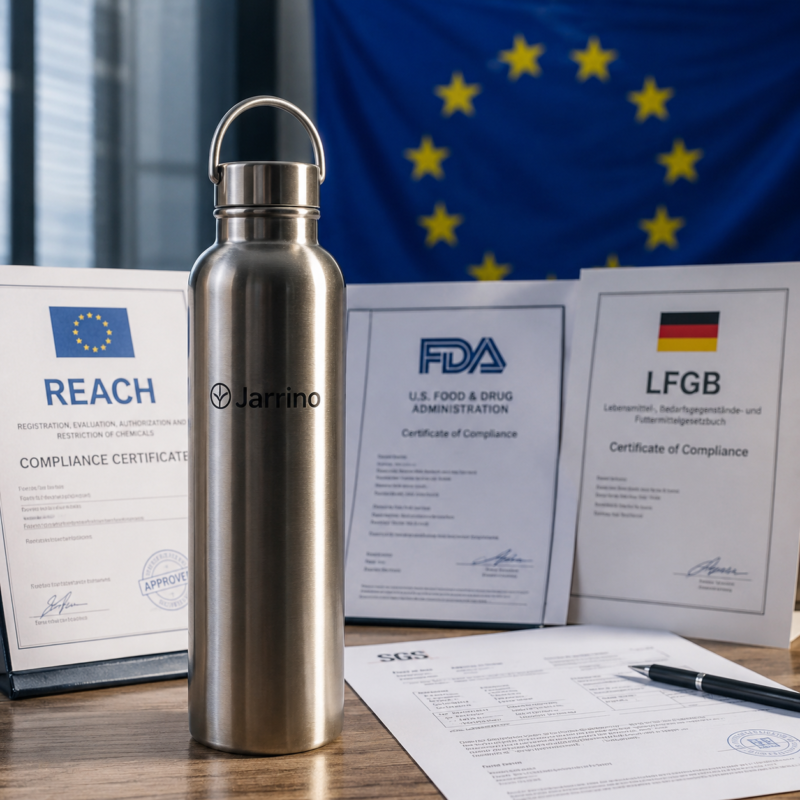
Learn how the EU Microplastics Regulation (EU) 2026/1168 impacts custom water bottle manufacturers and private label drinkware brands. Discover how Jarrino helps importers stay REACH compliant with durable stainless steel water bottles.
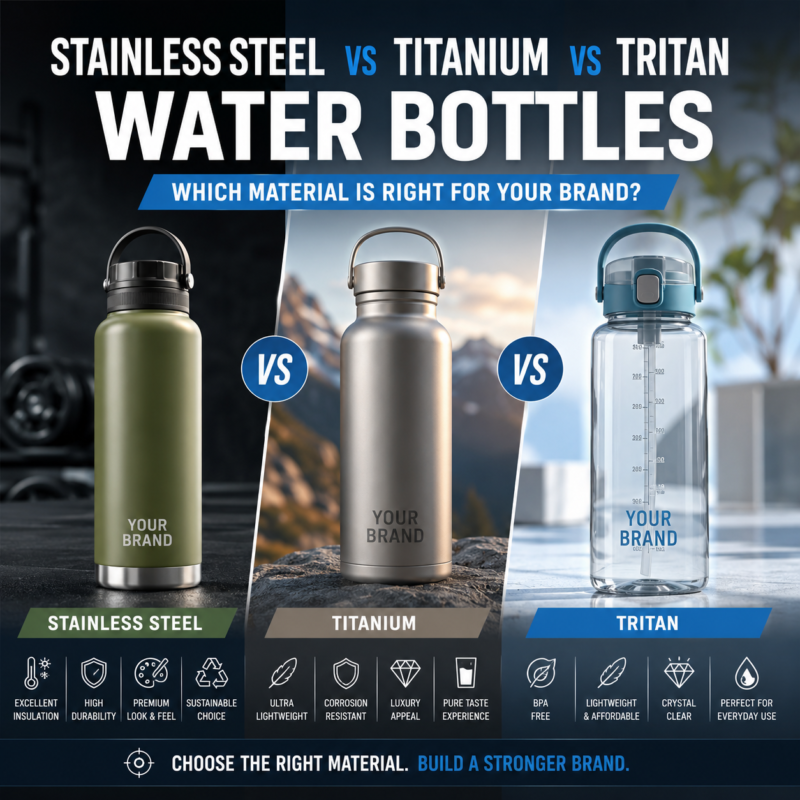
Choosing the right water bottle material can significantly impact your product quality, pricing, and brand positioning. This guide compares stainless steel, titanium, and Tritan water bottles across durability, insulation, cost, customization, and sustainability to help brands, retailers, and OEM buyers select the best material for their target market.
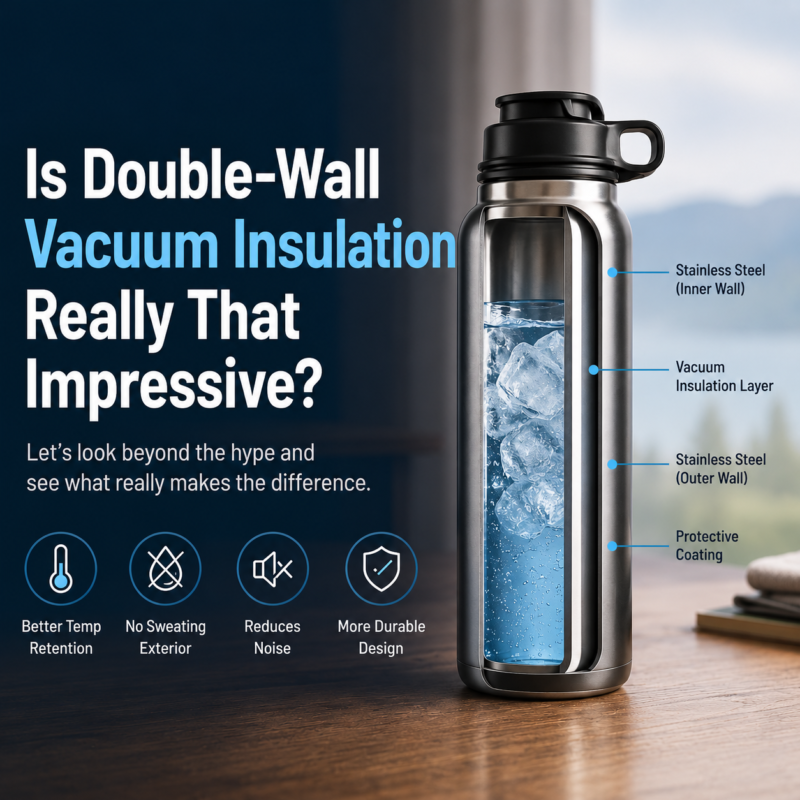
Double‑wall vacuum insulation is standard in premium drinkware, but the difference between a bottle that performs and one that disappoints comes down to manufacturing quality. This guide explains how vacuum insulation works, sets realistic performance expectations, and gives B2B buyers a practical checklist for evaluating suppliers. Plus, why Jarrino’s strict quality standards ensure your custom bottles deliver on their promises.
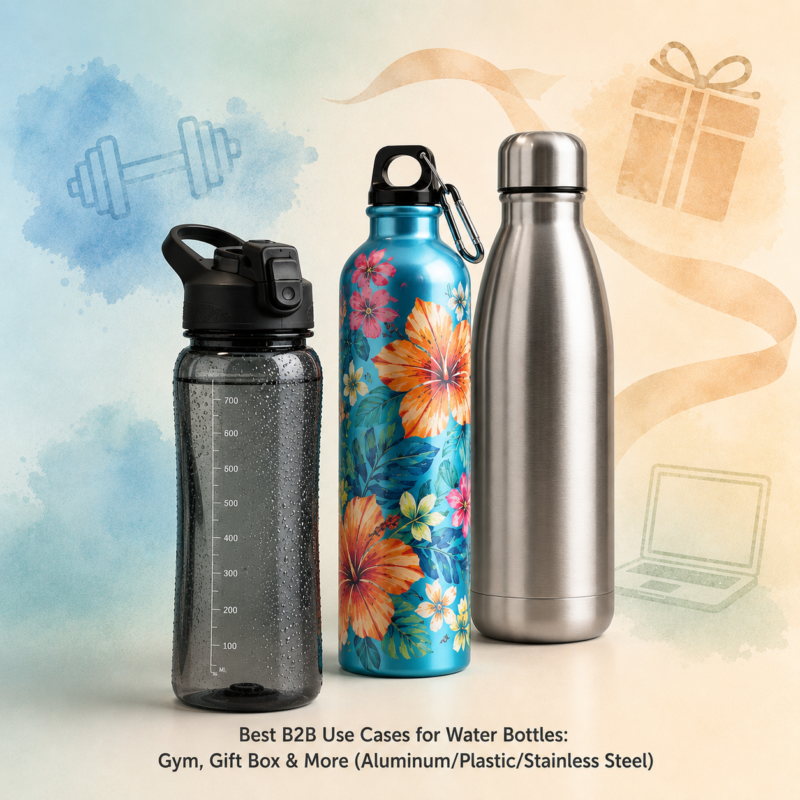
Not every water bottle fits every B2B use case. This article matches three materials — stainless steel, aluminum, plastic — to real‑world applications: gyms, corporate gift boxes, trade shows, outdoor retail, and school programs. Stainless steel wins on durability and insulation. Aluminum offers lightweight, full‑color branding. Plastic is budget‑friendly for high‑volume events (provided it’s BPA‑free). A quick cheat sheet helps B2B buyers balance cost, brand image, and user expectations.
To provide the best experiences, we use technologies like cookies to store and/or access device information. Consenting to these technologies will allow us to process data such as browsing behavior or unique IDs on this site. Not consenting or withdrawing consent, may adversely affect certain features and functions.
Functional
Always active
The technical storage or access is strictly necessary for the legitimate purpose of enabling the use of a specific service explicitly requested by the subscriber or user, or for the sole purpose of carrying out the transmission of a communication over an electronic communications network.
Preferences
The technical storage or access is necessary for the legitimate purpose of storing preferences that are not requested by the subscriber or user.
Statistics
The technical storage or access that is used exclusively for statistical purposes.The technical storage or access that is used exclusively for anonymous statistical purposes. Without a subpoena, voluntary compliance on the part of your Internet Service Provider, or additional records from a third party, information stored or retrieved for this purpose alone cannot usually be used to identify you.
Marketing
The technical storage or access is required to create user profiles to send advertising, or to track the user on a website or across several websites for similar marketing purposes.