
304 против 316 Нержавеющая сталь: Какой сорт подходит для вашей бутылки?
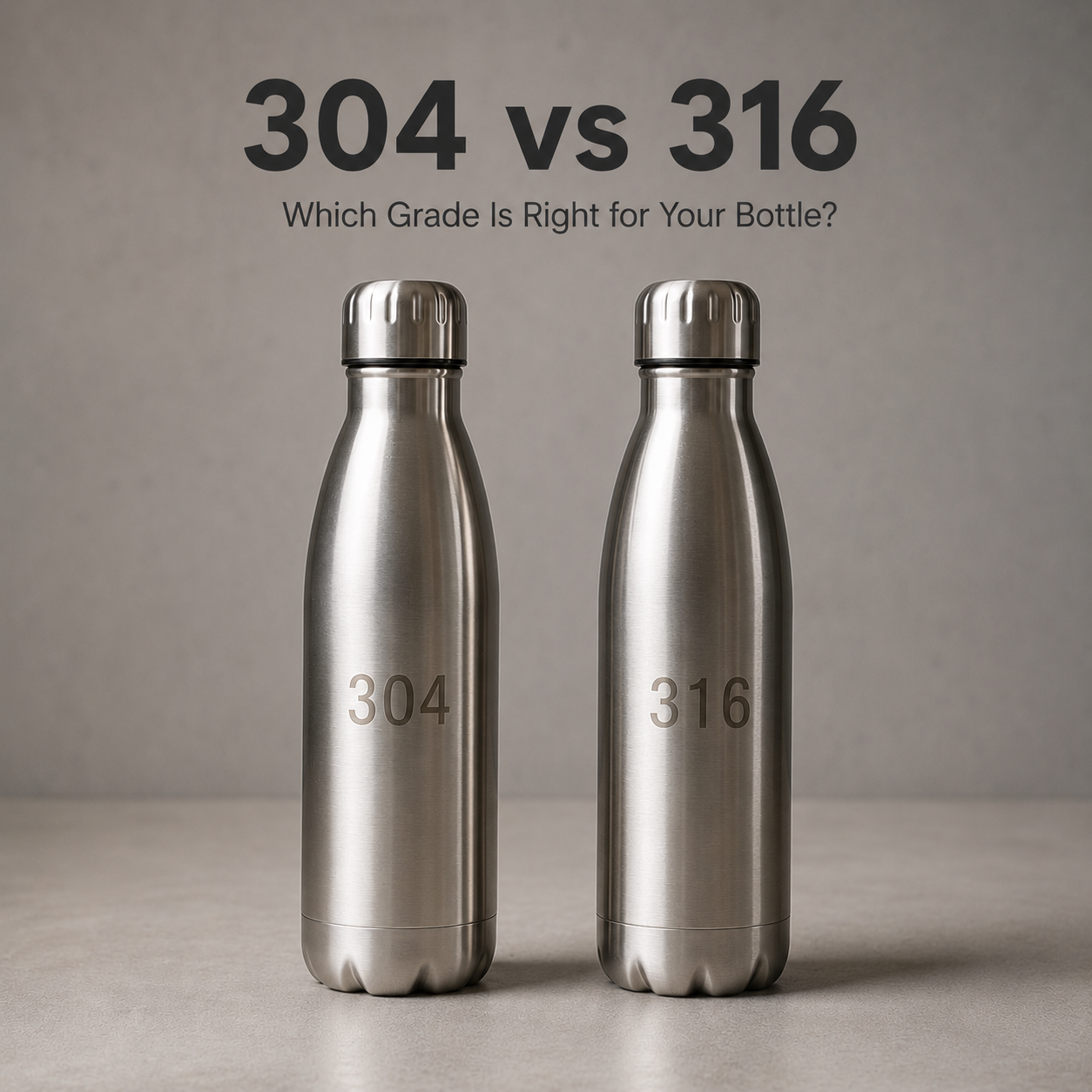
When you’re sourcing custom stainless steel bottles for your brand, one decision stands above most others: Which steel grade should you choose?
You’ve likely seen the numbers «304» и «316» stamped on product specs, maybe without fully understanding what they actually mean for your product.
This isn’t just a technical detail buried in a material data sheet. The steel grade you select affects your product’s corrosion resistance, safety compliance, manufacturing cost, and ultimately your brand’s reputation in the market.
Let’s break down the real differences between 304 и 316 stainless steel — and help you decide which one is right for your next production run.
The Quick Answer: When to Choose Which
If you’re short on time, here’s the practical verdict:
304 нержавеющая сталь is the industry standard — the workhorse grade used by most major brands. It’s certified safe for food contact and offers excellent value. This is the right choice for the vast majority of drinkware applications: everyday water bottles, sports hydration, promotional items, and retail products.
316 нержавеющая сталь is the premium alternative. It contains an additional alloying element called molybdenum, which dramatically improves corrosion resistance in challenging environments. Выбирать 316 if your product will hold acidic beverages (кофе, чай, citrus juices), serve coastal markets with salt air exposure, be used by outdoor enthusiasts in variable conditions, or target premium/baby/medical segments where «Медицинский состав» material adds brand differentiation.
Both grades are safe. Both are food-grade. The difference is a question of durability and application, not safety.
The Science: What Makes Them Different?
Оба 304 и 316 belong to the austenitic family of stainless steels — non-magnetic, highly durable, and known for excellent corrosion resistance. At a glance, they look nearly identical. But the difference lies in their chemical makeup.
304 нержавеющая сталь, often called «18/8» stainless, contains approximately 18% Хром и 8% никель. Chromium creates a passive oxide layer on the surface that protects against corrosion, while nickel enhances toughness and gives the material its premium polished finish.
316 нержавеющая сталь starts with a similar base formula but adds one crucial element: approximately 2% к 3% молибден. This small addition — just a tiny percentage of the total composition — transforms the material’s performance in ways that matter enormously to certain applications.
| Element | 304 Оценка | 316 Оценка |
|---|---|---|
| Хром | 17.5–20.0% | 16.0–18.5% |
| Никель | 8.0–11.0% | 10.0–14.0% |
| Молибден | — | 2.0–3.0% |
| Carbon | ≤ 0.08% | ≤ 0.08% |
316 also contains slightly more nickel than 304 (10–14% versus 8–11%), which further contributes to its corrosion resistance profile.
The molybdenum in 316 improves corrosion resistance by more than three times compared to 304, making it particularly effective in chloride-rich environments such as seawater, coastal air, and even certain acidic food products.
Corrosion Resistance: Where the Difference Really Shows
In normal, everyday use — drinking water at room temperature, brief storage of non-acidic liquids — both 304 и 316 perform nearly identically. You wouldn’t notice a difference.
The divergence appears in more demanding conditions.
304 stainless steel has excellent general corrosion resistance, performing well in most atmospheric and freshwater environments. Однако, it is vulnerable to pitting corrosion in chloride-rich conditions — saltwater, chlorinated disinfectants, or extended exposure to high-salt environments. In technical terms, 304’s Pitting Resistance Equivalent Number (PREN) is approximately 19, while 316’s PREN reaches approximately 26 — a substantial difference that directly translates to real-world durability.
316 stainless steel’s molybdenum creates a stronger, more stable protective oxide layer. В кислых растворах (pH around 3), 316 corrodes 66% less than 304. It resists pitting and crevice corrosion in chloride-exposed, acidic, or high-temperature environments significantly better than 304.
For a stainless steel bottle, this matters most when:
You’re storing acidic beverages. Coffee, чай, фруктовые соки, спортивные напитки, and protein shakes all have elevated acidity levels. Over time — especially if beverages are left in the bottle for hours — the inner surface is exposed to compounds that can gradually degrade the protective oxide layer. 316’s molybdenum-enhanced layer handles acidic environments substantially better.
You’re in coastal or high-humidity markets. Salt in the air accelerates corrosion. If your target market includes coastal cities (San Francisco, Miami, Sydney, Singapore) or island nations, the ambient environment alone can affect product lifespan. 316’s salt resistance is why it’s often called «marine grade» нержавеющая сталь.
Your product will be used in hot climates. Temperature accelerates chemical reactions, including corrosion. 316 maintains its corrosion resistance at higher temperatures where 304 begins to show vulnerability.
Safety and Regulatory Compliance: Both Are Certified
Here’s where many buyers get confused. Оба 304 и 316 stainless steel are certified food-grade materials.
The confusion often comes from encountering lower grades — particularly 201 stainless steel — which some manufacturers substitute to cut costs. 201 stainless steel contains only approximately 1% nickel and is not certified safe for food contact. It’s prone to rust, can leave metallic taste, and may leach heavy metals. Yet because it’s technically «нержавеющая сталь,» less reputable factories sometimes pass it off to unsuspecting buyers.
This is why grade transparency matters. Some buyers have encountered rust issues with bottles labeled simply «нержавеющая сталь» — only to discover the material was actually 201, not any food-grade alloy.
Оба 304 и 316 comply with major international food safety standards:
- FDA (НАС): Both grades are fully compliant with FDA regulations 21 CFR for direct food contact
- ЛФГБ (Germany/EU): Both pass migration testing for heavy metals under EU Regulation (ЕС) Нет 1935/2004
- ISO and BSCI certifications: Available for both material grades
From a regulatory standpoint, оба 304 и 316 are equally compliant and equally safe for food contact applications. The choice is not about safety — it’s about performance and durability in specific environments.
Cost and ROI: The Real Business Decision
316 stainless steel costs more. Significantly more.
The raw material cost for 316 обычно 20% к 40% higher than 304. Molybdenum itself is over ten times more expensive than chromium or nickel, and even though it’s added in small quantities (2-3%), it substantially increases the bill of materials.
So is the premium worth it?
For most projects, the answer is no. 304 stainless steel offers the perfect balance of cost and performance. It’s the standard across the industry precisely because it meets the needs of 90%+ of applications at a competitive price point.
For premium positioning or specific use cases, 316 can be the right investment. If your brand targets the premium outdoor, baby care, or coffee enthusiast segments, 316 adds legitimate value. It justifies higher MSRP (manufacturer’s suggested retail price) — typically 30% or more — while reducing warranty claims related to corrosion or staining over the product’s lifespan.
From an ROI perspective, 316 makes sense when:
Your price point supports premium positioning. If you’re selling a $40+ retail bottle, the marginal cost of upgrading to 316 is negligible compared to the perceived value. «Medical-grade stainless steel» is a legitimate selling point that commands premium pricing.
Your customers will use the bottle in demanding environments. Coastal markets, outdoor enthusiasts, daily coffee drinkers — these users will genuinely benefit from 316’s enhanced performance.
You want to eliminate future warranty risk. If rust or discoloration in high-acid use cases could trigger returns, тот 316 premium may be cheaper than handling quality claims down the road.
How to Maximize Lifespan Regardless of Grade
Even the highest-grade stainless steel needs proper care. A bottle’s lifespan depends more on how it’s used and maintained than on whether it’s 304 или 316.
Practical recommendations for your customers:
Replace thermal flasks every 1–2 years with regular use. Even high-grade stainless steel eventually shows wear, and the vacuum seal also degrades over time.
Clean bottles promptly after holding acidic beverages. Coffee, чай, фруктовые соки, and sports drinks should not sit for extended periods. Rinse immediately after use.
Inspect the inner surface periodically. If you see rust spots, ячечка, or visible wear, replace the bottle regardless of the steel grade. Once the protective inner layer is compromised, the material can no longer protect the drink.
Avoid aggressive cleaning methods. Steel wool, abrasive scrubbers, and harsh chemical cleaners can scratch the surface, creating sites where corrosion can initiate. Use soft sponges and mild dish soap instead.
Jarrino’s Approach: Transparency and Choice
В Харрино, we work with both 304 и 316 stainless steel grades, and we’re completely transparent about which material your product is manufactured with.
We source only certified stainless steel that meets FDA and LFGB food safety standards. Every shipment is verified against mill test certificates, and we do not substitute lower-grade materials to cut costs. Our testing standards meet or exceed EU and Japanese quality requirements.
Why does this matter for your sourcing decision?
Because the bottle that arrives at your warehouse must match exactly what you specified — no substitutions, no surprises, just the material you paid for.
Whether you choose 304 или 316, we manufacture to consistent quality standards. The difference is in the material spec, not in our production quality. And whichever grade you select, we’ll provide full compliance documentation, including material certifications and test reports, so you can sell with confidence in your target markets.
Our recommendation for most B2B buyers: start with 304. It’s cost-effective, fully certified, and perfectly suitable for the vast majority of applications. Only upgrade to 316 if your brand positioning, target use cases, or market demands genuinely require the additional performance — and you can explain to customers why it matters.
The Final Decision
Let’s cut through the technical details:
Выбирать 304 если: You’re selling everyday water bottles for general hydration. Your customers will use the bottle primarily for water, occasionally for other beverages. Price is an important competitive factor in your market. You’re serving mainstream retail or promotional channels. This is the right choice for 90% of projects.
Выбирать 316 если: Your bottle will hold coffee, чай, citrus drinks, or protein shakes daily. Your brand targets premium, на открытом воздухе, baby, or medical market segments. You’re selling in coastal or high-humidity regions. You can command higher prices and want «premium grade» as a legitimate selling point. The added material cost (20-40%) fits within your product’s margin structure.
Both grades are safe. Both are food-grade. Both are backed by the same regulatory certifications. The choice isn’t about finding the «better» material — it’s about finding the right material for your specific product, your target market, and your brand positioning.
If you’re still unsure which grade suits your upcoming project, reach out. We’ve helped hundreds of B2B buyers navigate this exact decision, and we can walk you through the trade-offs for your specific use case, target market, and volume requirements.
📧 Contact our sourcing team: [email protected]
Связаться с нами
Связанные посты
Custom Christmas Drinkware: Complete OEM/ODM Manufacturing Guide
Jarrino is a certified OEM/ODM manufacturer specializing in custom vacuum flasks, ceramic-lined tumblers, and titanium drinkware. Lead times for Q4 custom Christmas orders are 20–30 days with low MOQs (300–1,000 pcs) and full FDA/LFGB compliance. We offer end-to-end customization including 3D digital printing, Лазерная гравировка, and bespoke Christmas gift packaging. Sample kits and the quotes are available upon request to help brands lock in Q4 holiday production smoothly.
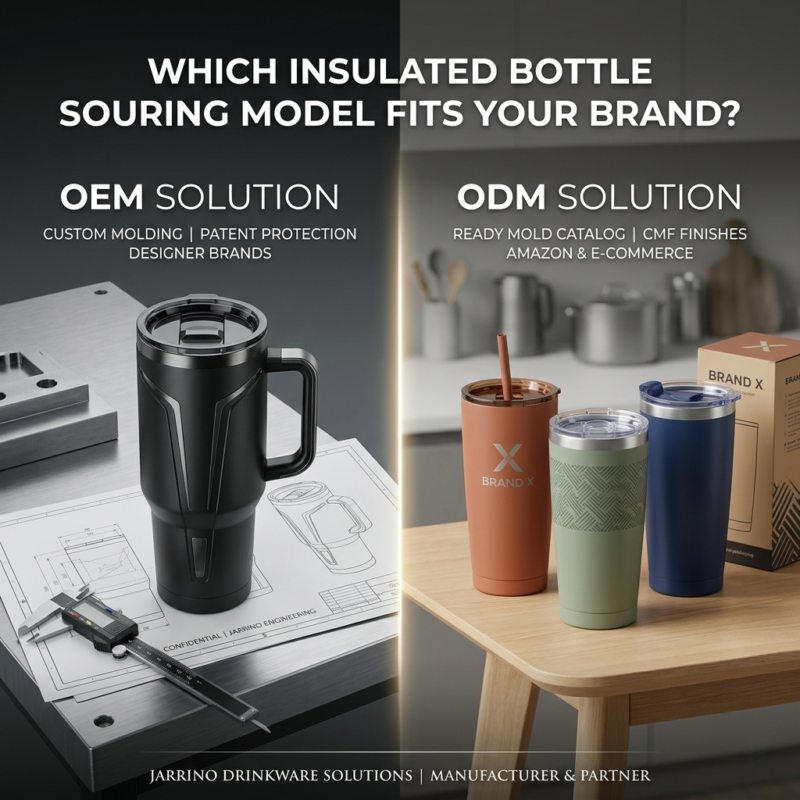
OEM vs. ODM Insulated Tumblers: Which Sourcing Model Fits Your Drinkware Brand
Choosing between OEM (Original Equipment Manufacturing) and ODM (Original Design Manufacturing) defines your drinkware brand’s R&D budget, time-to-market, and product exclusivity. OEM is ideal for established brands with custom CAD designs and unique IP requirements, offering 100% custom molding and patent protection. ODM is built for Amazon sellers, DTC startups, and corporate buyers seeking zero tooling costs, low MOQs, and rapid product launches via advanced CMF finishes (powder coating, UV printing).
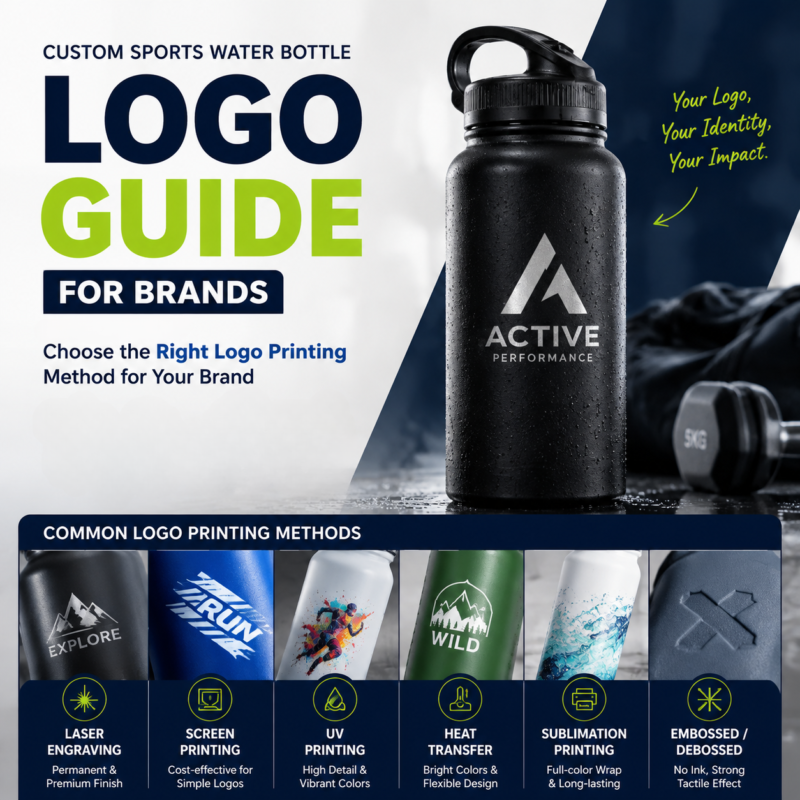
Custom Sports Water Bottle Logo Guide for Brands
Custom sports water bottle logos are created through different decoration processes depending on the bottle material, brand design, and performance requirements. This guide covers the most common logo printing methods, including laser engraving, screen printing, UV printing, теплопередача, and sublimation, helping sports brands select the right customization option for durable and professional drinkware products.
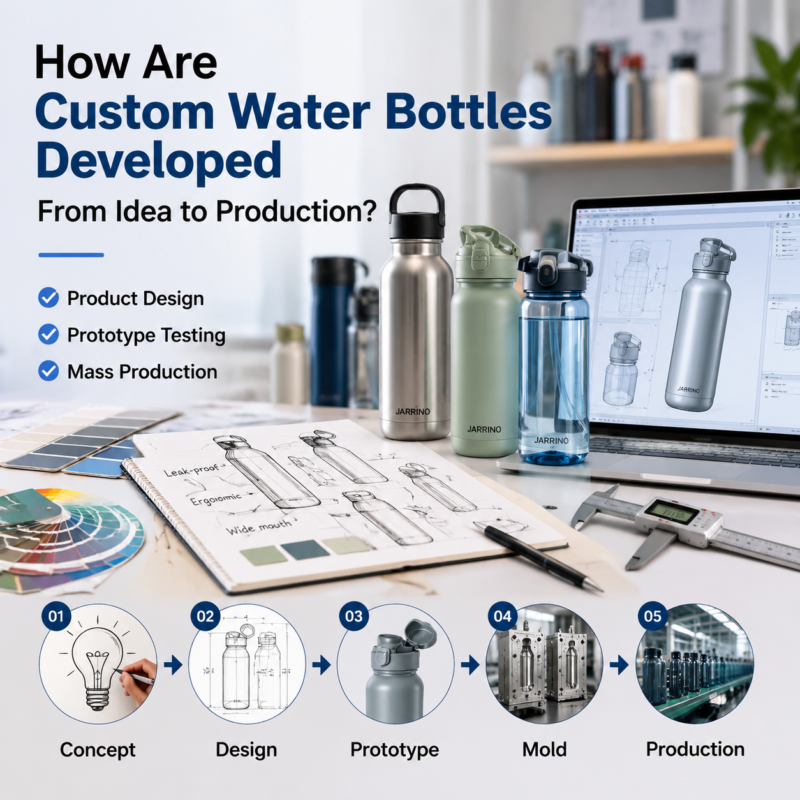
Как разрабатываются индивидуальные бутылки для воды от идеи до производства?
Разработка индивидуальной бутылки для воды требует большего, чем просто выбор дизайна и добавление логотипа.. От первоначальной концепции продукта до проектирования, прототипирование, разработка пресс-формы, тестирование, и массовое производство, Каждый этап играет важную роль в создании успешного продукта для питья.. В этом руководстве объясняется, как бренды работают с OEM-производителями бутылок для воды, чтобы превратить идеи в высококачественные продукты., готовые к выходу на рынок продукты при управлении дизайном, расходы, и производственные задачи.
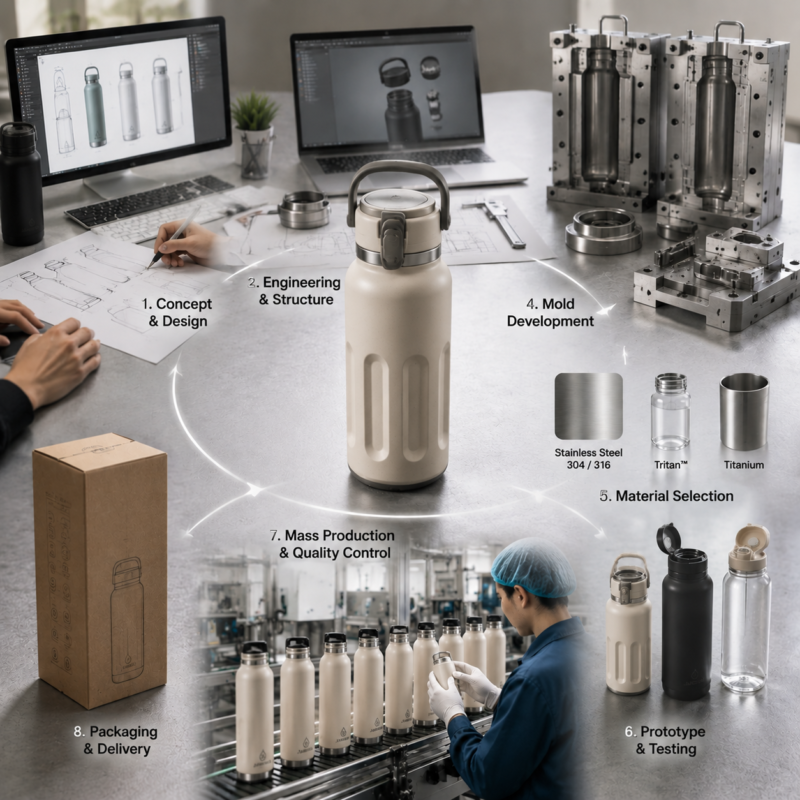
Как изготавливаются бутылки для воды по индивидуальному заказу?
Разработка полностью индивидуальной бутылки для воды предполагает гораздо больше, чем просто добавление логотипа к существующему продукту.. В этом руководстве объясняется, как бренды создают уникальные бутылки для воды с помощью дизайна продукции., инженерия, выбор материала, разработка пресс-формы, тестирование прототипа, и массовое производство. Узнайте, как опытный производитель OEM-производителей бутылок для воды помогает превратить идею в продукт, готовый к выпуску на рынок, сохраняя при этом качество., расходы, и эффективность производства.
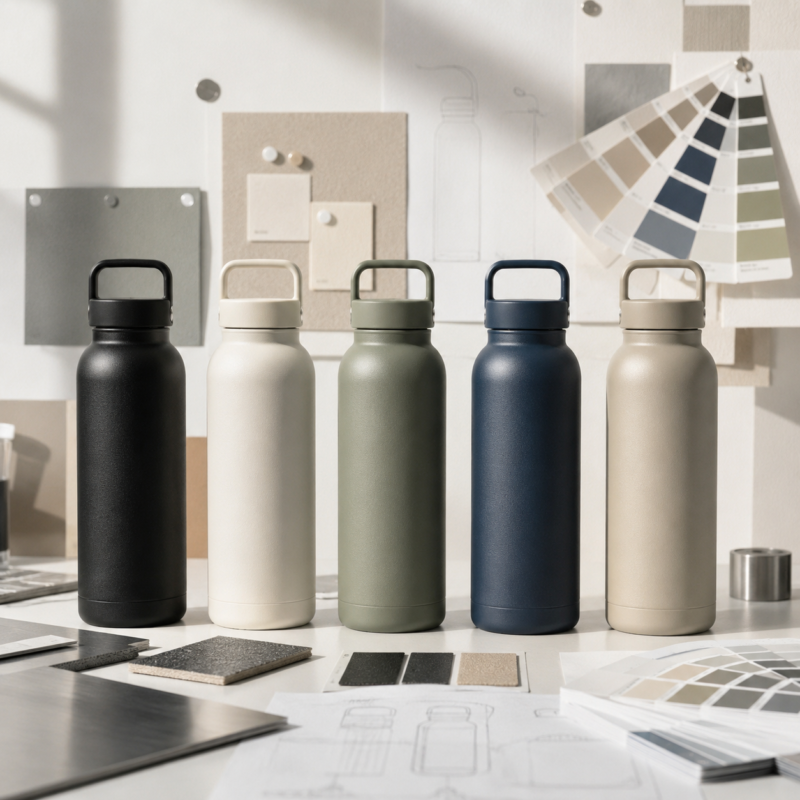
Как выбрать цвет и отделку для бутылок для воды на заказ
Успех индивидуальной коллекции бутылок для воды зависит не только от привлекательных цветов.. Выбор правильной цветовой палитры, обработка поверхности, и производственная стратегия помогает укрепить индивидуальность бренда, повысить привлекательность клиентов, и обеспечить долгосрочные продажи. В этом руководстве объясняется, как выбирать цвета на основе предпочтений рынка., Сравните матовое и глянцевое покрытие, оптимизировать SKU, и добиться стабильного качества благодаря профессиональному OEM-производству.
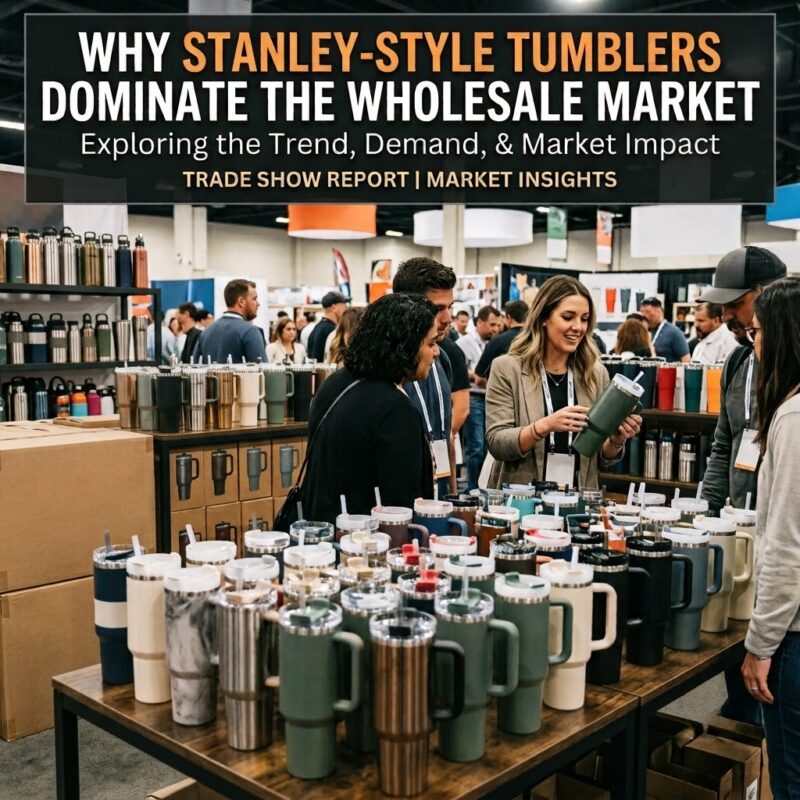
Почему стаканы в стиле Стэнли доминируют на оптовом рынке
Стаканы в стиле Стэнли стали культурным феноменом и оптовым бестселлером.. В этой статье объясняется, почему – от 18/8 нержавеющая сталь и вакуумная изоляция с двойными стенками обеспечивают высокую ощутимую ценность, потенциал настройки, и устойчивый спрос на повторные заказы. Узнайте, что делает эти стаканы надежными, выгодная категория для оптовых покупателей.
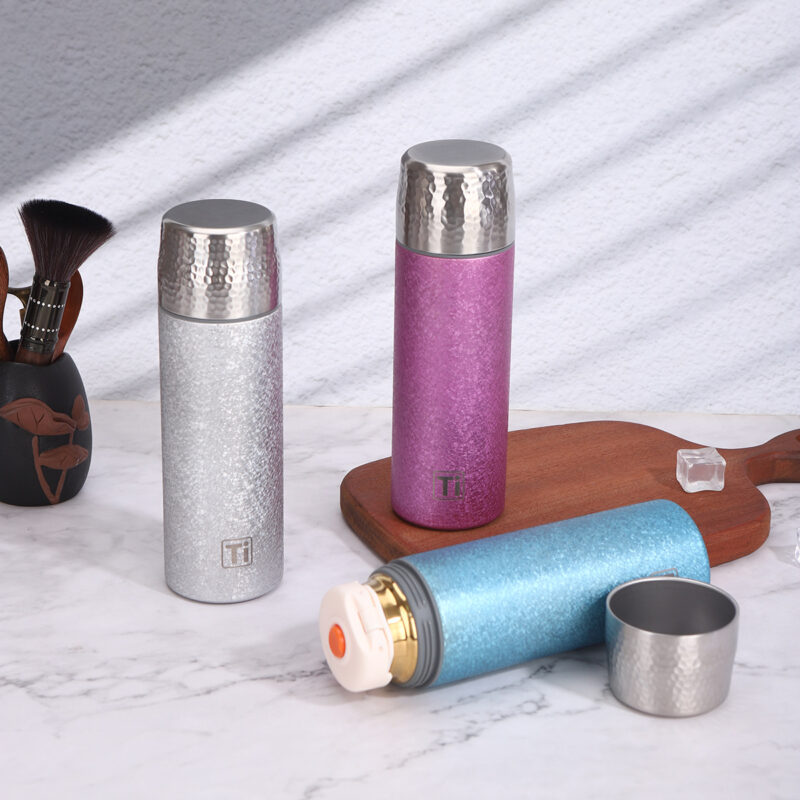
Безопасны ли титановые бутылки для воды?
Титан безопасен. Это тоже дорого. Вот как он сочетается с нержавеющей сталью и алюминием – и какой материал действительно имеет смысл для вашего бренда.
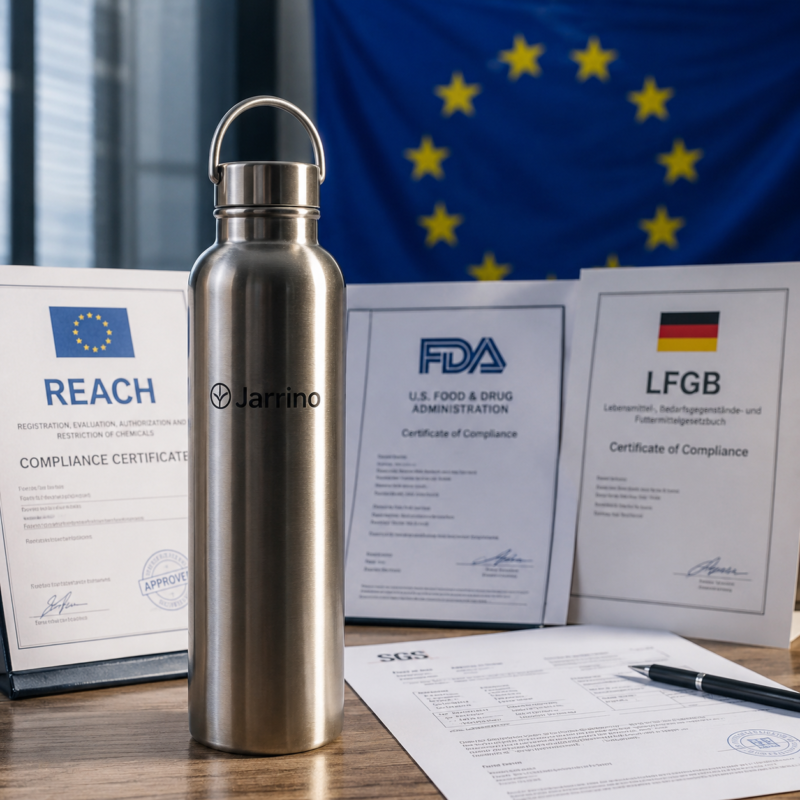
Регламент ЕС по микропластику 2026: Что должен знать каждый производитель бутылок для воды на заказ
Узнайте, как действует Регламент ЕС по микропластику (Евросоюз) 2026/1168 влияет на производителей нестандартных бутылок для воды и бренды напитков под частными торговыми марками. Узнайте, как Jarrino помогает импортерам соблюдать требования REACH, используя прочные бутылки для воды из нержавеющей стали..
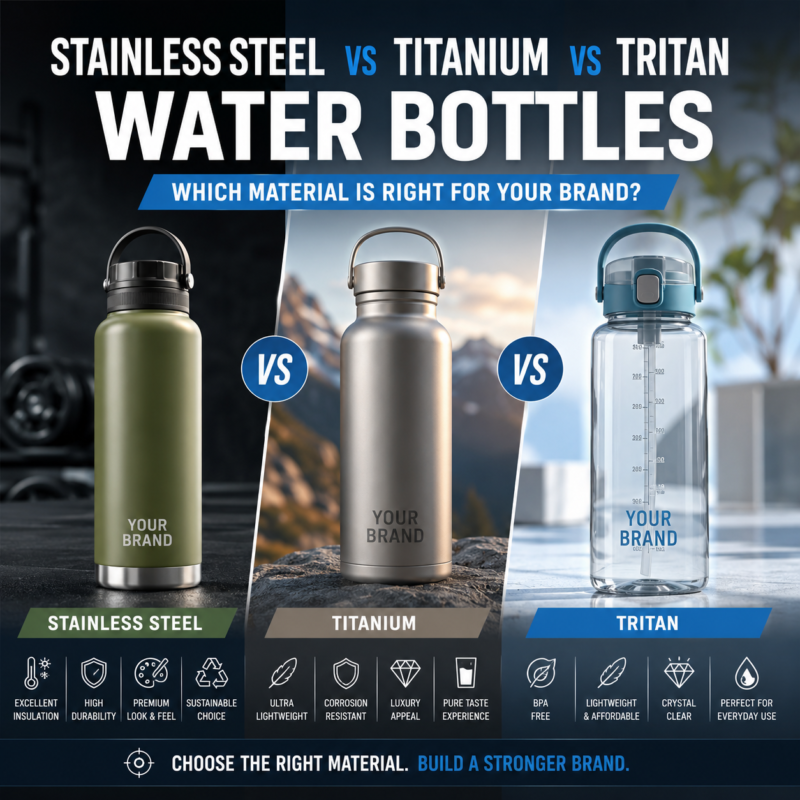
Stainless Steel vs Titanium vs Tritan Water Bottles: Which Material Is Right for Your Brand?
Choosing the right water bottle material can significantly impact your product quality, pricing, and brand positioning. This guide compares stainless steel, титан, and Tritan water bottles across durability, insulation, расходы, настройка, and sustainability to help brands, розничные продавцы, and OEM buyers select the best material for their target market.
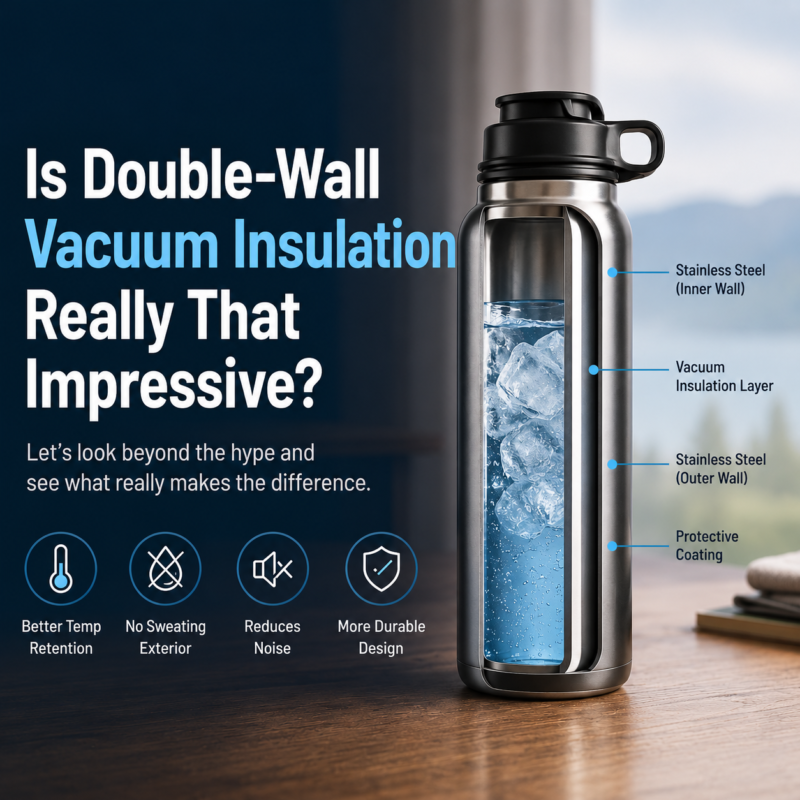
Действительно ли вакуумная изоляция с двойными стенками так впечатляет??
Double‑wall vacuum insulation is standard in premium drinkware, but the difference between a bottle that performs and one that disappoints comes down to manufacturing quality. This guide explains how vacuum insulation works, sets realistic performance expectations, and gives B2B buyers a practical checklist for evaluating suppliers. Plus, why Jarrino’s strict quality standards ensure your custom bottles deliver on their promises.
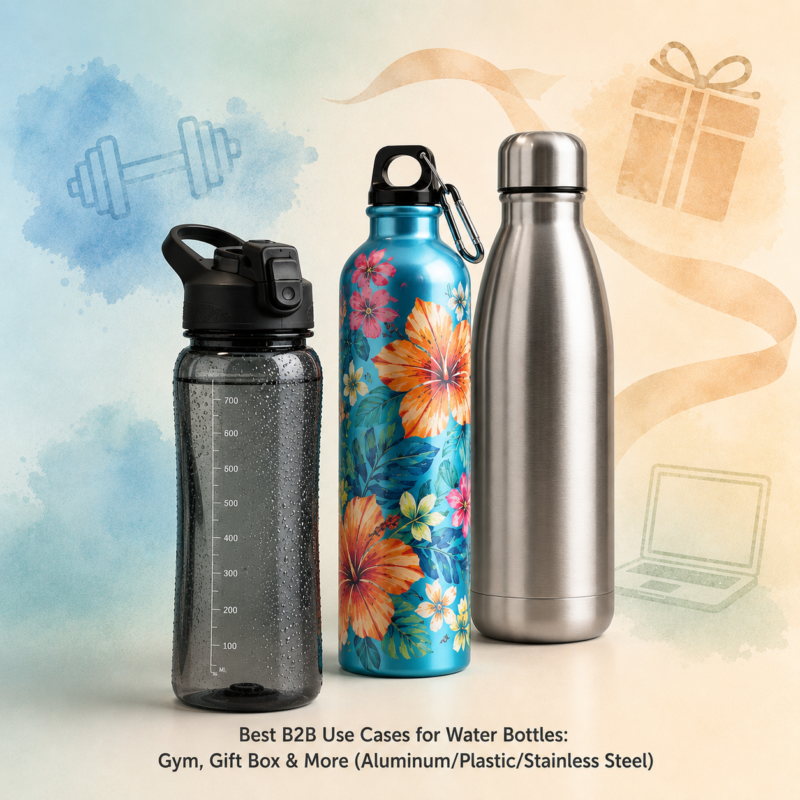
Лучшие варианты использования бутылок с водой в B2B: Спортзал, Подарочная коробка & Более (Алюминий/Пластик/Сталь)
Не каждая бутылка с водой подходит для любого сценария использования B2B.. Этот артикул соответствует трем материалам — нержавеющей стали., алюминий, пластик — для реального применения: тренажерные залы, корпоративные подарочные коробки, выставки, розничная торговля на открытом воздухе, и школьные программы. Нержавеющая сталь выигрывает по долговечности и изоляции.. Алюминий обеспечивает легкий вес, полноцветный брендинг. Пластик экономичен для мероприятий большого объема. (при условии, что он не содержит BPA). Краткая шпаргалка помогает покупателям B2B сбалансировать затраты., имидж бренда, и ожидания пользователей.