

Os copos de aço inoxidável podem ser feitos em qualquer formato??
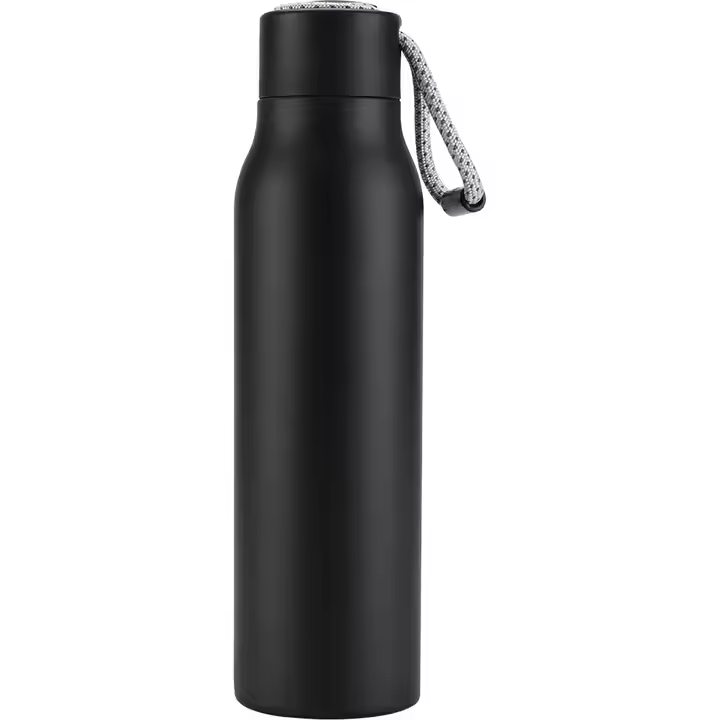
As a stainless steel thermos manufacturer, we’re often asked, “Os copos de aço inoxidável podem ser feitos em qualquer formato??”
That’s certainly a good question—just look around. From sleek hourglass-shaped thermoses to wide-bottomed mugs and minimalist geometric water bottles, the variety of stainless steel cup shapes available today is dazzling. But the question is: stainless steel isn’t the easiest material to work with. So how do we achieve these complex yet fluid designs?
The answer lies in a powerful manufacturing technique: hidroformagem.
What exactly is hydroforming?
Hydroforming is a special metal forming process that plays a crucial role in the manufacture of stainless steel cups. Unlike traditional mechanical stamping, hydroforming uses high-pressure water as the forming medium.
The working principle is as follows: A stainless steel tube is sealed inside a mold, and then water is injected into the mold cavity at extremely high pressure. The water pressure acts evenly on the entire surface of the metal, gently but powerfully forcing the metal to expand and conform to the shape of the mold. The final product is a seamless three-dimensional part with precise curves and contours—ideal for creating beautifully shaped cups and bottles.
The difference between hydroforming and stamping or forging lies in its principle of “soft force conquering hard materials.” By converting mechanical force into fluid pressure, hydroforming avoids many problems caused by stress concentration in traditional processes, such as cracking, wrinkling, or uneven thickness. Material flows smoothly along the mold wall, forming complex shapes with high dimensional accuracy. This makes hydroforming not only the preferred technology for beverage vessel manufacturing but also widely used in aerospace, automotive, and medical device manufacturing.
There are two main types of hydroforming molds used in cup production:
- Vertical Mold (Plug-type Hydroforming)
This type of mold is characterized by a top punch (core rod) vertically aligned with the pressure chamber. Water is injected through small holes in the core rod, pushing the metal outward along one axis. It is ideal for forming symmetrical, vertically stretched parts, such as the threaded neck of a thermos.
Why choose it? Because it is cost-effective, easy to control, and well-suited for forming simple unidirectional shapes.
- Split Mold (Two-piece Mold)
This type of mold is horizontally divided into two halves, forming a completely closed cavity when closed. Water pressure is applied from all directions, allowing the metal to expand 360 degrees. This device is ideal for creating multi-directional curves and complex shapes, such as grooved cup bodies or sculpted waistlines—all of which can be achieved in a single forming cycle.
Why use this type of mold? It offers maximum design freedom and precision, but the mold itself is more complex, production costs are higher, and the entire process requires more stringent control over water pressure distribution.
Each method has its advantages: vertical molds are faster and cheaper, suitable for products with simple shapes; while split molds excel at processing high-end, complex cup bodies. As manufacturers, we carefully select the appropriate hydroforming method based on the complexity of the product design and the scale of production, striking a balance between technical capability and commercial value.
No entanto, this is not without limitations. While hydroforming technology is powerful and versatile, it is not a panacea. Like other advanced manufacturing methods, it involves trade-offs—and understanding these trade-offs is key to making the right decisions in product development and production planning.
- High Mold and Equipment Costs
Hydroforming requires specially designed molds to withstand extremely high internal water pressure, and sophisticated hydraulic equipment to maintain this pressure during the forming process. The design and production costs of these molds—especially for two-piece molds with complex shapes—are far higher than those used in simpler processes like stamping. Therefore, hydroforming is best suited for medium to large-scale production, as the initial investment can be amortized over production volume. - Not Suitable for All Shapes or Designs
While hydroforming excels at creating smooth curves and organic shapes, it is not suitable for all types of cup structures. Designs requiring internal parts, sharp edges, or external attachments (such as welded handles or decorative shells) may still require conventional manufacturing methods. Some shapes are too complex or have too high functional requirements to be achieved using hydroforming alone. - Precise Pressure Control is Crucial
Because the process relies on high-pressure water, even small variations in pressure or seal quality can lead to inconsistent results. Excessive pressure can cause the metal to crack, while insufficient pressure can result in incomplete forming or wrinkling. Manufacturers need to fine-tune every parameter—material thickness, die fit, pressure profile, and seal—especially when dealing with thin-walled or complex-shaped products. - Longer Setup Times Compared to simpler processes like stamping or spinning, hydroforming typically requires longer setup times to produce a new product. This includes die alignment, pressure calibration, and seal system checks. For small-batch custom orders or frequent product changes, this can lead to longer production cycles and slower time-to-market.
In short, hydroforming is not a panacea, but when applied to the right products and carefully planned, it can significantly improve design and manufacturing quality. As manufacturers, our responsibility is to carefully weigh these pros and cons and match the appropriate production method to the specific needs of the project. Sometimes this means combining hydroforming with other processes; sometimes it means choosing entirely different options based on cost, complexity, or functional requirements.
So, can stainless steel mugs be made into any shape? In short: almost. With advanced technologies like hydroforming, we achieve amazing design freedom—producing seamless, durável, and uniquely shaped mugs that stand out on the shelf and in your hand. But like any process, it only achieves its best results with careful consideration and a full understanding of its strengths and limitations.
At Jarrino, we focus on creating personalized stainless steel insulated mugs. Whether you want a bold and novel shape, practical details, or a design unlike anything you’ve ever seen before, our engineering team can help you find the right manufacturing process to meet your design and budget requirements.
If you already have a custom shape in mind, or want to learn more about the possibilities of hydroforming and other processes, feel free to contact us. We’re always happy to explore the future of design, materials, and beverage containers—focusing on one shape at a time.