
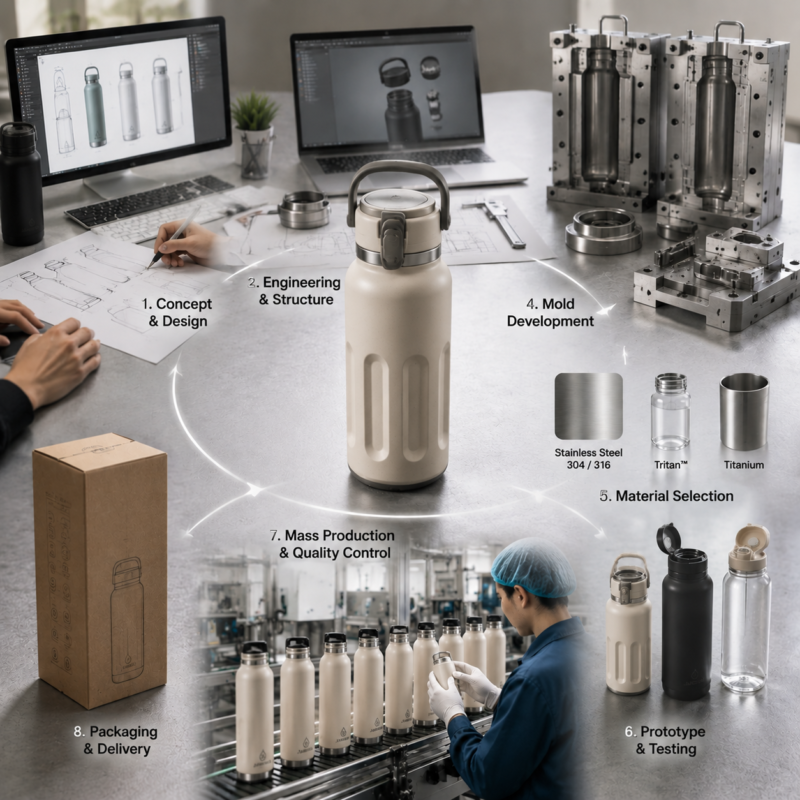
How Are Fully Custom Water Bottles Made?
Developing a fully custom water bottle involves much more than adding a logo to an existing product. This guide explains how brands create unique water bottles through product design, engineering, material selection, mold development, prototype testing, and mass production. Learn how an experienced OEM water bottle manufacturer helps transform an idea into a market-ready product while managing quality, cost, and production efficiency.
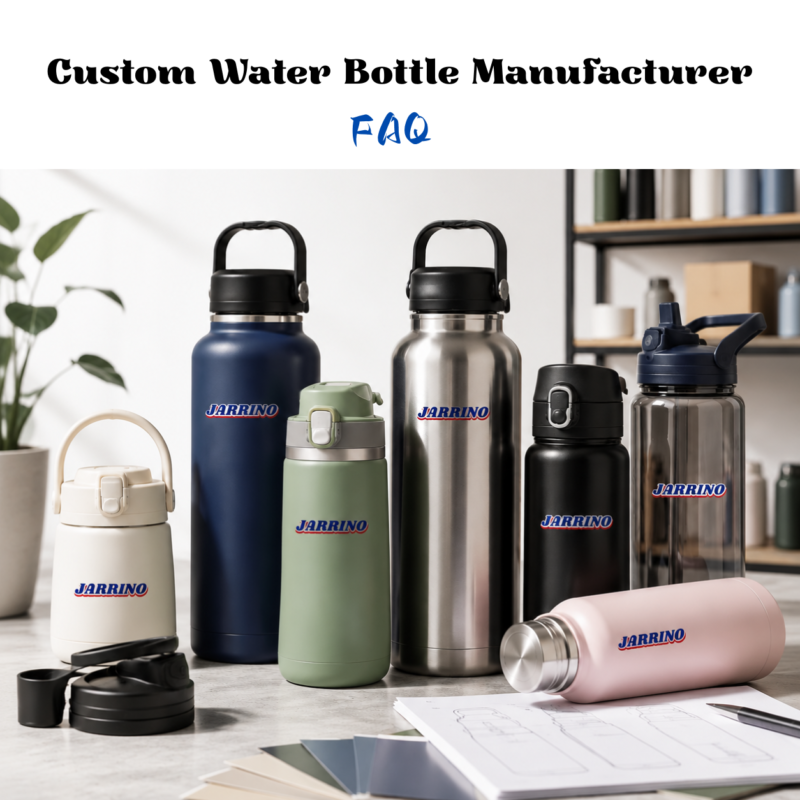
Custom Water Bottle Manufacturer FAQ: 15 Questions Every Brand Should Ask
Looking for a reliable custom water bottle manufacturer? This FAQ covers everything brands need to know before starting an OEM or private-label project, including product customization, existing molds, material selection, MOQ, certifications, sampling, production processes, and quality management. Learn how experienced manufacturers support startups, retailers, and global brands in developing high-quality reusable water bottles.
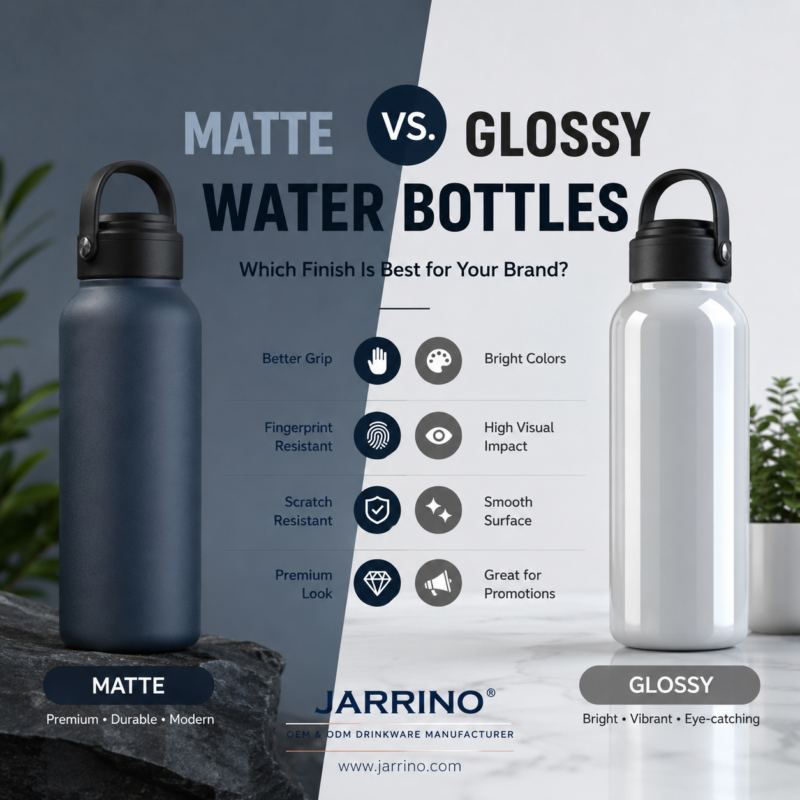
Matte vs. Glossy Water Bottles: Which Finish Is Best for Your Brand?
The surface finish of a custom water bottle affects far more than its appearance. It influences how customers perceive quality, how durable the product feels, and whether it aligns with your brand image. While matte finishes have become the preferred choice for many premium brands, glossy finishes continue to perform well in promotional and youth-focused markets. This guide compares both finishes from a branding, manufacturing, and customer experience perspective to help businesses choose the right option for their next custom drinkware collection.
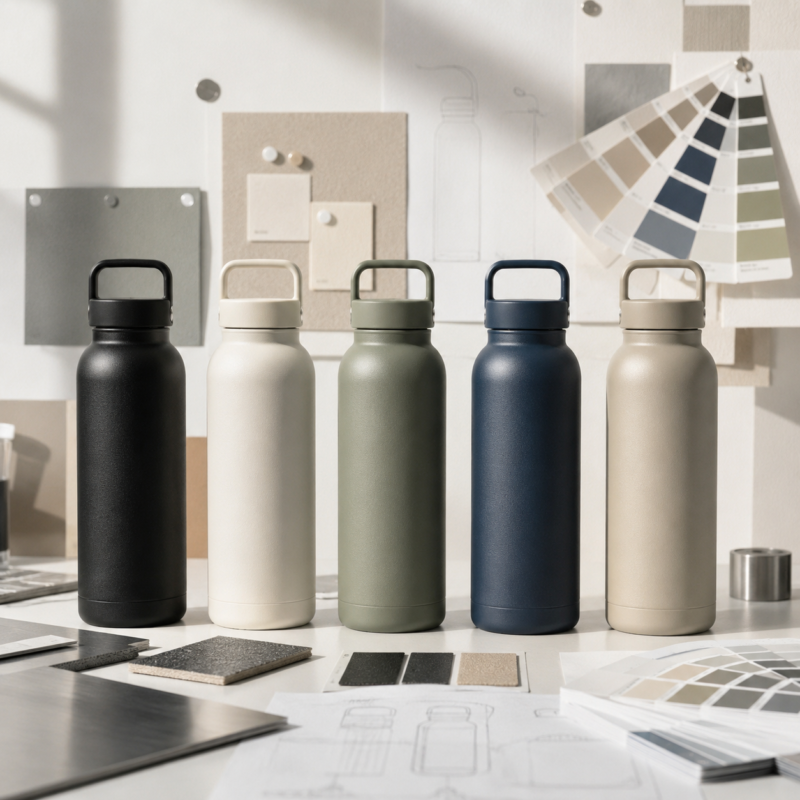
How to Choose Colors and Finishes for Custom Water Bottles
The success of a custom water bottle collection depends on more than attractive colors. Choosing the right color palette, surface finish, and manufacturing strategy helps strengthen brand identity, improve customer appeal, and ensure long-term sales. This guide explains how to select colors based on market preferences, compare matte and glossy finishes, optimize SKUs, and achieve consistent quality through professional OEM production.
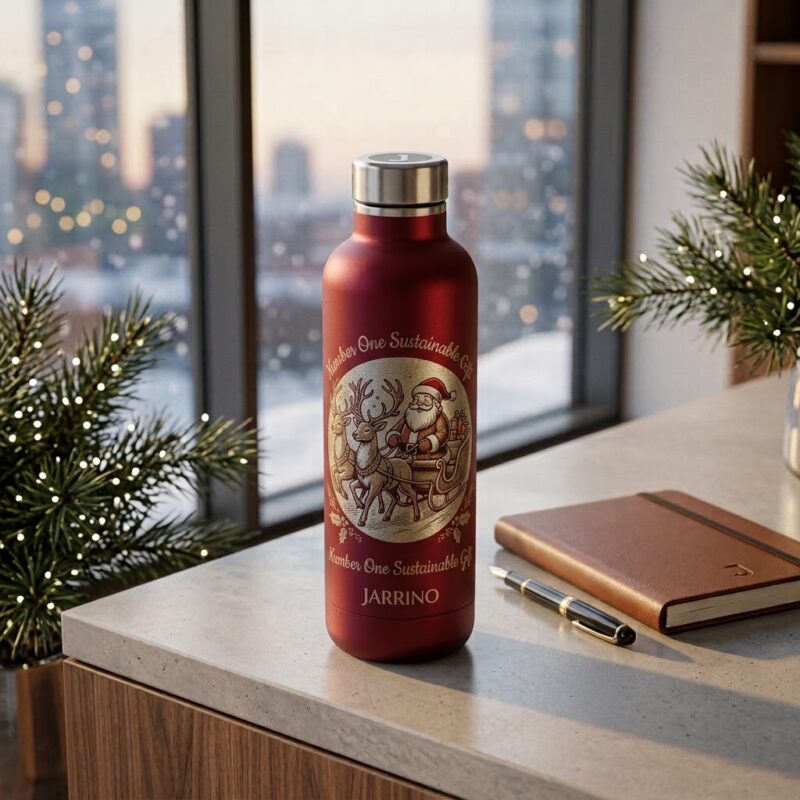
Why Custom Drinkware Is the Top 1 Sustainable Corporate Gift in 2026
Discover why custom premium drinkware is the top sustainable corporate Christmas gift in 2026. Explore Jarrino’s non-toxic, ceramic-lined, and titanium water bottles for executive holiday gifting.
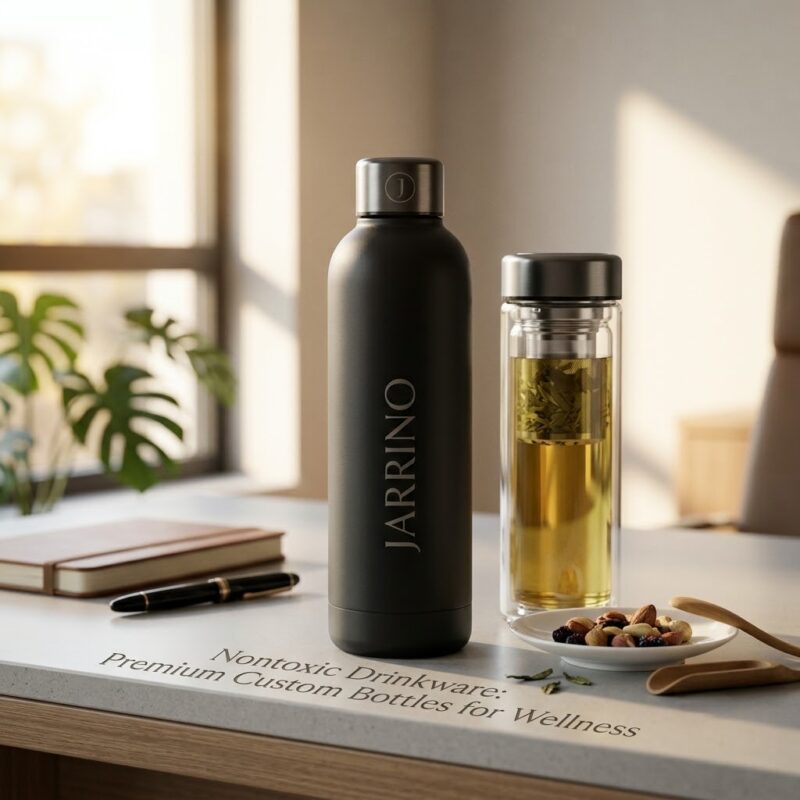
Nontoxic Drinkware: Premium Custom Bottles for Wellness
Discover how health aesthetics and advanced materials like pure titanium and ceramic-lined insulation are redefining premium drinkware. Explore Jarrino’s customized, nontoxic, and BPA-free reusable water bottles designed for corporate gifting and executive wellness in 2026.
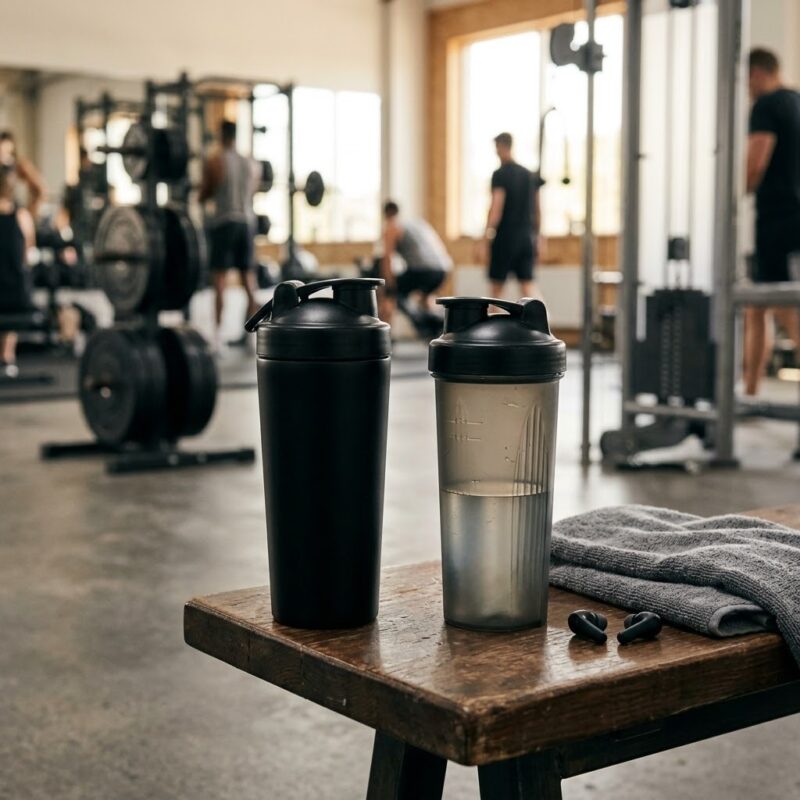
Why Shaker Bottles Are Gaining Popularity?
Shaker bottles are gaining popularity due to the global fitness boom, increasing health awareness, and the growing demand for sustainable, customizable drinkware. More consumers and businesses are choosing stainless steel shaker bottles for their durability, premium feel, and eco‑friendliness. This article examines the market drivers, product trends, and business opportunities for wholesale buyers, brand owners, and corporate gift distributors. It also covers key features like insulation technology, leak‑proof designs, and customization options that make modern shaker bottles appealing to a wide range of users.
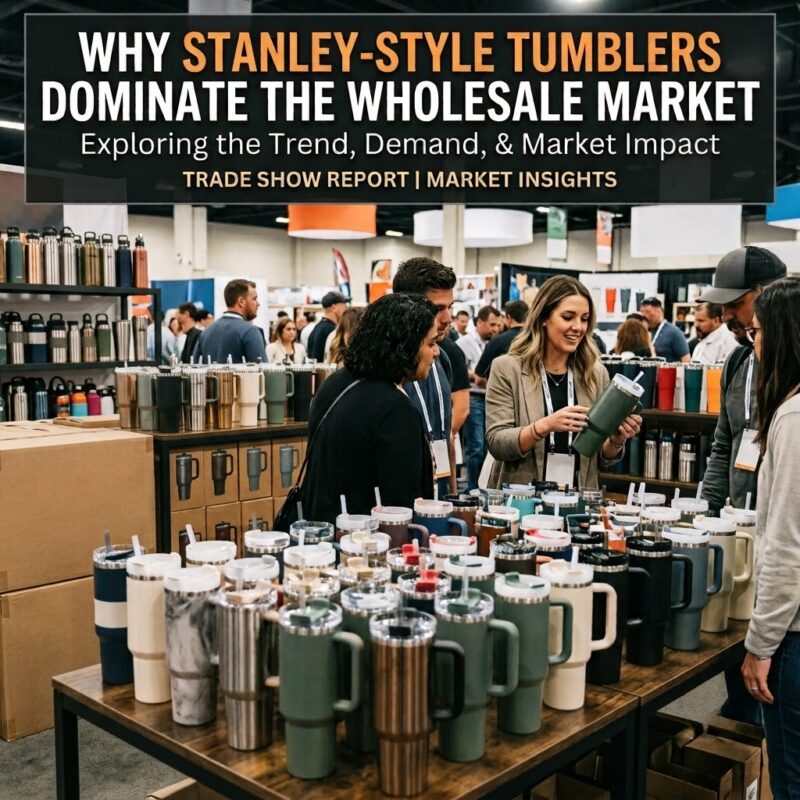
Why Stanley‑Style Tumblers Dominate the Wholesale Market
Stanley‑style tumblers have become a cultural phenomenon and a wholesale bestseller. This article explores why – from 18/8 stainless steel and double‑wall vacuum insulation to high perceived value, customization potential, and steady repeat‑order demand. Learn what makes these tumblers a reliable, profitable category for wholesale buyers.
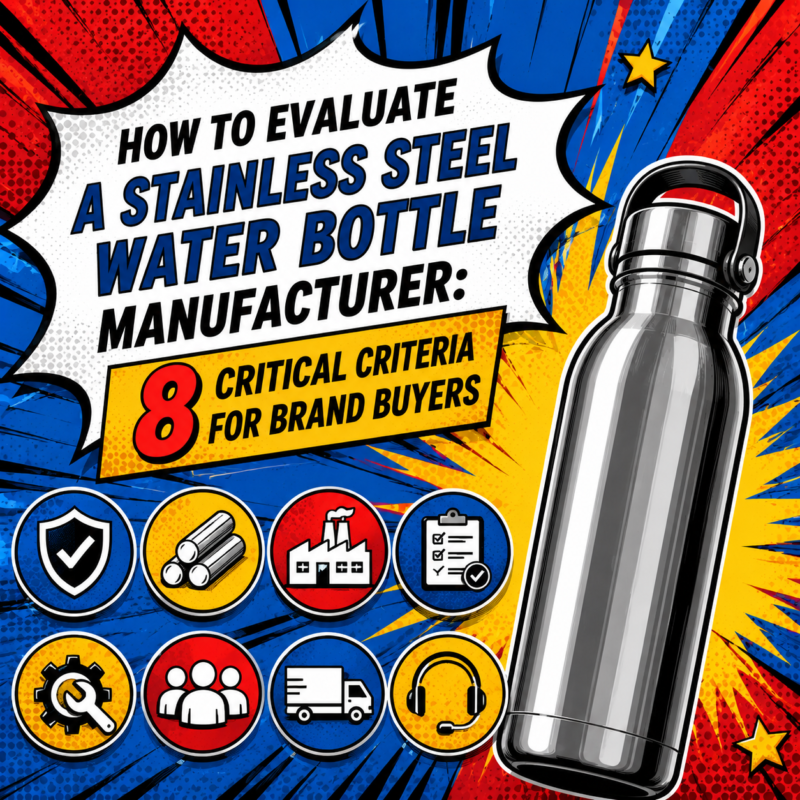
How to Evaluate a Stainless Steel Water Bottle Manufacturer: 8 Critical Criteria for Brand Buyers
8 critical criteria for evaluating a stainless steel water bottle manufacturer: certifications, material, capacity, MOQ, customization, QC, responsiveness, and lead time. Jarrino meets all with LFGB/FDA/BSCI/ISO9001, 9M annual capacity, and 15‑20 day lead times.
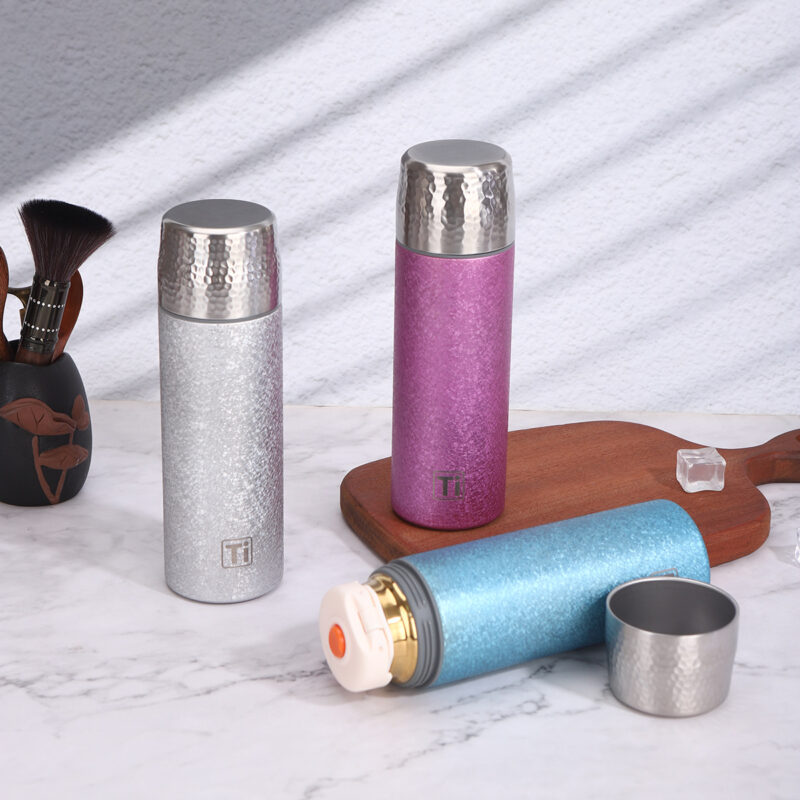
Are Titanium Water Bottles Safe?
Titanium is safe. It’s also expensive. Here’s how it stacks up against stainless steel and aluminum – and which material actually makes sense for your brand.
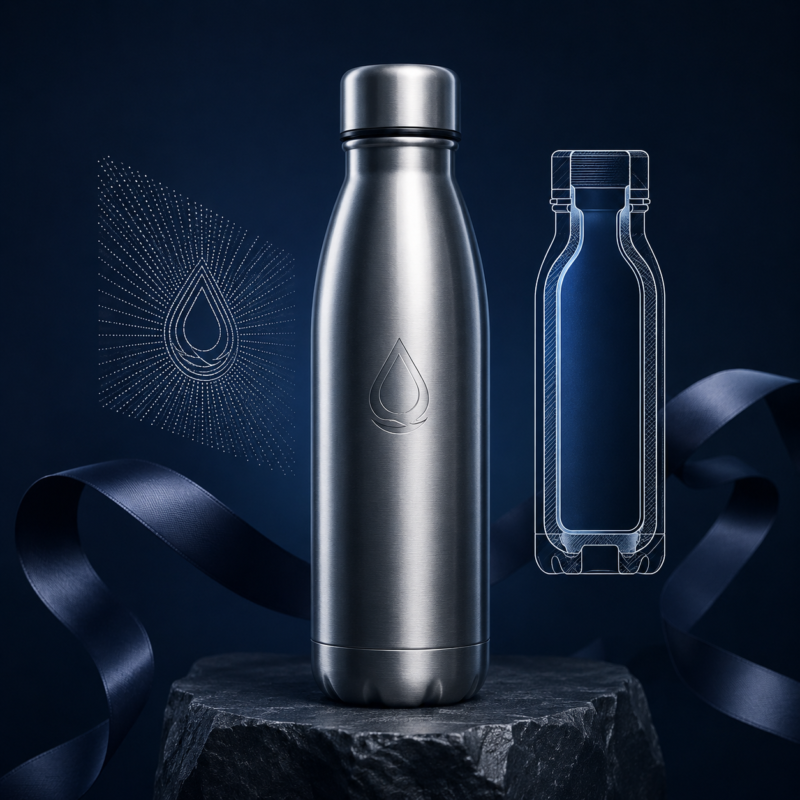
The 7 Most Expensive Mistakes Brand Owners Make When Sourcing Custom Water Bottles
7 costly mistakes brand owners make when sourcing custom water bottles – and how to avoid them.From material grade confusion to compliance shortcuts, this guide saves you time, money, and reputation.
EU Microplastics Regulation 2026: What Every Custom Water Bottle Manufacturer Should Know
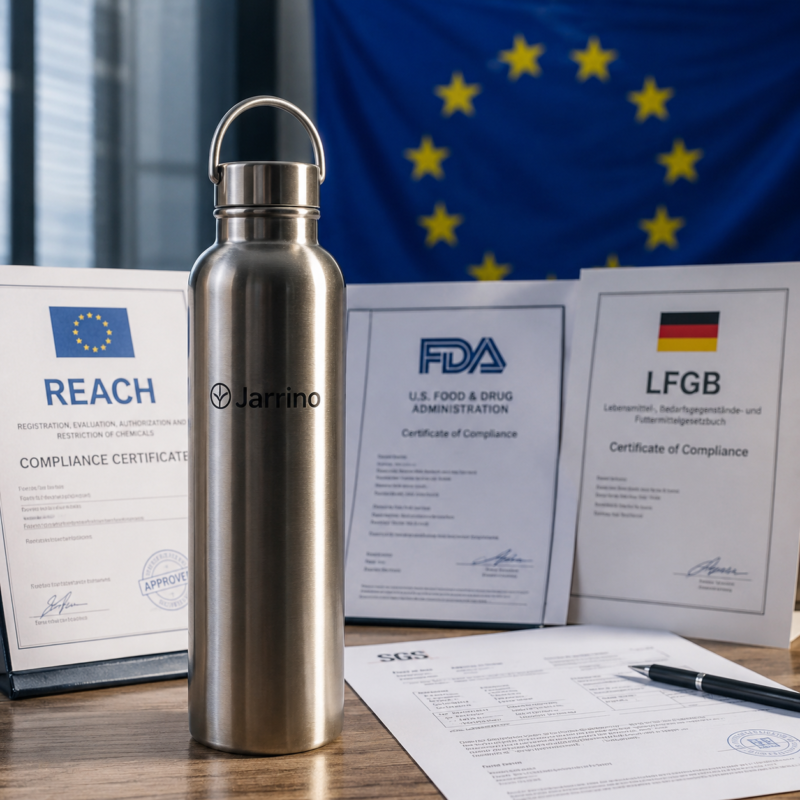
Learn how the EU Microplastics Regulation (EU) 2026/1168 impacts custom water bottle manufacturers and private label drinkware brands. Discover how Jarrino helps importers stay REACH compliant with durable stainless steel water bottles.