
Stainless Steel vs. Titanium Tumblers: Which is Healthier?
Quick Summary for Buyers
Is a titanium cup healthier than a stainless steel tumbler?
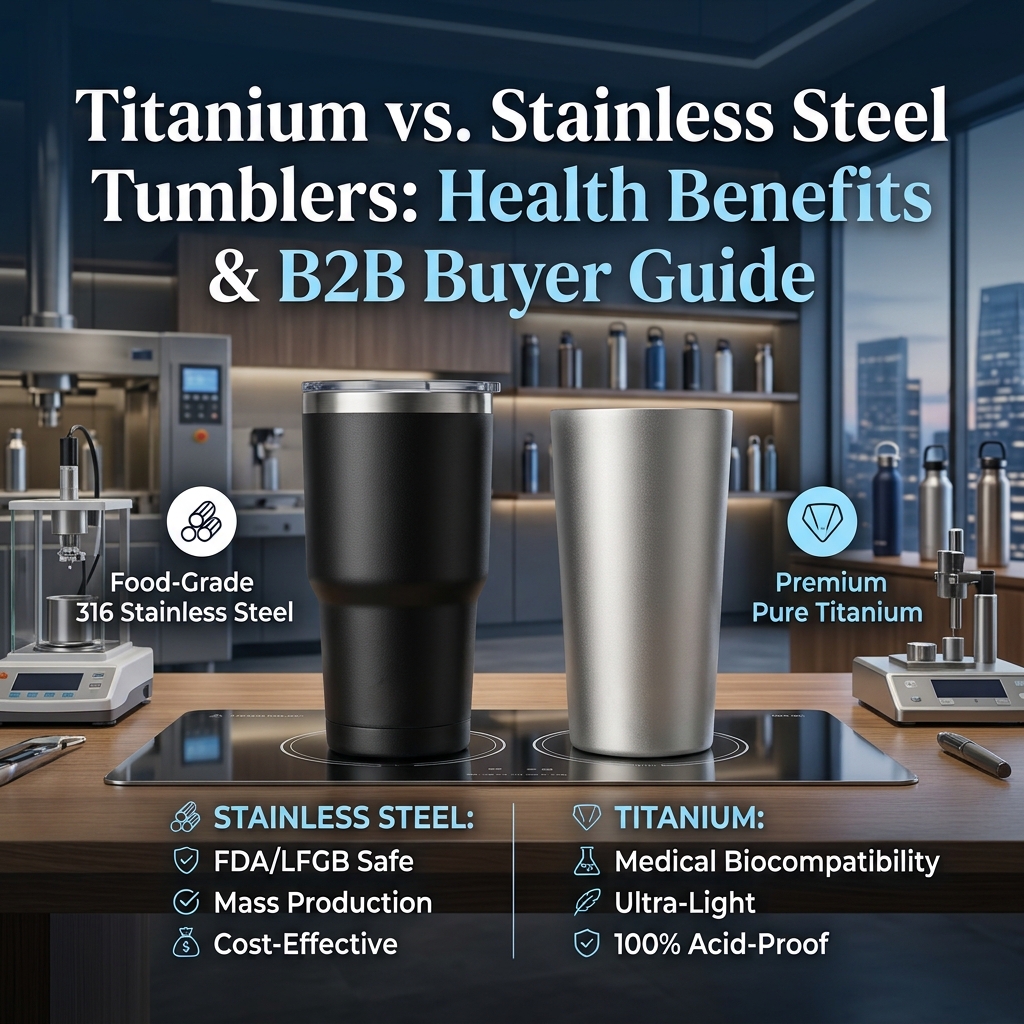
Yes, pure titanium is biologically superior. Titanium is 100% non-reactive, hypoallergenic, resists strong acids/alkalis without chemical leaching, and features natural antibacterial properties via its titanium dioxide surface film. However, food-grade 304 and 316 stainless steel tumblers remain 100% safe for everyday drinking water when manufactured using compliant, lead-free vacuum sealing processes. For B2B brands, titanium targets ultra-premium outdoor and executive markets, while stainless steel (especially with ceramic coatings) dominates mass-market volume sales.
In the global custom drinkware market, health safety and material purity have evolved from niche selling points into mandatory consumer demands. Whether you are expanding an outdoor gear brand, curating corporate gifting lines, or sourcing for a DTC eCommerce store, product managers face a critical material selection question:
Are pure titanium tumblers truly safer for human health than traditional stainless steel cups, and how should B2B buyers strategically position both materials?
As an ISO9001-certified OEM/ODM manufacturer specializing in custom insulated drinkware, Jarrino breaks down the material science, toxicological safety, practical drink compatibility, and commercial sourcing strategy for both materials.
1. Material Science Breakdown: Stainless Steel vs. Pure Titanium
Stainless Steel Tumblers (Grade 304 vs. Grade 316/316L)
Stainless steel is the industry benchmark for vacuum-insulated drinkware due to its mechanical strength and thermal efficiency.
- Chemical Composition: Typically composed of iron alloyed with chromium (18%) and nickel (8-10%). Grade 316 adds 2-3% molybdenum for enhanced pitting resistance against chloride and acidic environments.
- Health & Safety Compliance: High-quality 304 (18/8) and 316/316L (medical-grade) stainless steel comply strictly with global food contact standards, including FDA (USA), LFGB (Germany), and EU Regulation (EC) No 1935/2004. Heavy metal migration (chromium, nickel, manganese) remains virtually zero under standard operating temperatures.
- Limitations: Long-term storage of highly acidic liquids (pH < 4.0, such as pure lemon juice or concentrated kombucha) or high-salinity drinks in low-grade steel can cause minor passivation breakdown, occasionally imparting a faint metallic taste.
Pure Titanium Drinkware (Grades 1 & 2 Unalloyed Titanium)
Titanium is widely regarded in bio-engineering as the ultimate “biophilic metal” (biocompatible material), frequently chosen for surgical implants, hip replacements, and medical equipment.
- Biocompatibility & Hypoallergenic Nature: Pure titanium is non-magnetic, non-toxic, and utterly immune to human tissue rejection or allergic response.
- Self-Healing Protective Layer ($\text{TiO}_2$): When exposed to oxygen, titanium spontaneously forms a microscopic, dense passivation layer of Titanium Dioxide ($\text{TiO}_2$). This inert barrier prevents any elemental leaching—even when exposed to hydrofluoric-level acid equivalents, hot coffee, traditional herbal teas, or carbonated soda.
- Photocatalytic Antibacterial Effect: Under ambient light, the $\text{TiO}_2$ film exhibits mild photocatalytic oxidation, inhibiting bacterial growth on the inner walls and keeping beverage taste 100% unaltered over extended periods.
2. Head-to-Head Comparison: Health, Safety & Technical Performance
Below is an engineered comparison matrix evaluating stainless steel vs. pure titanium across critical health and commercial metrics:
| Key Evaluation Criterion | Food-Grade Stainless Steel (304 / 316) | Pure Titanium (Grade 1 / Grade 2) | Winner / Advantage |
| Biological Safety & Allergy Risk | Safe; minimal risk except for severe nickel allergies | 100% Hypoallergenic, zero toxic leaching risk | Titanium |
| Beverage Compatibility | Water, coffee, tea, milk (avoid prolonged high acid/salt) | Universal (Coffee, citrus, soda, dairy, wine, tea) | Titanium |
| Flavor Integrity & Aftertaste | High quality; sensitive palettes may sense mild iron notes | 100% Pure Flavor (Zero metallic aftertaste) | Titanium |
| Material Weight | Standard density (~7.9 g/cm³) | Ultra-lightweight (~4.5 g/cm³, 45% lighter) | Titanium |
| Thermal Insulation Performance | Exceptional (Easy double-wall vacuum engineering) | High performance (Requires advanced titanium vacuum welding) | Stainless Steel |
| Production Cost & B2B Pricing | Highly Cost-Effective; mature global supply chain | Premium Segment; high raw material and processing costs | Stainless Steel |
3. The Health Verdict: Which Material Should Consumers Choose?
From a strict toxicological and material biology perspective:
- Titanium is unequivocally the healthier, purer material. Its absolute chemical inertness, natural antibacterial oxide skin, zero heavy metal migration, and universal beverage neutrality make it the cleanest container material available for drinkware.
From a practical everyday health perspective:
- Certified 304 and 316 stainless steel tumblers are completely non-toxic and safe for 99% of daily hydration needs. As long as the manufacturer utilizes lead-free vacuum sealing processes and food-grade inner liners, stainless steel presents zero health hazards to the average user.
4. Jarrino Sourcing Strategy: How B2B Buyers Should Position Both Materials
To maximize ROI and market expansion, B2B procurement managers and brand owners should segment their catalog based on consumer use-cases:
[ Drinkware Product Portfolio ]
|
+---------------------------+---------------------------+
| |
[ Pure Titanium Series ] [ Stainless Steel Series ]
* Target: Ultralight Outdoor / Executive * Target: Mass Market / Corporate Swag
* Selling Point: Purity, 0% Metallic Taste * Selling Point: Insulation, Cost & Customization
* Upgrade: Anodized Custom Colors * Upgrade: Ceramic Coated Inner Liner
Strategy A: Target Outdoor, Luxury & Wellness Segments with Titanium
- Ideal Product Lines: Ultralight hiking flasks, premium executive travel mugs, espresso cups.
- Value Proposition: “Featherlight, 100% Taste-Pure, Naturally Antibacterial.”
- Jarrino Manufacturing Advantage: Advanced anodic oxidation coloring (chemical-free rainbow/matte finishes) and seamless precision welding for pure titanium vacuum tumblers.
Strategy B: Capture Mass Market & Corporate Gifting with Stainless Steel
- Ideal Product Lines: 40oz Stanley-style handle tumblers, sports bottles, corporate promotional swag.
- Value Proposition: “All-Day Thermal Insulation, Premium Powder Coating, Unbeatable Durability.”
- Health Upgrade Option: Offer Jarrino Ceramic-Coated Stainless Steel. This hybrid solution applies a food-safe ceramic spray layer to the inner 304/316 steel wall—giving consumers the flavor purity of ceramic with the thermal retention and ruggedness of stainless steel.
5. Frequently Asked Questions (B2B FAQ)
Q1: Is titanium lighter than stainless steel in insulated tumblers?
Yes. Titanium has a density of approximately 4.51 g/cm³, which is roughly 45% lighter than stainless steel (7.9 g/cm³). An insulated titanium tumbler provides the same double-wall structure at a significantly reduced carry weight, making it ideal for backpacking and premium travel.
Q2: Does stainless steel leach harmful heavy metals into acidic drinks?
Not if it is compliant 304 or 316 steel. Under standard FDA and LFGB testing protocols, acid-induced heavy metal migration in certified food-grade stainless steel is far below international safety limits. However, to eliminate any potential metallic taste, a ceramic-coated inner liner is recommended for frequent coffee or juice drinkers.
Q3: Why are titanium tumblers more expensive than stainless steel?
Titanium raw materials are significantly costlier to extract and refine. Furthermore, titanium requires specialized vacuum-welding equipment, inert gas shielding, and higher stamping pressure due to its high tensile strength and springback characteristics.
6. Why Partner with Jarrino for Custom Drinkware Manufacturing?
Whether your brand vision calls for ultra-pure titanium or versatile stainless steel, Jarrino provides end-to-end OEM/ODM custom solutions:
- 100% Lead-Free Vacuum Sealing: We utilize eco-friendly, lead-free glass bead sealing technology to guarantee non-toxic, eco-conscious vacuum insulation.
- Global Quality Certifications: Fully certified ISO9001 and BSCI factory compliant with FDA, LFGB, CA Prop 65, and REACH food safety regulations.
- Advanced CMF Capabilities: Over 30 custom finishing processes including Powder Coating, 3D UV Textured Printing, Gradient Sprays, and Titanium Anodization.
- Agile B2B Supply Chain: Low MOQs for market testing, 3–5 day rapid prototyping, and automated production lines ensuring on-time global fulfillment.
Elevate Your Brand’s Drinkware Line Today
Contact the Jarrino Engineering Team to request custom OEM/ODM catalogs, material sample kits, or factory-direct pricing for titanium and stainless steel drinkware lines.
Related Posts
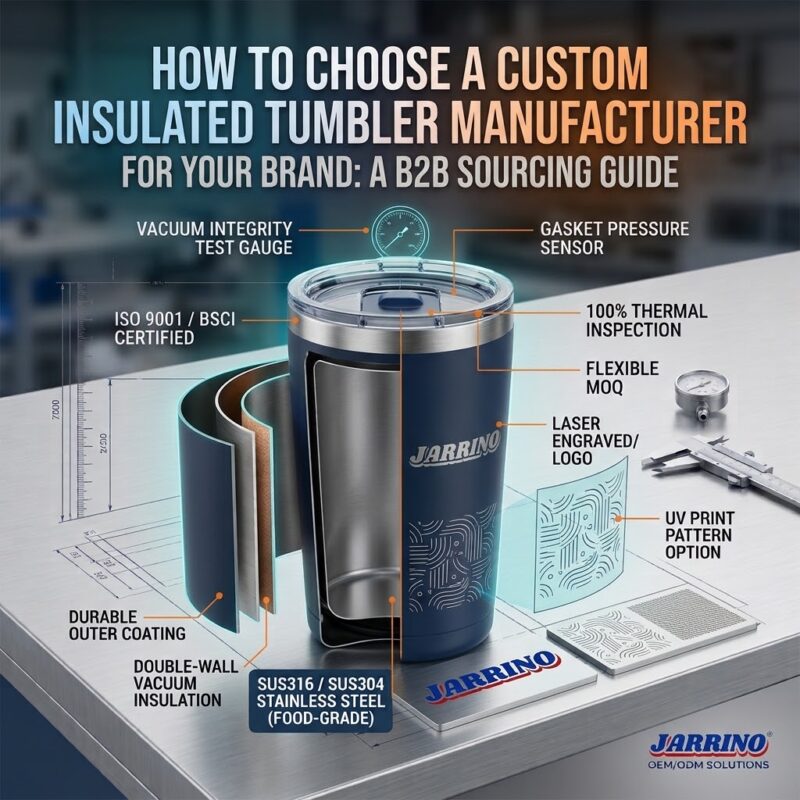
How to Choose a Custom Insulated Tumbler Manufacturer for Your Brand
Discover how to choose the right custom insulated tumbler manufacturer for your brand. Learn about OEM and ODM services, stainless steel materials, private label customization, MOQ, wholesale pricing, quality control, and food-contact compliance. This guide helps B2B buyers, wholesalers, and drinkware brands evaluate suppliers and source custom insulated tumblers with confidence.
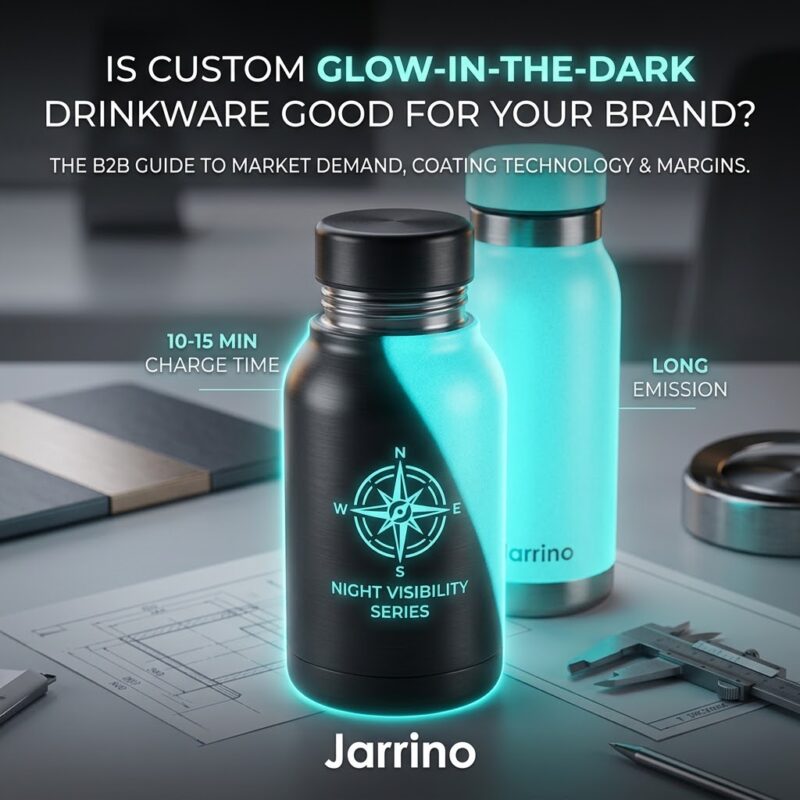
Is Custom Glow-in-the-Dark Drinkware Good for Your Brand?
Custom glow-in-the-dark drinkware offers private-label brands a high-margin opportunity in a competitive market. Jarrino provides industrial-grade, food-safe photoluminescent coatings, ensuring durability and compliance while targeting outdoor and youth sectors, driving viral social media appeal and product differentiation.
How to Choose 100% Leak-Proof Stainless Steel Water Bottles for Your Brand?
This guide helps drinkware brands select 100% leak-proof stainless steel bottles by analyzing QC testing and lid engineering. Manufacturers like Jarrino use inverted, shaking, and air pressure tests to verify seals. Traditional screw-caps offer absolute leak protection, while locking flip-lids and straw caps require precise silicone gaskets, CNC thread precision, and one-way air valves to prevent spills.
Custom Christmas Drinkware: Complete OEM/ODM Manufacturing Guide
Jarrino is a certified OEM/ODM manufacturer specializing in custom vacuum flasks, ceramic-lined tumblers, and titanium drinkware. Lead times for Q4 custom Christmas orders are 20–30 days with low MOQs (300–1,000 pcs) and full FDA/LFGB compliance. We offer end-to-end customization including 3D digital printing, laser engraving, and bespoke Christmas gift packaging. Sample kits and the quotes are available upon request to help brands lock in Q4 holiday production smoothly.
OEM vs. ODM Insulated Tumblers: Which Sourcing Model Fits Your Drinkware Brand
Choosing between OEM (Original Equipment Manufacturing) and ODM (Original Design Manufacturing) defines your drinkware brand’s R&D budget, time-to-market, and product exclusivity. OEM is ideal for established brands with custom CAD designs and unique IP requirements, offering 100% custom molding and patent protection. ODM is built for Amazon sellers, DTC startups, and corporate buyers seeking zero tooling costs, low MOQs, and rapid product launches via advanced CMF finishes (powder coating, UV printing).
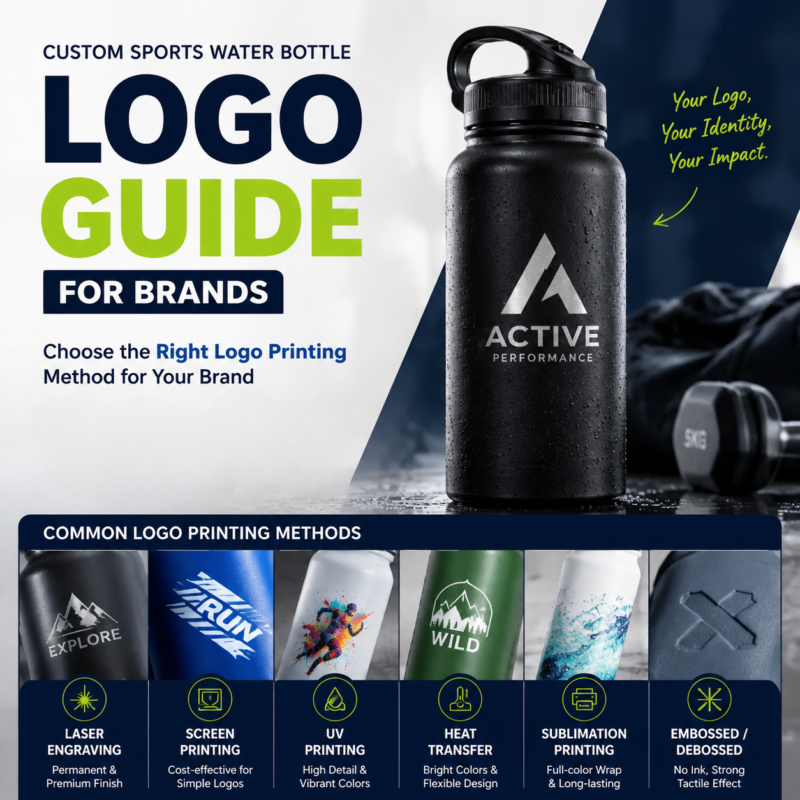
Custom Sports Water Bottle Logo Guide for Brands
Custom sports water bottle logos are created through different decoration processes depending on the bottle material, brand design, and performance requirements. This guide covers the most common logo printing methods, including laser engraving, screen printing, UV printing, heat transfer, and sublimation, helping sports brands select the right customization option for durable and professional drinkware products.
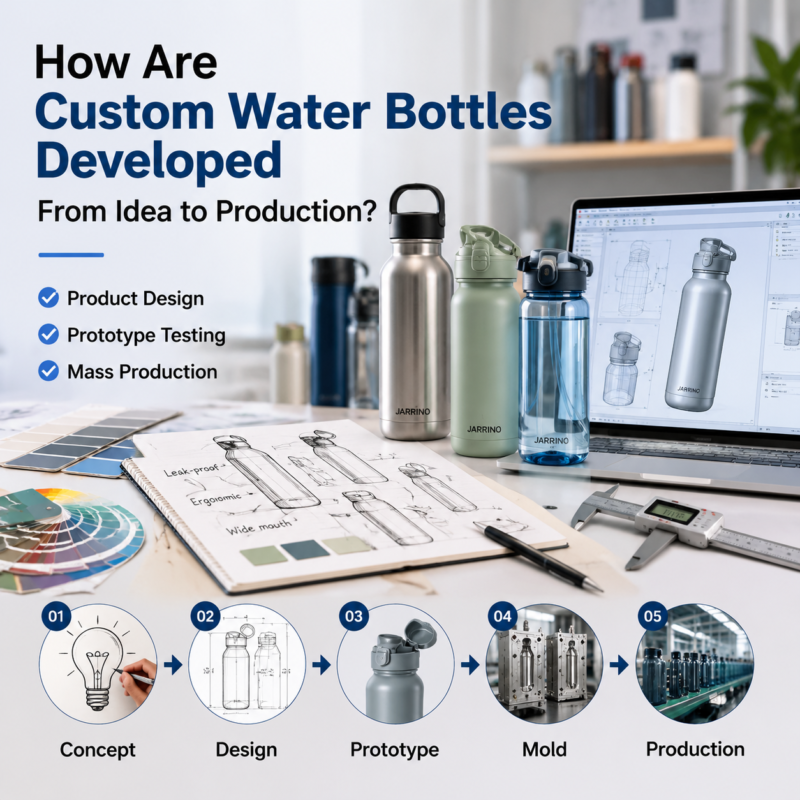
How Are Custom Water Bottles Developed From Idea to Production?
Developing a custom water bottle requires more than choosing a design and adding a logo. From the initial product concept to engineering, prototyping, mold development, testing, and mass production, every stage plays an important role in creating a successful drinkware product. This guide explains how brands work with OEM water bottle manufacturers to transform ideas into high-quality, market-ready products while managing design, cost, and production challenges.
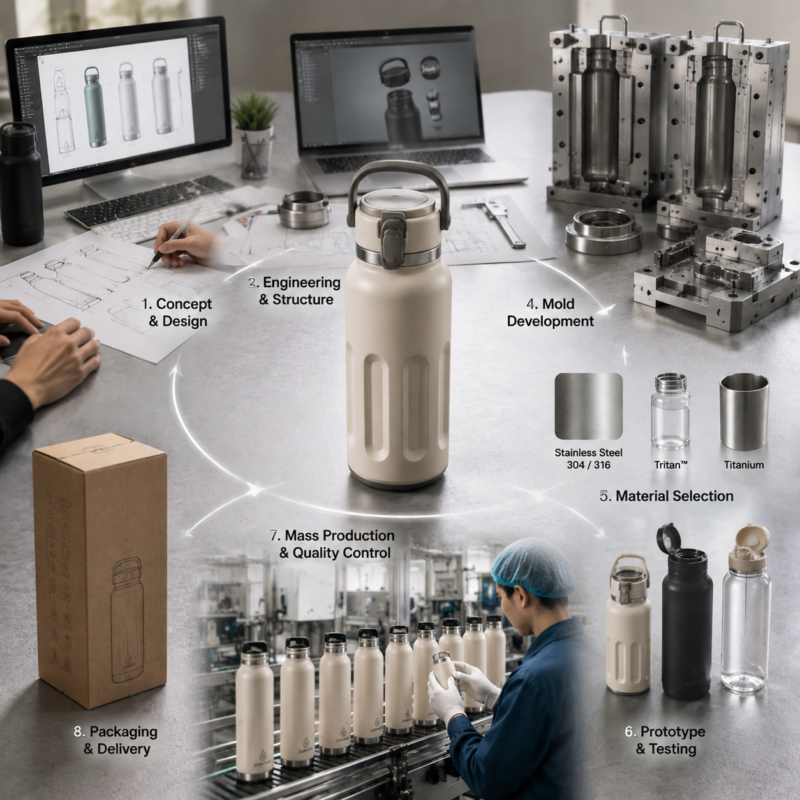
How Are Fully Custom Water Bottles Made?
Developing a fully custom water bottle involves much more than adding a logo to an existing product. This guide explains how brands create unique water bottles through product design, engineering, material selection, mold development, prototype testing, and mass production. Learn how an experienced OEM water bottle manufacturer helps transform an idea into a market-ready product while managing quality, cost, and production efficiency.
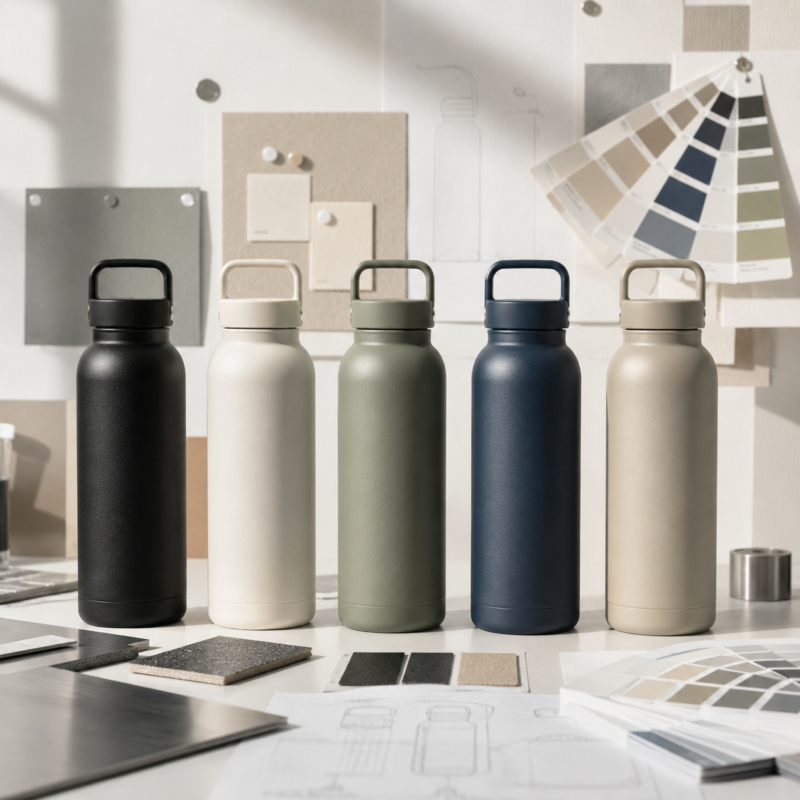
How to Choose Colors and Finishes for Custom Water Bottles
The success of a custom water bottle collection depends on more than attractive colors. Choosing the right color palette, surface finish, and manufacturing strategy helps strengthen brand identity, improve customer appeal, and ensure long-term sales. This guide explains how to select colors based on market preferences, compare matte and glossy finishes, optimize SKUs, and achieve consistent quality through professional OEM production.
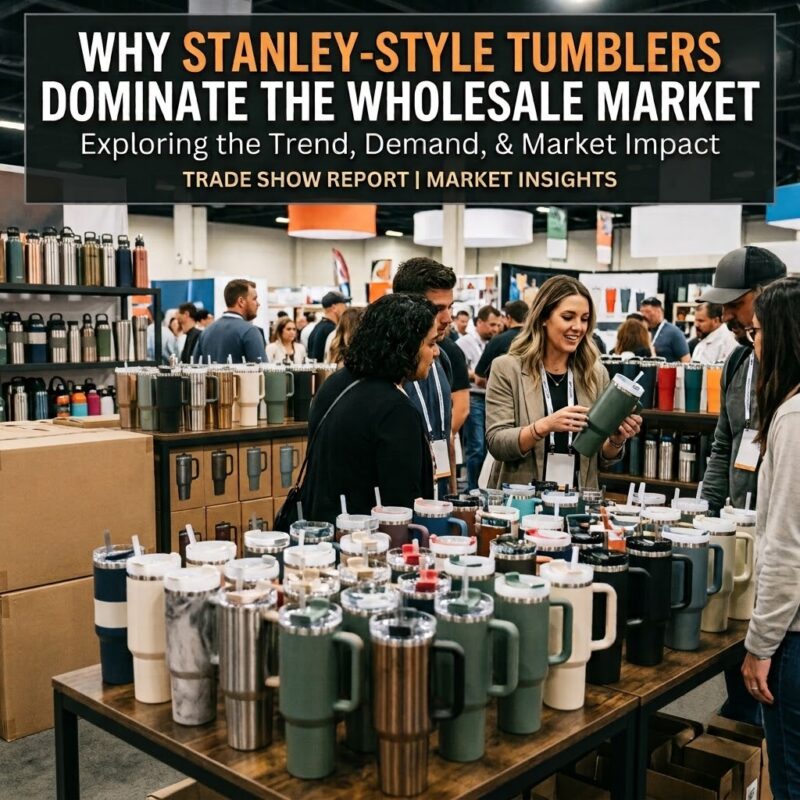
Why Stanley‑Style Tumblers Dominate the Wholesale Market
Stanley‑style tumblers have become a cultural phenomenon and a wholesale bestseller. This article explores why – from 18/8 stainless steel and double‑wall vacuum insulation to high perceived value, customization potential, and steady repeat‑order demand. Learn what makes these tumblers a reliable, profitable category for wholesale buyers.
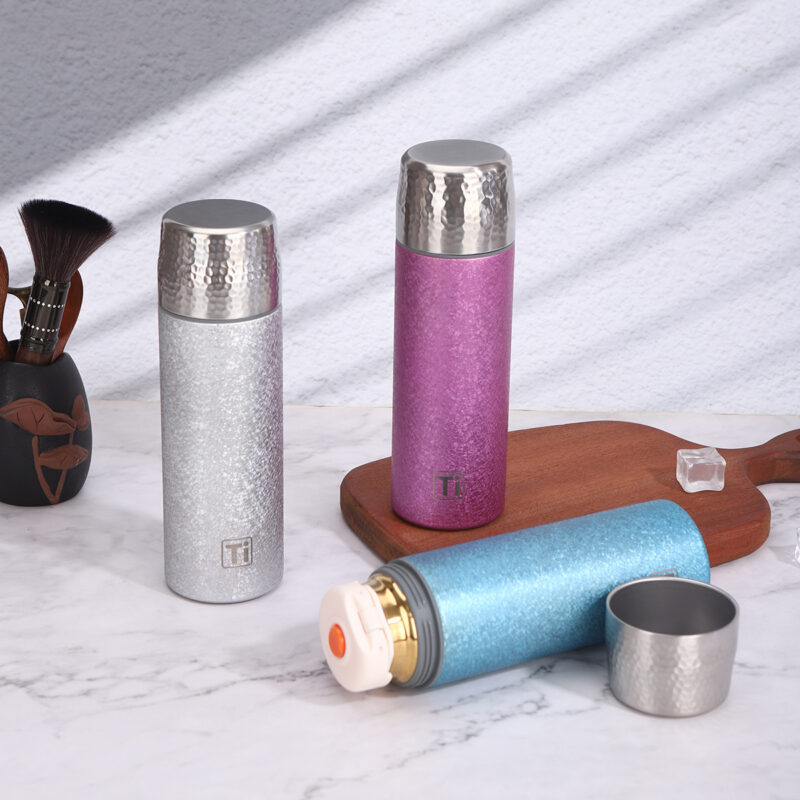
Are Titanium Water Bottles Safe?
Titanium is safe. It’s also expensive. Here’s how it stacks up against stainless steel and aluminum – and which material actually makes sense for your brand.
EU Microplastics Regulation 2026: What Every Custom Water Bottle Manufacturer Should Know
Learn how the EU Microplastics Regulation (EU) 2026/1168 impacts custom water bottle manufacturers and private label drinkware brands. Discover how Jarrino helps importers stay REACH compliant with durable stainless steel water bottles.